In this article
Winter makes concealed carry harder because the layers that keep you warm also change where your holster sits, how easily you can reach it, and whether anything shows. Most of the fix is planning: know the rules where you carry, leave room in your layers, choose a holster setup that stays put and covers the trigger guard, and decide whether a jacket with built-in carry pockets is simpler than a belt holster under a coat.
If you carry on your belt all year, the first cold morning shows the problem. A bulky coat hangs over the holster, so you either unzip it to reach anything or tuck it behind the grip. Gloves make fine movements clumsier. A seat belt, a hood, and a thick sweatshirt all end up in the same few inches of space.
This guide covers the questions to settle before you buy anything, how to layer, how jackets and vests with built-in pockets differ from a belt holster under a coat, what buyers report about fit and handgun size, and what to check the day a jacket arrives. It is about everyday clothing and safe habits, not about any particular firearm.
What should you settle before choosing a winter jacket?
Clothing does not change what the law requires. Rules for carrying a concealed handgun differ from state to state, and from place to place within a state: who needs a permit, which out-of-state permits are honored, and which locations are off limits. Your state's attorney general or state police website is the place to confirm the current rules before you carry anywhere new, including on a winter trip.
Safe handling matters even more once a handgun lives inside a garment. The four basic rules published by the National Shooting Sports Foundation are to keep the firearm pointed in a safe direction, treat every gun as loaded, keep your finger off the trigger until you are ready to shoot, and be sure of your target and what is beyond it. A sagging pocket, or a handgun shifting loose inside a jacket, makes those rules harder to follow.
- Use a holster, not just a pocket. The handgun should sit in something that covers the trigger guard and holds its position when you sit, bend, or reach.
- Match the holster to your handgun. A holster made for a different size can let the gun shift or make it hard to draw. Include any light, laser, or optic when you check.
- Train in the clothes you will wear. A coat adds steps to the draw. Practice with an unloaded handgun, ideally with a qualified instructor, before you rely on a new setup.
How do you layer so the holster still has room?
The usual cold-weather advice is to wear several layers of loose clothing rather than one thick garment. The CDC's cold stress guidance says layers of loose clothing insulate better, and it also warns that some clothing can restrict movement. For carrying, that second point matters: you want warmth without a garment so snug that it pins your arm or presses the handgun against your body.
- Start with a thin base layer, add a fleece or sweatshirt as the middle layer, and keep the outer layer for wind and weather.
- Size the outer layer for the layers underneath. A jacket that fits over a T-shirt in the fitting room may be tight over a hooded sweatshirt in January.
- Try it on with your usual winter layers, raise both arms, reach across your body, and sit as you would in your car before you commit to it.
- A vest keeps your core warm and leaves your arms free, which is an easy way to add a layer without making sleeves a problem. In real cold you still need warm sleeves on top.
Buyers' sizing notes are a reminder that sizing is not universal. One buyer found the large too small and the extra-large a little long on a vest, then washed it to shrink it slightly and liked the fit. Others said a shirt jacket ran snug, and one wrote that a carry jacket should run a little larger than normal, because clothing that fits like sausage skin cannot hide anything.
Is a jacket with built-in carry pockets better than a belt holster under a coat?
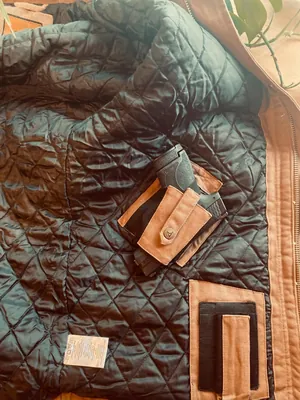
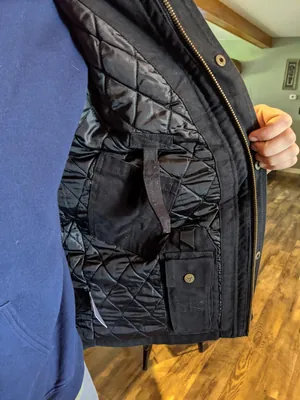
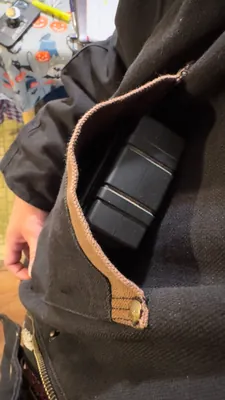
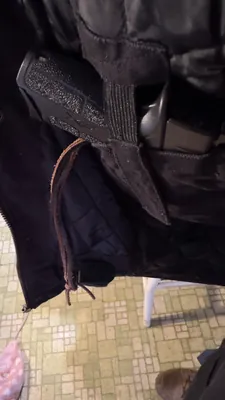
It depends on what is bothering you. A belt holster stays in the same spot on your body whatever you wear over it, but a thick coat covers it. A jacket with built-in pockets puts the handgun inside the front of the garment, where your hand can reach it, but the position is tied to the jacket rather than to you.
- Weight pulls on the jacket. One buyer noted that a heavier handgun tugs the front of a medium-weight jacket downward. A sturdier fabric or a lighter handgun helps.
- The jacket has to stay on and closed. One buyer said the holster sat so close to the front zipper that the jacket had to stay fully zipped to hide it.
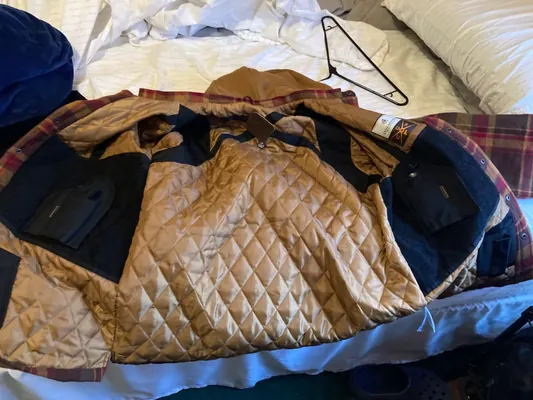
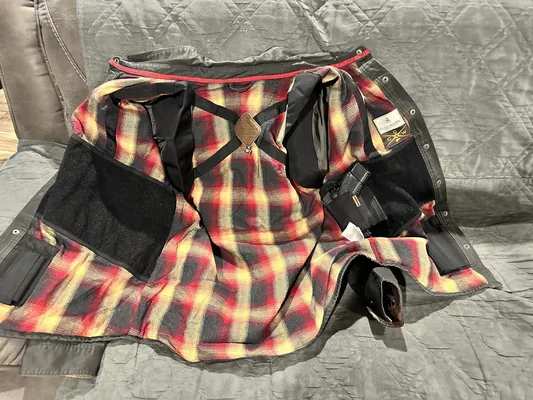
- Adjustable beats fixed. Hook-and-loop panels let you move a holster up or down and change its angle. One buyer wished for more mounting positions because the holster sat a little low for their draw, and another found a non-adjustable holster tight for a handgun with a laser.
- Plan for taking it off. If the handgun is in the jacket, the jacket is the handgun. More on that at the end.
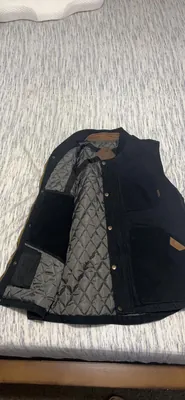
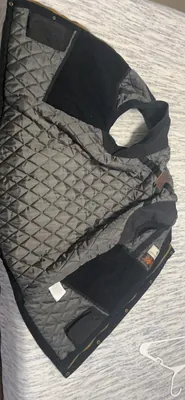
Which handguns fit in a jacket holster?
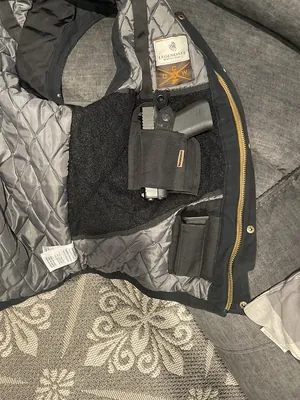
This is where buyers disagree the most. A fabric holster built into a jacket has to work for many different handguns, so it tends to suit compact and subcompact sizes best. One buyer's full-size 1911 fit a vest but felt heavy for long wear, while a compact pistol with a red dot balanced much better. Another buyer's pistol with a mounted red-dot sight did not fit a shirt jacket, while a compact model without one fit perfectly. Several buyers wrote that a holster was tight for a handgun with a light or laser.
- Check the listing for the handgun sizes it mentions, then compare the length and width of your own handgun in its holster, including any attachment.
- Treat a fabric pocket's fit as a starting point. A rigid piece that covers the trigger guard is the standard to look for, and one buyer pointed out that a fabric holster had none.
- If you carry a full-size handgun, a belt holster under a longer coat may suit you better than any built-in pocket. One buyer wrote that anyone wanting to carry a full-size handgun should simply buy a shoulder holster.
How warm should a carry jacket be?
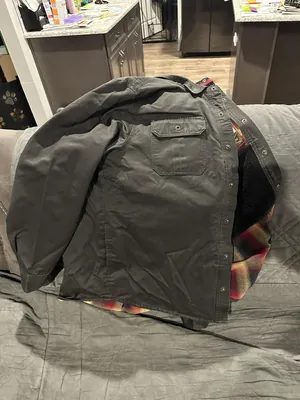
Buyers describe three broad categories. A lightweight, unlined canvas jacket was comfortable for one buyer into the high 60s and, with warm layers underneath, down into the 20s. A flannel-lined shirt jacket handled 20-degree mornings for another buyer, though its sleeves had a slick lining that slid against counters and car consoles. A quilt-lined canvas chore coat or a hooded work jacket is the kind buyers called very warm.
Pick based on your coldest ordinary day and plan to add or remove a layer under it, not on the coldest day of the year. If you are overheating on the way in, you are likely to unzip the jacket, which defeats the point of concealing anything.
How do you keep it from printing, rattling, or getting in the way?
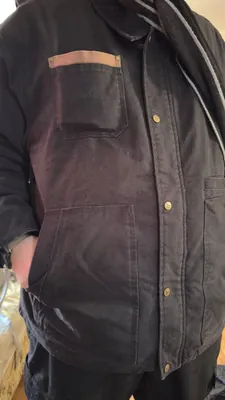
A heavy fabric hangs straight and hides shapes better than a thin one, and a relaxed cut leaves air between the handgun and the outside of the jacket. Buyers of heavier jackets and vests most often wrote that nothing showed through the fabric, while the buyer of a snug jacket wrote that the fit was the problem.
Is the hook-and-loop noise a real problem?
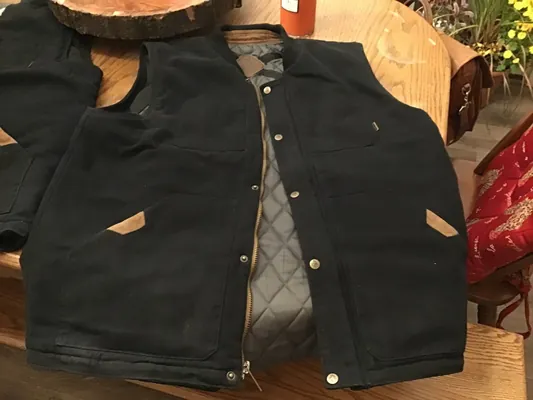
Some buyers of the vest said the plastic backing behind the hook-and-loop panels crinkled loudly when they moved, and one said that defeated the purpose of discreet carry. Other recent buyers wrote that a newer version of the design is quiet. Check the date of the comments you read, and listen to the panels when the jacket arrives.
Can you reach the pocket and your phone?
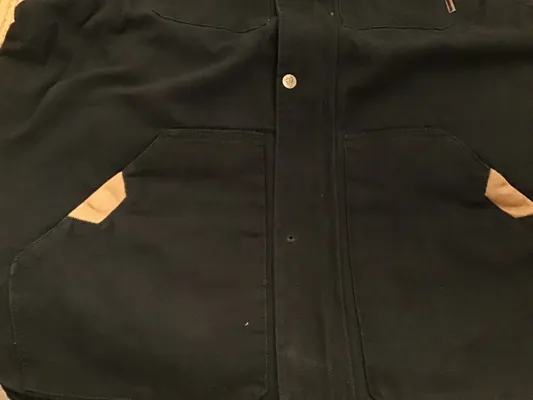
Several buyers complained about pocket placement rather than the carry pockets themselves: hand pockets sewn so far forward that a phone slid out in the car, or lower pockets that were awkward to reach. Put your hands in every pocket you plan to use and sit down in the jacket before you remove the tags.
What should you check the day a carry jacket arrives?
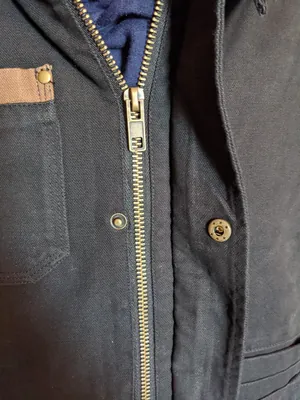
Durability is the most mixed part of the buyer feedback. Many wrote that the fabric felt heavy and well made, while others described snaps pulling through the fabric, seams opening at a pocket or after a first wash, a missing button, or holster pieces that were left out. One buyer also found mold on the back after opening the bag.
- Unpack it and check the pieces: every snap and button, the zipper, the hook-and-loop panels, and the holsters or pouches the listing says are included.
- Tug gently on seams around the pockets and shoulders, where the weight of a handgun will pull.
- Wash by the tag, in cold water and on its own, because one buyer noted color running. Several wrote that seams opened after a first wash, so some people wait to wash it until they are sure they are keeping it.
- Try it with your usual layers, handgun, and holster at home before you wear it out, and keep the return window in mind.
Where should the handgun go when you take the jacket off?
This is the part of jacket carry that is easy to overlook. If the handgun lives in the jacket, the jacket is not just clothing any more. Do not hang it on a hook, drape it over a chair, or toss it in the back seat with the handgun inside. Decide ahead of time what you will do when you get home or arrive somewhere you plan to stay: unload and secure the handgun in a locked safe or lockbox, away from children and visitors, or keep the jacket on you.
In a vehicle, the rules for storing or transporting a handgun differ by state, so check yours. And on days you go without a handgun, the inside pockets still do real work: buyers wrote about carrying a phone, a multitool, a pen, and even birdwatching gear in them.