In this article
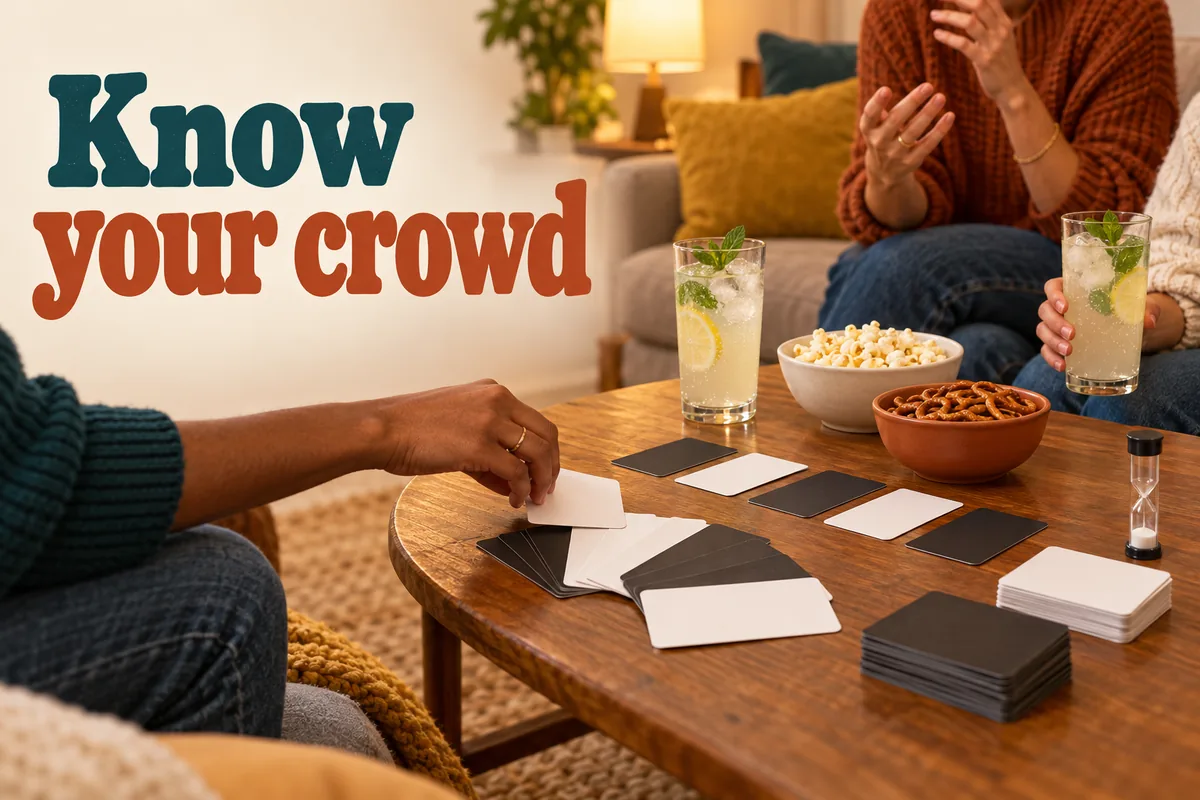
Match the game to how well your guests know each other, agree on a comfort level before the first card is dealt, keep each round short, and treat any drinking rule as optional. Get those four things right and an ordinary evening turns into the one people talk about for weeks. Get them wrong and the same game can leave half the table quiet.
Most game nights do not fail because of the game. They fail because the game does not fit the room: a confession game with two people who met an hour ago, a roast-style voting game with someone who does not enjoy being teased, a long rulebook at the end of a long day. The cards are the easy part. The hard part is choosing a format that suits this particular group.
This guide walks through that choice, then through the practical details that keep an evening comfortable: what to do when a card goes too far, whether anyone needs to drink, how long to play, and what to check when the box arrives. The examples come from six adult party card games, from a ranking game that families also play to fill-in-the-blank and voting games with a much edgier sense of humor, and from what people who bought them report.
What makes a party card game work at a get-together?
Three things matter more than the deck. The first is a short route from opening the box to the first laugh: the games buyers praise most are the ones that were ready to play within minutes. One buyer of a ranking game said they had it unwrapped and ready in about three minutes, and another called its directions so simple that nobody has to read a novel of instructions.
The second is that everyone is involved on every turn. Games where one person plays while everyone else waits lose a table quickly. Voting, ranking, and "does this apply to you?" formats keep every guest answering, which is why they work for groups with different levels of talkativeness.
The third is how well the humor matches the room. The six games in this guide range from gentle to deliberately shocking, and the buyers' comments split along that line far more than along quality. People who bought an edgy game for friends who enjoy edgy jokes mostly loved it. People who ended up playing it with a mixed crowd often pulled cards out of the deck.
Which kind of game suits friends who already know each other well?
Voting games are built for this. Someone reads a prompt, everyone votes for the player who fits it best, and the table argues about the result. The fun comes from shared history, so buyers say the same thing again and again: it works best with people who know each other well. One buyer of a voting-style game said it is not fun unless the group is large and close enough that nobody is easily hurt by a joke, and suggested at least six players. Another noted it is better with more than three people.
The flip side is a newcomer. One buyer wrote that the game could be difficult for people who are just getting to know each other, yet a friend's girlfriend who did not know everyone still had a great time. If you have a mix like that, the regulars set the tone: be welcoming, and explain a vote before you cast it.
The listing describes about 420 question cards, ages 15+, and 20 to 45 minutes of play. One buyer found the extra cards and variant rules too confusing for a party, and another used only the character voting cards, so the simple version is the easiest way to start.
Is there a gentler version of the same idea?
A second voting game in the batch is described by its listing as playing 2 to 10 people with about 350 cards and a separate adult expansion. Buyers say the base set is the friendlier one: one group started with the adult cards and switched to the regular set after a few questions turned too personal, and a family brought it on a camping trip. Even so, one buyer felt some of the base questions were not family-friendly, and another skipped a few for a 13-year-old. Read through the cards before you bring it to a mixed-age table.
What if some guests have never met?
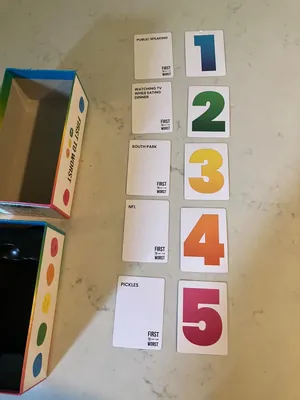
Pick a format where the questions are about opinions instead of secrets, and where people work together or answer at the same time. A ranking game does that. One player secretly puts five items in order from best to worst, and the rest of the table cooperates to guess the order. Because the topics are everyday things people have opinions about, strangers have something to say within a minute, and the conversation that follows is the point. Buyers describe learning how the others think, laughing at arguments over unrelated items, and playing without keeping score.
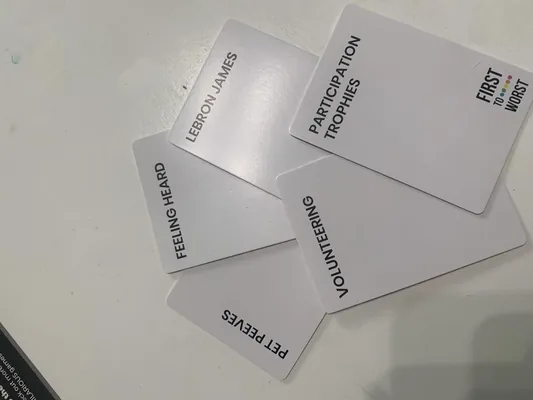
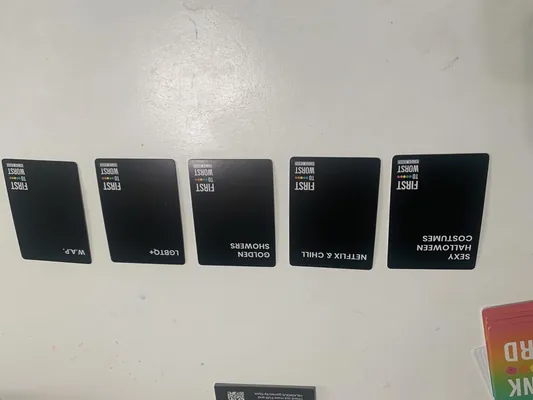
It is also the format buyers use with mixed ages. One said they played rounds with relatives from 6 to 83 years old, and others bring out the adult expansion after the kids are asleep. A different buyer wrote that the plain white cards are fine for all ages while the black ones can be used sparingly depending on the crowd.
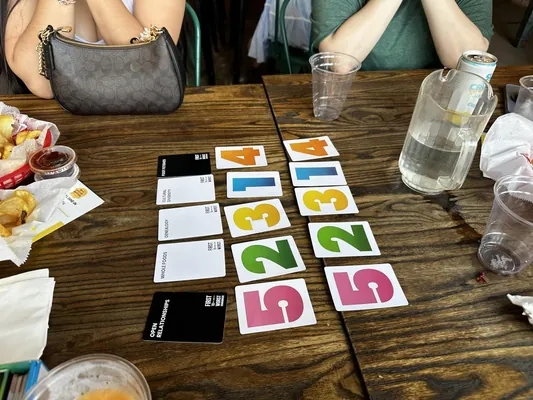
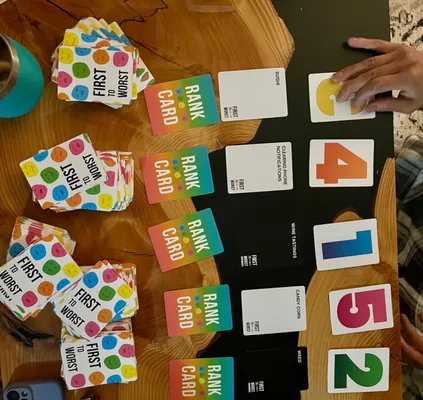
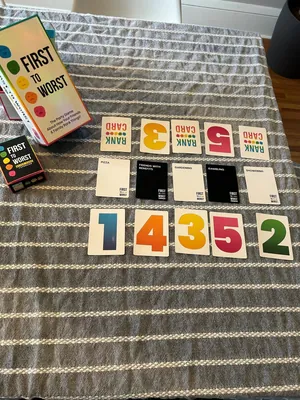
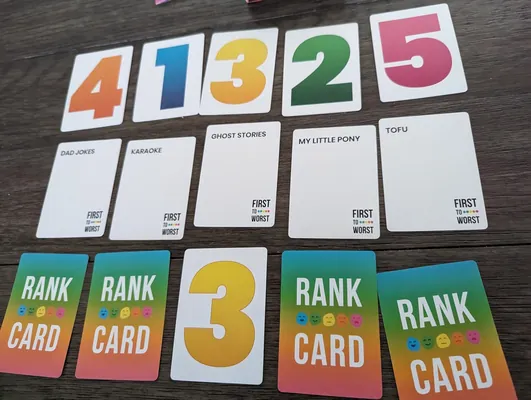
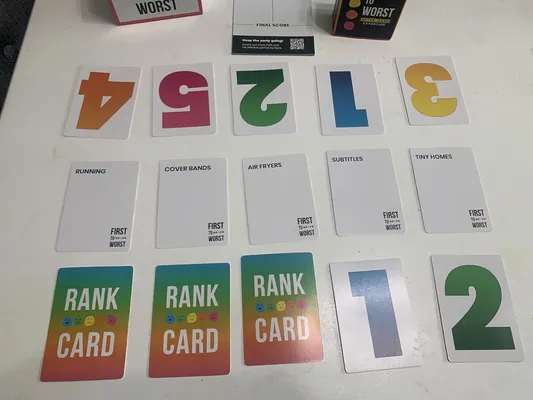
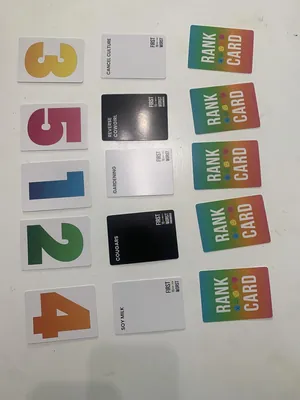
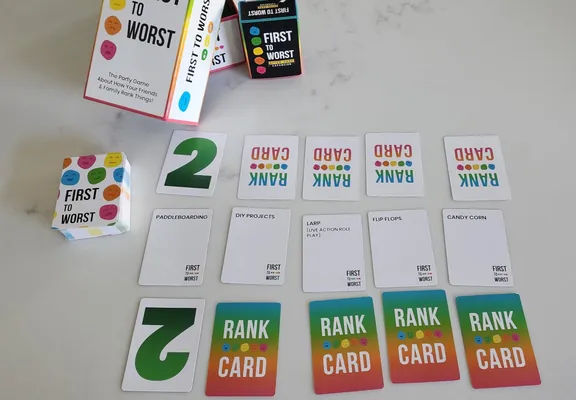
The listing gives the format as 2 or more players and 30 to 45 minutes. A buyer who took it on a vacation noted the box is small enough to pack, and said it is not a game where you laugh nonstop, so it suits conversation more than a rowdy party.
And a game that works as a pure icebreaker?
A "does this apply to you?" deck can be used with almost no rules at all. One buyer carries a deck when going out, spreads the cards out, and asks people to pick one without following the printed directions; they say it reliably breaks the ice and gets people laughing. Others say they learned a lot about their friends, sometimes more than they expected. One buyer felt the cards repeated themselves and that even the adult set was milder than expected, which is a reminder that humor and heat are personal.
How do you keep it fun when jokes land differently?
Treat the first ten minutes as a calibration. Read the first few cards out loud, watch who laughs and who goes quiet, and be ready to move on. Buyers who disliked their game mostly pointed to three things: cards focused on sex or other topics they found too much, a lot of near-duplicate prompts, and a few cards they thought were offensive. Several simply removed the cards they did not want and kept playing with the rest.
- Look through the deck before guests arrive and pull any cards you know your crowd will not enjoy.
- Say out loud that anyone can skip a card or pass without explaining why.
- Name one person to call time if the mood changes.
- For a mixed group, begin with the friendlier cards and add the spicier set only if everyone asks for it.
- Adjust numbers or rules that do not fit. One buyer found the dollar amounts in a would-you-do-it-for-money question too low to tempt anyone and started adding a zero.
What about the very edgiest games?
A fill-in-the-blank game where each player plays a card and one person judges the funniest combination is the best known of the type, and its buyers are blunt about who it is for. They describe it as not for the easily offended, as a poor fit for conservative relatives or children, and as better when everyone has the same sense of humor. One buyer estimated around a quarter of the cards were obscene and set them aside for a more delicate group. If your table shares that humor, buyers rate it as hard to beat for pure laughter. If you are not sure, choose a gentler format first.
Another style asks questions that begin "would you ever" or "have you ever" and requires a yes answer to score. Buyers who liked it called it a way to hear surprising stories from friends. One who gave a mixed review played on a video call by having everyone answer together instead of competing, and found it led to funny reactions. Others thought many cards were shock value or repeated, and one said a card was not a yes-or-no question and had to be discarded. It rewards a group that enjoys raunchy stories.
Do you have to drink to play?
No. Some of these games build a sip into the rules, and the listing for one of them is for adults 21 and up. The game works the same with water, mocktails, or a point system. One buyer said alcohol goes hand in hand with a fill-in-the-blank game but is not required, and another, who is in recovery, said their group takes it on camping trips and has a great time without drinking at all.
If you do serve alcohol, the National Institute on Alcohol Abuse and Alcoholism has simple host advice: offer a variety of alcohol-free drinks, put more emphasis on food than drinks, make sure guests know what contains alcohol, and avoid games or activities centered on alcohol. It also says not to call attention to guests who are not drinking, because they do not need an excuse. In practice that means swapping "take a sip" for "take a point" or "pass a card to the next player" so nobody feels pressure, and keeping a pitcher of something non-alcoholic where everyone can reach it.
How many people do you need, and how long should you play?
The listings give 20 to 45 minutes for most of these games and 30 to 45 for the ranking game, while one voting game lists 30 to 90; players range from 2 or 3 upward, and voting works best with at least four to six. One buyer of the fill-in-the-blank game says the box lists 4 or more players and 30 to 90 minutes. A buyer who said everyone was hooked after the first turn stayed up hours past bedtime, so a stopping rule helps too: pick a number of rounds or a time limit before you start.
- Two to four people: ranking or confession-style games, with a round or two extra.
- Five to eight people: voting and fill-in-the-blank games where the reactions matter.
- Mixed ages: start with the all-ages cards and ask the group before adding anything stronger.
- Little table space: ranking cards need a row of five slots, so give them a long table or counter.
What should you check when the game arrives?
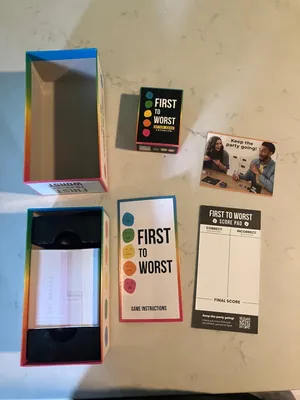
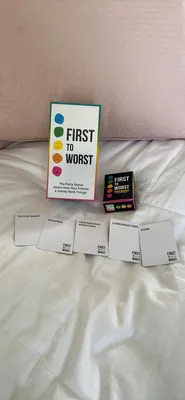
Most of these come as a base game plus an adult expansion, so check the contents against what you expected. Several buyers of one bundle received a different expansion than the one listed, and a few received none; a buyer of the ranking game never received the adult set. If a particular expansion matters to you, open the box when it arrives and look for it while a return is still easy. Box condition varied for the biggest game in the batch: some buyers received a crushed corner or a torn lid, others a box in perfect condition, and buyers reported that the cards inside were usually fine.
Finally, test the setup the way you would use it. Shuffle, deal two rounds with a partner, and decide on your house rules before the guests come. It takes ten minutes and makes the real evening run smoothly.