In this article
The best way to count down to Christmas with a toddler is to pick something that matches what a toddler can actually do: open a big flap, place a piece, and wait one more sleep. That usually means chunky pieces too large to swallow, a visible sign of progress, and one small, easy surprise a day instead of a pile of candy. This guide covers how to make a daily countdown work for a one- to three-year-old, what to check for small parts, magnets, and allergens, which kinds of calendars tend to suit each age, and how to catch missing pieces before December.
Counting down to Christmas is a lovely tradition, and a hard one for a toddler. One door a day means waiting, wanting to open them all, and small hands that want to taste everything. A little planning makes the month calmer for everyone.
How do you make a daily countdown work for a toddler?
Toddlers do not count days, but they do understand “more” and “done.” The calendars that worked best in buyers' homes gave the child something visible to do and something visible to see change.
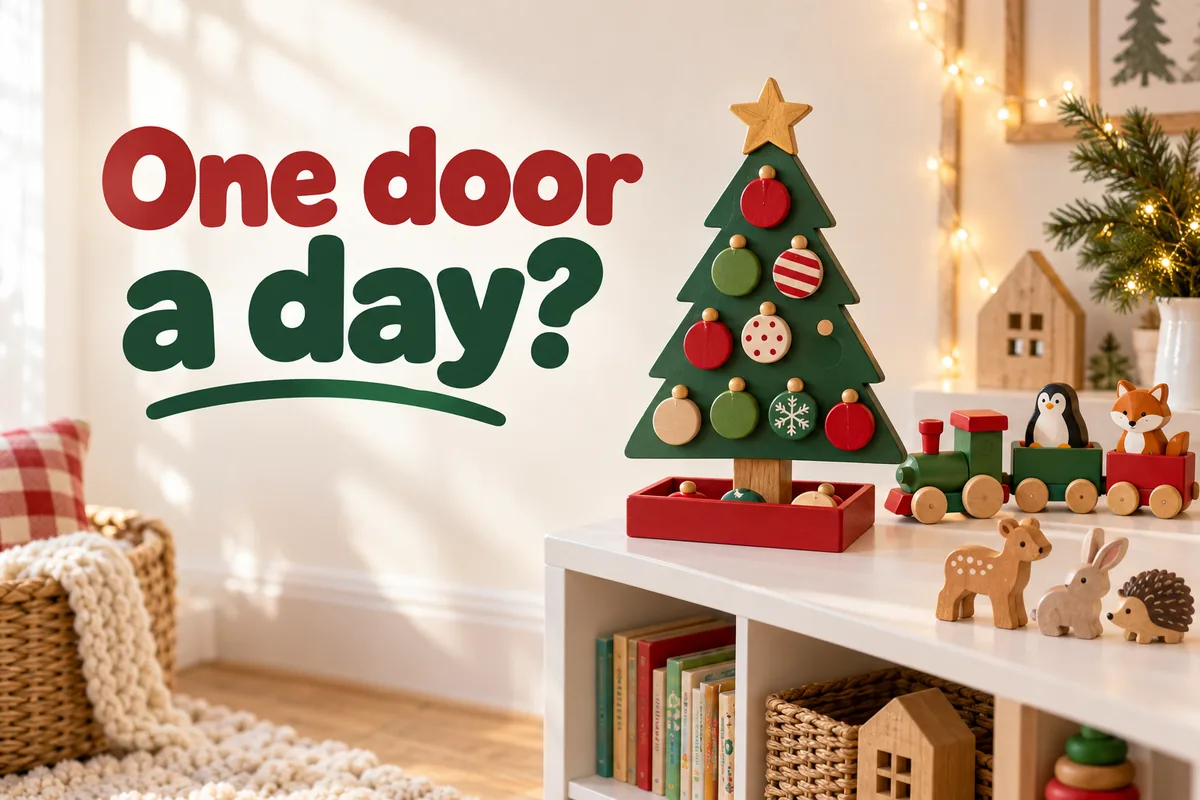
- Make progress visible. A tree that gets an ornament each day, a train that grows a car at a time, or a snowman built piece by piece answers “Is today Christmas?” without any counting. One parent of a three-year-old said exactly that about a tree calendar.
- Keep one routine. Buyers who set a time, such as first thing in the morning or after dinner, said it prevented the daily negotiation. One filled the calendar each day before the grandchildren arrived.
- Expect some cheating. Not every child accepts one door a day. One buyer said their daughter opened the whole calendar after two days, and another said their child was not keen on opening only one box. A simple fix is hiding the calendar between openings, as one parent did, so it is not a daily temptation.
- Think in minutes, not hours. A toddler's attention is short. A flap, a piece, and a song is plenty, and the toy gets its own play time later in the day.
Many buyers also liked that the calendar replaced daily sweets with something to play with. That is a personal choice, and it is one reason the calendars below are mostly toys or activities.
What should you check for safety before you open the first door?
Start with the age on the box. The Consumer Product Safety Commission bans small parts in products intended for children under 3, defined as anything that fits entirely inside a cylinder meant to approximate a young child's fully expanded throat, and it requires choking-hazard warnings on certain products with small parts that are meant for older children. A character on the front of the box does not change that, so read the age grade and any warning, and keep tiny pieces out of reach of the youngest child in the house.
What about magnets?
Several of these calendars use magnets, from large wooden ornaments to mini building tiles. The American Academy of Pediatrics explains in its guidance on magnetic toys that swallowing more than one high-powered magnet can be life-threatening, because magnets can pull toward each other inside the body. Symptoms such as stomach pain, vomiting, and fever are common in children, so a swallowed magnet may not be obvious, and a child who may have swallowed one needs to see a pediatrician or go to an emergency department right away. The Academy also advises supervising young children around magnets, putting small or loose ones away right after play, checking the floor for strays, and looking for cracks in magnetic toys where a magnet could come loose.
What about allergens and food?
If you fill a calendar yourself, remember that small items are a choking risk for the youngest children. For ready-made sets, read the listing: the modeling dough calendar below, for example, notes that its sparkle compound contains wheat, which matters if your child avoids gluten.
What works for ages 1 to 2?
For one-year-olds, look for big, sturdy pieces, flaps they can open themselves, and a short interaction. Story-based wooden sets and fill-it-yourself calendars let you control the size of everything that goes in.
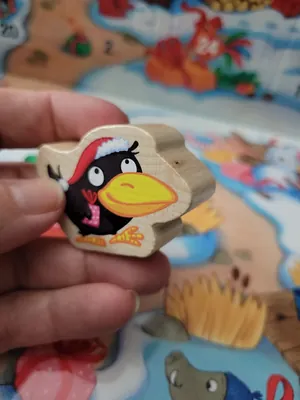
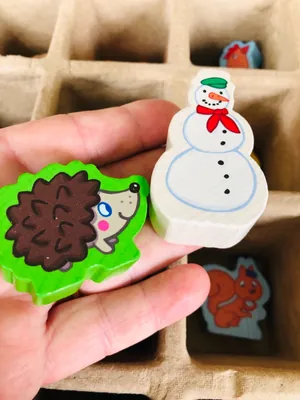
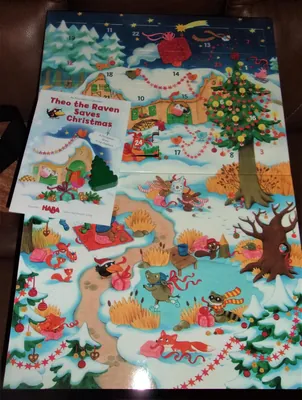
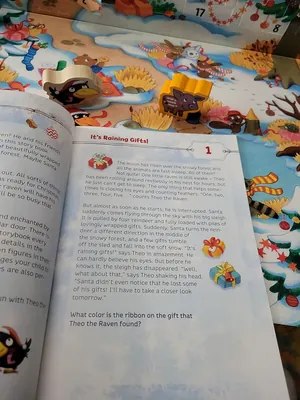
This one pairs a fold-out play scene with 24 chunky wooden figures and a 24-chapter storybook. Its listing recommends ages 2 and up.
Parents of toddlers as young as 14 to 18 months said their children loved the animals, and several kept the pieces for year-round play, with one on their sixth year of use. A few said the stories run long for a first calendar. One buyer said the pieces were not behind the days matching each story, so check the order before the first night.
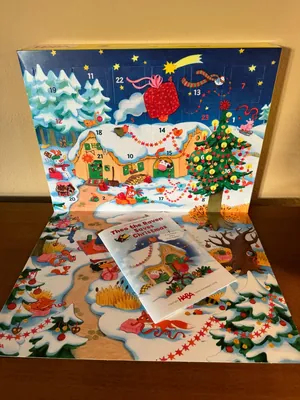
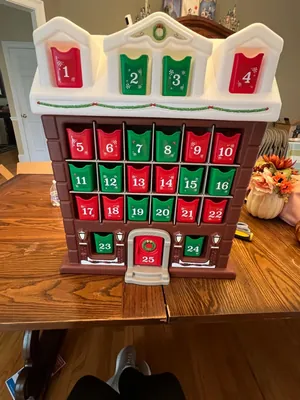
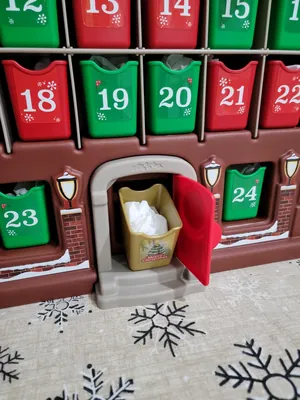
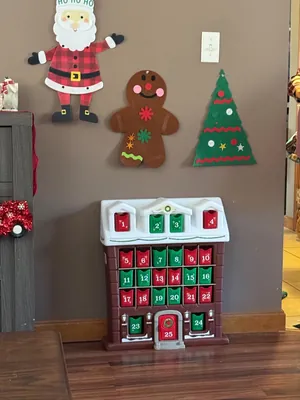
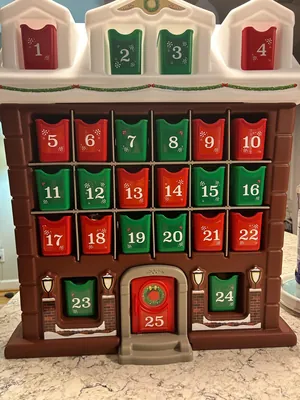
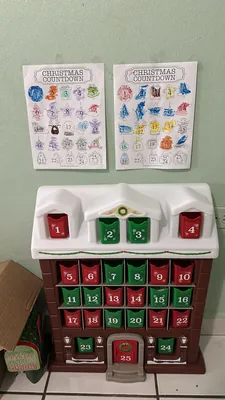
If you would rather choose what goes behind each door, a fill-it-yourself calendar gives you full control over size, safety, and what the surprise is. A note, a sticker, a short family activity, or a small toy suited to your child's age all fit.
Buyers liked that they could fill it with anything instead of chocolate and that the doors are easy for a two-year-old to open and close. Several found assembly slow, with tight plastic pins, stiff screw holes, and date stickers that are hard to place. The bins are small, about 2.6 by 2.5 inches according to the listing, and one buyer could not fit a toddler bath toy in one, so plan on tiny items and notes.
What works for ages 2 to 3?
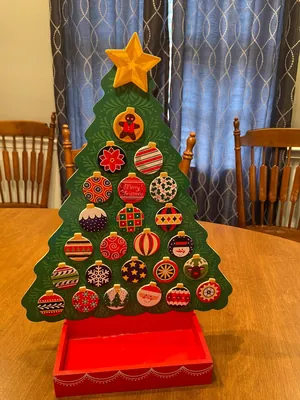
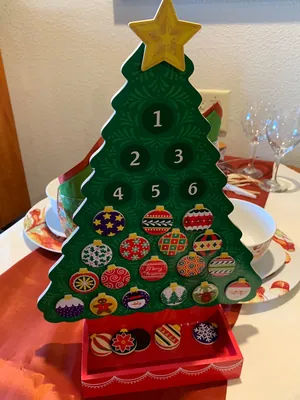
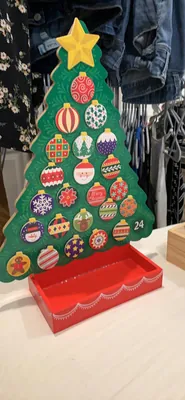
By two, many children love placing and matching. Calendars that build something as the days go on suit this age, and a tree, a train, or a small world are good fits.
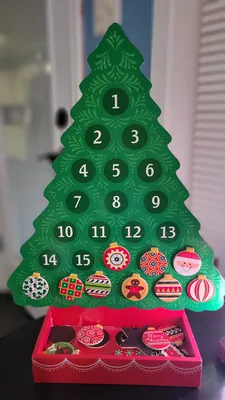
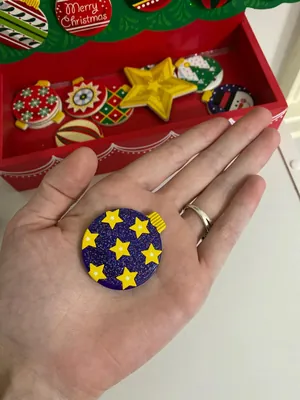
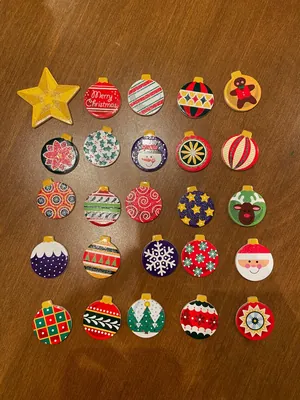
Parents of two- and three-year-olds said their children loved adding an ornament each morning, and one said it made “Is today Christmas?” visibly answerable. Others used it as a decorate-the-tree toy all season. The tradeoff is condition: several buyers received a tree missing one to three ornaments, others got scratches, and one said the front panel began separating in the second year. Count the ornaments right away and contact the seller if any are missing.
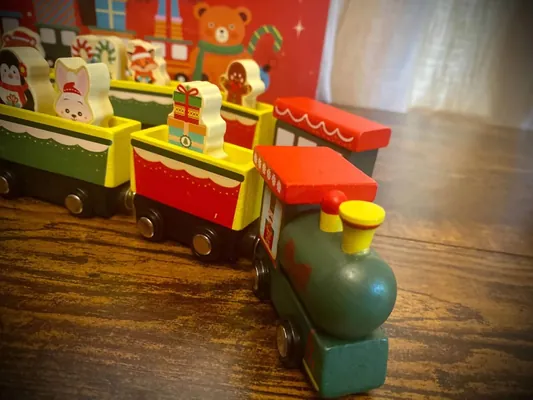
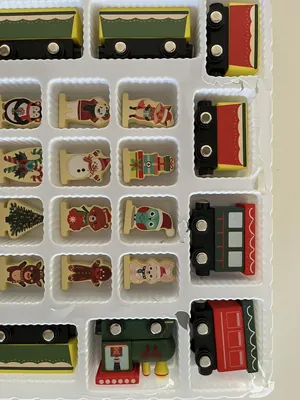
This next calendar builds a train, one car at a time, until it is complete. Its listing describes strong magnetic connectors and a child-safe coating.
Buyers said the pieces are sturdy and nicely painted, with magnets that hold well, and one said it fits their wooden track set. The caution is packaging: a plastic tray arrived broken twice for one buyer, and several said the cardboard box is only good for one season. Because the cars connect with magnets, follow the same advice as above and check the floor for strays after play.
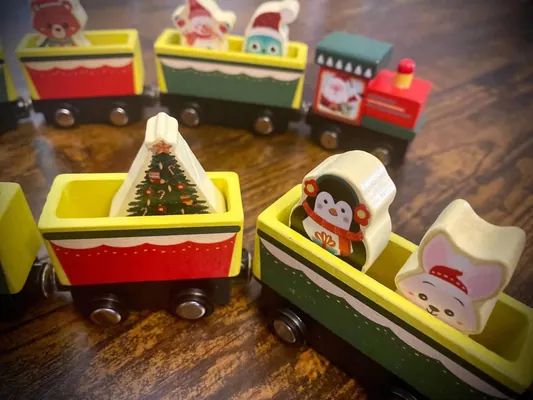
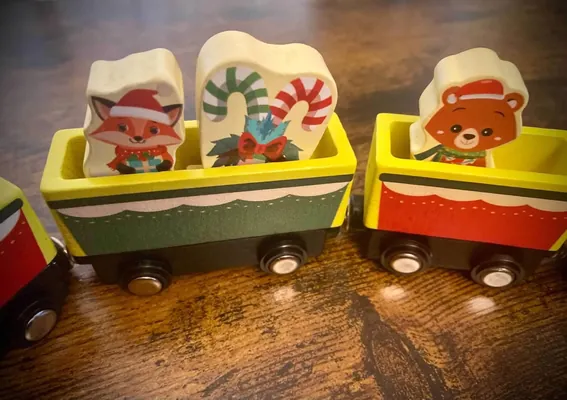
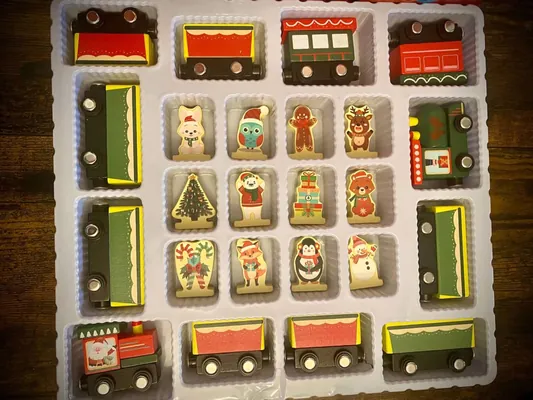
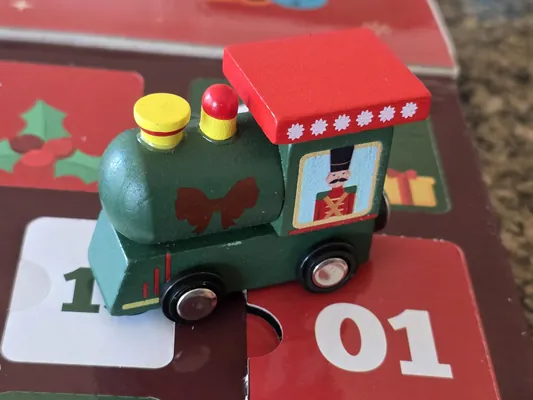
For toddlers who love pretend play, a figure-and-furniture playset gives a different kind of daily surprise. This calendar opens to a winter chalet backdrop, with six figures and 17 accessories listed, and its listing says it suits ages 18 months and older.
Buyers said children as young as 20 months led them by the hand to find it each day, and they liked how many figures, pets, and accessories come in it. A couple said some accessories feel unnecessary, and one thought the figures feel less sturdy than other sets. It is a new listing with fewer than 30 ratings, so there is limited feedback to go on.
What about ages 3 and up?
Preschoolers can handle smaller pieces, more variety, and a longer attention span, but small parts still matter if there is a younger sibling in the house. These calendars lean toward creating, building, or favorite characters.
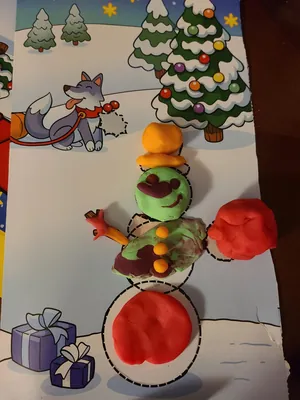
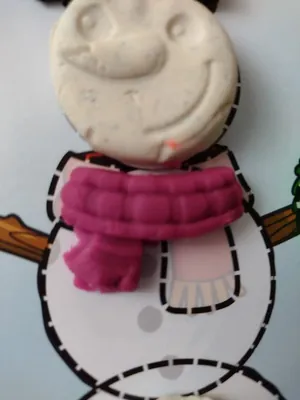
Parents said it kept children busy for a stretch each day, such as while cooking dinner, and liked that the tear-off mats turn the days into a snowman and a gingerbread scene. The problems are consistency: a few buyers received hard or moldy-looking dough, repeated colors, a missing cutter on the last day, or a crushed box, and one found the doors hard for a child to open.


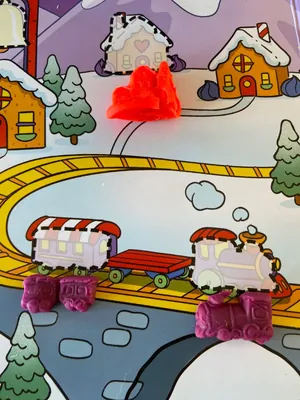
Children aged three to five loved building the small train and holiday scene, and parents liked that the tiles are a toy they keep. Buyers noted that the tiles are smaller than the regular size and not compatible with it, that the price is high, and that some days bring only one or two tiles. A few said tiles were inserted backward or missing, and one received loose magnets that did not seem right. Because they are small magnetic pieces, keep them away from younger siblings.
Favorite-character calendars give a child a reason to look forward to each door. The first of these lists 7 vehicles, 11 figures, and 6 accessories.
Parents of two- to four-year-olds said the toys are sturdy and the doors easy to open, and one said opening one a day gave their two-year-old something to look forward to. The main disappointment was the missing lead human character, which two buyers noted. It has fewer than 450 ratings and is mostly positive.
The second has thousands of ratings, and it is also the one with the most complaints of missing pieces. Its listing says the contents include figures, accessories, and stickers, and a buyer found only three figures total.
Many buyers were happy with the figures and the buildable tree, but a sizeable share of the collected comments reported empty compartments, missing figures, or a smashed box, and several said stickers replaced toys on some days. Others who opened every door before December found everything in place, which is the best protection. The listing also sells ornament and plush styles, so check which one you choose, and it gives two different age ranges, so go by the age grade printed on the box.
What should you check before the first day?
Missing and damaged pieces were the most common complaint across these calendars, especially on sets that arrive early and sit sealed for months. A calendar that is missing something on day 6 is a sad moment for a toddler, and it is much easier to fix in November.
- Open the box when it arrives, not on December 1, and open every door or lift every tray.
- Count the pieces against the listing and check for cracks or loose magnets.
- Photograph the contents and the packaging, and keep the order information until January.
- Read the age label and any warning, and put away anything with small or magnetic pieces if a younger child lives with you.
- Close it back up and hide it until the first day.
If something is missing, contact the seller right away so there is time for a replacement. If there is not time, a small note or sticker in the empty spot keeps the day from feeling like a disappointment.