In this article
Clothes on the floor usually mean the hamper is the harder choice: too far away, too full, or not worth the trouble. This guide covers a daily routine that works, where to put a hamper, how to check that an over-the-door hamper fits, how to empty it, and what to expect from a basketball-style hamper.
Why do clothes end up on the floor instead of in the hamper?
It is rarely plain laziness. Clothes come off at the edge of the bed, inside the bedroom door, or in the bathroom, and the hamper is often somewhere else: in the closet, in a corner behind a chair, or already too full to take another shirt. When the floor is the closest option and putting clothes away has no payoff, the floor wins, especially for a child who is already thinking about the next thing.
So before you change the child, check the setup. Can they reach the hamper without moving anything? Is it where clothes actually come off? Does it have room today? If any answer is no, a reminder will not fix it for long.
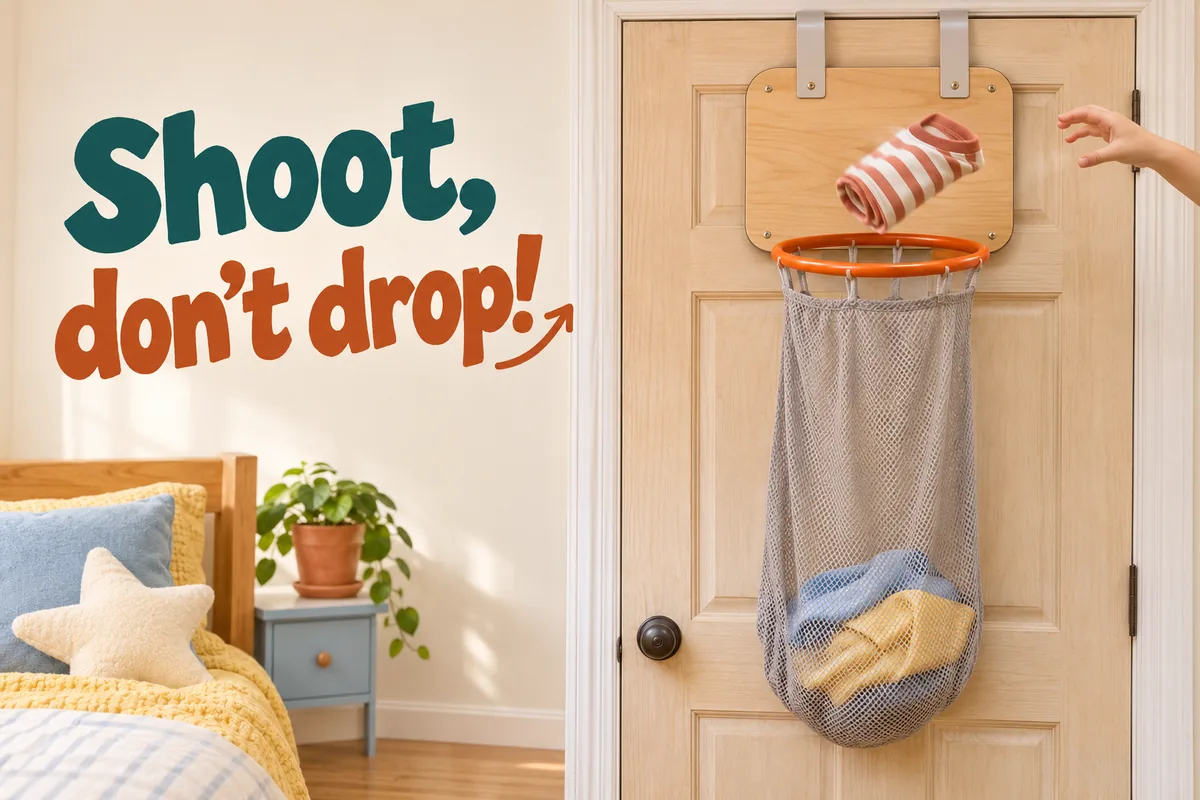
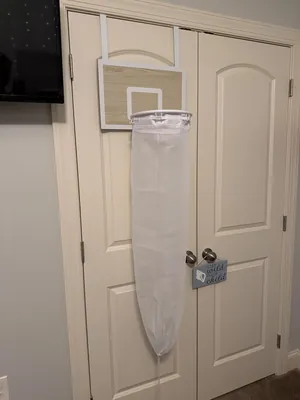
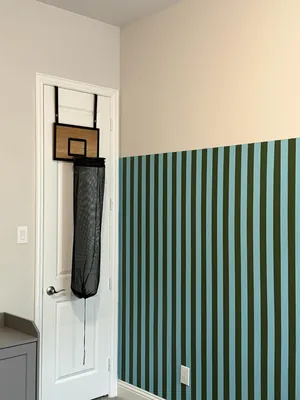
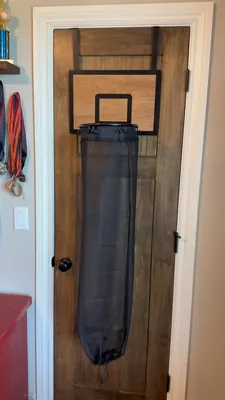
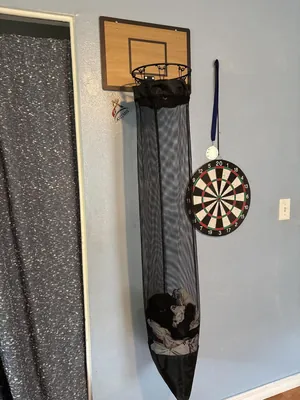
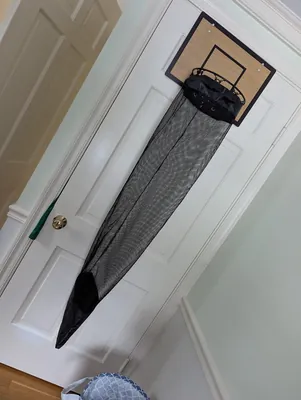
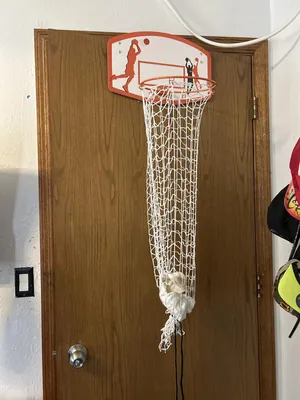
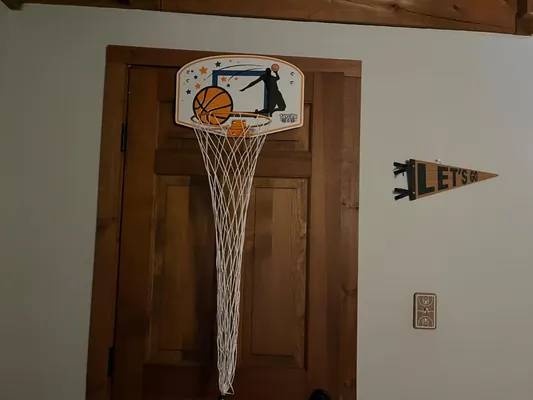
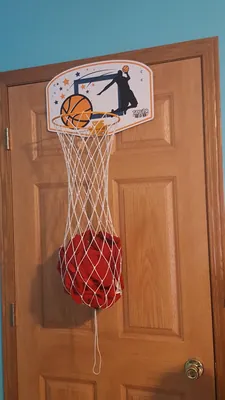
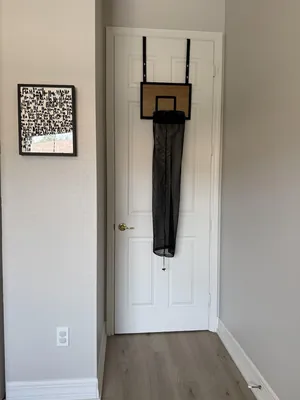
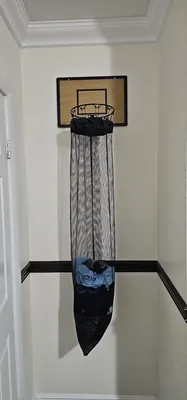
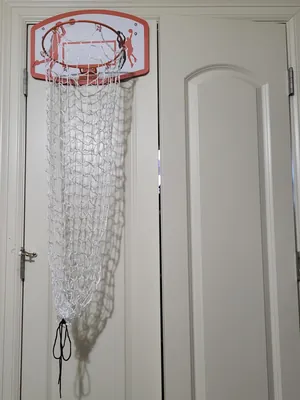
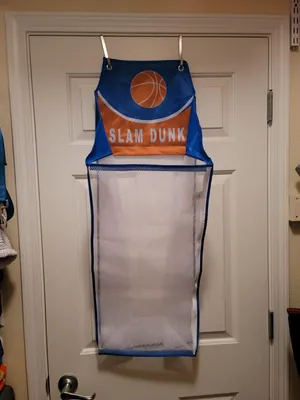
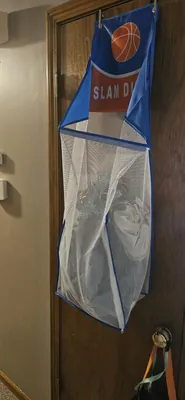
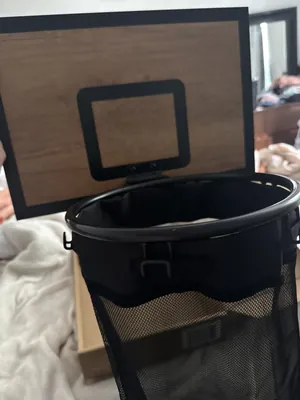
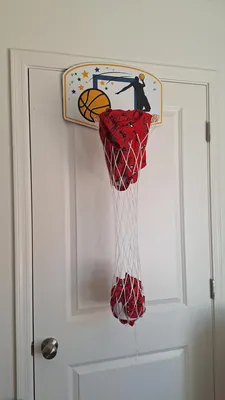
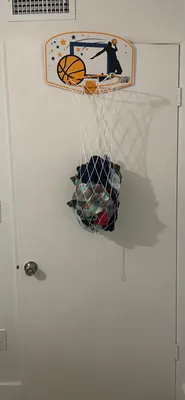
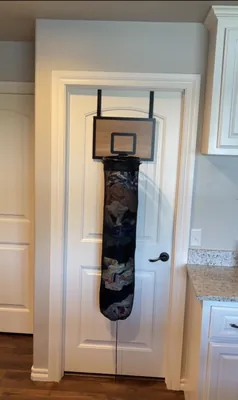
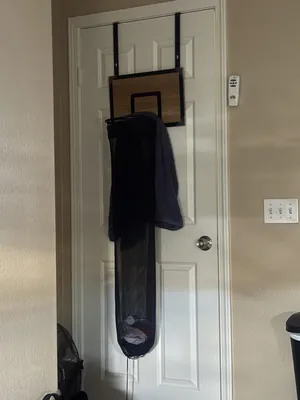
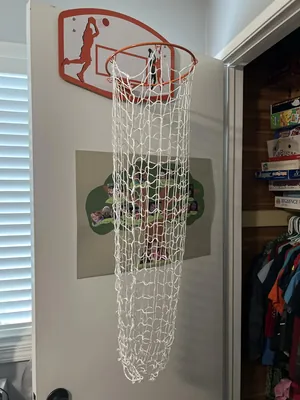
Hanging a hamper on the back of a door is one way to pass all three checks in a small room. It uses no floor space, it sits right where a child walks in and out, and it can be reached from the doorway. Buyers of over-the-door basketball hampers describe them on bedroom doors, closet doors, and a bathroom door.
What actually gets kids to use a hamper every day?
The habit matters more than the gadget. The American Academy of Pediatrics lists putting dirty clothes in a hamper among the chores that suit ages 5 to 7, and its advice for starting out is simple: add one new task at a time, keep the routine consistent, and praise effort instead of expecting perfect results. The American Academy of Child and Adolescent Psychiatry adds that expectations should be clear and tied to a time of day, and that games can make a small job easier for younger children.
In practice, that comes down to a short routine:
- Name one moment. "When clothes come off, they go in the hamper." Pick a moment that already happens, like changing after school or before a shower.
- Show it once, then step back. Stand at the doorway while they do it so the new habit has a place to start.
- Notice the effort. A quick "thanks for getting those in" works better than scolding about the ones that missed.
- Do not demand perfection. A shirt on the rim counts as progress; the goal is for most clothes to end up in one place.
- Keep the rule the same every day. Rules that change from day to day are what make it feel like nagging.
Does turning laundry into a basketball game really work?
For some children it does, at least at first. One parent says their son does not leave clothes on the floor as much anymore, another says their boys now treat dirty clothes as a game and can empty the bag on their own, and a parent of a teenager says the teen's clothes now stay off the floor. A parent of a 6-year-old calls it a major win that he is putting dirty clothes in at all.
Feedback is also honest about the limits. One parent says theirs has been more of a toy than a functional hamper, and another says their son sometimes uses it perfectly and sometimes dumps the clothes out to shoot them in again. Treat the hoop as a way to start the routine, not as a substitute for it.
Where should the hamper go so it is the easy choice?
Put it where the clothes come off. For many kids that is the bedroom door, but it can also be the closet door or the back of the bathroom door. One parent says their boys fought over whose room would get it, so it went on the bathroom door until a second one could be ordered.
Height matters more than it seems. A parent of a 4-year-old found the board a bit too tall and planned to buy longer brackets so it could hang lower, while a buyer of another version points out that it hangs at three different levels to suit a child's height. A rim a child can reach and often make is what keeps the game fun; a rim set too high gives them a reason to quit.
If the door cannot take it, you are not stuck. Two buyers mounted theirs directly on the wall, one of them using anchors because of the weight. If you do that, use wall anchors rated for the load, or screw into a stud.
How do you know an over-the-door hamper will fit your door?
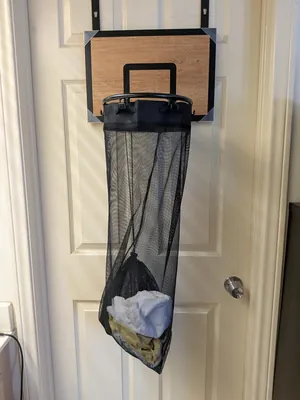
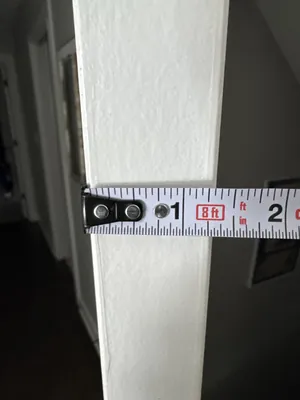
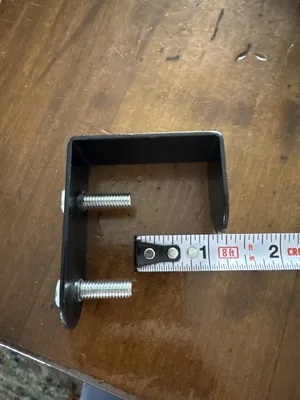
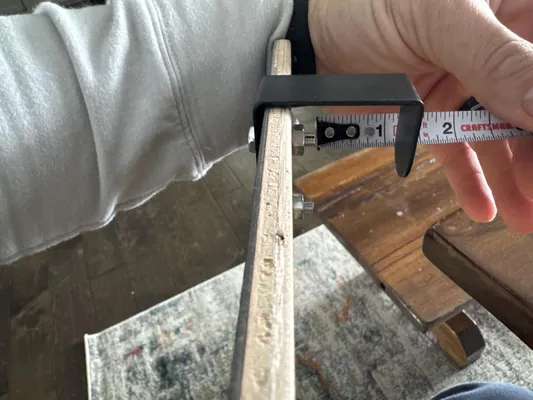
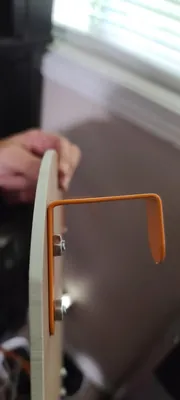
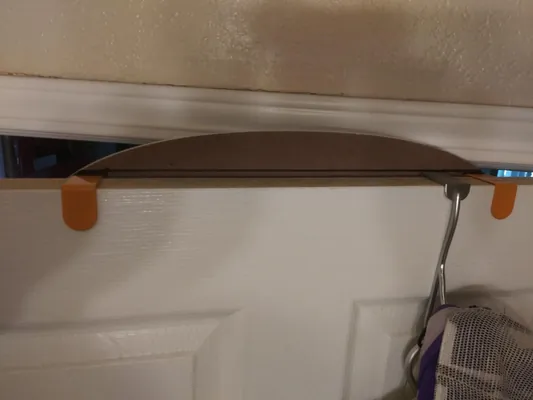
Door fit is the most common complaint in the feedback, and it is easy to check before you hang anything. Measure the thickness of the door's top edge. Interior doors are commonly about 1⅜ inches thick, but older or heavier doors vary, and hooks that are too thick are one reason a door will not close.
What buyers ran into, and what to look for:
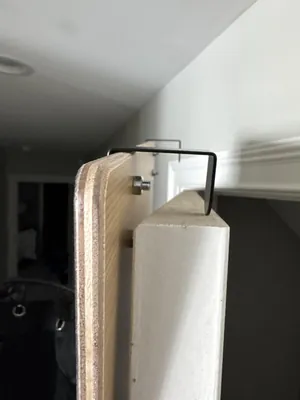
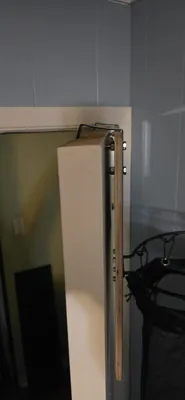
- Hooks too thick for the door. Several buyers say the brackets were so thick the door would not close, or the board dangled from the door.
- Screws too long. Two buyers of one version say the mounting screws were longer than needed and blocked the bracket from sliding over the door.
- Bolts against the door. One buyer worried that the exposed bolts would chew up the door and covered each one with sticky putty.
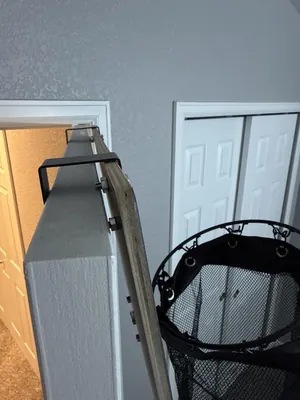
- Board taller than the door. One buyer found the board stood higher than the door frame allowed, so it only worked on the outside of the door.
- Swing and wall. The basket can hit a wall or another door when the door opens, and one buyer wished it moved less on the door.
- Missing hardware. A few buyers received packages without all the screws or hooks, so open the box and count the pieces right away.
A quick test saves trouble: hook the board on, close the door, then open it all the way and see whether anything catches. If it does, a wall mount or a different door may be the better place for it.
How do you empty it without a wrestling match?
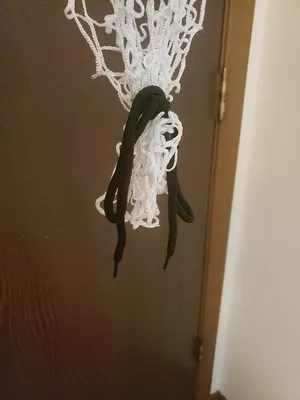
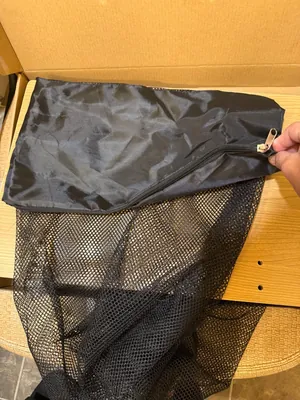
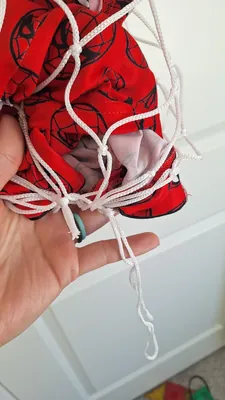
A hamper that is a chore to empty becomes a chore to use. Over-the-door styles close the bottom in one of three ways: a zipper, a drawstring, or a cord that you knot.
- Zipper. One parent says their sons can do it on their own: put a basket underneath, unzip the bottom, and the clothes fall right in. It can fail, too: one buyer says the zipper broke in the first month, leaving an expensive over-the-door net.
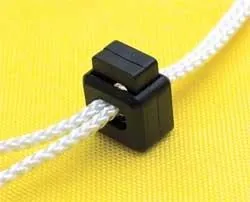
- Cord or shoelace. Buyers of one version say the cord is fussy to tie and untie, and one plans to add a cord stop from a craft store. One parent says their 10-year-old will not be able to do it alone, while another says it is simple once you tie one snug knot.
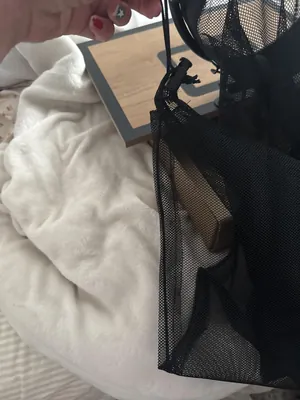
- Removable bag or clip. One buyer likes that the bag is removable, and another says a clip at the end lets the laundry drop into a basket without unhooking the board.
In every case, set a laundry basket directly below the opening, release the bottom, and let the clothes drop. Make it part of the weekly laundry routine instead of something you do only when it overflows.
Is the open bottom a safety issue for young children?
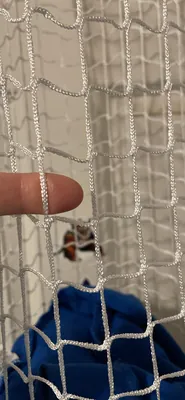
It can be. One parent describes a child who put his head through the open bottom of the net and got stuck until a parent came up and untangled him. A net or cord is not a toy for toddlers, so keep it away from young children and make sure the bottom is closed when no one is supervising.
How much will it hold, and how long will it last?
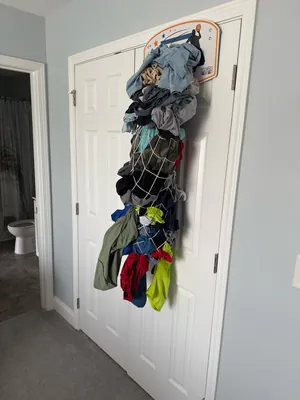
Plan on a day or two of clothes, not a week. Buyers say one version holds a surprising amount, while others say it fills up after two days of outfits for a pair of kids or is best for small loads. A long bag helps, but weight pulls on the rim: buyers of two versions say the rim sagged or the backboard let go when the net was packed with clothes.
Durability is the other recurring note. Buyers of one wooden version describe a solid board; buyers of other versions say the board felt thin or like cardboard, chipped, cracked, or broke within days to months. A child pulling on the net or hanging from it was a factor in several breakages, so set a rule that the hoop is for shooting only.
A few habits help any version last longer:
- Empty it before it is stuffed, and send the load to the washer on schedule.
- Keep wet or damp towels out of the bag. Mesh lets air circulate, but soaked items still do not belong there.
- Teach tossing instead of pulling. A basketball hamper is not a climbing rope.
- Check the screws and hooks every few weeks so a loose one does not leave a mark on the door.
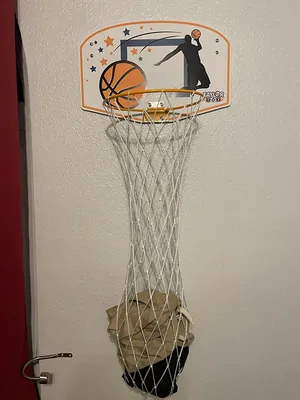
Does it work for teens, toddlers, or a dorm room?
Teens. A parent of a teenager says the clothes stay off the floor now, and another says their son used it for laundry at first and now also uses it for silent basketball. The size is the catch. A buyer of one version says it is small for a teen, and a buyer of another says the thin board was already tearing with a teenager.
Toddlers and preschoolers. This is where buyers report the most breakage. One parent says a version lasted only a few hours with a toddler before the material broke off the rim, and another says even small stuffed animals had to be placed through the hoop instead of shot in. For a little one, a basic fabric hamper they can reach is usually a better fit.
Dorms and small spaces. Lightweight folding versions are easier to move. One buyer uses theirs on a cruise, another in a camper. A buyer of the foldable mesh version says a handle broke at the seam on the first trip to the laundromat when it was overloaded, so keep the loads light.
Not only for clothes. A few parents use theirs for plush toys, which keeps them off the floor too. If you want that, look for a version with a roomy hoop, since one buyer found stuffed animals had to be placed through a narrow one.
What if the novelty wears off?
It might. The first few weeks are usually the easiest, and then the routine has to carry it. Keep the same moment for putting clothes away, keep thanking the effort, and let the child take ownership by choosing where it hangs. The listing for one version suggests writing the child's name on the backboard with a marker. If the hoop turns into a distraction, set a simple rule: clothes first, shots after.
And if a door-hung hamper does not suit your door, your child, or your budget, the same habits work with a regular hamper. The best hamper is the one closest to where the clothes come off, easy to empty, and used every day.