In this article
Short answer: probably not for a light mask or panel, and yes, you need something slippery for a wand. An “activation” serum is a normal hydrating serum with a promise attached, and none of the sources checked for this guide show that it makes red light work better. What a wand or a microcurrent device does need is glide or a conductive layer, and the wrong texture can make a session tug, stick, or dry out halfway through. Below: what the research says, how to match a serum to the device you own, how to prep skin, what to check on the label and the bottle, and when to skip the whole idea and ask a professional.
If you have just bought a red light mask or wand, the product pages quickly start suggesting a serum to go with it. Here is a practical way to decide, built from health sources, device guidance, and what people who bought these serums say about them.
Does a serum actually make red light therapy work better?
None of the sources checked for this guide shows that it does. The Cleveland Clinic's overview of red light therapy says experts do not yet know whether it works for all its claimed uses, that there is not enough evidence for most uses, and that home devices are generally safe but may be weaker than the ones dermatologists use. A 2026 narrative review of home-device specifications in Cureus concentrates on wavelength, dose, and session length, and does not discuss serums or skin prep at all. It also notes that dosing is not standardized and that devices that do not disclose their dose may fall outside the useful range.
The listings make bolder statements. One says its serum raises the effect “by up to 10x.” No source reviewed here backs a figure like that. What a serum can plausibly do is ordinary: add moisture, feel pleasant, and give a wand something to glide on.
Buyers say much the same. Many describe skin that feels softer and more hydrated and say they cannot tell whether the light is doing more. One who had used a mask for years wrote that adding a serum was a game changer, while another used it for a while with their device and saw little difference in before-and-after photos. A few said it simply works as a good hydrating serum, with or without the light. One who does not own a light device at all called it just another potion without one.
Are FDA-cleared devices proven to work?
Not in the way “approved” suggests. The FDA says a 510(k) clearance means a device was shown to be substantially equivalent to one already on the market, while approval is the stricter route that requires evidence of safety and effectiveness for the intended use. Clearance is a useful sign of a regulated device, not proof that the claims on the box hold up, and it says nothing about a serum.
Which serum texture goes with a mask, a wand, or a microcurrent device?
Start with the device, because the serum has a different job for each one. Whatever the listing for the serum says, your device's own instructions come first: one buyer noted that their home machine's instructions say to use it on bare skin and applied a serum anyway, so check yours before adding anything.
Do you need a serum with a mask or panel?
No glide is needed, because nothing moves across your face. The only question is whether you want a light layer of moisture under the mask. Buyers who use masks mostly describe a thin, fast-absorbing serum that does not feel sticky. Several apply it a few minutes before the session, and one lessened the session time after noticing a flush that looked like mild sunburn after the first use. If your device instructions say bare skin, a moisturizer after the light is a safer way to get the same comfort.
This one is a fragrance-free peptide and niacinamide serum in a glass pump bottle, and its listing says it pairs with a light mask.
Buyers called it thin, not greasy, and a little goes a long way, and one liked the sturdy glass. One said they could not tell whether it adds anything to their light device but liked how their skin felt, and another found it did not moisturize enough. A buyer with sensitive skin reported itching and a smell they disliked, so it is not for everyone.
What about a wand that glides across your skin?
Here a serum matters, and the texture decides everything. Buyers' most common complaint is a serum that sinks in too fast. One said it absorbed so quickly they had to reapply many times to finish a session. Another found a thin serum dried before the wand could glide and switched to using it only with a mask, where it worked fine. A third wrote that a watery serum needs several applications before the wand moves without pulling.
These two are thin, fast-absorbing serums. The first has a light blue tint, and one buyer said the wand glides over it nicely while another said it needs several applications:
Several buyers have used it for months or years and like how soft their skin feels afterward. One said the formula seems thinner than an earlier bottle, and one who uses it daily with a wand said it takes a lot and became expensive. One buyer found the jar not full, so check the fill level when it arrives.
The second is sold for facial wands and microcurrent devices, with hyaluronic acid and blue tansy:
The listing says to apply more as needed for a smooth glide. Buyers said it feels nice, with one calling it soft and smooth even without the light, but a few said it dried too fast to keep a wand gliding for a full session, and one found it hard to get out of the bottle.
If a thin serum keeps drying out, the usual fix is a gel texture. One buyer who tried both said the gel was a major improvement over a thin serum that came with their wand, because it stays put and does not tug. Another with a tripolar device wrote the gel glides better than the one they had used before and needs no reapplying. The catch is that results depend on the wand: a couple of buyers found a gel sticky or quick to dry on theirs.
Buyers described it as cushiony and scentless, and some use it with microcurrent devices. Two things stood out. Buyers like the refill option, but not the container: several found the inner bottle and pump hard to use, and one said you need a cotton swab to scoop product out of the jar.
And if you use microcurrent or EMS?
Those devices pass a small electrical current through the skin, and conductive gels are made for that job. A serum is not automatically one. One buyer found a gel serum useless on their wand but excellent as a conductor for an under-eye device that uses electrical stimulation, so the best match is whatever your own device's manual names.
How do you prep skin for a red light session?
Keep it simple, and keep the order the American Academy of Dermatology uses for any routine: cleanse, then treatments, then moisturizer or sunscreen. A serum is a treatment step, so it goes on clean skin.
- Wash with a gentle cleanser and pat dry. Take off makeup, sunscreen, and anything else the device manual says to remove.
- Patch test a new serum first (see below), and add only one new product at a time.
- Use a thin layer, about a pump or a few drops for the face and neck. One buyer said less than a full pump covered their face and neck.
- Wait before the session if the listing says to. Listings and buyers mention anywhere from 30 to 60 seconds up to 3 to 5 minutes for the serum to settle.
- Protect your eyes the way your device says to. The Cleveland Clinic advises shielding your eyes during use.
- Finish with moisturizer, and sunscreen in the daytime.
Should the serum go on before or after the light?
Several listings say to apply it before. One says that with masks and panels you can use it right after the light to rehydrate, and before the session when you use a wand. With no evidence either way, pick the order your device's instructions allow and your skin prefers.
This serum is sold on that two-way plan, with a pump that gives a measured amount:
Most buyers called it thin and watery, and said a small amount is enough. The bottle is small: one buyer got about eight sessions from it even with a dime-sized amount, though the listing counts 30 pumps. One buyer with mildly sensitive skin reported a bad reaction, one noticed a faint smell, and another said it dripped easily.
What should you look for on the label and the bottle?
A serum is a skin product first and a device accessory second, so read it like one.
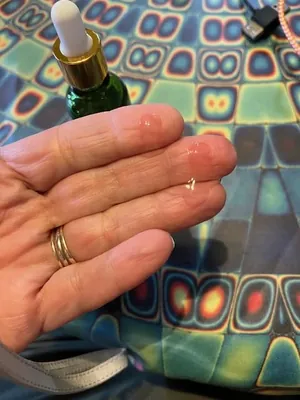
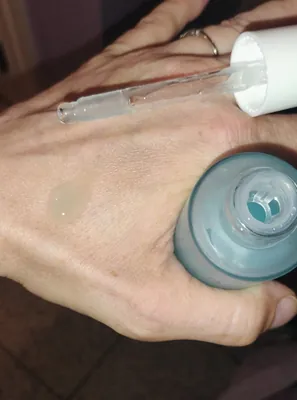
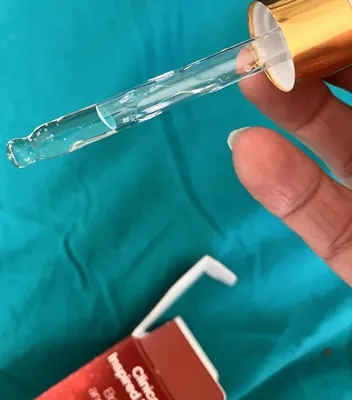
Are fragrance and other ingredients a concern?
The American Academy of Dermatology suggests choosing products labeled fragrance free once fragrance is found to be the cause of a reaction, and notes that “unscented” or botanical products may still contain fragrance-related ingredients. The ingredient list is the place to look, not the front label. Two buyers found propylene glycol listed as the third ingredient on a box that also said the product is propylene glycol free.
Buyers liked the dropper dose and the dark glass bottle, and several said it absorbs fast without any sticky feel. It is a newer listing with fewer than 100 ratings, and buyers said it feels nice but they could not tell a difference from the light. One said it dried too fast for a wand, and another reported a flush the first time, so go slowly.
What about copper peptides?
Some listings name active ingredients like copper peptides. That is a skin-care choice with its own questions, including strength and what not to layer it with, so treat it as a separate step and not as something the light unlocks.
Buyers called it lightweight, quick to absorb, and not sticky, and several used it with a mask. A pattern of shipping complaints stands out: several buyers reported a leaking pump and a partly empty box, and one added that it left their skin sticky enough that a wand would not glide. Check the seal and fill level as soon as it arrives.
How do you choose a bottle that is easy to live with?
Dispensers decide how annoying a serum is every single day. A dropper makes it easy to count drops, a pump gives a steady dose, and a bottle within a bottle can make the last third hard to reach. Several complaints in this batch are about packaging more than formulas: pumps that jam, jars that need a swab, and bottles that arrived under-filled.
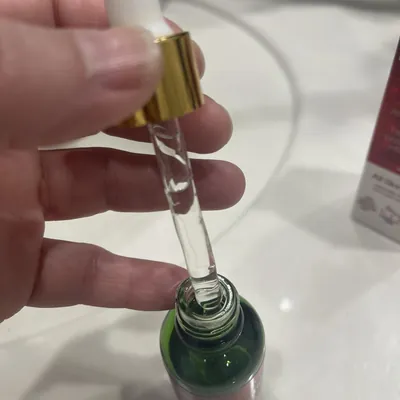
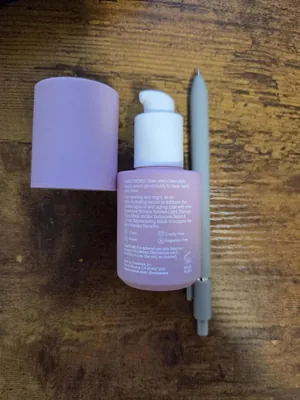
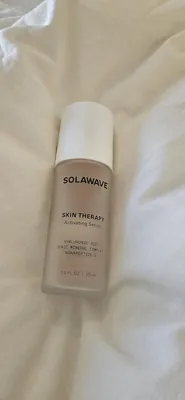
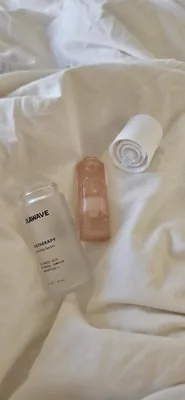
This rose and vitamin E serum uses a dropper bottle and positions itself as an everyday hydrating serum as well as a companion for a light mask.
Buyers liked the light texture, the pleasant rose scent, and the dose control. One said it felt soothing during a flare-up of redness, though that is one person's report. One called it watery. Two said the bottle arrived not full, and one returned it because no country of origin was printed on it.
Do you need to patch test?
Yes, for anything new, including a serum that calls itself gentle. The American Academy of Dermatology suggests applying a quarter-sized amount twice a day for 7 to 10 days in a spot that will not rub or wash off, such as the underside of the arm, in the normal amount and left on as long as you normally would. Red, itchy, or swollen skin means wash it off and stop. A severe reaction that does not ease with a cool compress or petroleum jelly is a reason to see a dermatologist.
Who should check with a doctor before using red light at home?
Short-term use as directed appears safe, according to the Cleveland Clinic, but misuse or skipping eye protection could damage skin or eyes, and long-term safety is not known. The 2026 Cureus review notes that the light can cause rare, dose-dependent redness and blistering, and mentions that one consumer mask was recalled over a theoretical risk of eye injury. A health-news summary of expert comments lists some prescription medicines that can make skin more sensitive to light, including doxycycline, tretinoin, isotretinoin, and hydroxychloroquine, and says people with photosensitive conditions should avoid red light. It also says those prone to dark marks after irritation should be cautious. It is a summary and not a medical source, so treat it as a reason to ask, not as a rule.
If you take prescription medicine, have a skin condition such as rosacea or eczema, or tend to get dark marks after irritation, ask a doctor or pharmacist before starting. Stop and wash your face if you notice stinging, burning, a lasting flush, or a rash, whichever product you used.
How long before you can tell if a serum is worth buying?
Expect the serum itself to be the easy part: you will know within a session or two whether you like its feel and whether the wand glides. What it adds to the light is harder to judge, because the light's own effects are hard to judge. Take a photo in the same daylight before you start, change one thing at a time, and look again after several weeks, not days.
Price and size matter more than the marketing. The serums here run from about $14 to $45 for the same one-ounce bottle, and daily wand use can finish a bottle in weeks. A reasonable test is to start with a less expensive one, and move up only if the texture is the thing you are missing. If your skin looks and feels fine without a serum, a moisturizer you already like is a perfectly reasonable thing to put on after a session. For anything that concerns you, such as a changing spot or a rash that will not clear, a dermatologist is a better place to start than a bottle.