In this article
A cold, windy, or drizzly day does not have to end your time outside. The trouble is that wind, a damp seat, and a gray sky make a porch, a deck, or a field sideline miserable fast. A clear dome or pop-up pod is one way to keep the view and lose most of the wind and rain, and plenty of people now use them from late fall to early spring. This guide covers what makes sitting outside comfortable in the first place, how much a clear tent can really warm up, how to add heat without creating a hazard, why the walls fog and wrinkle, how to keep one standing in wind and snow, and which style suits a deck, a yard, or a sports field.
Why does sitting outside in cold weather feel so bad so fast?
It is usually not the air temperature alone. Moving air strips heat from you faster than still air at the same temperature, a damp seat or cold ground pulls heat from underneath, and a gray, shaded spot gives you none of the warmth that direct sun can. Fix those three and the same afternoon feels very different, with or without a tent.
- Block the wind first. A solid wall, a fence, or the lee side of the house changes how a spot feels more than an extra sweater does.
- Insulate what you sit on. A foam seat pad or a folded blanket keeps cold from creeping up from a metal or plastic chair, and a rug keeps your feet off a cold deck.
- Face the sun. On a clear day, a spot that gets direct sunlight is noticeably warmer than one in shade a few feet away.
- Dress in layers you can open. Thin layers let you adjust as the sun comes and goes, and a warm drink helps more than it should.
- Come in if you stop feeling your fingers or start shivering hard. Comfort is the goal, not endurance.
A clear tent combines the first three: it stops wind and rain, sits on its own floor, and lets sunlight in. That is why buyers use the same kinds of tents for rainy ballfields, a deck in January, a porch coffee spot, and a bird feeder they want to watch without freezing.
Can a clear dome warm up on its own, without a heater?
When the sun is out, often yes, and buyers describe it in numbers. One buyer put a thermometer inside on a January day in Wisconsin and read 63°F in the tent against 36°F outside, with no heat source other than the sun. A buyer in the northeast reported the inside running 30 to 40 degrees warmer than outside on sunny days, and a track-meet parent measured 20 to 25 degrees warmer than a 45°F day. Another buyer sat comfortably in 20°F air with a light breeze with the sides rolled up.
Those are single buyers' readings, not guarantees, and the pattern has limits. Several buyers said the effect disappears under clouds: without sun, one found the tent still cold, and another said it is not ideal below about 20°F without a heat source. The same greenhouse effect works against you on mild days. A buyer set one up in 60-degree weather and found it too hot, and another baked inside at 43°F outside and ordered sun shades. One listing says outright that its tent is meant for cool autumn and winter use, not hot weather or strong direct sun.
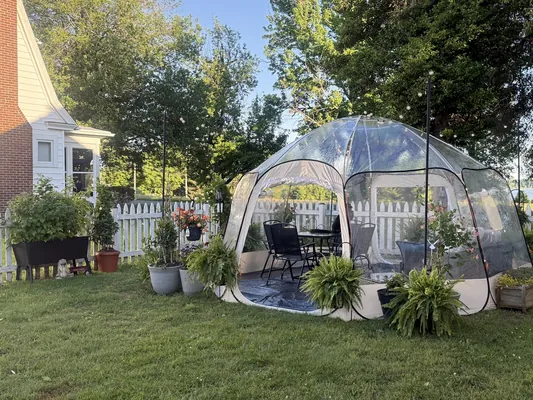
The practical takeaway: place the tent where it gets sun for the hours you will use it, and plan for what happens when the sun goes behind a cloud. If you only want it for sunny afternoons, you may need nothing else. If you want evenings or overcast days, you need a heat source and a plan for ventilation.
How do I add heat inside a clear tent without creating a hazard?
This is the part not to improvise. Many buyers add a space heater, and the plastic walls and small enclosed volume change the risks.
Is it safe to use a propane or charcoal heater inside?
No. In a 1999 report on camping deaths, the CDC said fuel-burning stoves, heaters, lanterns, and charcoal grills should never be used inside a tent, camper, or other enclosed shelter, and that opening flaps, doors, or windows is not enough to prevent carbon monoxide from building up (CDC report). The report described two incidents in which six people died after a propane stove and a charcoal grill were brought into zipped tents to provide warmth. Some buyers describe using a propane fire table or heater in a dome with the top vent cracked; one said they keep a carbon monoxide monitor in the tent. Treat those as individual choices, not as guidance, and rely on the CDC's wording.
What about an electric heater?
An electric heater avoids the carbon monoxide problem, but it can still start a fire. The Consumer Product Safety Commission advises keeping a space heater at least three feet from bedding, drapes, furniture, and other flammable materials, putting it on a level, hard, nonflammable surface rather than a rug or carpet, turning it off when you leave the area, and never leaving one on while you sleep or placing one near a sleeping person (CPSC). In a tent, that means a heater well away from the plastic walls, the blankets, and the chairs, standing on something hard rather than the rug.
Buyers' reports give a sense of what electric heat can do in a small dome. One reached 75°F in 10 to 15 minutes from a ceramic heater with 28°F outside; another raised the temperature in the smallest dome size by 20 degrees in about an hour. One buyer who sat in -15°F air for four hours said two space heaters barely kept up. Heating to a comfortable temperature takes real power, and the cold plastic keeps pulling heat out, so a larger dome needs a lot more heat than a small pod.
Why does the inside of a clear tent fog up and drip?
It is the same reason a cold glass sweats. Air can only hold so much water vapor, and the temperature at which it reaches its limit is the dew point; cool the air further and the vapor turns to liquid (National Weather Service). In a tent, you breathe out moisture, a heater or a wet rug adds more, and the thin plastic walls are cold from the outside air, so the moisture condenses on them. In freezing weather it can show up as frost, then melt and drip.
Buyers describe all of it. One in Michigan reported frost on the inside that melted and dripped on furniture in single-digit weather. Another said the ceiling dripped most of the time and that venting the tent and leaving the doors open helped. A third found condensation vanished or wiped off easily whenever a heater was running. One buyer said the included top cover reduced ceiling condensation and, in turn, wall condensation, though that same buyer saw droplets forming at the seams on rainy nights and put washable absorbent pads on the floor to soak them up.
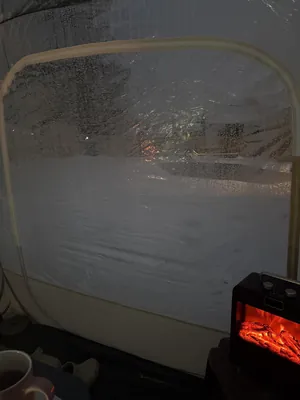
- Vent before it fogs. Open a top vent or crack a window a little, even in cold weather. Dry outside air dilutes the moisture you add.
- Keep the water out. A tarp under the floor and a rug on top keep ground moisture from rising, and wiping wet shoes at the door helps.
- Use the top cover if one is included. Buyers who used it saw less ceiling condensation.
- Wipe the walls with a cloth and let the sun finish the job.
- Do not seal it up for hours. A tightly closed tent with a heater and several people is where drips are worst.
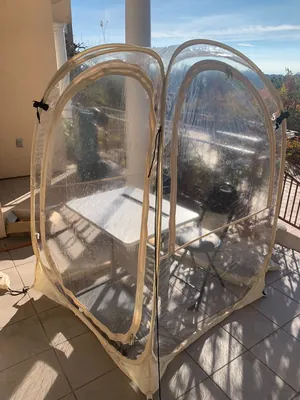
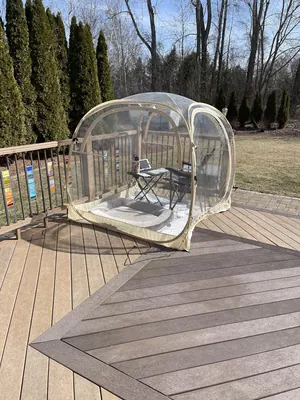
Ventilation matters for a second reason: a closed tent in strong sun gets hot fast. Models with top vents give you a way to let heat out without opening a door. The one below is a 10 by 10 foot pop-up dome with two top windows, two doors, and six clear windows, according to its listing, and several buyers added sun shades after finding it too warm on mild, sunny days.
The listing describes a 24-pound pop-up with fiberglass ribs, interior hooks, and a carry case, sized for four to six adults. Buyers reported setting it up alone in a few minutes, and several said the zipper stitching or roof seams gave out after repeated use or a windy stretch. A few said the pop-up folds back up only with a second person, and the retaining strap springs open forcefully, which brings up the next safety point.
Pop-up designs spring open when you release the strap. A few buyers said it opened with enough force to knock things over or hit them, and one said the warning was only on a small tag. Take it outside before you open it, keep your face and hands clear, and have room around it.
Why is the plastic wrinkled, and how clear will the view be?
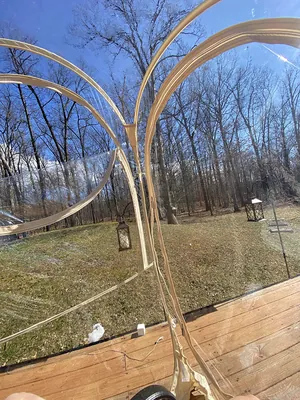
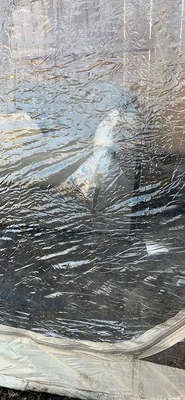
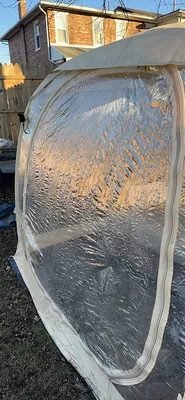
Clear does not mean glass-clear. The plastic is thick and flexible, and folding it for shipping leaves creases that do not vanish at once. One buyer who bought a pop-up for kids' games said the vinyl was too wrinkled to watch through, while another found it surprisingly easy to see out of, and a buyer who wanted it for stargazing found it too wrinkled and blurry for the night sky.
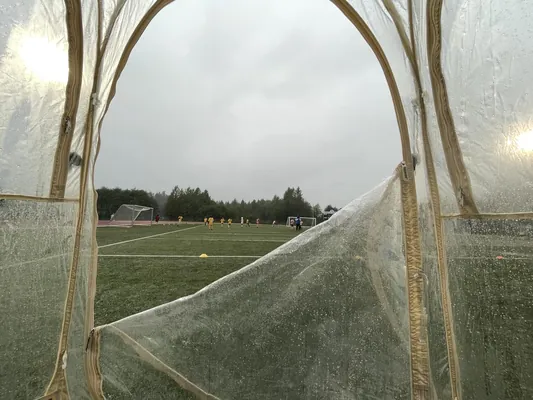
What buyers and listings suggest helps:
- Let it sit unfolded and warm. One listing says to place the tent in a warm area after unpacking so the plastic can flatten; one buyer said the instructions for their dome call for leaving the doors and windows unzipped for at least 24 hours so the plastic can stretch out.
- Add gentle warmth. One buyer ran a small space heater inside for several hours to smooth the plastic, and another used a hair dryer on the wrinkled areas. Keep any heat source well back from the plastic.
- Air it out. One buyer noticed a plastic smell at first and suggested airing the tent for two or three days before use.
- Expect a wavy view. If a sharp view matters, such as watching a game, test it before the first event.
How do I keep it from blowing away or collapsing in snow?
A clear dome is a big, light, curved sail, so anchoring is not optional. Almost every buyer who reported a good experience in wind also described how they anchored it, and most of the worst reports involve a gust, a storm, or heavy snow.
- Use every anchor that comes with it. Buyers reported tents holding in 40 mph gusts when guyed and anchored to a deck, and sliding or lifting when only sandbags were used on concrete. Several people filled the sandbags with pea gravel or sand, and one used water weights or patio blocks. A Chicago buyer reported piling about 800 pounds of sand on a terrace.
- Match the anchor to the surface. Stakes for lawn, screws or clamps for a wood deck, concrete anchors or heavy weights for a patio. One buyer zip-tied a dome to deck boards instead of drilling.
- Take off the top cover in strong wind. A buyer who lost a tent in a gust believed the cover made things worse, because wind picked it up and shook the frame.
- Take it down for storms. Multiple buyers said pop-ups should come down when winds reach about 20 mph or higher, and one said a 60 mph storm broke the door joints of a large dome.
- Clear snow before it piles up. Under 18 inches of snow, one dome collapsed and popped back up undamaged once the snow was cleared, and another buyer's pop-up caved in on one side. Buyers described pushing snow off with a broom handle from inside, and one bought a center support pole for heavy-snow forecasts.
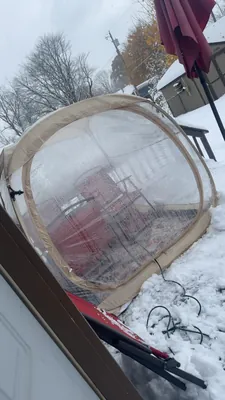
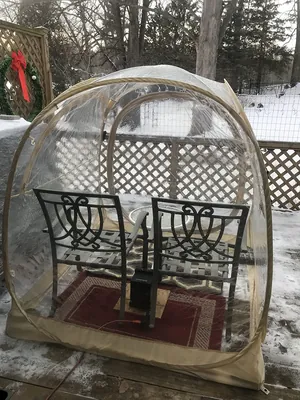
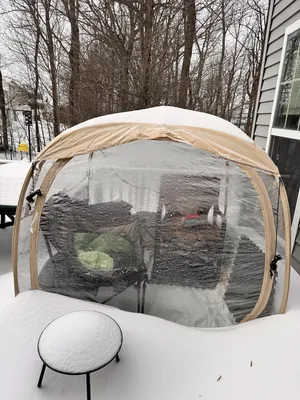
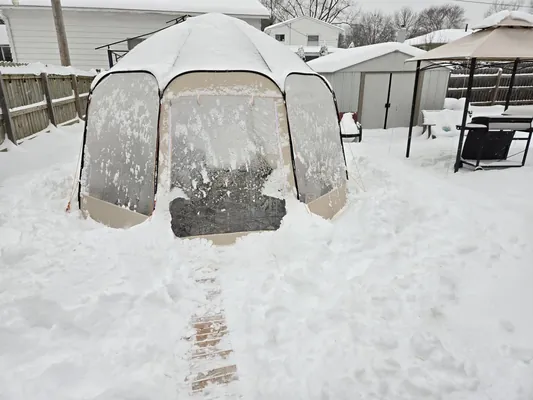
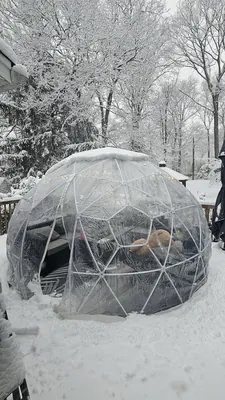
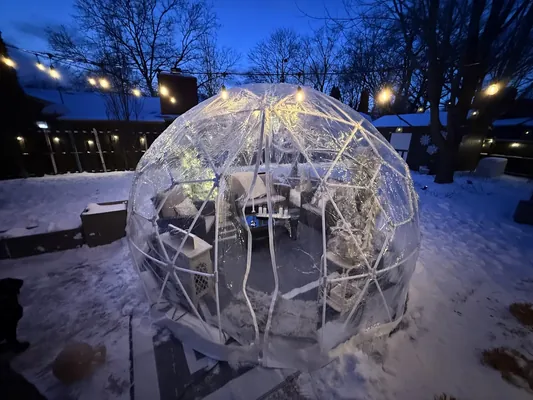
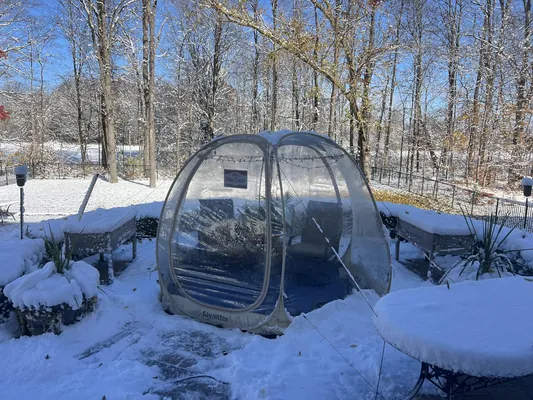
The listings set their own limits, which are worth reading. One pop-up pod says it is for light rain only and to avoid heavy rain, thunderstorms, strong winds, and standing water. Another pop-up says it is not recommended for heavy rain, strong winds, or snowstorms. The largest geodesic dome listing describes rustproof poles and heat-sealed seams, and says it withstands winds up to 31 mph and 90 pounds of snow, and includes stakes, clamps, and sandbags for anchoring.
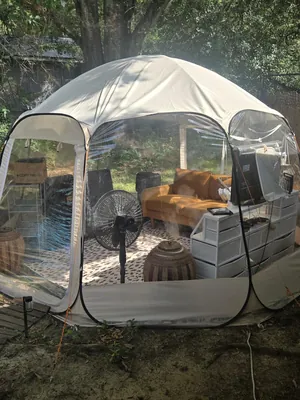
Buyers describe a stand-up space that fits several chairs, a firepit-style table, or a TV, held up in storms with anchoring. Assembly reports ranged from under 30 minutes with a helper to about five hours with unpacking, and the cover needed two or three people. Reports on durability and support were mixed: some said it held through 50 mph winds and winter storms, while others reported plastic tearing within a few months, a cut in the cover on arrival, or a long wait for help.
What goes on the floor, and how do I keep bugs and wet out?
This is where many buyers are surprised. Several pop-ups ship with a floor sheet that clips in rather than a sewn-in floor, some tents have no floor at all, and buyers say the sheet often does not reach the walls, leaving gaps at the edges. That matters for three reasons: ground moisture, bugs, and drafts.
- Layer the floor. Buyers put a tarp under the tent, then a rug or foam tiles on top. One built a solid floor with two layers of foam tiles around the built-in sheet and OSB panels on top, so it would not wear out.
- Tuck the edge. A flap around the bottom edge can be weighed down from inside with a patio block or sandbag. Without that, a gust can lift it.
- Expect some bugs. Several buyers said insects get in from grass or gaps, and one advised clearing the area before setting up. Screened windows help: a Florida buyer said the screening kept out even no-see-ums, while others wished their tent came with screens.
- Check the seams after rain. A few buyers reported leaks at the bottom seams in heavy rain and put towels or absorbent rugs down; others reported staying dry through storms.
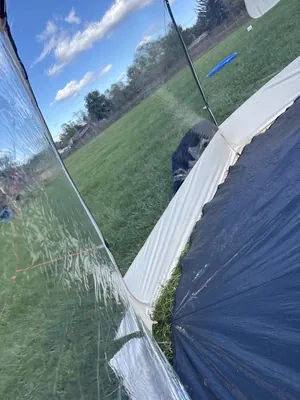
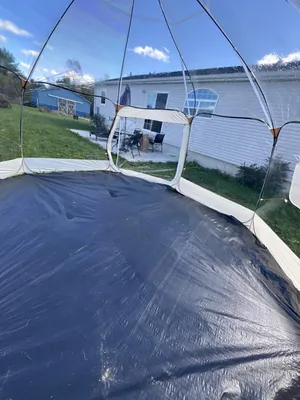
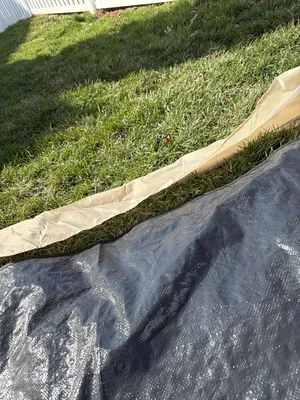
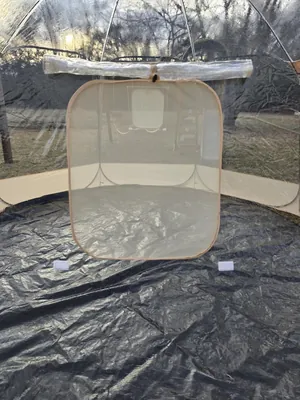
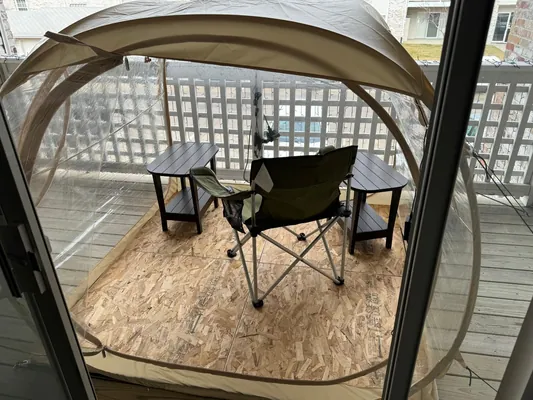
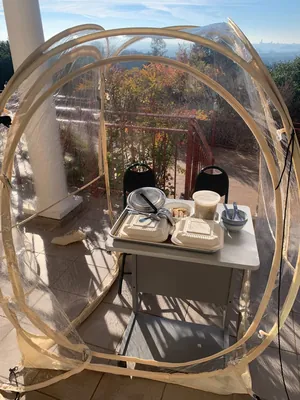
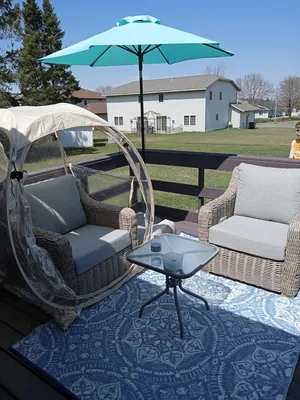
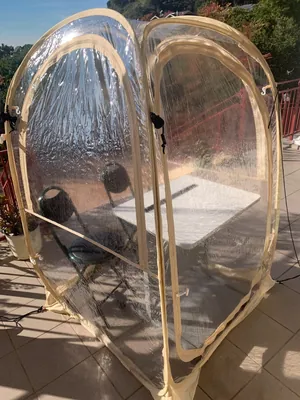
The pop-up below is described in its listing as having a clip-on floor mat, a top cover, two roll-up windows, and a size range for one to six people, and it says it is for cool autumn and winter use and not for heavy rain, strong winds, or snowstorms. Buyers liked the floor and top cover for sports and porch use, and several called out gaps in the floor, bug entry, and seam leaks.
Should I get a small pod, a pop-up, or a dome?
The right style comes down to how often you will set it up and how many people it needs to hold.
When is a small pop-up pod enough?
For one or two people at a game, a pod is simple. Buyers described setting up a pod in minutes, fitting a chair, a diaper bag, and a folded stroller, or keeping a dog and a small table beside one chair. Capacity numbers are rough: one listing says the person count is for seated use only and varies with body size, chair size, and winter clothing, and a buyer who bought a 72-inch pop-up found it more like 50 inches inside and returned it. Check the actual length, width, and height, and size up if you want to stretch out.
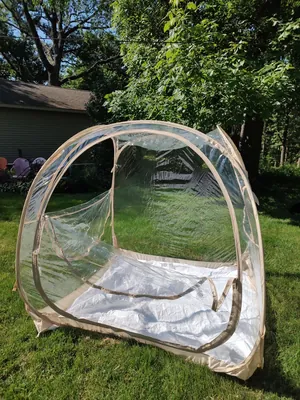
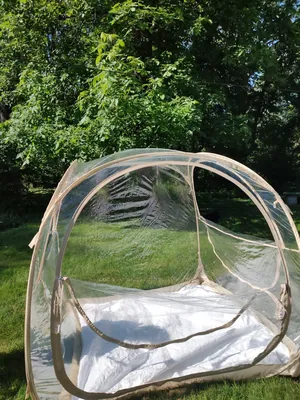
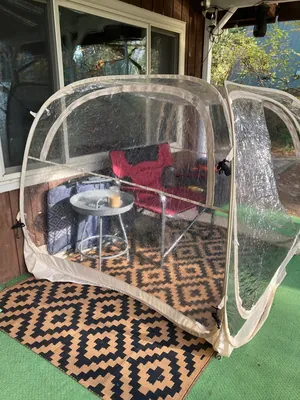
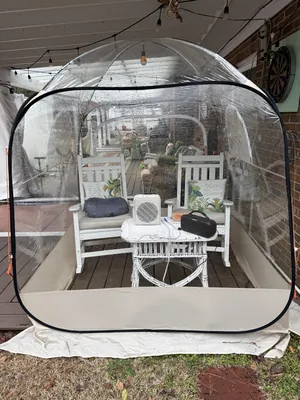
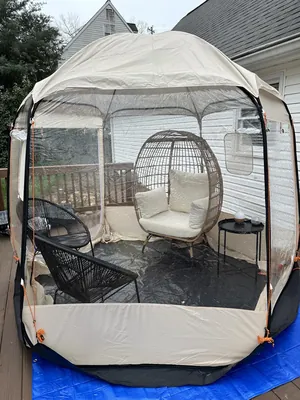
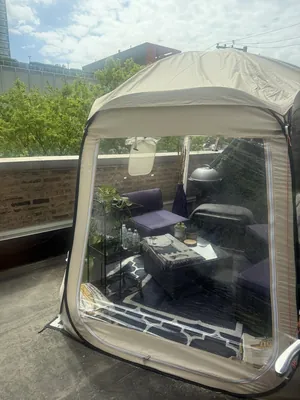
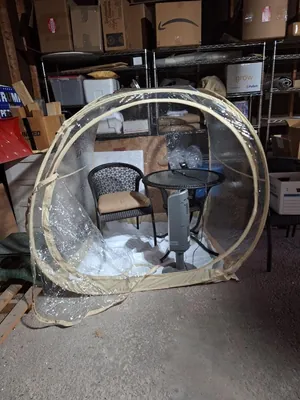
The listing describes four sizes, from 40 by 40 by 62 inches for one person up to 83 by 83 by 65 inches for as many as four, with a double-sided zipper, interior hooks, UPF 50+ protection, and a factory-folded package. Buyers used it for sidelines, a cold deck, and a catio, and often called out how hard it is to refold.
What changes with a geodesic dome?
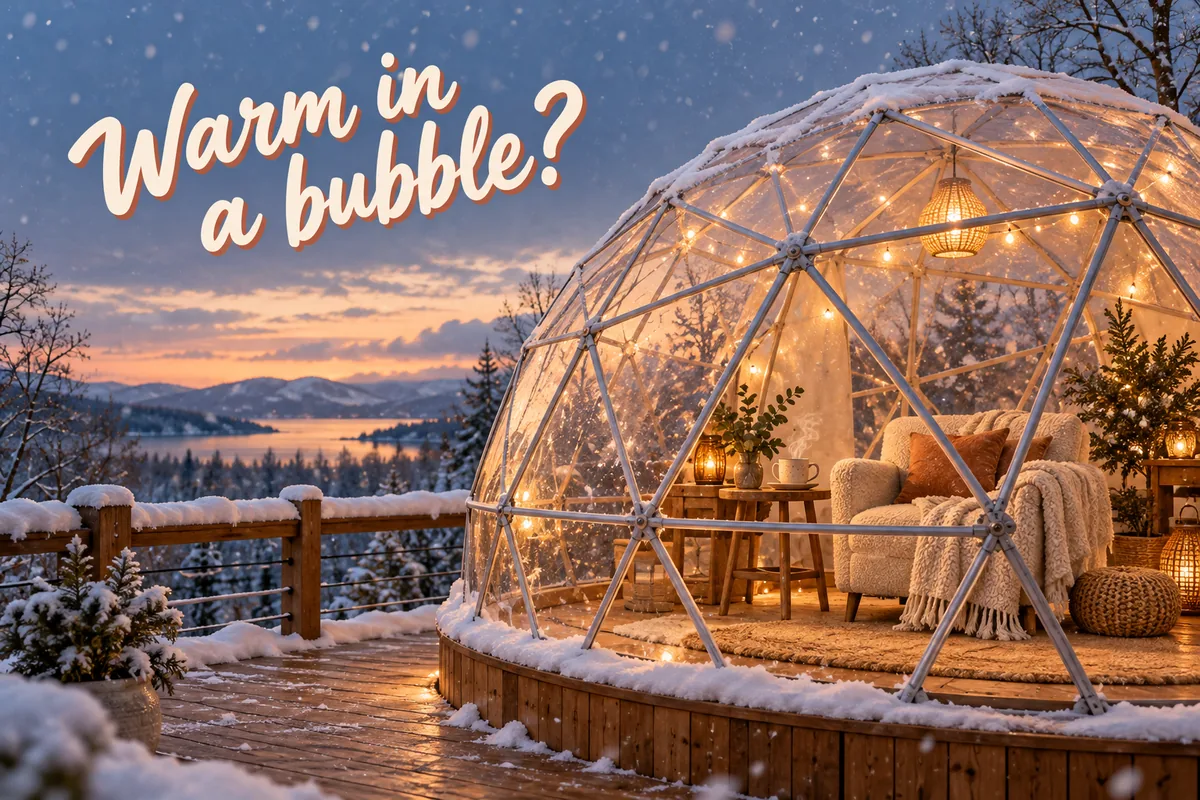
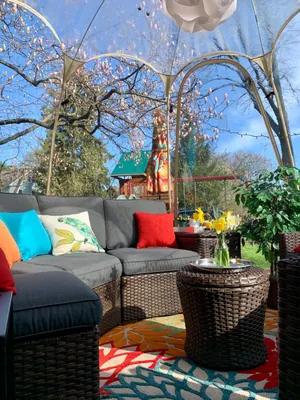
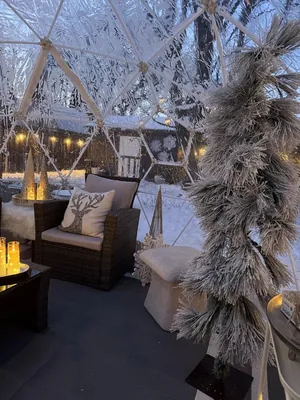
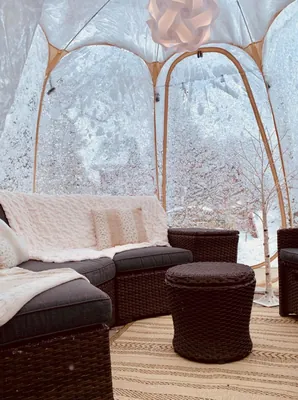
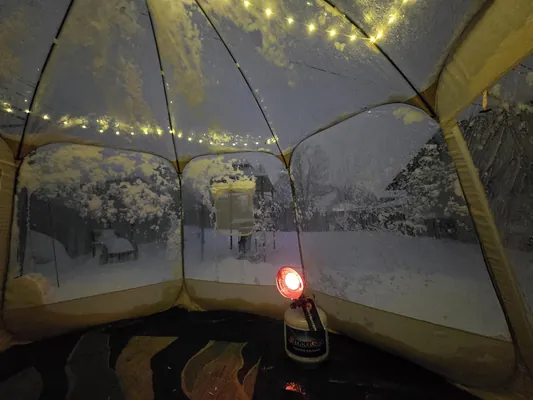
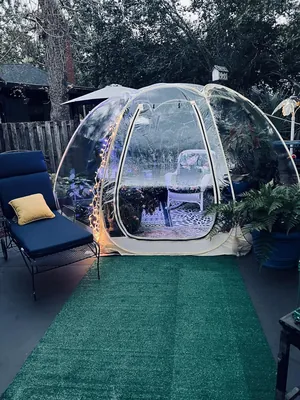
A dome is a different commitment. It is a frame of connected poles with a vinyl cover, roomy enough to stand in, and it is built to stay up. Assembly takes hours, the cover usually needs two or three people, and several buyers said it is not meant to be taken down every season. In exchange, you get a space that fits real furniture, a heater, and lights, as the photos below show.
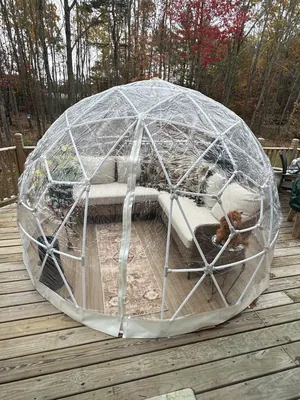
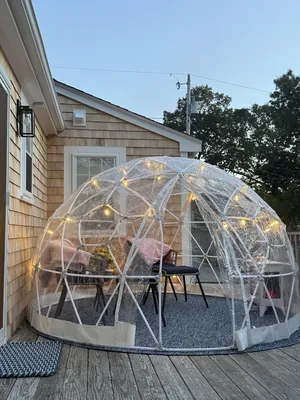
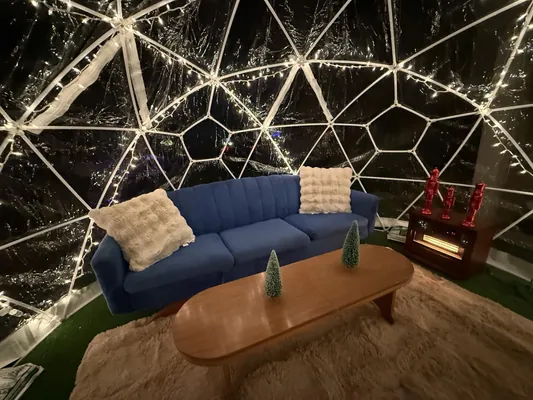
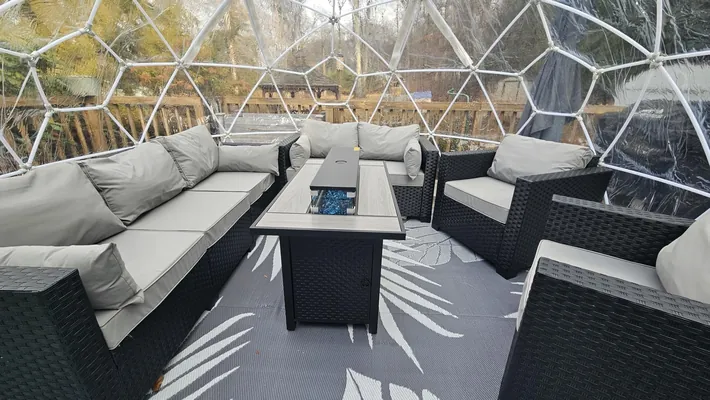
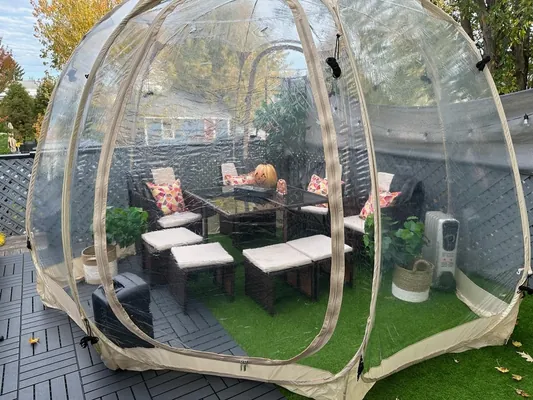
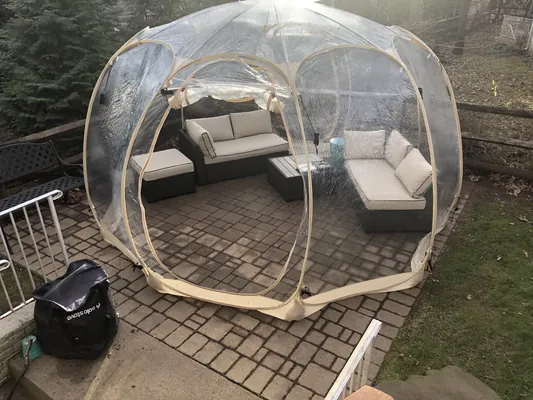
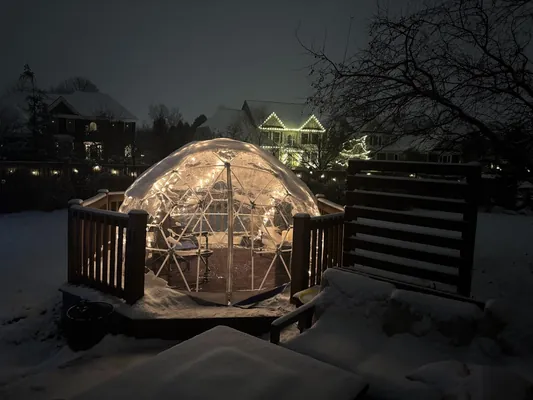
One listing describes a snap-together dome in 12-foot and 15-foot sizes for four to five people, with two ventilation windows, hooks for hanging lights, and anchoring options including sandbags, ground stakes, and screws. It has far fewer buyer ratings than the others here, so the picture is thinner. Buyers called it sturdy once built but said assembly takes patience with many parts, the cover takes two people, and one said it is not designed to be taken up and down yearly. A few reported missing parts replaced quickly, one reported seams tearing in the first windstorm, and one wanted a PDF copy of the instructions after rain ruined the paper ones.
How do I fold a pop-up tent back into its bag?
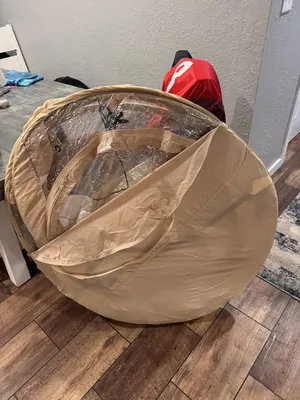
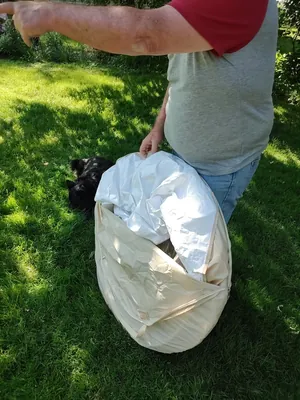
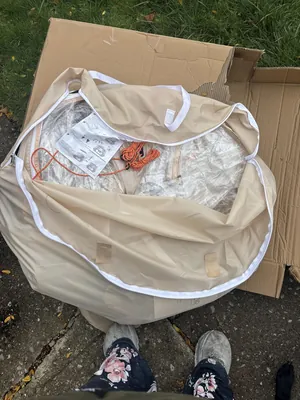
It is the most common complaint about pop-ups, and several buyers said the bag is a struggle at first. A few report it never fit in the original box. A few tips came up repeatedly:
- Remove the top poles first. One buyer broke a fiberglass top support by folding the tent with it still in, and the maker replaced the pair.
- Fold in half, then twist. Another buyer's order was to fold the tent in half, then twist it so it takes up a quarter of the space, and it fit in the round bag.
- Follow the maker's sequence. A buyer who spent 45 minutes wrestling one found the key was tucking one corner under itself before twisting; getting that step wrong ruined every attempt.
- Bring a second person the first few times. Several buyers said the first fold took two or three people and got easier with practice.
- Use a bigger bag if needed. One buyer fit a pop-up in a 48-inch wreath storage bag with room for blankets.
- Or leave it up. Several buyers keep theirs unfolded in a garage and carry it as needed.
What else can a clear tent be used for?
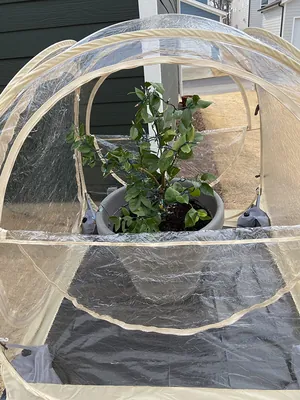
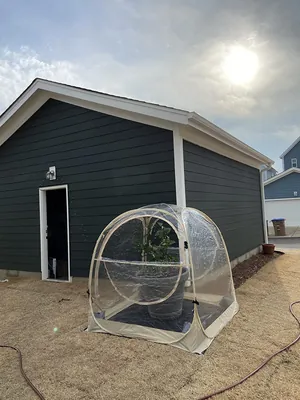
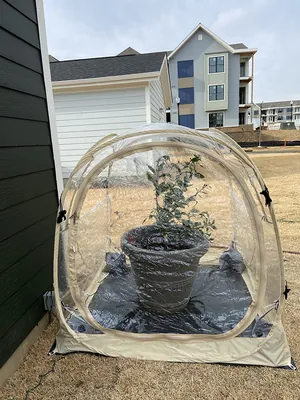
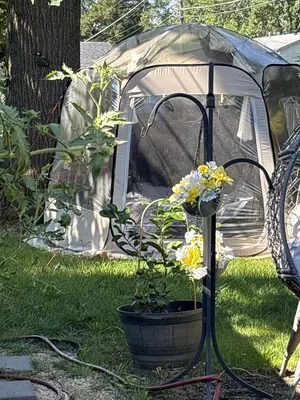
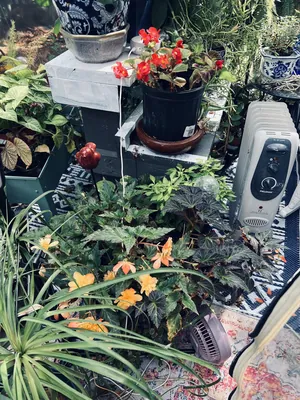
Buyers found uses beyond people. One used a pop-up as a winter greenhouse for a lemon tree and reported the plant doing well, adding water weights at the corners for wind. Another used a larger one as a winter greenhouse with grow lights and a heater, and noted the sun turned the plastic yellow over time and the roof sagged under snow. Others used one as a catio, a spot to watch a dog or birds, and a dry place for a grill or cookout. Treat these as individual experiences: a tent is not a purpose-built greenhouse, and plants still need the right temperature and light.


How long will one last, and when should I take it down?
These are made of thin plastic and zippers under stress, and buyer experiences on durability vary widely. Some said theirs lasted a season or more outside through storms; others reported tears at seams or around zippers within weeks or months. Several buyers said support helped with replacements for missing parts or damage, and others said they could not get answers. If a tent is going to sit out all winter, read the warranty and return window, keep photos of its condition, and plan on patching.
- Thunderstorms: A tent does not protect you from lightning. The Lightning Protection Institute says tent poles do not provide any lightning protection, and that the safest move when thunder is heard is to go into a substantial building or a fully enclosed vehicle (Lightning Protection Institute). One listing also says to avoid thunderstorms.
- Strong wind: Take it down or move it before gusts of roughly 20 mph and up, or anchor it as firmly as you can and watch the forecast.
- Heavy snow: Clear the roof, add a support pole if it comes with one, or take it down. Do not rely on it holding the weight overnight.
- Unattended heaters: Never leave a space heater running in an empty tent, and never sleep with one running.
- Hot sun: A closed tent in strong sun on a mild day can get uncomfortably hot, so vent it or add shade.
Used with those limits in mind, a clear tent gives you a sheltered, bright place to sit outside on days that would otherwise keep you indoors. The better choice is the one that matches how often you will set it up, how many people it needs to hold, and how much weather you expect it to face.