In this article
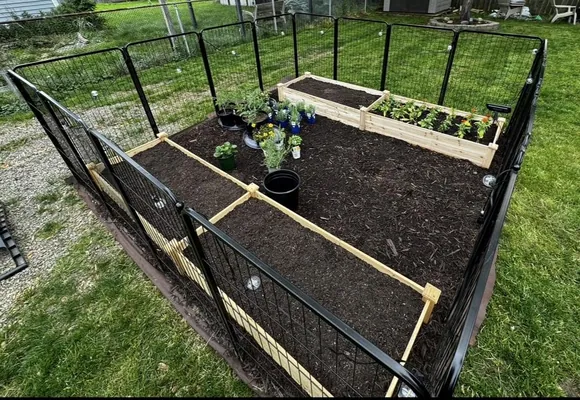
The right garden barrier depends on who you are keeping out: about 3 feet for most dogs, about 2 feet of tight mesh for rabbits, and far more for deer. Connected metal panels that anchor with ground stakes let you try a layout without digging post holes, but they have limits. This guide covers height, spacing, gates, and tricky ground so you can decide what fits your yard.
Most garden damage comes from a short list of visitors: a dog that tramples and digs, rabbits that clip seedlings overnight, chickens that scratch up mulch, or a woodchuck that tunnels under anything shallow. Each one needs a different kind of barrier, which is why a fence that works for one problem can fail at another. This guide helps you work out who you are fencing out, how tall and how tight the barrier needs to be, and how to put up connected metal panels that you set with ground stakes instead of digging post holes.
Panels like these are popular because they go up in an afternoon, bend around beds, and come back out when you need to mow, move, or take them with you at the end of a lease. They also have real limits, and the people who use them report those limits openly. The sections below sort out where the panels fit and where another solution is the better call.
Who is actually getting into the garden?
Before you measure anything, look for clues. Flattened seedlings and muddy paw prints point to a dog. Fresh holes along the base of a bed or fence line mean something is digging. If you rarely see the culprit, watch the garden at dawn and dusk for a few days. What you find decides the height, the spacing between wires, and how the bottom edge needs to be handled.
University extension guidance lays out a useful starting point for each animal, and it is easy to see why one panel height cannot cover everything:
| Visitor | What to plan for |
|---|---|
| Dogs and cats | A wire fence about 3 feet tall can work well, and bending the bottom outward discourages digging, according to University of Georgia Extension. |
| Rabbits | About 2 feet of fence with openings of 1 inch or smaller, with the bottom edge bent outward and anchored or buried a few inches (University of Georgia Extension). |
| Woodchucks (groundhogs) | A fence about 3 feet tall on top, staked loosely so it wobbles when climbed, plus a 12-inch flap laid outward on the ground and pinned down (a wildlife guide from Humane World for Animals). |
| Deer | A minimum of 6 to 8 feet, anchored to the ground (University of Georgia Extension). A decorative panel fence is a deterrent at best. |
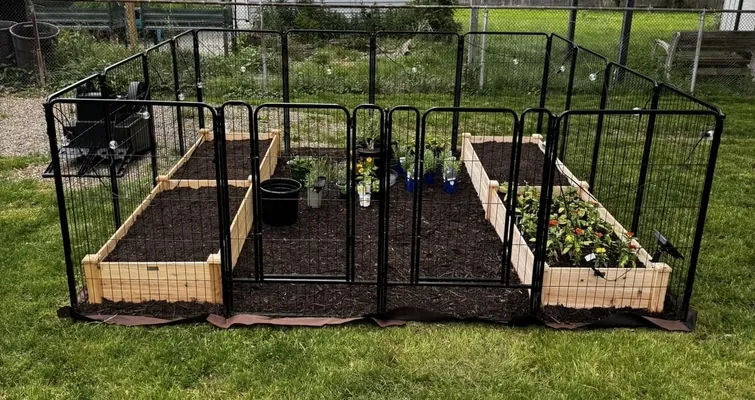
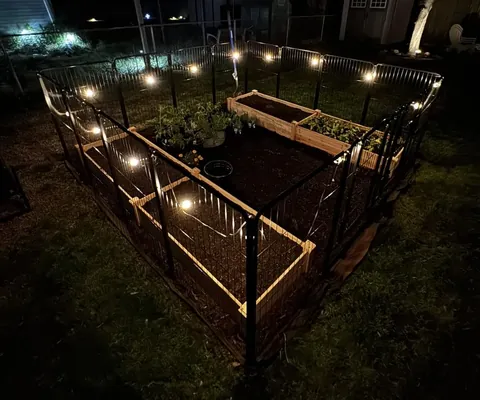
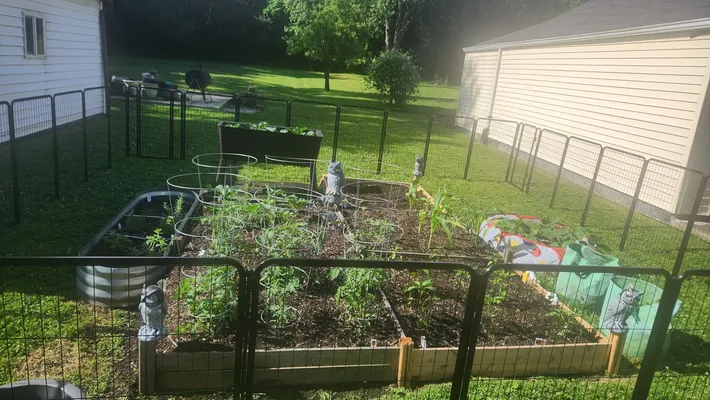
Most of the panels discussed below stand between about 2 and 4 feet tall. That fits the dog, rabbit, and woodchuck rows when the details are right, and it does not fit the deer row at all. One gardener who used a 48-inch panel set wrote that deer and skunks had so far looked at it and walked away; another noted that a deer running at full speed could still take it out. Treat both as the real picture: a low fence works partly because animals choose not to test it.
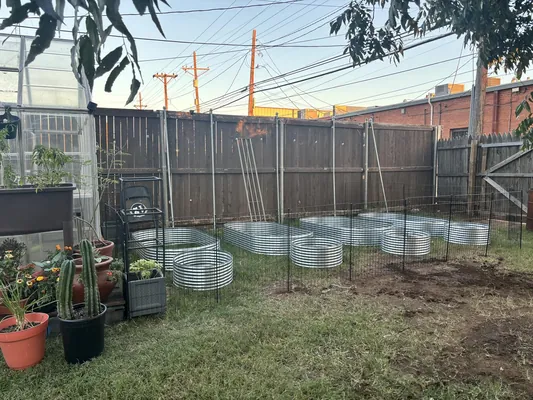
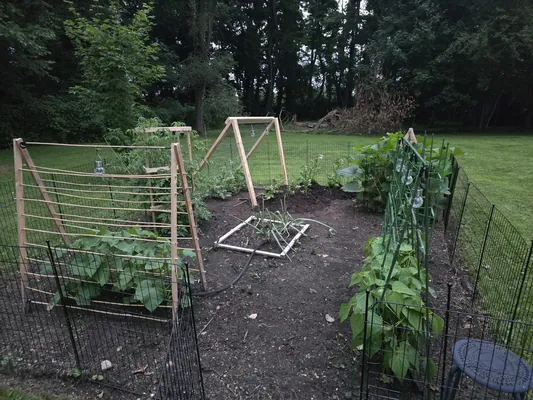
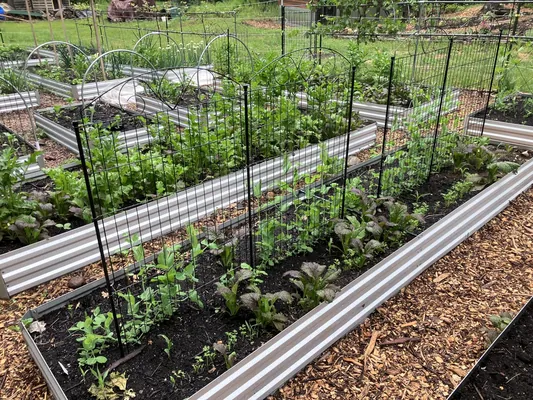
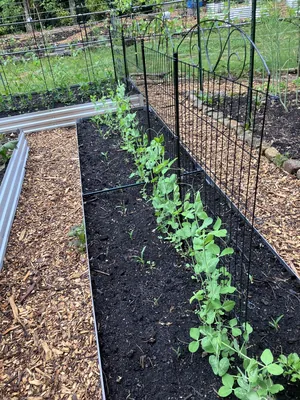
How tall does a garden fence need to be for a dog?
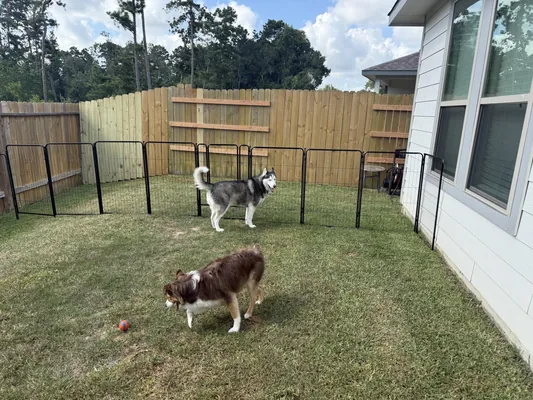
Height is the first thing people search for, and the honest answer is that it depends on the dog more than on the fence. A fence that comes up to the dog's chest stops a dog that respects boundaries and does very little against one that jumps. Extension guidance suggests about 3 feet of wire for most dogs and cats. Buyers' stories line up with that: one owner said a 40-inch panel was plenty for a 40-pound dog that is not a jumper, while another reported that one of their dogs cleared a height that had been chosen for a different dog.
Plenty of buyers also say the barrier works mostly as a visual signal. One owner of a dog that likes to fence-fight with the neighbor's dog said the panels did the job because the dogs simply do not test them. Another with a pointer found that one run at the fence bent a panel out of shape. If you have a dog who treats a boundary as a challenge, plan for a taller or sturdier barrier from the start.
What if the dog is big or a climber?
Buyers with larger dogs describe two separate limits. One is height: a dog that likes to jump can clear a short panel. The other is weight and force: thin wire bends when a dog leans on it or throws its weight against a corner. Buyers with big dogs reinforced fences with zip ties or longer stakes, and a few said a stronger fence with thicker posts would suit a large dog better. If your dog is the kind that jumps or pushes, treat panel fencing as a boundary and not a containment system.
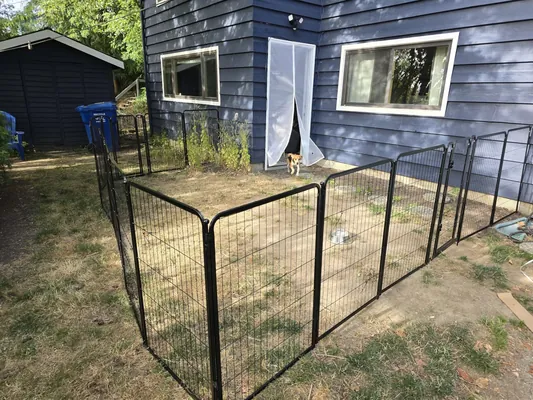
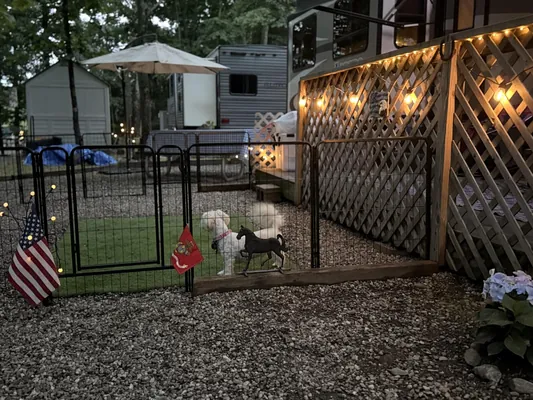
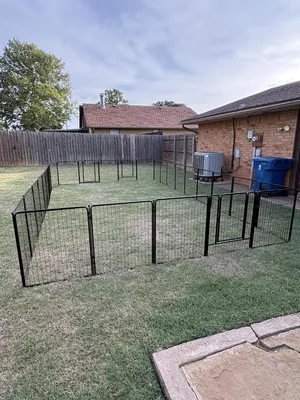
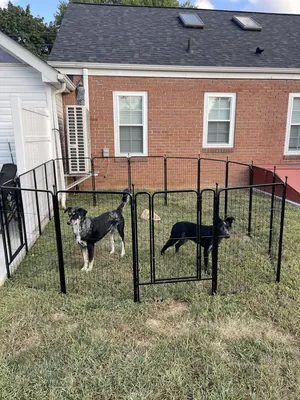
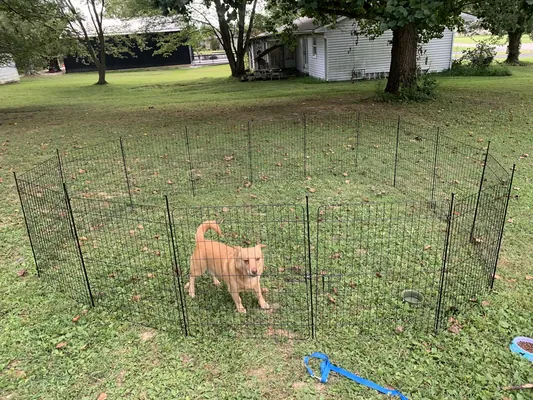
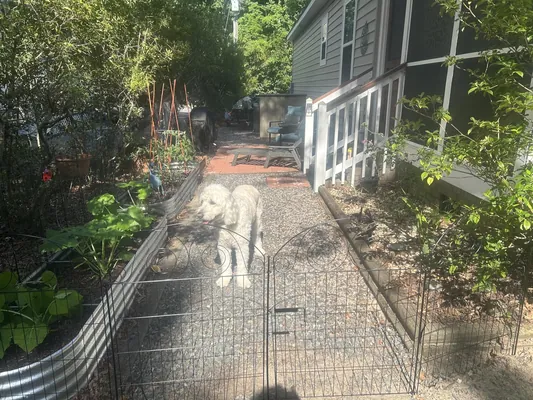
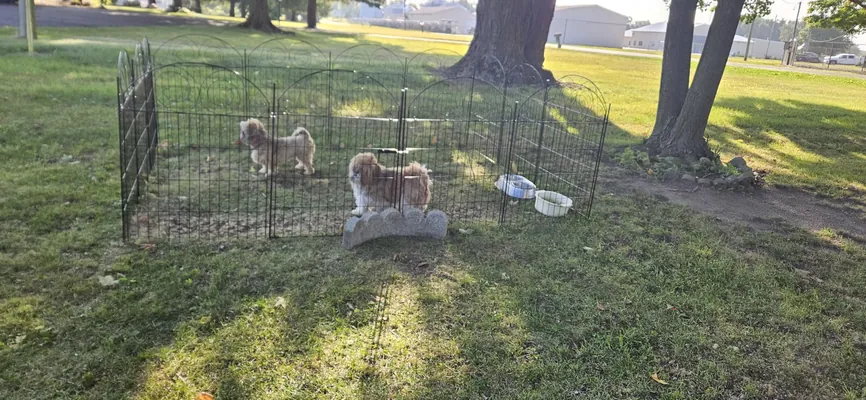
Matching the height to the animal is easier when you can pick from several. Some sets come in 24-, 32-, 40-, and 48-inch heights, with or without a gate, so you can start with a small section around a tree or bed and extend later with compatible panels.
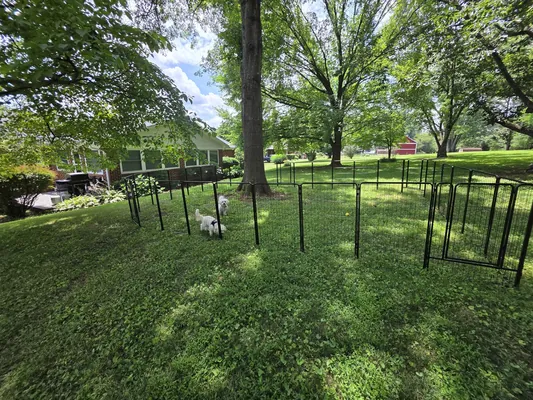
Can a no-dig fence keep rabbits and burrowing animals out?
Rabbits are a spacing problem as much as a height problem. University of Georgia Extension recommends openings of about 1 inch and a bottom edge that is bent outward and buried or pinned. Panel fences usually have wider gaps. One 40-inch set lists a 1.57-inch gap between wires, which is close to the point where small or young rabbits can slip through. A buyer with the 36-inch panels reported adding extra screening along the bottom for exactly that reason, and another noted the vertical bars were narrow enough to exclude wild rabbits in their garden.
Experiences differ, which is a good reminder that it depends on the rabbits and the garden. A gardener who had been losing flowers to cottontails said a 24-inch set kept them out after trying scent repellents and decoys. Another said the panel fence worked for a while until the dog learned to hop the shorter 13-inch version.
What about woodchucks and animals that tunnel?
Digging animals ignore height. A wildlife guide from Humane World for Animals recommends a fence about 3 feet tall on top, staked loosely so it wobbles when climbed, with a flap about 12 inches wide laid outward on the ground and secured with landscape staples. Animals dig at the base of the fence, hit the flap, and give up. Panels that stand on their own stakes do not have that flap, so a no-dig panel fence is best seen as a deterrent for woodchucks and not a seal. One buyer who needed a quick groundhog barrier around a garden said it worked and kept the groundhog out. Another buyer noticed a groundhog trying to get into the garden the day after installing and said the fence stopped it.
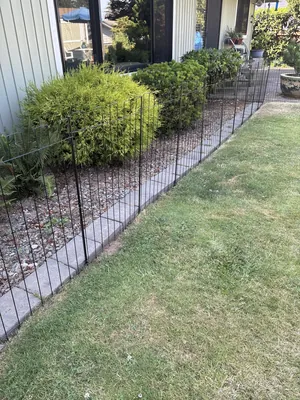
Panels that sit on top of the ground also leave a gap at the base. If a dog is digging under an existing fence, low border panels with ground stakes are a different tool. One buyer whose lab started digging beneath a gate arbor set two connected panels outside the fence line so the dog could not pull them up. Another said an escape-prone pit bull stopped trying once a short panel closed the gap. Not everyone had that outcome: several buyers said short panels are light duty and do not stop a determined digger.
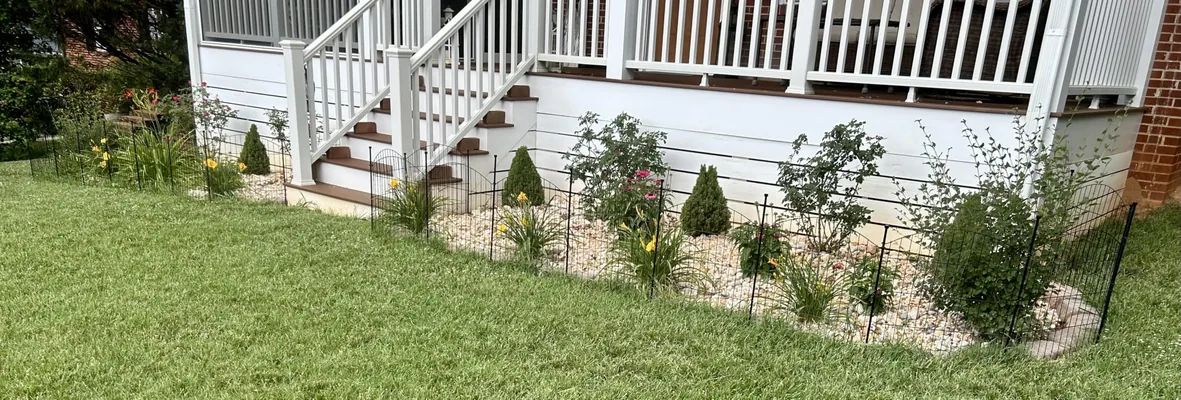
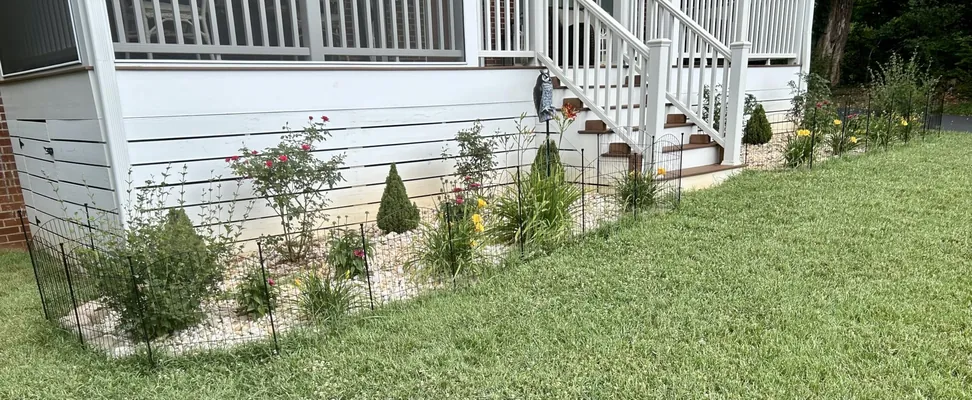
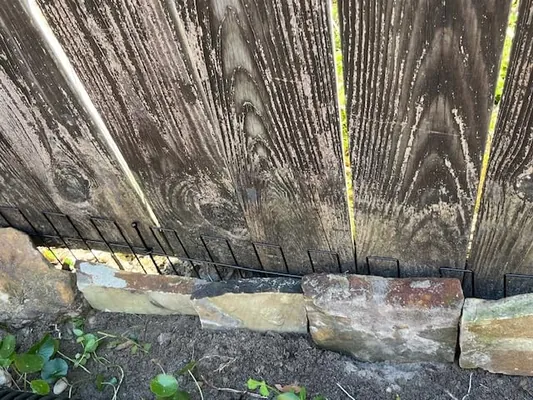
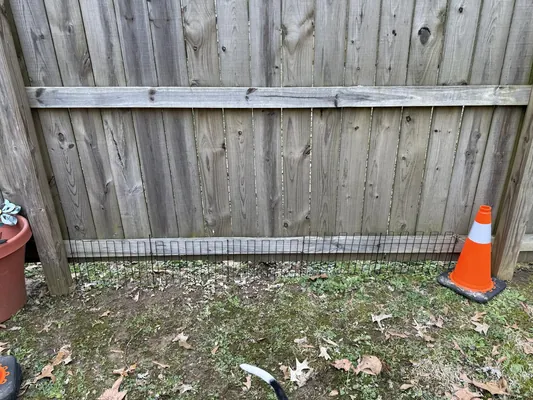
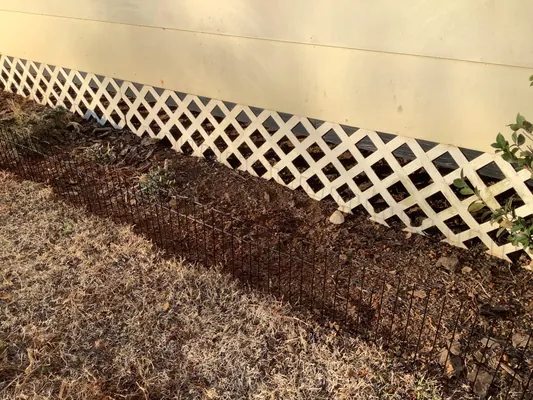
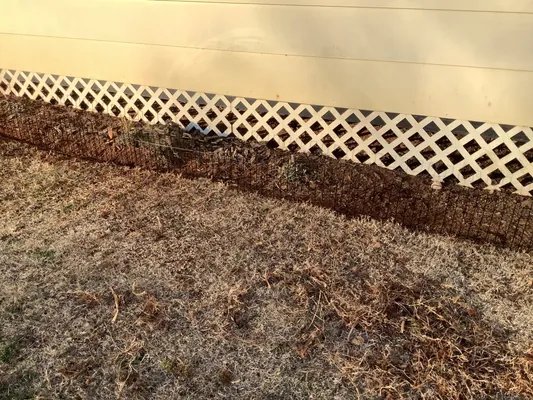
Can the same fence keep chickens in or out of the garden?
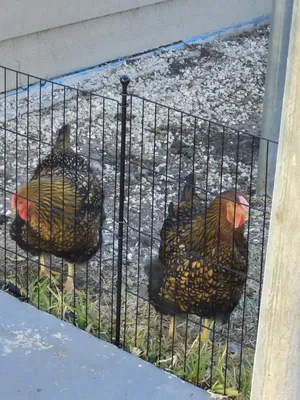
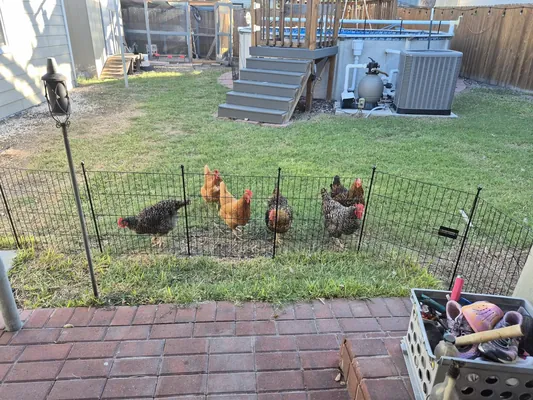
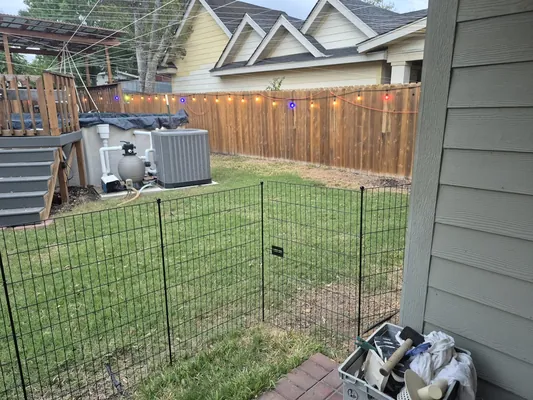
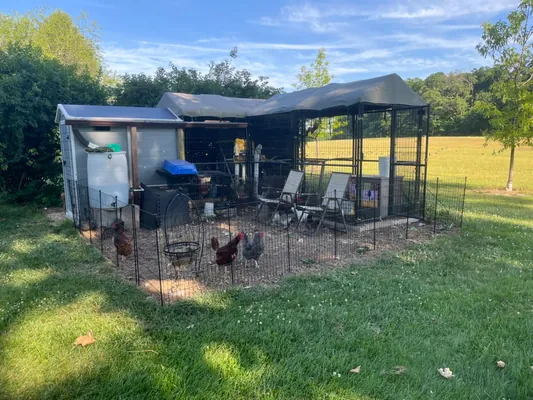
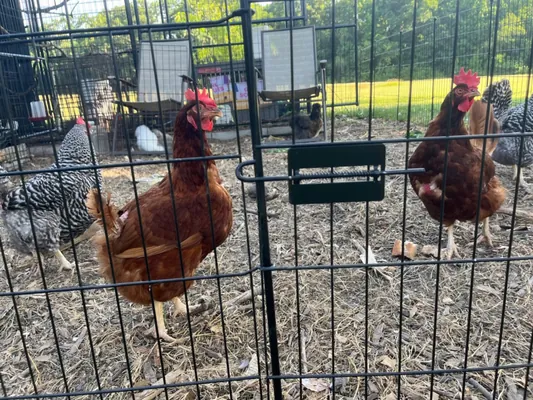
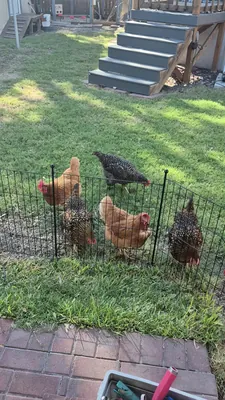
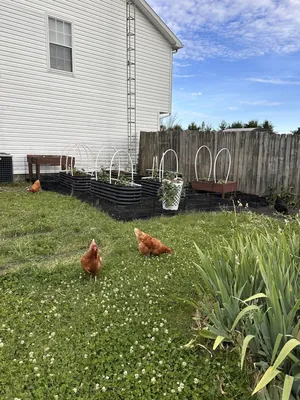
Chickens hop, and a fence that is too low becomes a perch. One buyer who tried a 12-inch garden fence said the chickens cleared it within a week, returned a 24-inch version because the birds would clearly jump it, and settled on 40 inches. Others use panels to keep chickens out of garden beds, or to widen a chicken run while keeping a dog out of it. Buyers also use them for geese on a lawn, turkeys on a patio, and goats near a porch. A buyer who wanted to extend a chicken run said the latch was a little flimsy but that chickens do not use latches, so it did not matter to them.
The practical advice is the same as with dogs: choose a height the birds will not hop, and watch the gate, because that is where animals usually get through.
How do you set one up on sloped, rocky, or hard ground?
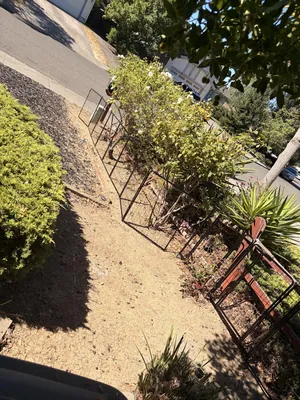
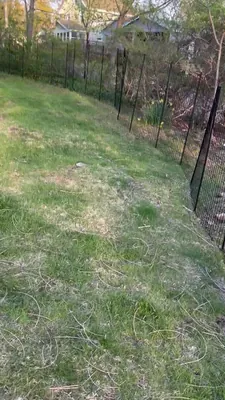
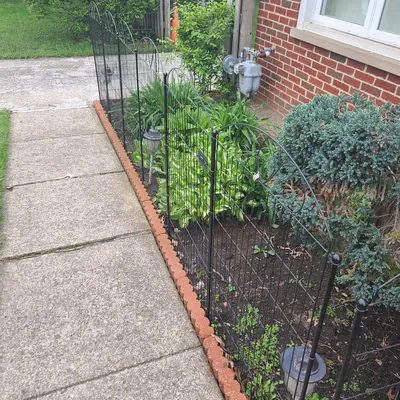
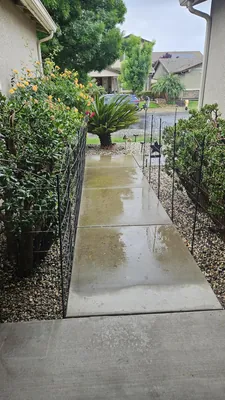
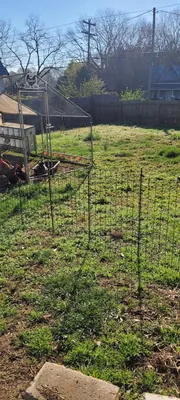
No-dig does not mean no prep. Buyers' installation stories fall into a few clear patterns. In soft or damp soil, the stakes slide in by hand. In dry or packed ground, a rubber mallet is the tool people recommend most, sometimes with a folded cloth over the stake to protect the finish. Pounding the stakes into rocky ground bent several of them, and one buyer installing on desert rock had to dig a shallow trough and level the area first.
A few habits make the job easier. Start from a corner so the line stays straight. Stagger the top and bottom of neighboring panels so they stand at the same height, because a buyer noticed photos of alternating heights and traced the problem to assembly. If you plan to move the fence, leave the stakes a bit above the ground so you can grab and pull them. Locate any sprinkler lines, drip tubing, or buried pet-fence wires before you drive stakes. On uneven ground, one listing says its panels have a small foot at the bottom so heights can be adjusted, and one buyer said the fence handled elevation changes without leaving gaps.
Will the fence stay put in wind or when a dog leans on it?
Panel fences stand because the stakes pass through the loops on the panel edges and into the soil. The stakes do all the anchoring, which is why buyers' fixes center on them. People in windy places stacked blocks at the base, zip-tied the stakes to the panels, or swapped in longer poles. One buyer who found long runs a little flimsy added 48-inch garden posts at gate openings, at corners, and every sixth panel. Another worried that a 35-foot straight stretch with no angles to brace against would wobble, and was pleasantly surprised at how firm it was once installed.
The materials matter, too. Several buyers described thin wire that bends when bumped, so they handled panels carefully and straightened the occasional bent one by hand. A parent who fenced a play area for a toddler said it was a good value but that a child who shakes the fence can bend the stakes. Make the choice with your actual household in mind.
What should you plan before choosing a gate?
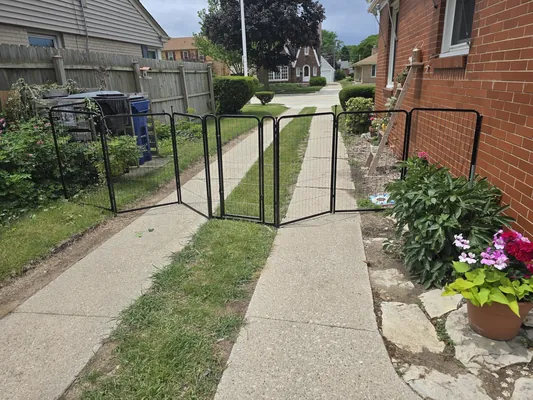
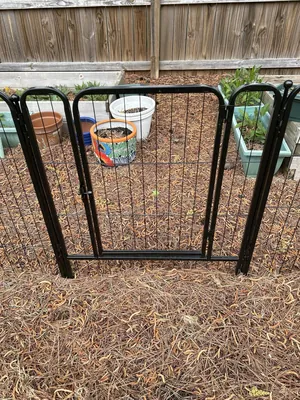
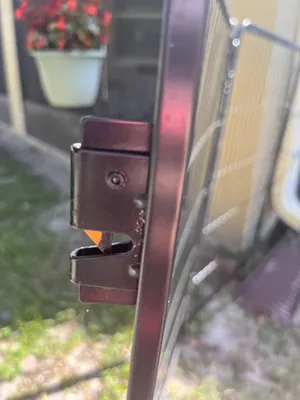
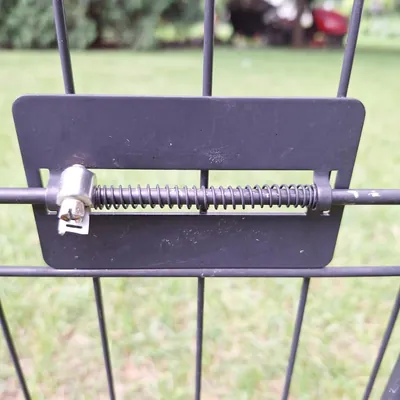
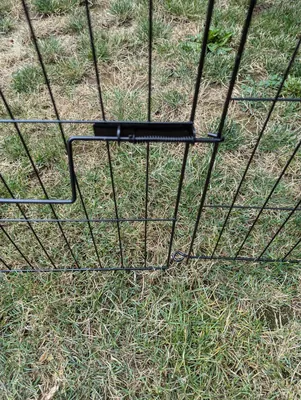
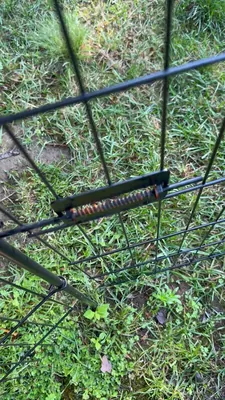
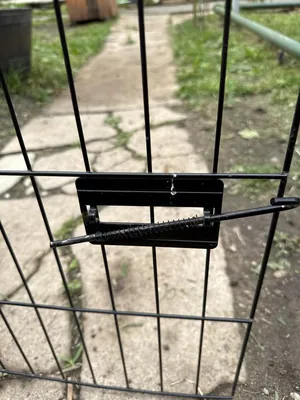
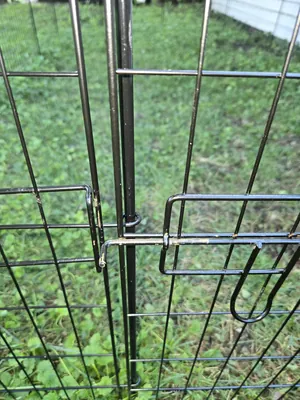
The gate is the part buyers mention most when they have a complaint. Gates with two latches can be a nuisance with a leash in one hand. Gates that need you to reach down to a low latch are hard on knees and hands. Others catch on the grass or ground, so the listing's tip about lifting the gate slightly is worth remembering. One buyer put the gate backward so the latch faced the side where reaching over was easier; another fashioned a hook latch to open it from the far side.
If a gate is not included, a loose stake can serve as one: one gardener left one stake out of a panel to open and close the fence. A mower may or may not fit through a standard gate, with some buyers saying a regular mower passes easily and others finding the opening narrow, so measure first. If you need to get through often, think about where the gate goes before you drive a single stake, and buy extra panels without a gate when the set you want is only sold with one.
Is a no-dig fence a good fit for renters and temporary needs?
This is where panel fences earn most of their praise. Renters like that nothing is dug up or screwed into the property. One buyer in a mobile home community with strict rules chose a removable fence for that reason. Others use panels at campsites, at a community garden plot, and as a quick pen while a backyard is under construction. One used a set as a temporary barrier at a wedding and planned to reuse it. Another takes theirs down weekly so the yard can be mowed and puts it back in a few minutes.
Buyers also mention that the panels are easy to take apart and store flat at the end of the season. If you plan to move the fence often, one buyer advises not driving the stakes all the way down, so there is something to grab when you pull them. Scratches and chips are worth touching up before the next season; see the section on rust below.
Will it rust, bend, or arrive damaged?
Finish quality is the most mixed part of the buyer feedback. Some people reported no rust after nine months of wind and rain, and a few after a year. Others noticed rust at the stakes, hinges, and gate locks within weeks. A few said the black coating chipped when they drove the stakes in, and a buyer who reordered said the second box had more scratches than the first. A mallet, a cloth over the stake, and a can of outdoor spray paint for touch-ups go a long way.
Shipping is another common comment. Some buyers received bent panels or stakes, a gate with a missing piece, or fewer stakes than the listing implied, and several said they could straighten the bends by hand. The boxes can be heavy; one buyer suggested opening the box where it is delivered if you cannot lift 50 pounds. Unbox and count everything within your return window, and check the number of panels, stakes, and gates against the exact version you ordered.
How much fencing do you actually need?
Measure the perimeter you want to enclose, then divide by the width of one panel. Panel widths in the listings above run from about 2 to 2.5 feet, and the length in a title may not match what you get: one buyer who enclosed about 250 feet said each box covered closer to 35 feet than the 49 in the title. Several buyers ordered a second set to enlarge the area after the first went up, and one wished they could order extra panels without a gate. Decide how many gates you want, keep a few spare panels for corners, and buy a little extra rather than stopping mid-project. Check that any panels you add later are compatible with the ones you already have.
What else can the same panels do in a garden?
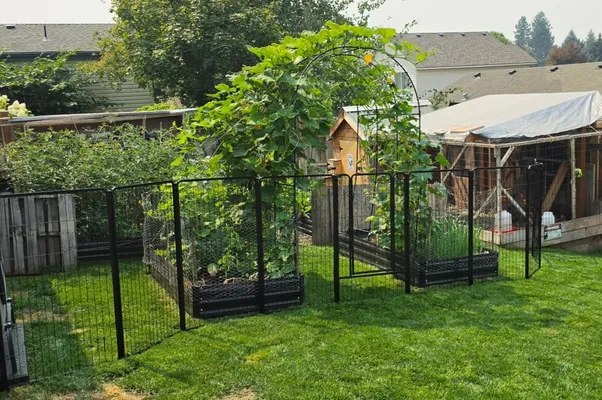
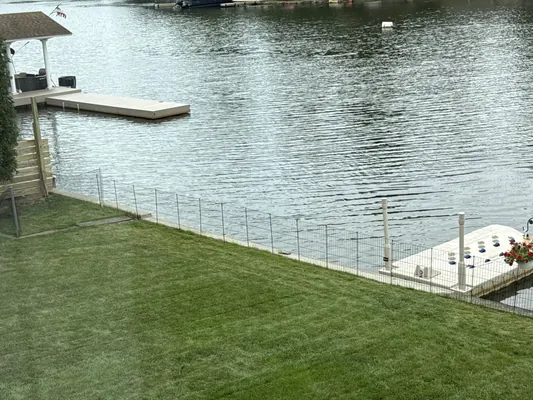
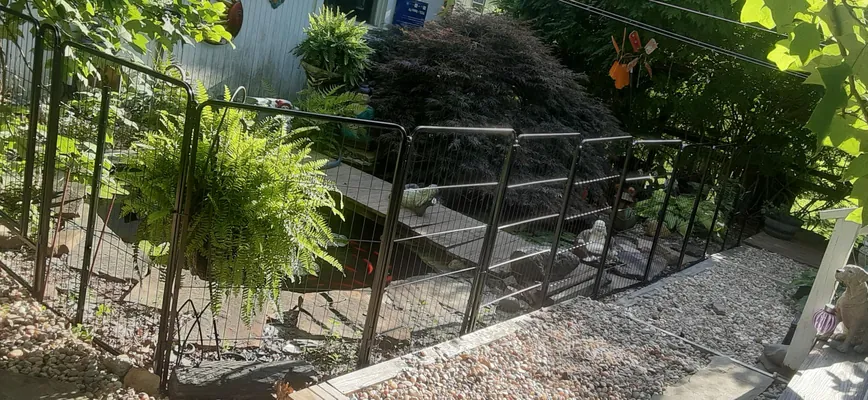
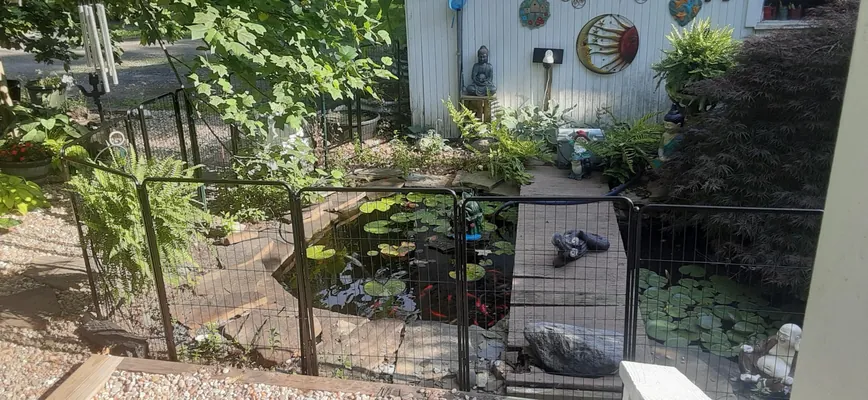
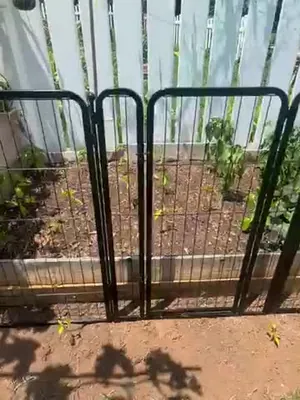
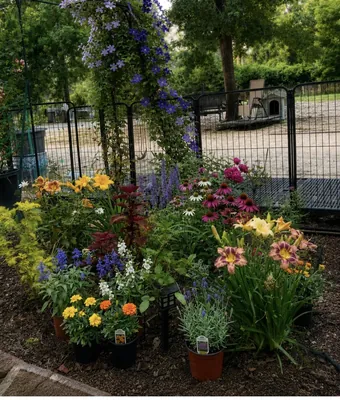
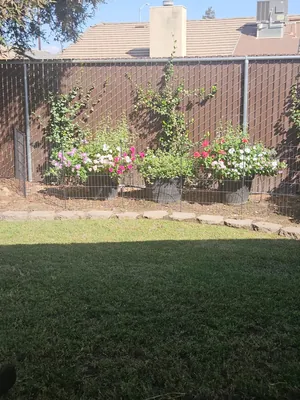
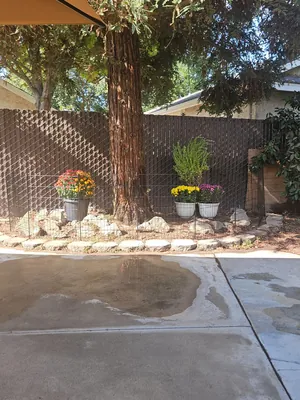
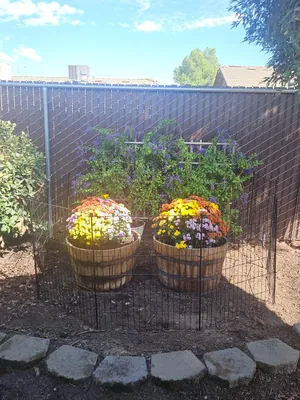
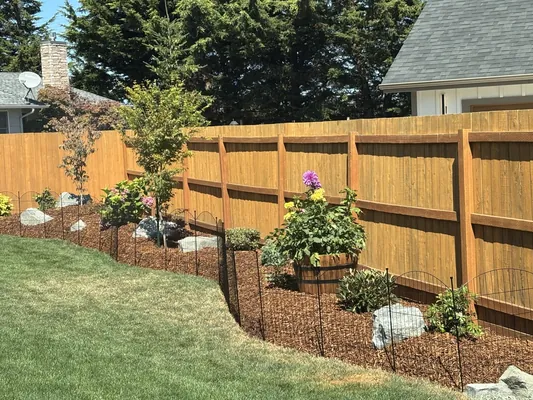
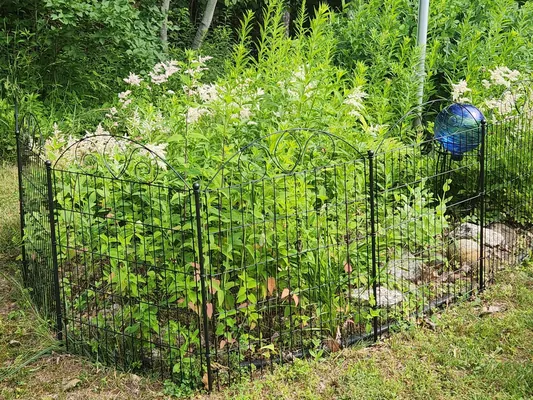
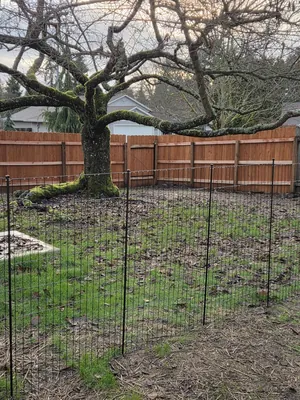
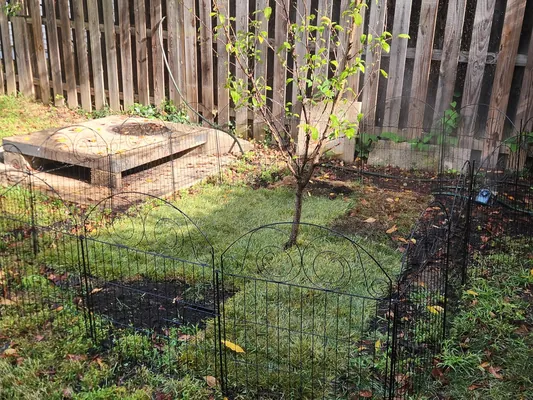
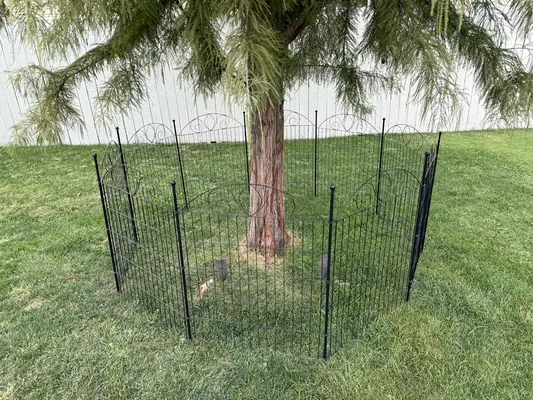
Buyers use the panels more creatively than the listings suggest. One set serves as a trellis for peas and cucumbers in raised beds; the grid is the right size for climbing plants. Another shields the base of a young tree from dogs and protects new sod while it roots. Others fence a pond edge, hold flowers upright as a border, keep a puppy from running under a raised deck, or support squash. The panels bend into a hexagon, a triangle, or a curve, so they work around a tree, a bed, or a tight corner.
When is a panel fence the wrong answer?
A no-dig panel fence is the wrong tool in a few situations. It is not for a dog that jumps, climbs, or runs at the gate. It will not stand up to heavy deer pressure, which calls for 6 to 8 feet of anchored fence according to University of Georgia Extension. It will not hold a persistent digger. And it should not be the only barrier for a pool, a pond, or a young child.
That last point deserves particular care. A few buyers used panels to keep dogs away from a pool or children away from a pond, which is a sensible visual boundary. But the Consumer Product Safety Commission's pool barrier guidelines recommend barriers at least 4 feet high, with no more than 4 inches of clearance at the bottom, no handholds or footholds, and self-closing, self-latching gates. These guidelines are not mandatory federal rules, and many states and cities have their own pool-barrier requirements. Panel fences that are 24 to 48 inches tall and stand on the ground do not satisfy those recommendations, so check local rules for any pool and do not rely on panels alone.
For everything else, a connected panel fence is a flexible, low-effort way to protect a garden bed, give a puppy a place to go, or block a spot where a dog keeps digging, as long as the height, spacing, and gate fit the animal you are really dealing with.