In this article
Toddlers learn by doing: dropping, stacking, pretending, pulling up, and talking about all of it with whoever is nearby. The toys that help most match what a child is working on this month and leave room for a grown-up to join in. A few well-chosen things on a low shelf, some floor time, and a running commentary from you will do more than a crowded toy bin. Below: what toddlers pick up through play, how to set up play for talking, standing and walking, hands-on thinking, and building, how to use sound-and-light toys sensibly, and a short safety check for anything that goes in the toy basket.
If your toddler ignores the expensive toy and plays with the box, nothing is wrong. Young children are not choosing between “educational” and “fun.” They are experimenting with how things work and how people respond. Here is what pediatric and public-health guidance says about that kind of play, and what buyers report about a handful of popular toddler toys.
What is a toddler actually learning when they play?
The American Academy of Pediatrics describes play as the way children build language, thinking, and social and emotional skills, and for ages 1 to 3 it points to ordinary things: reading and singing together, make-believe, blocks, shape sorters, and puzzles. It also says a parent's or caregiver's presence and attention matter more to a child's development than electronic gadgets.
The CDC's milestone lists show why this matters in daily life. Around 18 months, children are expected to try a few words beyond “mama” and “dada,” and the CDC's tips suggest simple pretend play, like “feeding” a stuffed animal with a spoon. By 2 years, children start putting two words together. Those skills grow out of back-and-forth play, not out of flashcards.
How do you tell which kind of play your child needs right now?
Watch what they keep repeating. A child who pulls up on every table is working on balance and leg strength. One who babbles to a stuffed animal or lines up animals is practicing language and pretend play. One who dumps, drops, and re-fills a basket is learning how objects behave. Match the toy to the thing they already repeat, and the rest takes care of itself. That is also why a toy that fits last month's interest can sit untouched this month.
How do you get a toddler talking through play?
Talk about what they are doing while they do it. “The cow is going in the barn. Moo! Now the pig.” Pause so they can answer, even with a sound. Pretend play gives you natural things to say, and familiar settings like a farm, a kitchen, or a garage give a toddler a script to copy.
A toy that makes a sound when something happens can start the conversation, as long as you stay part of it. Buyers of one barn playset describe a one-year-old who puts the animals down the chute again and again because it sings, a toddler who now knows every animal name, and a child who uses the barn as a garage for other toys. One buyer who identifies as a speech-language pathologist says the three learning levels support vocabulary, following directions, and pretend play. The listing describes more than 45 songs, sounds, and phrases, and figures sized for small hands.
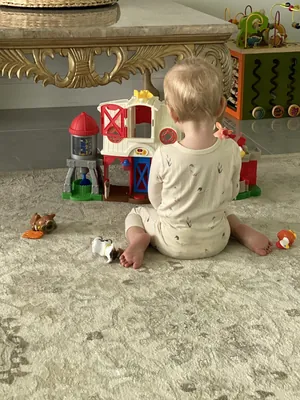
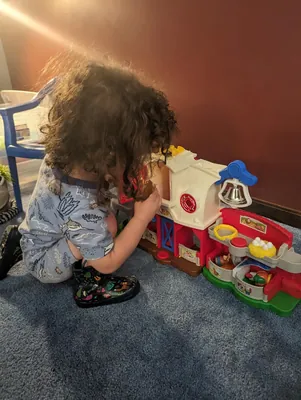
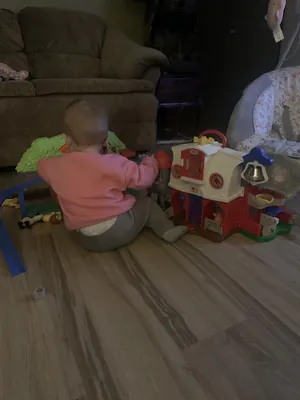
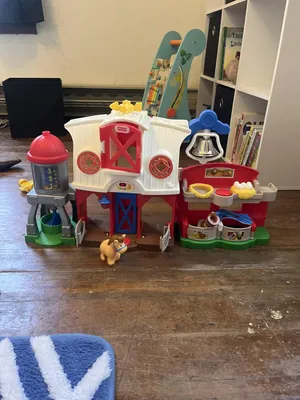
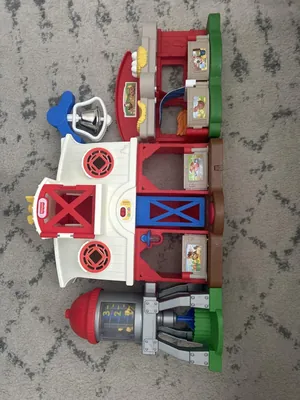
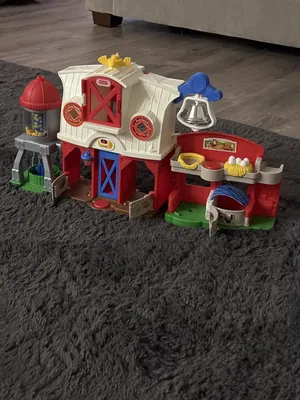
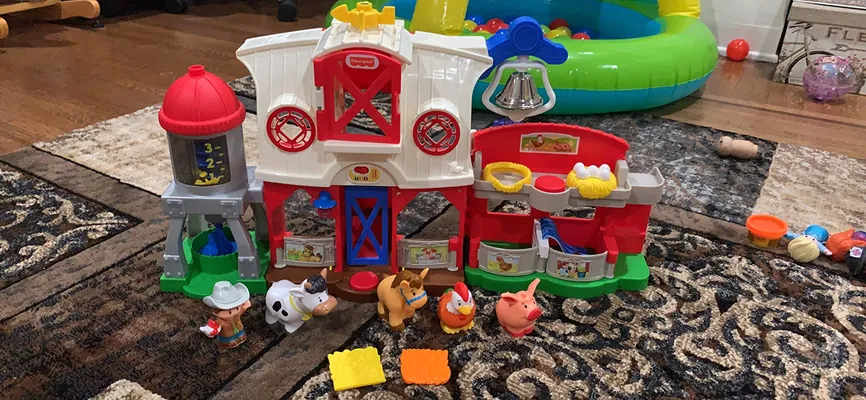
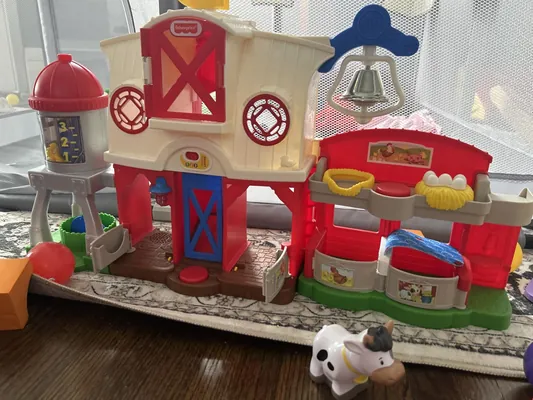
The caveats are mostly about condition on arrival. Several buyers report units that came with a stuck button, a barn door that would not open, a figure missing from the box, or sound that failed, and one said the silo feature was not worth keeping. One buyer noted that the voices are English only. Open it as soon as it arrives, press every button, and count the figures before it goes to the child.
Do music and sound toys help with language?
They can, when you use them as a prompt rather than a babysitter. Sing the words, copy the sounds, name the colors that light up, and let your toddler “turn” you off and on. A toy that records your child's voice and plays it back, like the activity table in the next section, gives them an immediate answer to a babble, which is exactly the loop language grows from. Buyers describe toddlers dancing to it first thing in the morning, and several found the volume pleasant rather than shrill.
How can play help a toddler who is learning to stand and walk?
Give them something to hold, something stable to pull up on, and a clear floor. Toddlers practice this for weeks, usually by cruising along furniture, so anything that stays put when they lean on it is useful. Buyers of one musical activity table say it stood up to a newly standing baby without tipping, was the right height for a 7-month-old who had just learned to stand, and still worked at a year old. The listing describes 100-plus songs, sounds, and phrases, a record-and-playback feature, and an age range of 6 months to 3 years.
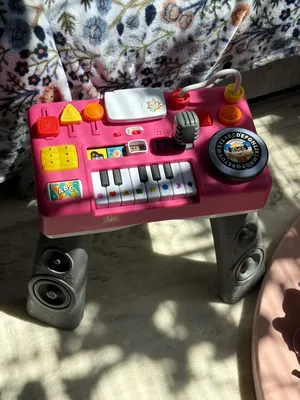
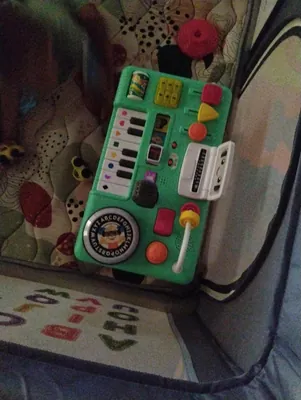
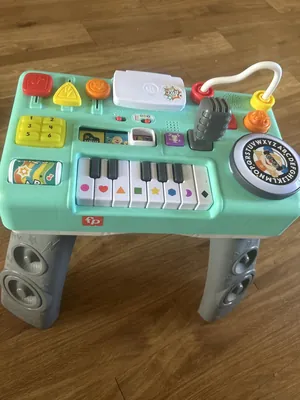
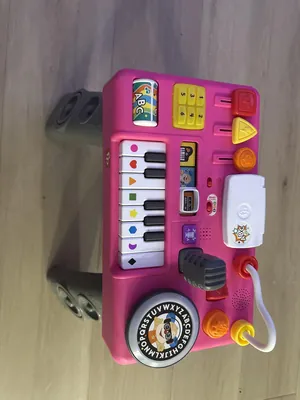
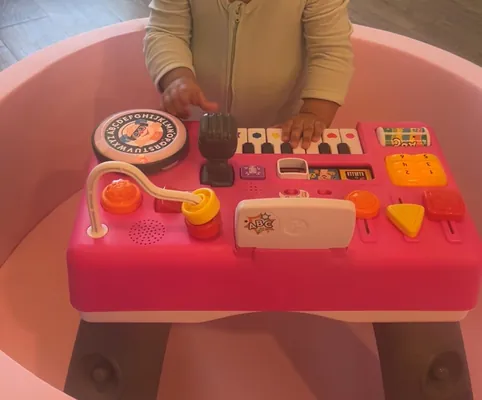
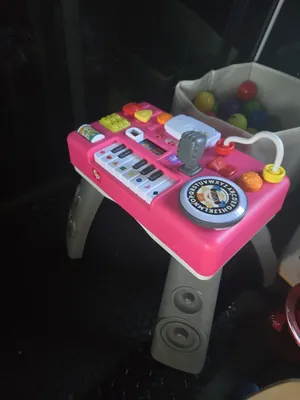
Be realistic about the age match. One buyer said a 2-year-old found it hard to figure out how to make songs, and another said a 1-year-old could not use it completely yet but still loved it. A third bought an extended warranty because an older model had sound glitches.
Are push walkers safe for a baby who is learning to walk?
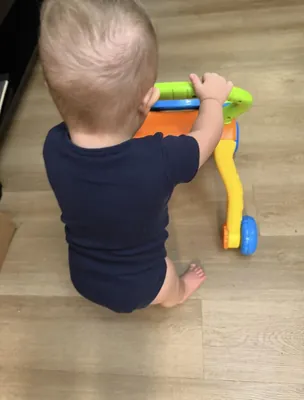
Two different products go by “walker.” The AAP calls the kind where a baby sits in a seat on wheels unsafe, even when an adult is nearby, because the child can move fast and reach higher, and it recommends stationary activity centers instead. A push walker is a different design: the child stands on their own feet and holds a handle. The AAP page does not address push toys, so if you are unsure, ask your pediatrician.
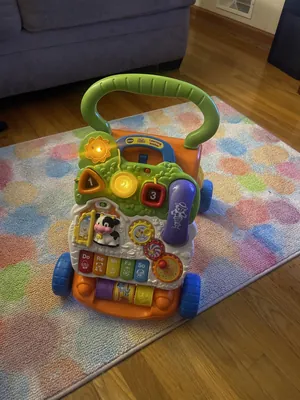
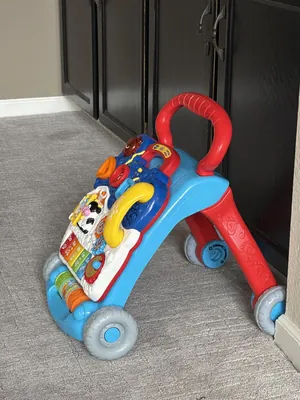
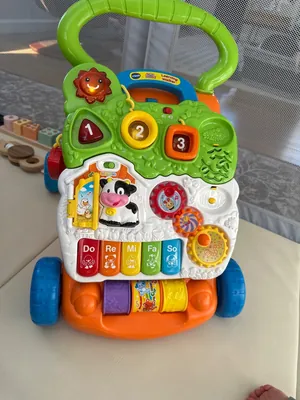
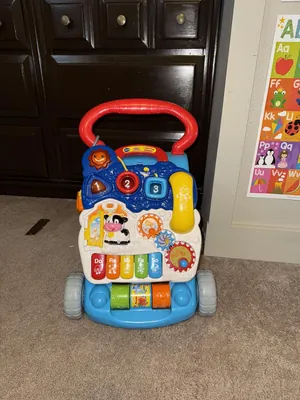
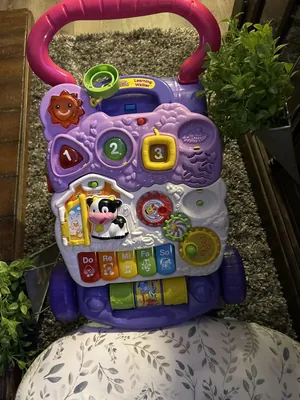
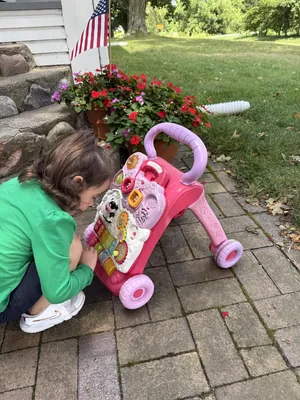
If you do use a push walker, buyers' reports point to what to check: a wheel setting that slows the toy on hard floors and a lock that holds it still for pulling up. Keep the floor clear of stairs and loose rugs. The listing describes a detachable activity panel that lets a baby who is not yet standing play seated, two speed settings, and five piano keys. Buyers praise the detachable panel and the speed control. One said the wheel lock did not stop it from rolling while the baby pulled up, and another thought the all-plastic body felt light. A tall 2-year-old outgrew it, since the height does not adjust, and the phone handset is easy to throw. One buyer noted that the newer version differs from the older one that most feedback describes, so details like the piano keys may not match older photos.



What toys build hands-on thinking?
Look for toys where a child does something and sees a result: a ball goes in, a piece fits, a block falls. That loop of try, watch, and try again is the earliest form of problem solving. It is also why toddlers repeat the same action fifty times. Repetition is the lesson.
Why does a toddler drop or knock things down again and again?
Because it works every time, and they are checking. A ball ramp makes that experiment visible. The listing for one three-level ramp describes light-up balls, small cars, a mallet, and a design that teaches cause and effect. Buyers say it goes together in a few minutes, that children from 1 to 3 enjoyed it, and that the balls were the favorite part more than the mallet. The sounds of balls rolling were called pleasant rather than annoying.
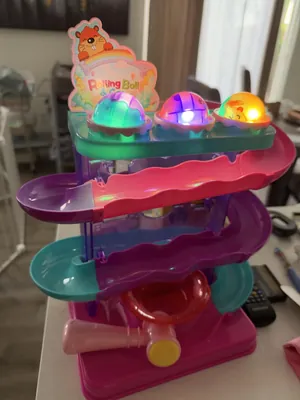
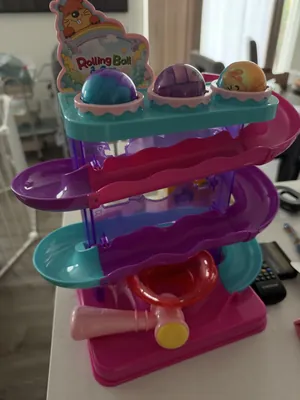
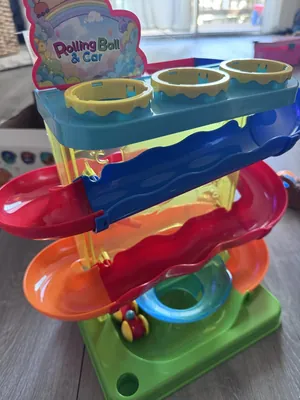
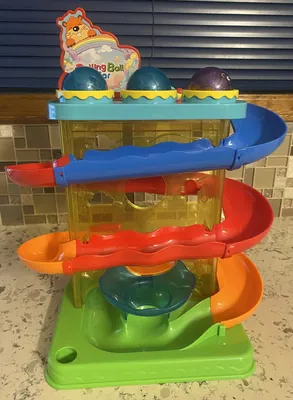
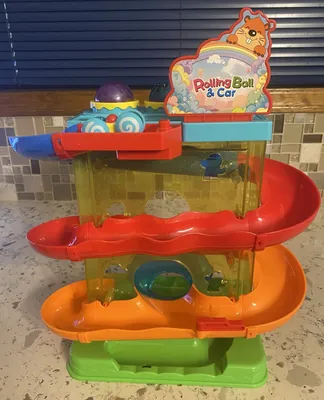
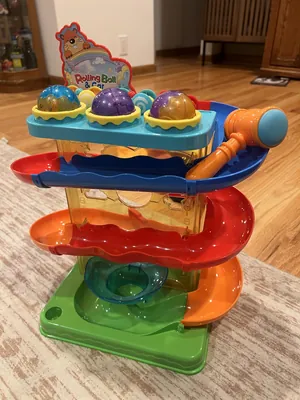

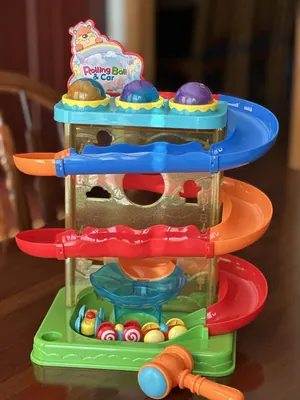
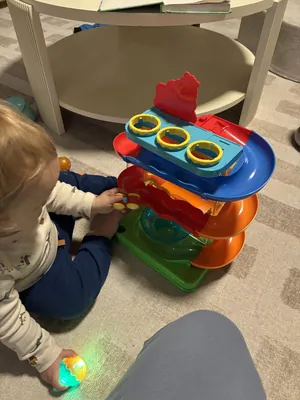
The complaints are specific. Balls sometimes stick on the slides, and collecting them from the narrow bottom tray is hard for small hands. The balls light up when the toy is bumped or someone walks past, so they can switch on at odd times.
Are puzzles too hard for a two-year-old?
Not if you choose chunky knob puzzles and start with one. Show your child the piece, turn it until it fits the hole, and then let them try. A few buyers rotated the puzzles rather than putting all six out, and one said that made it easier to sit with a child and talk about each picture. Letters, numbers, shapes, and animals give you plenty to name while they work.
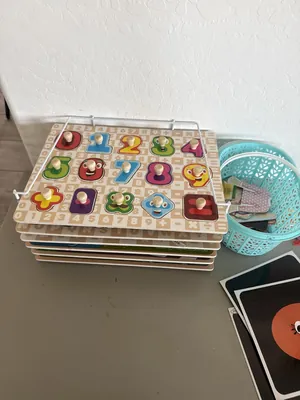
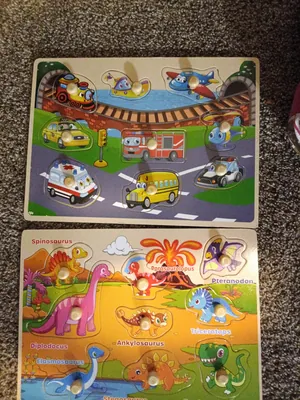
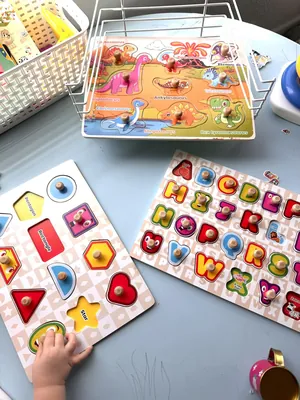
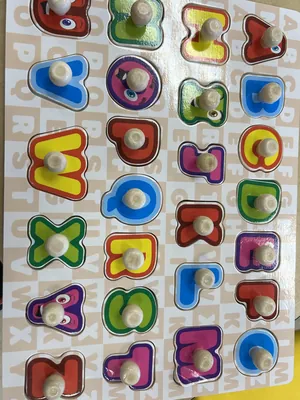
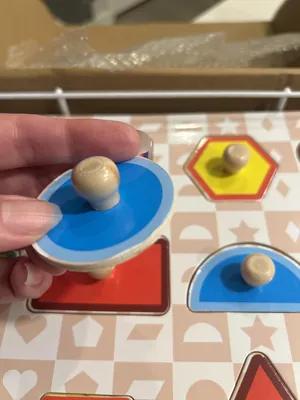
Be a careful shopper here. Most buyers like the pieces and the storage rack, but a few reported nails rusting and staining the board, stickers peeling, boards warping, and boards that felt more like pressboard than wood. One noted that a few pieces were small enough that they supervise play. Check each board when the set arrives, and set aside any that look damaged or have loose parts.
What about a box of stacking, sorting, and sensory toys?
Sorting and stacking are the other half of hands-on thinking. A set that mixes a stacking ring, soft blocks, a sorting cube, and a pull-string toy lets a child choose what to explore, and it is easy to rotate. The listing describes eight toys and says the set is suited to ages 6 months and up.
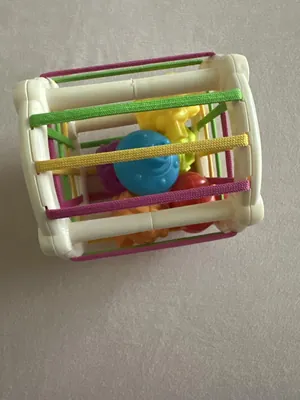
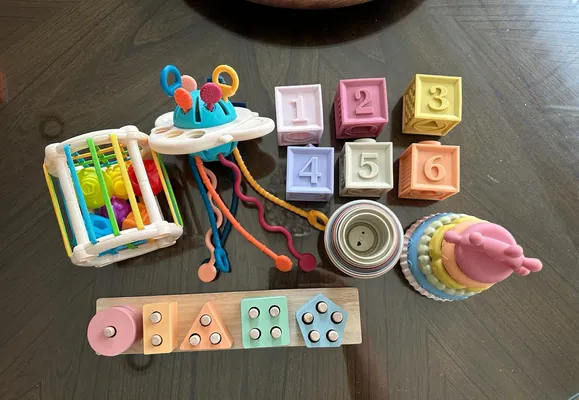
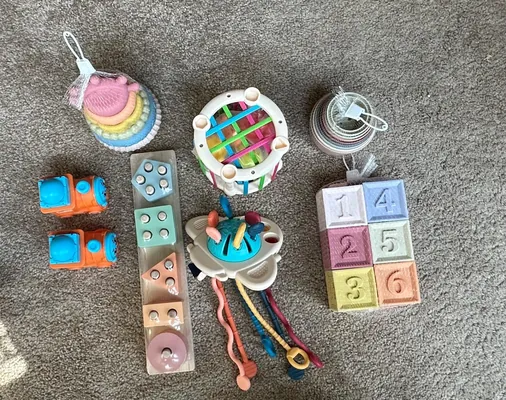
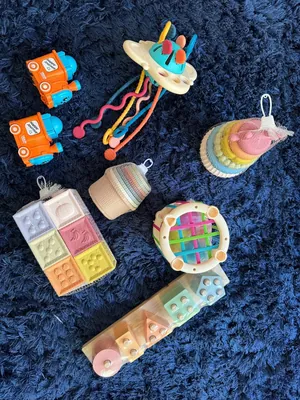
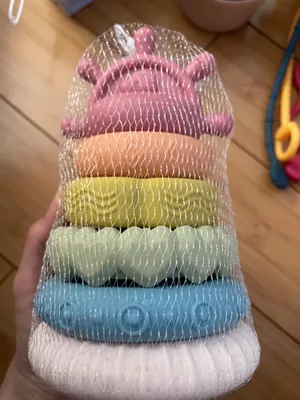
This is the product where buyers' warnings are loudest, so read them before you decide. Several reported that the caps on the small train toys pop off and are about the size of a coin, that rubber pieces on the spaceship toy and the tiny balls inside a shaker could be swallowed, and that some pieces snapped or arrived dirty. One reported that a home lead test strip turned positive on the rings and another reported mold on the soft toys. These individual claims cannot be verified here, but together they are reason enough to inspect everything. The CPSC's rule for toys meant for children under 3 is built around a small-parts test that approximates the throat of a young child; a piece that fits inside that test, or that comes off and then fits, is not for that child.
Are magnetic tiles a good building toy for toddlers?
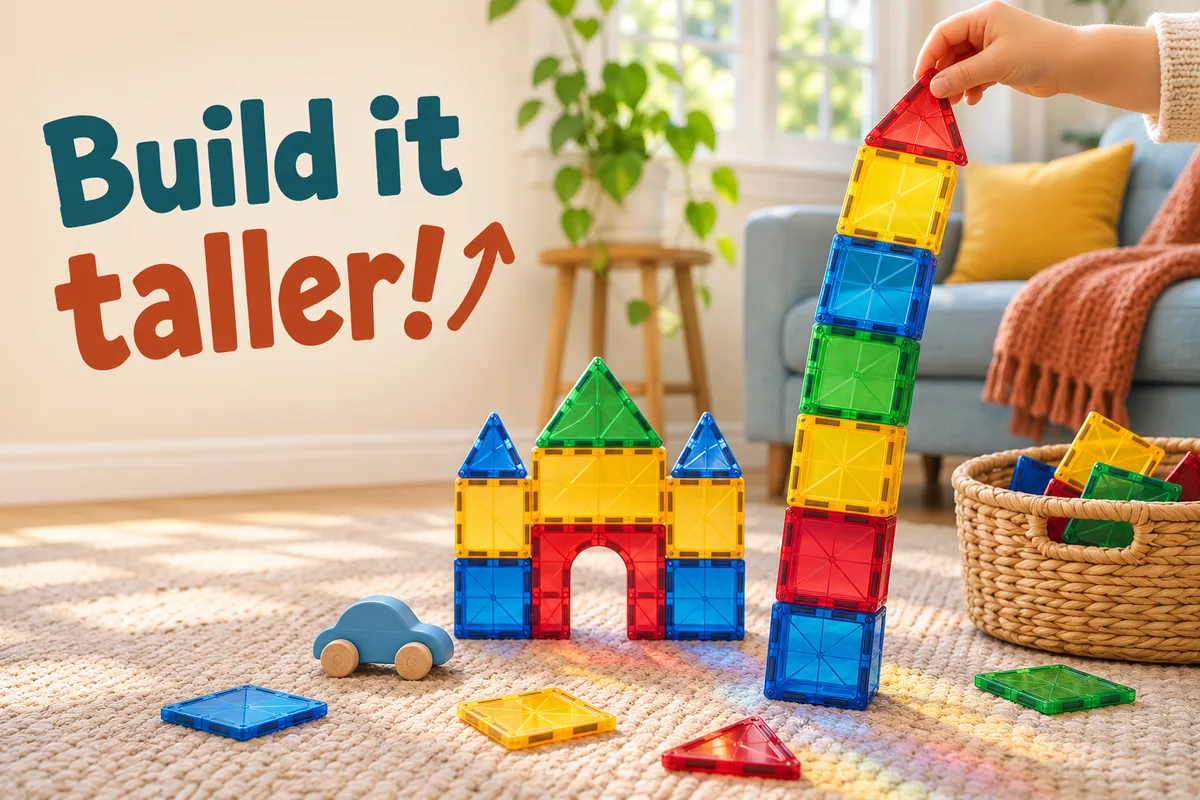
Open-ended building is some of the best play a toddler can do, because there is no wrong answer. They make flat patterns, then walls, then enclosures for toy animals or cars. The CDC's milestone lists put block towers at around age 3, so a younger toddler may mostly stack, sort by color, and knock down, which is fine.
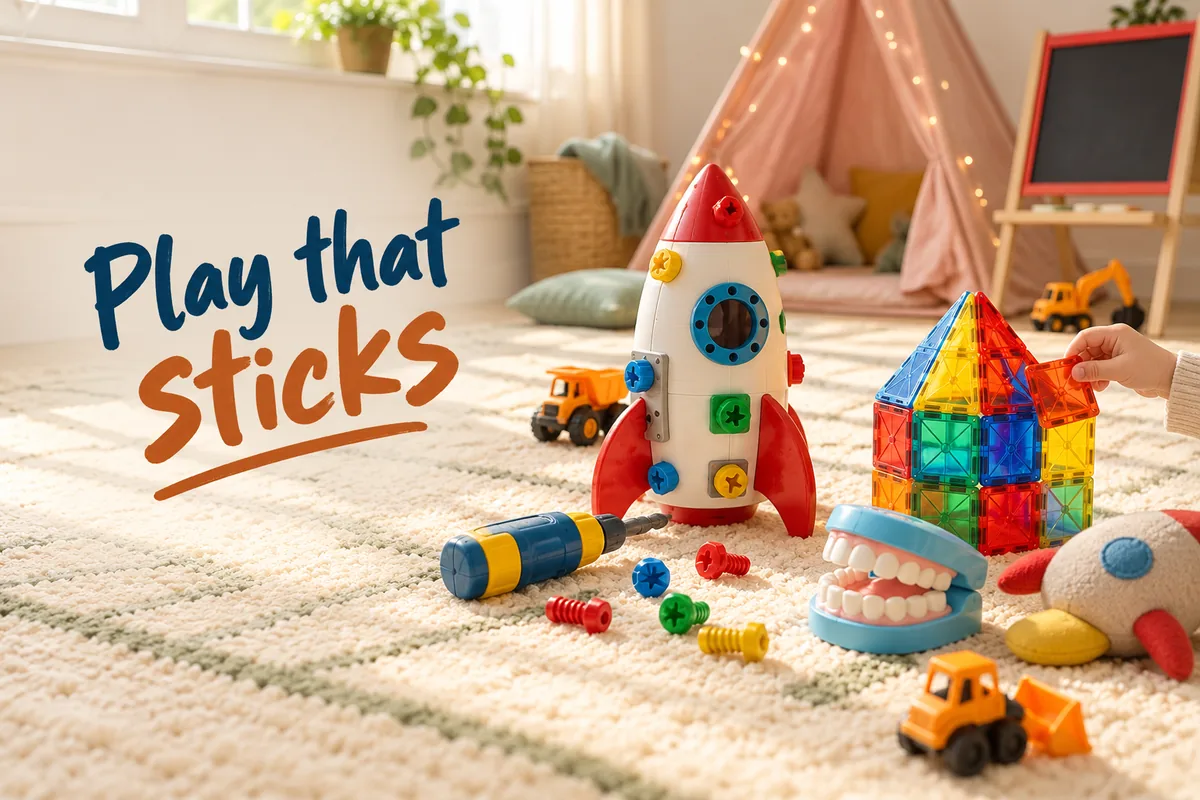
The listing for one 100-piece magnetic tile set says it is for ages 3 and up, though several buyers describe children of 20 months and up playing with it every day, usually building houses and garages for small toys, sorting colors, and counting. Buyers also say the tiles combine with other magnetic tile sets, and some report years of daily use. The cautions are as clear. Several report that the larger tiles cracked, especially when stepped on or when a tower fell, and one reported that the plastic packaging tray had shattered into sharp pieces in the box.
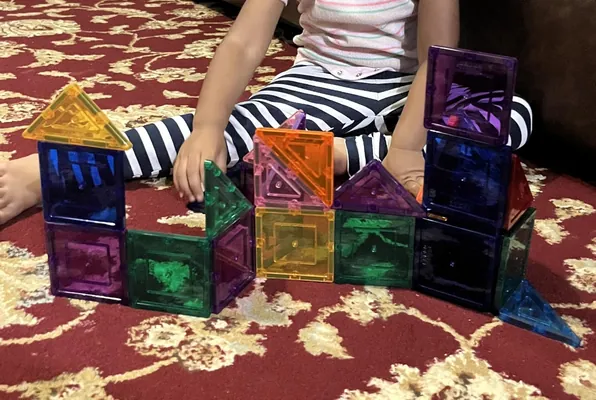
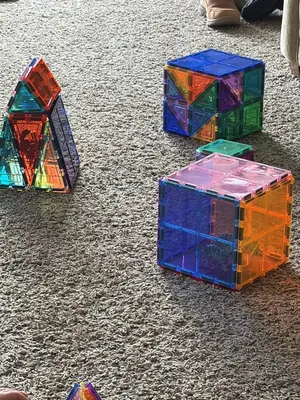
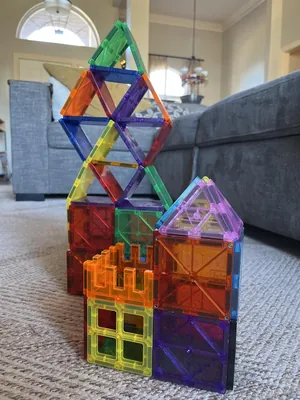
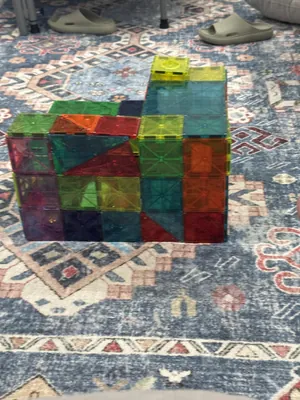


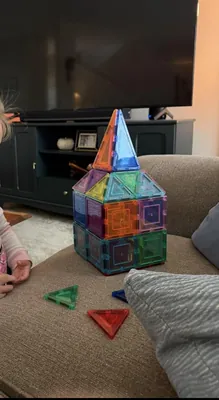
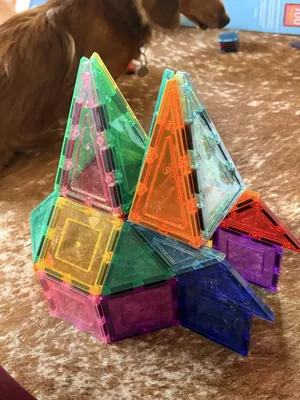
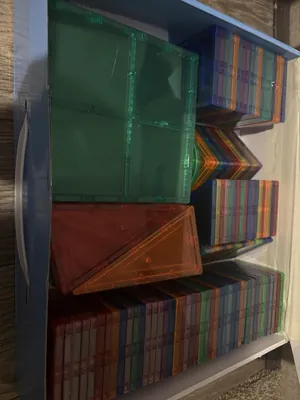
On magnets, the CPSC says swallowing two or more magnets can cause serious internal injuries because they attract each other inside the body, and that magnets in toys are much weaker than the high-powered kind but still need care. Toys are covered by a mandatory standard, which is not a reason to leave a toddler alone with them. Keep the set where an older sibling can use it without a younger child reaching it, and retire any tile that cracks.
Is a toy laptop or tablet a good idea for a toddler?
It depends on the toy and on you. The AAP's guidance for young children, Media and Young Minds, suggests avoiding screen media other than video chat before 18 months, and for 18 to 24 months, if you introduce any, choosing high-quality programming and using it together. A learning laptop with a small screen is not a tablet, but the same habit helps: sit with your child, press the keys with them, and say the letters out loud.
The listing describes a keyboard with letters A through Z and numbers 1 through 10, a screen that flips into a touch tablet, five learning modes, and an age range of 2 to 5. Buyers say toddlers carry it everywhere, use it in the car, and like “working” like a parent. One buyer with a 15-month-old said the child was obsessed with it, and another gave it to a 13-month-old who now says several letters. One buyer found it a good stand-in for a phone or tablet.
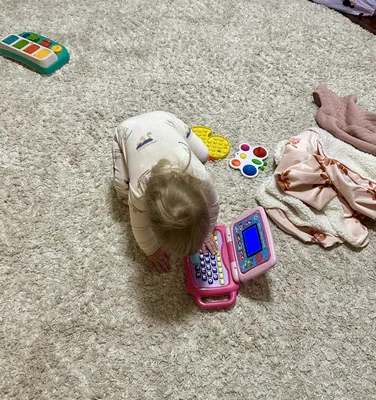
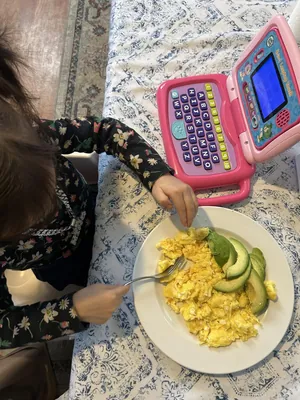
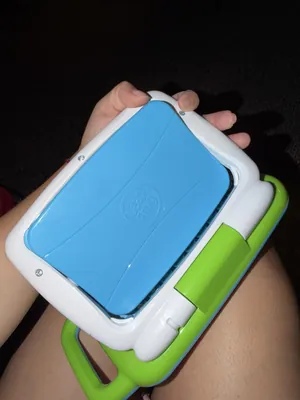
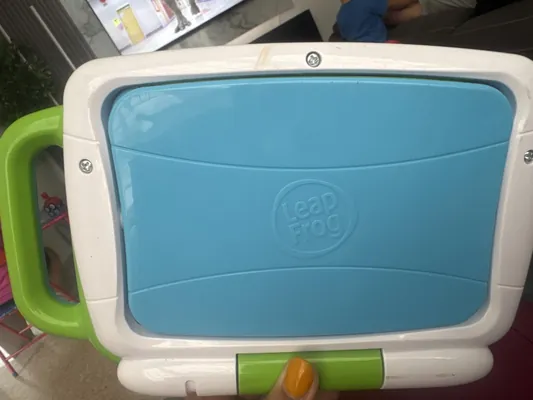
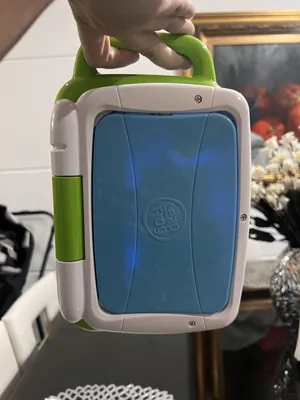
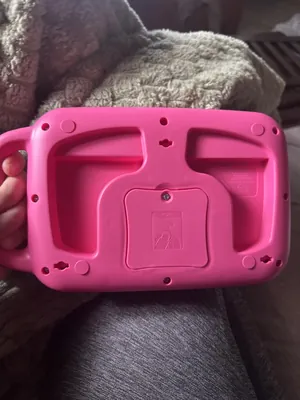
Plan for a few practical issues. The listing says it takes three AA batteries and that those supplied are for demo use only, so buy fresh ones; one buyer's unit would not turn on until they did. Others report the battery lasting about a month, the screen being dim in some rooms, the activities being limited, and the voices being English only. One buyer's buttons stopped working after 18 months, though tablet mode kept working. One buyer called the repetition “parent-exhausting,” which is fair warning if you plan to use it in the car.
How do you set up a play space that works?
Fewer toys out at a time tends to mean deeper play. A University of Toledo study of 36 toddlers aged 18 to 30 months found that children played longer with each toy and in more varied ways when four toys were out than when sixteen were. The sample was small, and the researchers suggested rotating a few toys into play while the rest are stored away. Many parents already do this by instinct.
- Keep 6 to 10 things on a low open shelf or in a shallow basket, and store the rest out of sight.
- Swap a few items every week or two. A toy that has been away for a month feels new.
- Sit on the floor at their level for ten minutes and follow what they do. Name things, copy sounds, and let them lead.
- Put toys that need an adult, such as magnetic tiles, on a higher shelf and bring them out when you can supervise.
- Leave open floor space. Toddlers need room to pull up, cruise, and drag things from room to room.
What should you check before a new toy goes in the basket?
- Small parts. The CPSC bans small parts in toys for children under 3. Check for caps, wheels, figures, and anything that comes off when pulled.
- Button batteries. The CPSC says toys with these batteries need a compartment that opens only with a tool, and a swallowed button battery can burn through the throat in as little as two hours. Check that the screws are in place and that nothing is loose. One buyer of a ball ramp toy found the batteries inside the balls are held by small screws, the kind of closure the rule describes.
- Magnets. Keep magnetic toys with older children and away from a younger sibling who mouths everything.
- Age labels. One buyer found a ramp toy's listing said ages 1 to 5 while the box said 2 and up. When they disagree, follow the box.
- Condition on arrival. Several buyers reported missing pieces, rust, or parts that arrived broken. Open, inspect, and test before gifting or handing over.
If your toddler plays with a pot and a wooden spoon for twenty minutes instead of the toy you bought, that is play doing its job. A good toy is one that gets used, and the best test is whether your child comes back to it.