In this article
Most people shed 50 to 100 hairs a day, and a bad stretch of shedding after childbirth, an illness, or fast weight loss usually settles on its own within months. Slow thinning at the part or temples is a different problem, and it tends to need a longer, more deliberate plan. This guide helps you work out which one you are dealing with, what is worth doing before you spend money, how long to wait before judging anything, and how to use a scalp spray, serum, or oil if you decide to try one.
Most people shed 50 to 100 hairs a day, and a bad stretch of shedding after childbirth, an illness, or fast weight loss usually settles on its own within months. Slow thinning at the part or temples is a different problem, and it tends to need a longer, more deliberate plan. This guide helps you work out which one you are dealing with, what is worth doing before you spend money, how long to wait before judging anything, and how to use a scalp spray, serum, or oil if you decide to try one.
The products in this guide are the kind people search for when the part widens or the shower drain fills up: leave-in sprays, droppers, oils, and one over-the-counter drug. Customer experiences with them are mixed, and the research behind the ingredients is thinner than the labels suggest, so the advice below leans on dermatology sources first and buyer feedback second.
Is it normal shedding, or is my hair actually thinning?
The American Academy of Dermatology draws a useful line between the two. Shedding 50 to 100 hairs a day is normal. When the body sheds significantly more than that, it is called excessive hair shedding (telogen effluvium), and it commonly follows a stressor: losing 20 pounds or more, giving birth, a high fever, an operation, recovering from an illness, or stopping birth control pills. The shedding often shows up a few months after the event. For new mothers it typically peaks around four months after birth, and within six to nine months the hair tends to return to its usual fullness.
Many buyers describe exactly these situations. Some say their shedding began after weight loss, after having a baby, around menopause, after cancer treatment, or during a stretch of heavy stress. Their stories are a reminder that the trigger often matters more than the product: if the stressor has passed, the shedding may stop whether or not you use anything.
Hair loss is a different mechanism. The AAD says it happens when something stops hair from growing, and the most common causes include hereditary hair loss, an immune system overreaction, some drugs and treatments, hairstyles that pull, harsh hair-care products, and a compulsion to pull out hair. Women with hereditary hair loss often notice gradual thinning, and the AAD notes that many people with it keep losing hair without treatment. Treatment helps many people, but not everyone.
How can you tell which one you have?
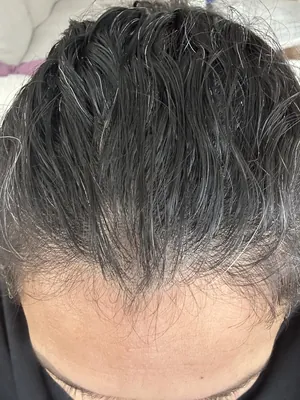
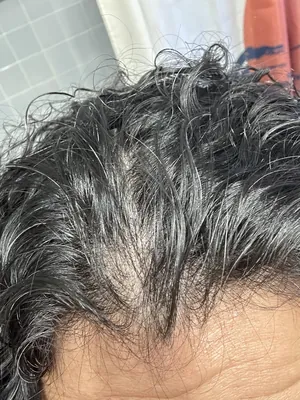
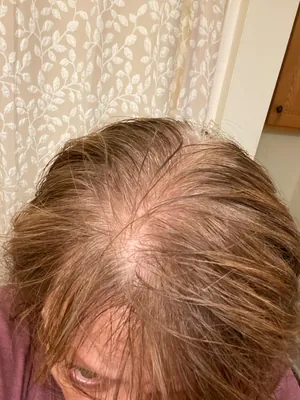
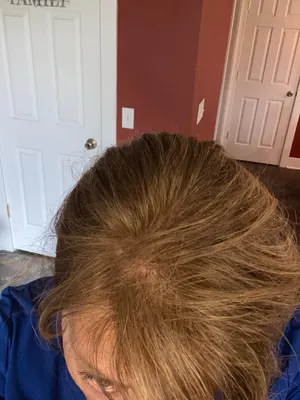
- Look at the timing. Sudden, widespread shedding a couple of months after a big event points toward shedding. A slowly widening part or thinning temples over years points toward hereditary loss.
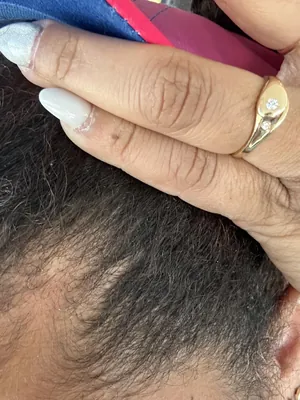
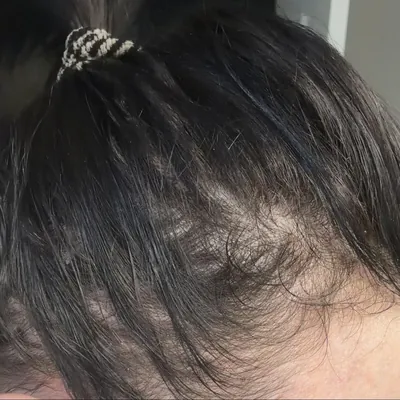
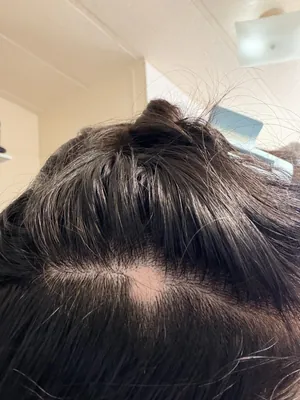
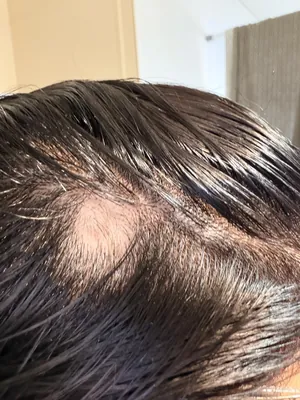
- Look at the pattern. Even thinning all over is common with shedding. Round or patchy bare spots, or a receding hairline, are different and deserve a professional look.
- Count what you see in context. A few strands in the brush on a wash day are ordinary. Clumps that keep coming out for weeks are not.
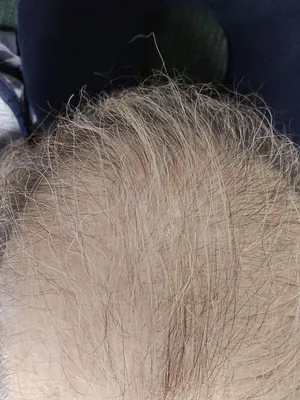
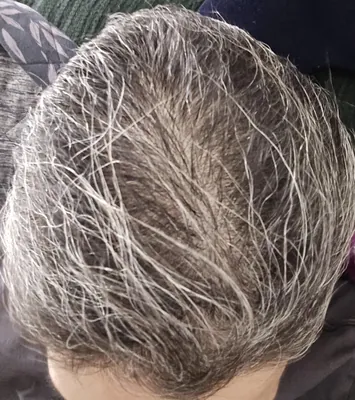
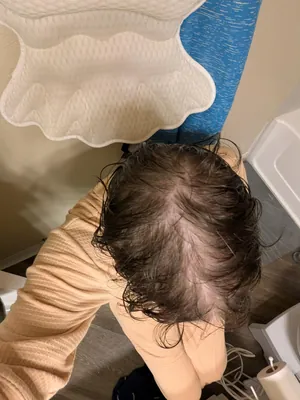
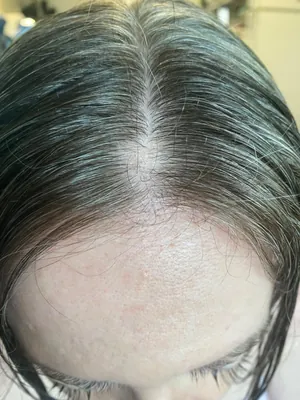
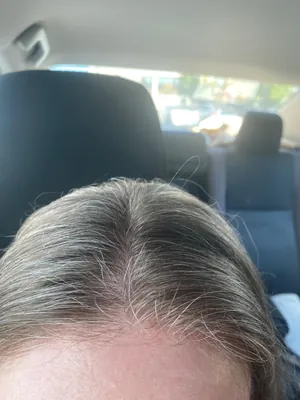
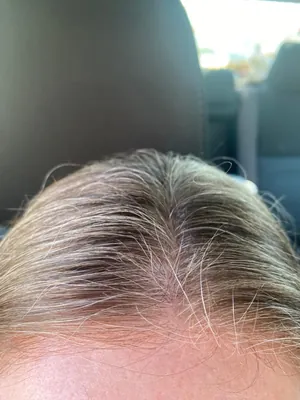
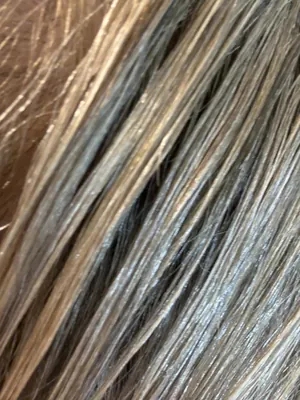
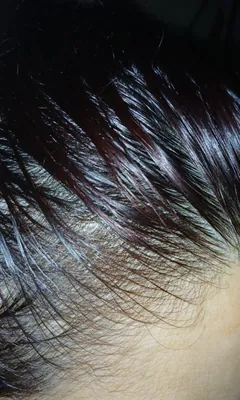
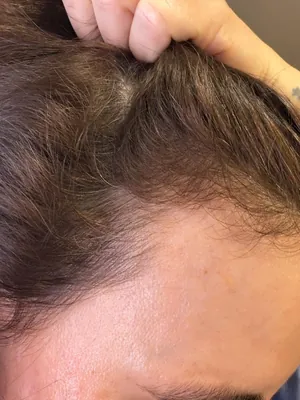
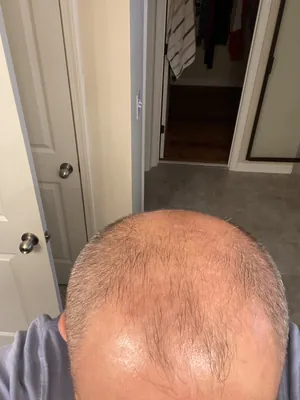
The AAD adds that some people have both, and that a dermatologist can tell the difference and look for causes. The photos below show how these changes can look at the part and crown, along with the shed hair some people collect to gauge how much is coming out.


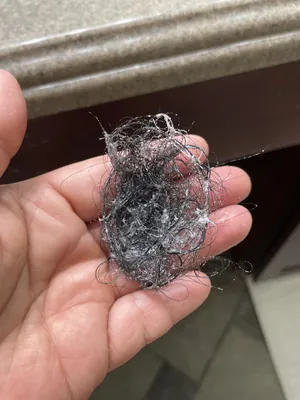
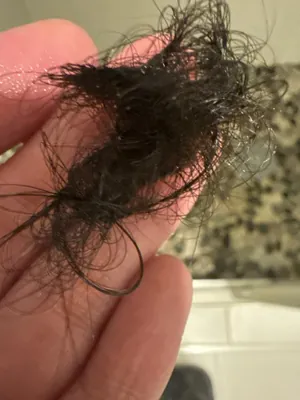
What can you do before buying anything?
Because shedding often resolves on its own and several causes of thinning are things you can change, a few low-cost steps come first.
Are your hairstyles or products part of the problem?
The AAD lists hairstyles that pull on the hair and harsh hair-care products among the causes of hair loss. Tight ponytails, braids, and buns worn day after day, heavy heat styling, and strong chemical treatments are the usual suspects. Loosening a style and giving the hairline a rest costs nothing, and it is a reasonable first experiment.
Could a medication or treatment be involved?
Some drugs and treatments cause hair loss. The AAD advises talking with your doctor if you suspect one, because stopping a treatment abruptly can cause serious side effects. Several buyers mention hair changes alongside medication changes or cancer treatment. Hair lost during chemotherapy or radiation tends to regrow once treatment ends, according to the AAD, so your medical team's guidance matters more than any bottle.
What should you track?
Take a photo of the same spot in the same light once a month: the part line, the temples, and the crown. Hair changes too slowly to judge by memory, and photos keep you honest in both directions. They also give a dermatologist something concrete to compare if you do book a visit.
How long before you can tell if something is working?
Hair grows slowly, so any honest answer is measured in months. The AAD says postpartum shedding takes six to nine months to return to normal fullness. MedlinePlus says you must use minoxidil for at least four months, and possibly up to a year, before you see any effect. In the small rosemary oil trial described below, hair counts had not changed at three months and rose by six months.
That timeline sits awkwardly beside some customer experiences. Plenty of buyers report less hair in the shower within a week or two. Others report no change after three or six months. Several describe a smoother, shinier look right away, which is a cosmetic effect on the hair, not regrowth at the follicle. When a bottle promises visible results in a few weeks, it is worth asking which of those two things is being measured.
A practical rule: give a routine at least three to four months of consistent use before deciding, keep the monthly photos, and change only one thing at a time so you know what to credit. If your hair is still shedding heavily or thinning after that, that is worth bringing to a doctor.


What do hair-growth sprays and serums actually contain?
Most scalp sprays and serums in this category share a handful of headline ingredients: rosemary oil, caffeine, biotin, castor oil, and fermented rice water. The evidence behind them is uneven. The best-known human study is a six-month randomized trial of rosemary oil in 100 people with hereditary hair loss, which compared it with 2% minoxidil. Hair counts rose in both groups by six months with no significant difference between them, and scalp itching was more frequent with minoxidil. That is encouraging, but it is a single small trial of one rosemary oil preparation, not of every spray with rosemary in its name.
For caffeine, biotin, and rice water, the sources checked for this guide did not include trials of sprays like these, so treat the effects described on those listings as the sellers' claims. That does not make them useless. A pleasant, light mist is a reasonable thing to buy for how it feels, and a poor thing to buy on the strength of a promised percentage of regrowth.
Many buyers care as much about how a product feels as about regrowth, and the feedback is consistent on that point: lightweight, not greasy, and easy to layer under styling products.
What does a caffeine and biotin leave-in spray look like in practice?
One example is a leave-in mist with caffeine, biotin, and castor oil. Buyers describe it as watery, quick to dry, and easy to use before styling, with a light floral scent. Reports on results vary widely. One buyer in their sixties said they saw a difference around four months and eventually cut back from nightly use to a few times a week. Another used it twice a day for more than three months and saw no change in their shedding. Several say the 1.7 oz bottle runs out quickly, and one buyer pointed out that the ingredient list includes common preservatives and solvents despite natural-sounding marketing, so it is worth reading the label if that matters to you.
What about fermented rice water?
A rice water mist is the budget-friendly end of the category. The listing for one large bottle says to spray the scalp, massage, and leave it on for 30 minutes or overnight, two to four times a week, and to use it as a leave-in on the lengths too. Buyers in very different situations praise it: a person recovering from chemotherapy, someone with stress-related shedding after an accident, and another who said the mist calmed a flaky scalp. Others found the smell off-putting, one buyer's partner said it smelled rotten, and a few said it felt too oily for morning styling. Check the size you order, because the smaller bottle gets complaints about how quickly it runs out.
Where does minoxidil fit in?
Minoxidil is the one ingredient here with a long track record as a hair-regrowth treatment. MedlinePlus describes it as a liquid applied to the scalp, usually twice a day, to stimulate hair growth and slow balding. It says the drug is most effective for people under 40 whose hair loss is recent, that it has no effect on receding hairlines, that it does not cure baldness, and that most new hair is lost within a few months after stopping.
The same page lists the practical cautions. Apply it to dry hair and scalp only, never to a sunburned or irritated scalp. Wash your hands afterward and keep it away from your eyes. Tell your doctor and pharmacist if you are pregnant, planning to become pregnant, or breast-feeding, or if you have heart, kidney, liver, or scalp disease. Scalp itching, dryness, scaling, and burning are the common side effects, and weight gain, swelling, trouble breathing, rapid heartbeat, chest pain, or lightheadedness call for an immediate call to a doctor.
Because it is a drug, a minoxidil product carries labeling on strength and on who it is meant for, and those details differ from cosmetic sprays. Read the label against your own situation, and ask a pharmacist if you are unsure.
One listing offers a 5% minoxidil spray with added biotin and rosemary in a two-bottle set. It has a high average rating, but most of the feedback is about convenience: buyers like the spray applicator, the quick absorption without a greasy or sticky feel, and the value of two bottles. Few describe results yet, which fits the timeline above, and most of the comments read as first impressions. If you are drawn to it, the useful question is whether the product suits you, not whether other people like the bottle.
Should you choose an oil, a mist, or a dropper serum?
The format changes how a routine fits into your day more than the ingredient list does. Buyers keep returning to the same trade-offs.
When is a rosemary oil the right format?
Oils are the heaviest option, and buyers say so plainly. Many call a rosemary oil blend greasy, a few describe it dripping or leaving a mark on the pillow, and one buyer with fine, straight hair found it too heavy even in a small amount. Others with thicker or curly hair say it works well, and several use it as a pre-wash treatment: massage it into the scalp, leave it on for anywhere from 15 minutes to several hours, then shampoo twice. Two tips recur: use it on damp hair so it spreads and absorbs, and plan to wash it out instead of styling around it.
It also helps to read the label. A buyer's photo of one popular oil shows grapeseed oil listed first and rosemary near the end, so it is mostly a carrier oil blend with a little rosemary. That is common for oils, and a reason not to assume a bottle named after one ingredient is mostly that ingredient. Expiration dates are another recurring comment, so check the date when it arrives.
When does a dropper serum make sense?
Droppers deliver a measured amount directly to the scalp, which suits people who want to target a hairline or part instead of spraying everything. One watery dropper serum is popular with buyers who have fine hair, who say it does not leave a greasy film and layers under styling products. Its fragrance is mild for some buyers and strong for others. One buyer said regrowth stopped when they stopped using it, which fits what MedlinePlus says about minoxidil and is a reminder that any routine is a long commitment.
The drawbacks are mostly practical. The bottles are small for the price, and covering a whole scalp can take several droppers. One buyer reported burning after three uses of a serum, while another sensitive-skin buyer found a different one soothing, which is exactly why a patch test is worth doing.
How do you get a product onto the scalp instead of the hair?
Almost every product here works, if at all, at the scalp, so where it lands matters more than how much you use. A spray aimed at the lengths mostly coats the strands.
- Part first. Section the hair into rows, then spray or dribble along each part. One buyer with thick hair parts sections and applies the serum as close to the scalp as possible, then massages it in.
- Massage for a minute or two. Many labels recommend it, and buyers who use a scalp massager say it also helps the routine stick.
- Damp or dry? Follow the directions on your bottle. Minoxidil goes on dry hair and scalp, while many oils and mists are used on damp hair. Mixing these up is a common reason a routine feels greasy or ineffective.
- Do not overapply. MedlinePlus says using more minoxidil does not produce faster growth and may cause more side effects. The same logic applies to cosmetic products: extra mostly makes hair look oily.
- Pick a time that suits your life. Some buyers apply at night a few hours before bed so it dries. One buyer prefers mornings for a caffeine serum.

What if you want something that works on wet and dry hair?
A fine-mist spray with a rosemary scent is the most flexible format. Buyers use one herbal spritz on both wet and dry hair: shake, spritz, and style. Many report a pleasant scent and a non-oily finish, and some describe gradual changes in thickness after a few weeks. The complaints are mostly about packaging, because several bottles arrived with the lid loosened and a quarter of the product leaked into the bag. Check that the cap is tight and keep the bottle upright.
Another mist, with biotin, rosemary, and peppermint, is described by buyers as light as water, with a herbal, slightly cooling feel. Several mention softer hair and less shedding within a few weeks, and one mentions less dandruff. The bottle is small, and some buyers wish it were larger because they use it daily. Others found the scent strong, and one received a bottle with an expired date, another reminder to check.
What if your scalp itches, flakes, or burns?
Any product put on the scalp can irritate it, and rosemary, caffeine, and fragrance are not exceptions. Buyer feedback includes an itchy, flaky scalp that kept one person awake, lightheadedness and disorientation after each use of one spray, and burning after only a few uses of one serum. Other buyers with sensitive skin say similar products felt soothing. Both kinds of experience are real.
- Patch test first. Apply a small amount behind the ear or on a small area of scalp and wait a day before using it more widely.
- Stop if it hurts. Persistent itching, burning, swelling, or a rash is a reason to stop and, if it does not clear, to call a doctor.
- Keep products away from your eyes. MedlinePlus says to rinse with plenty of cool water if a minoxidil product reaches the eyes or sensitive skin, and to call a doctor if irritation follows.
- Do not start several new products at once. If something irritates you and you started three things together, you will not know which one it was.
If you have a scalp condition such as persistent dandruff or flaking, it is worth having it looked at. Some buyers say a rosemary or rice water spray made their scalp feel better, others say it made things worse, and a clinician can tell you which situation you are in.
What should you check before you commit to a bottle?
Because results take months, the real cost of a routine is the price of a bottle times the number of bottles you will go through. Small bottles disappear fast with daily use, and several buyers across these products say so. Before buying, check the volume as well as the price, and think about whether you will use it nightly or a few times a week.
Buyers also report a pattern of packaging problems that is worth knowing before you order a glass bottle or a leak-prone spray:
- Boxes that arrived open, with the bottle looking used or less full than expected. If a product arrives that way, do not use it, and contact the seller.
- Glass dropper bottles that cracked in transit or had a blunt tip that scraped the scalp.
- Label coatings that flake onto hands, into hair, or into the product after repeated use in a humid bathroom.
- Lids that loosen and leak in shipping, especially on larger bottles.
- Expiration dates that are close or already past. Look at the date as soon as it arrives.
One premium scalp serum in a 1 oz glass bottle shows several of these patterns in buyers' comments. Many say it works for them and describe fine, non-greasy application, and a few find it oily on very fine hair. At the same time, a long list of buyers describe boxes arriving open, a flaking label, and a dropper tip that is hard on the scalp. If you are paying a premium, inspect the seal before first use.
A final caution applies to listings in general. Buyers of one root treatment said what arrived did not match the current listing: several described a glass-bottle dropper serum with no fragrance, not a spray, and a few noted that the price had risen. The product may be perfectly fine, but if the format matters to you, check what the listing shows now and compare it with the photos and descriptions from buyers.
When is it time to see a dermatologist?
The AAD says that effective treatment options are available for many types of hair loss and that the sooner treatment begins, the better the outlook. A dermatologist can tell whether you have shedding, hair loss, or both, and look for the cause. Consider booking a visit if any of these apply:
- Hair is falling out in clumps or you have been shedding heavily for more than a few months.
- You see round or patchy bare spots, a receding hairline, or hair loss elsewhere on the body.
- Your scalp is painful, red, scaly, or itchy in a way that does not settle down.
- The loss began after starting or changing a medication or treatment. Do not stop a prescription on your own.
- You have followed a routine consistently for several months and nothing has changed.
- You are unsure whether what you are seeing is normal.
Bring your photos, a list of what you have been using, and any medications. If your doctor recommends a treatment, follow that. Cosmetic sprays and oils can still be part of a scalp-care routine for how they feel and smell, as long as you keep expectations realistic and do not delay a diagnosis because a bottle promised results.