In this article
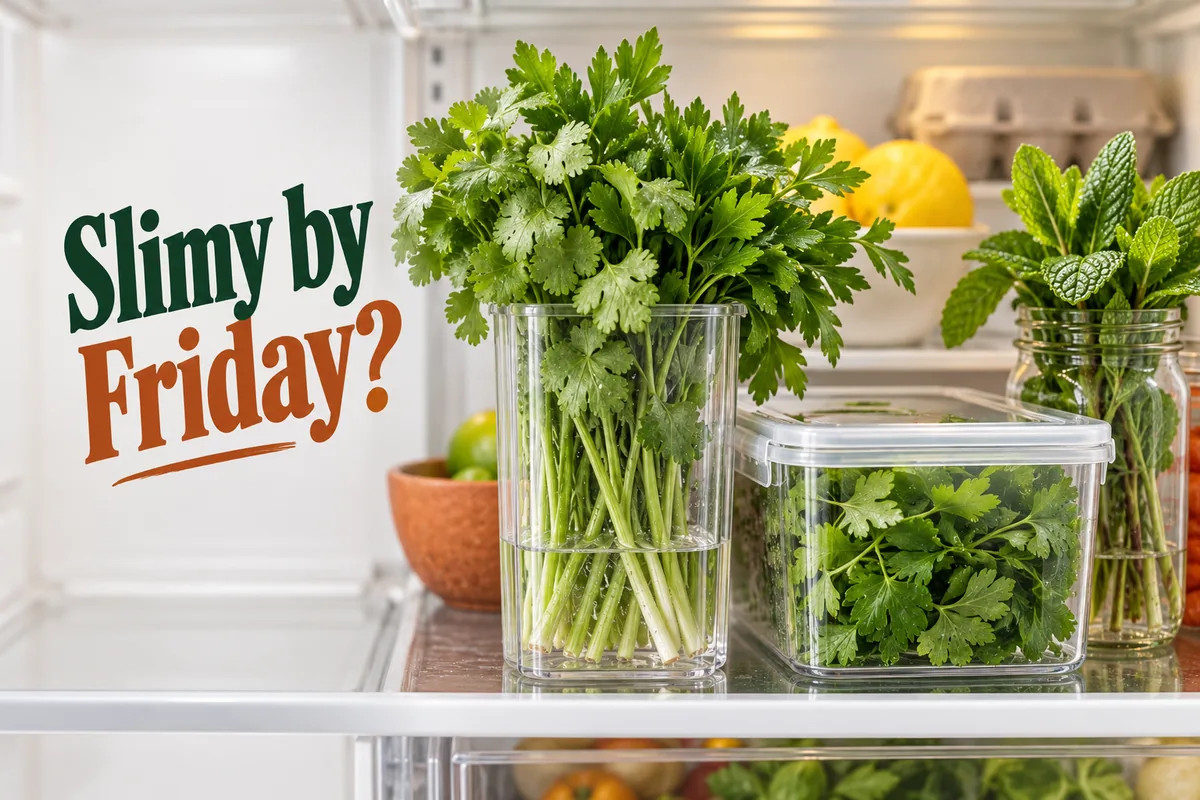
Fresh herbs go limp or slimy in the fridge for ordinary reasons: damp leaves, crushed stems, and a sealed bag that holds in moisture. The fix is the same trick florists use. Trim the stems, stand tender herbs in a little water, keep the leaves dry, cover them loosely, and change the water when it clouds. A jar can do that, and so can a purpose-made herb keeper, which mainly makes the setup stable, visible, and harder to knock over. Below: why herbs spoil, the method that works, which herbs skip the fridge, how to choose a keeper that fits your shelves, and how to keep one working.
If you buy a bunch of cilantro or parsley for one recipe and find it as a dark, wet clump by the weekend, the bunch was never really the problem. The way it was stored was. Here is what extension services and food-safety guidance say about storing herbs, and what buyers of herb keepers report about using them day to day.
Why do fresh herbs wilt or turn slimy so fast?
Most grocery-store herbs are tender, thin-leaved plants that were cut and have no roots to drink with. Two things go wrong at home. If they dry out, the leaves go limp. If they stay wet in a closed bag, the leaves soften and rot. Buyers describe the second problem vividly: herbs left in the produce bag turn into “slippery goop” within days, and herbs wrapped in a damp paper towel still tend to wilt and blacken.
Temperature and handling matter as well. The FDA advises keeping perishable produce, including herbs, in a clean refrigerator at 40°F or below, and an inexpensive appliance thermometer shows whether yours is really that cold. Crowding is a quieter problem. A tall, narrow container packed so tightly that leaves are pressed against the walls gives bruised leaves a damp place to start browning.
Spoilage that has already started cannot be reversed. The FDA says to throw away produce that looks rotten and to cut away damaged or bruised areas before use. Slimy stems and a sour smell mean the bunch is done, however much of it still looks green.
What actually keeps fresh herbs fresh in the fridge?
The method Penn State Extension describes is simple: trim the stems, stand the herbs in a glass with about an inch of water, cover them loosely with a plastic bag, refrigerate, and change the water daily, which it says keeps herbs for up to a week. A guide in Sunset magazine, quoting a UC Davis extension food technologist, adds that you should rinse and gently dry the herbs first, trim just above any bruise, and keep the leaves above the rim of the container. Change the water when it turns cloudy and trim any stem ends that have gone soft.
- Rinse the bunch, shake off the water, and dry the leaves gently. Wet leaves are what turn to slime.
- Trim the bottom of the stems, as you would for cut flowers, and remove any yellow or mushy pieces.
- Stand the stems in about an inch of cool water, with the leaves well above the waterline.
- Cover loosely. A bag or a lid with a gap lets air move; a tight seal holds in moisture.
- Put it somewhere cool but not frozen. A door shelf or a middle shelf is gentler than the back wall, where it is coldest.
- Change the water every few days, or sooner if it clouds, and re-trim the stems.
Buyers who have tried this at home say it works, though they differ on how long. One kept cilantro fresh for about three weeks by changing the water every few days, using filtered water, and trimming the stems with kitchen scissors. Others report a week or two before the leaves tire. Treat any single number as an estimate, because it depends on how fresh the bunch was and how cold the fridge runs.
Which herbs go in the fridge, and which should stay on the counter?
Soft-stemmed herbs such as cilantro, parsley, mint, and dill do well standing in water in the fridge. Basil is the exception. University of Illinois Extension recommends holding cut basil in a glass of water at room temperature and warns that refrigerating it discolors the leaves, and the Sunset guide says cold turns basil black. Many herb keepers are sold as fridge containers, so if you buy basil, plan to keep that one on the counter in a jar.
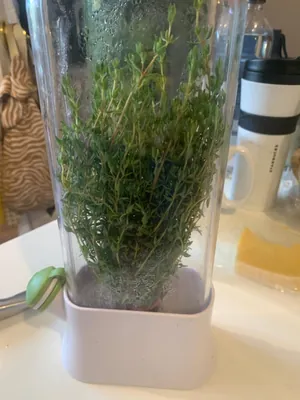
Woody herbs such as rosemary and thyme are hardier. One buyer noted that rosemary probably does not need a keeper at all. Thyme does stand up well in a tall pod, but those herbs alone are not a reason to buy one.
How often should you change the water?
Every three to five days is the interval the makers of several keepers give, and buyers who stick to it report the best results. Plan on sooner if the water clouds. One buyer advises checking the water level at least every two days, because a keeper with a small reservoir can dry out. Another said they forgot a keeper for over a month and most of the herbs were still fine, but that is luck rather than a plan.
Do you need a herb keeper, or will a jar do?
A jar and a bag work, and plenty of buyers did exactly that for years before switching. What they say changed is practical, not magical. A jar tips over when someone reaches past it, the bag sticks to the leaves with condensation, and you cannot see how the herbs are doing without lifting the bag. A keeper stands steadily, keeps the water off the shelf, and lets you check the herbs through the wall.
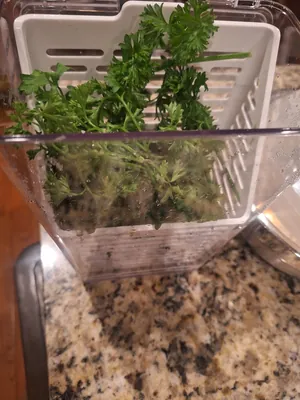
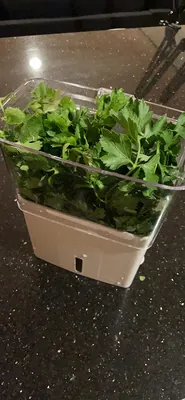
The basket inside most keepers also holds the stems just above the bottom, so the cut ends touch the water without the whole bunch sitting in it. One buyer liked that the stems barely touch the water, which they said prevents rot at the base.
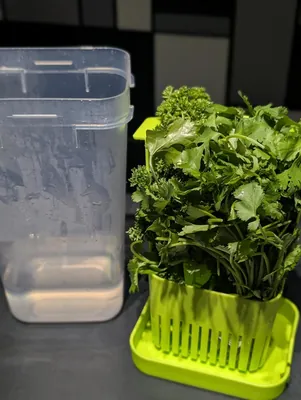
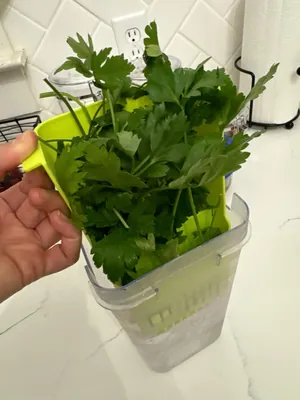
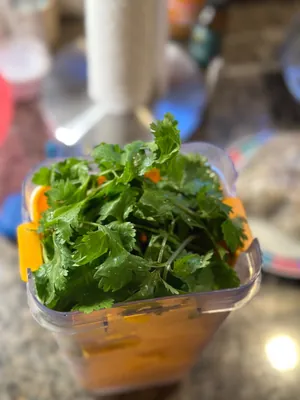
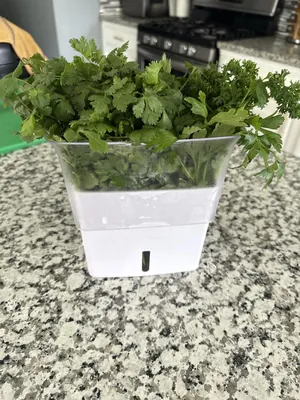
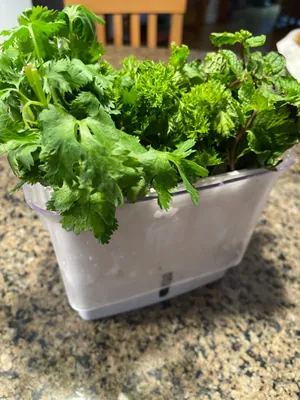
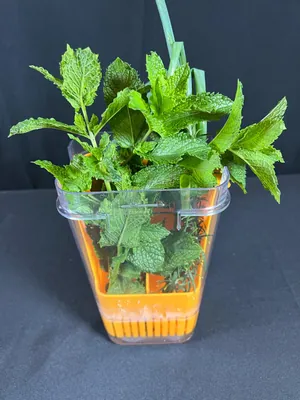
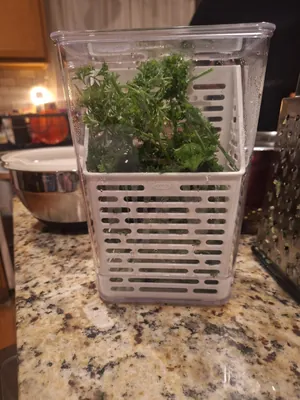
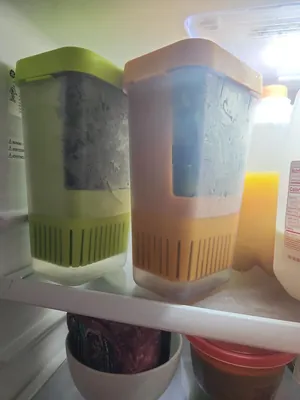
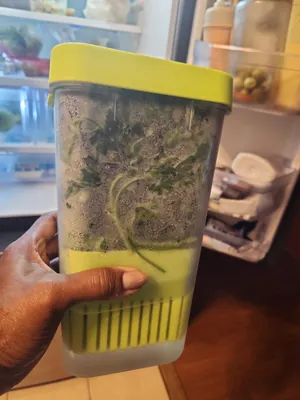
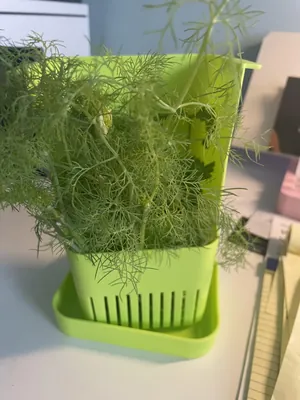
If you use herbs most weeks and often buy a bunch for one recipe, a keeper is worth considering. This set of three tall containers each has a lift-out basket with two handles and a removable divider, so one container can hold two or three kinds of herbs. The listing describes them as BPA-free plastic and says to refill the water every three to five days.
Buyers report cilantro lasting a week to two weeks, parsley staying crisp for a month in one case, and asparagus and green onions fitting well. One person said the lid has a stop partway down that leaves a small air gap on each side, and used it that way. Recurring points: the containers are tall and bulky, a few wished they were two inches taller, one found the pieces hard to pry apart when new, and one buyer found the lid and basket too short to close over a full bunch of cilantro without crushing it. The color mix varies by batch, and one buyer was not fond of the yellow.
Will a herb keeper fit in your refrigerator?
Check the space before the keeper. This is the complaint that comes up most often, and it has nothing to do with how well a keeper works. Herbs are tall, so most keepers are tall; those here run about 9 to 10 inches. That fits on a door shelf, a tall shelf, or the top shelf, but not under a low shelf or in a fixed-height drawer.
- Measure the height of your door shelves and of the shelf you would use, including any lip.
- Check the width too. One buyer said a narrow pod wobbled in a wider door slot, and another with fixed shelves had to use the door.
- Decide whether you want one tall pod or a wide bin that holds a full grocery-store bunch lying down.
- Think about the opening. A few buyers found stacked or tight-fitting lids hard to pry apart or open without a good grip.
Is a narrow pod enough for a whole bunch?
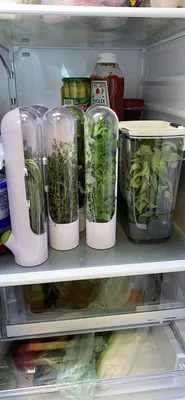
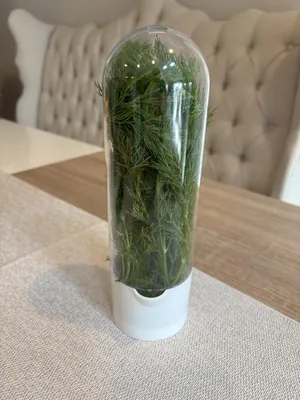
Only for a small bunch. A slim pod with a screw-on cap stands tall and takes little shelf width, which suits a refrigerator door. The trade-off is volume. This one has a clear hard shell and a tethered filler cap on the side, so you can add water without lifting anything out, and the listing says to refill every three to five days. Buyers reported cilantro staying fresh for about three to four weeks, and one left parsley for three weeks with no water change and found most of it still fine. But a few noted it holds only a handful, that the shell is hard to remove, and that it arrived with a broken cap or damage.
A newer three-pack follows the same idea: each pod is about 10 inches tall and 3 inches wide at the base, and the listing suggests giving each herb its own pod so strong flavors do not mix. It has far fewer ratings than the others here (58 at the time of writing), so there is little feedback to lean on. The few buyers say cilantro stays fresh for two to four weeks with a water change every few days, that it is small, and that the two halves are awkward to close because the side clips only align.
If you want tall plus roomy, this two-pack is built like the three-pack above, with a lift-out basket, a removable divider, and a clear body. Buyers like how steady and sturdy it is on a shelf and say herbs stay fresh longer than in a glass with a bag. One said it is taller than expected and fits only on their top shelf, and another said it kept herbs fine even on a counter at 68 to 76°F, though extension guidance is to refrigerate most of these herbs. A few said the lid is hard to open and that the stacked pieces are hard to pull apart, which matters if you have limited grip strength.
Can a herb keeper hold asparagus, scallions, and other tall produce?
Yes, and many buyers bought one for exactly that. Asparagus stands up in an inch of water the way herbs do, and scallions, chives, and celery sticks fit in the same way. The basket and divider also let you keep a few small bunches separate. Buyers report asparagus staying fresh for about a week, and one used the keeper for scallions that had arrived limp and watched them perk up over a few days.
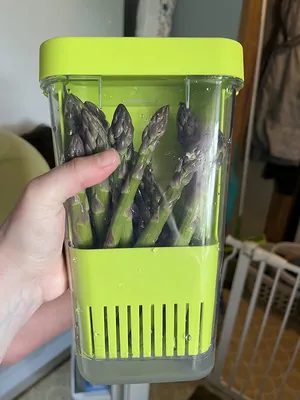
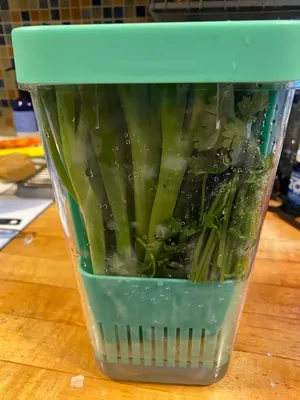
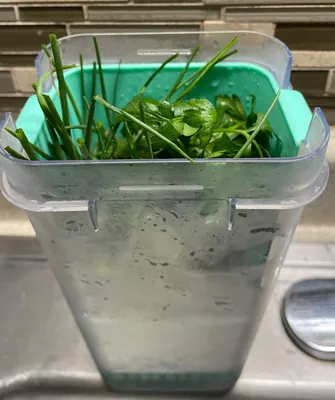
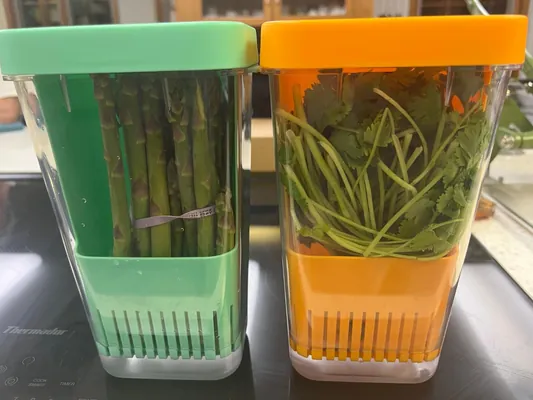
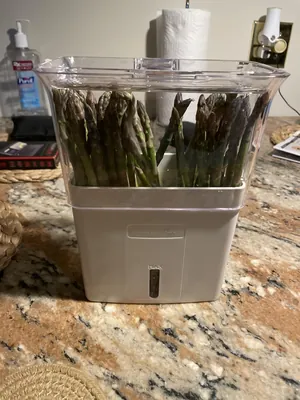
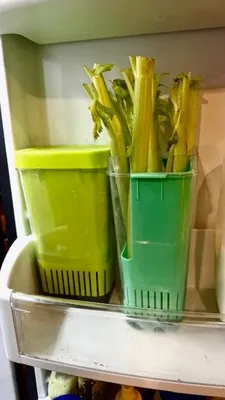
The limits are height and shape. Scallions and dill can be taller than a keeper, and buyers either cut the tops down or bent them over, which crushes leaves. If the tops are the best part, such as with scallions, a taller container or a jar will serve better.
What if you buy big bunches of herbs, or grow them?
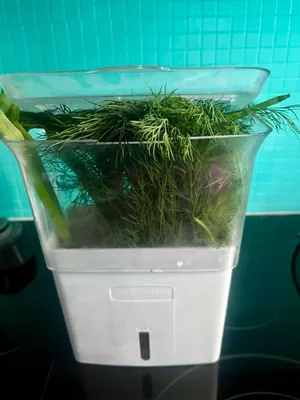
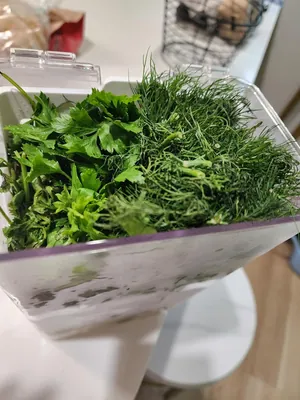
Tall pods suit a handful, but a farmers-market bunch of parsley or a pile of herbs from the garden needs room. A wide bin with a lift-out basket holds a bunch lying flat or standing, takes less vertical space, and fits on a normal shelf. It takes more shelf footprint in return.
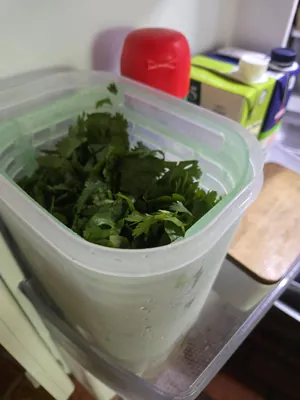
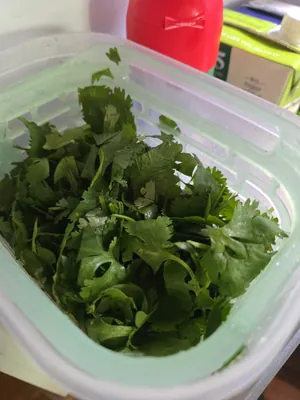
This herb keeper has a hinged basket that opens wide to make it easy to lay the herbs in, and the listing describes a lid that keeps the humidity up. The page covers a family of sizes and also includes produce keepers with a filter cartridge, so many comments are about berries and lettuce rather than herbs. The herb comments are consistent: one buyer of the herb-keeper size kept cilantro for three weeks by changing the water every three days, using filtered water, and trimming the stems every few days. The same person warned that the lid sits on loosely and can pop off if the keeper is bumped, and suggested a rubber band. Another found it bulky and pricey but said it paid for itself in herbs not wasted. A third said it holds several store-bought bunches and two bunches of asparagus.
A smaller bin of the same kind has a clear body, a removable basket that can hook over the side, a water-fill line, and a hinged lid. Buyers keep cilantro for about two weeks in it, and one reported herbs that still looked the same after two months, a claim worth treating cautiously. The recurring problems are on the build side: several buyers said the lid hinge is flimsy and that one or more units arrived with a broken hinge or damage, and one said the listed dimensions differed from the ones printed on the package. It is a good idea to check the hinge when it arrives and to measure your shelf against the dimensions on the package.
This one takes yet another approach: a wide bin with air vents, a flip-and-slide lid, removable dividers, and a window that shows the water level. The listing says it can extend freshness by up to 10 days, which is a more modest claim than many. Buyers say herbs stay fresh for weeks and that it fits two standard bunches side by side. The complaints are mechanical: the raised part that lifts the herbs slides back down, the lid can pop off, a couple of buyers had a latch or lid crack, it is too short for scallions and dill with the lid on, and buyers disagree on whether it is easy to clean. Some feedback on this page is about a self-watering planter sold alongside it, so not everything there is about the keeper.
How do you keep a herb keeper working week after week?
The keeper does not do the work for you. Buyers whose herbs failed often had a routine problem, not a product problem. One buyer who put basil in a keeper reported that it looked bad by the next morning, which fits the guidance that basil dislikes the cold. Another found their cilantro going bad by day three and went back to their old method, so a keeper is not a guarantee.
- Start with a fresh bunch. A keeper slows decline; it does not reverse it.
- Rinse and dry the leaves, then trim the stems and stand them in the basket.
- Fill to the water line or about an inch, no higher, so only the stem ends are wet.
- Change the water every three to five days, and sooner if it clouds. Trim the stems again each time.
- Wash the container by hand every few weeks and let it dry. The slim-pod listing says to hand wash, and buyers' reports of broken hinges and lids are a reminder that thin plastic cracks if handled roughly.
- Discard anything slimy or smelly, and wash your hands and the container after handling it.
A final check: the FDA recommends washing produce under running water, without soap or commercial produce washes, and keeping produce that you eat raw apart from raw meat, poultry, and seafood. Put the keeper on a shelf away from raw meat drips and wipe the shelf when you change the water.
If the fridge is the limiting factor, you may not need a new container at all. A clean jar, an inch of water, a loose bag, and a weekly trim will do what most keepers do. A keeper is a convenience for people who cook with herbs often enough to want them upright, visible, and out of the way.