In this article
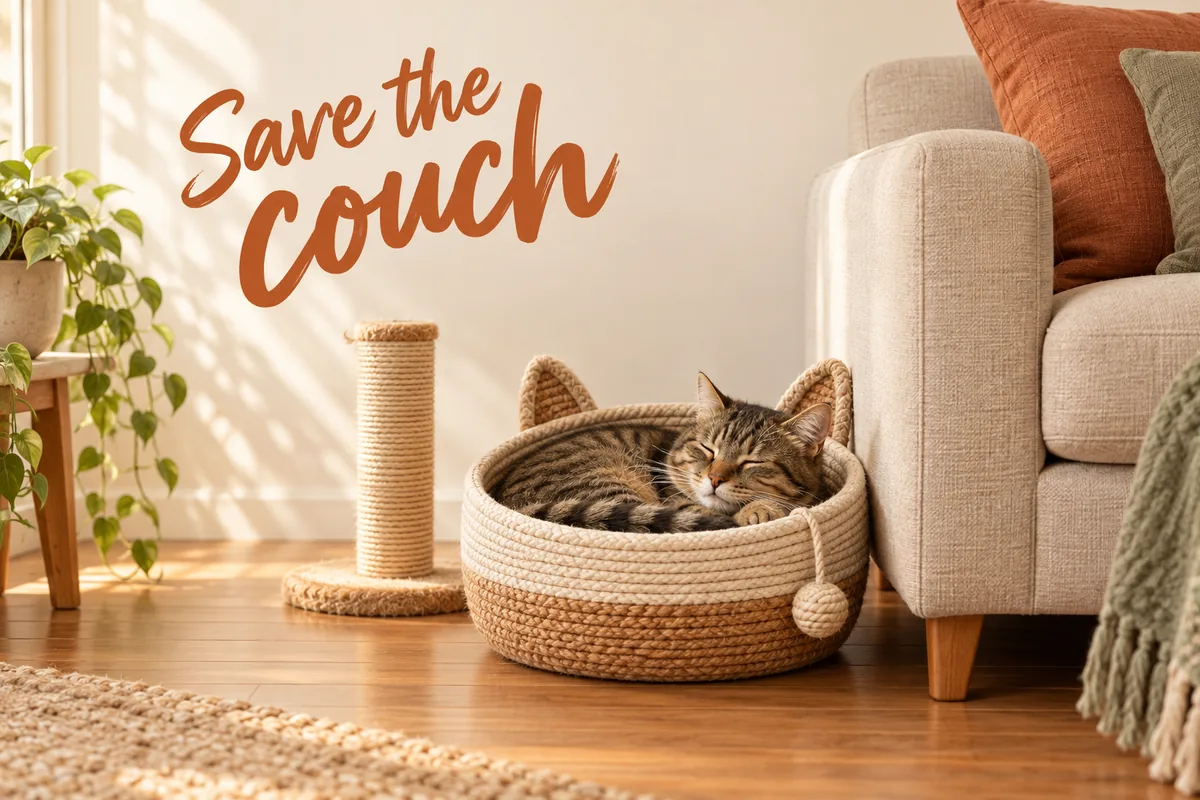
If your cat has a scratching post and still goes for the arm of the couch, the cat is not being difficult. The post is probably in the wrong place, feels wrong under the claws, or wobbles. This guide covers why cats pick furniture, where a scratcher belongs, which textures cats tend to prefer, how to protect the couch while a new habit forms, and where a woven rope basket (part bed, part low scratcher) helps and where it does not.
Why does my cat scratch the couch when there is a scratching post right there?
Scratching is normal cat behavior, not misbehavior. The American Association of Feline Practitioners says it is both inherited and learned, and that cats do it to keep the claw motion they use in hunting, to remove the worn outer sheath of the claw, to stretch their bodies, and to leave a visual and scent signal (AAFP toolkit). The ASPCA adds marking territory and relieving stress (ASPCA).
From a cat's point of view, a couch is a very good scratcher: tall, stable, textured, and in the room where the people are. A post that tips, sits in a spare room, or has a surface the cat does not like loses to it. Stress matters too. The AAFP notes that more scratching in indoor cats can be tied to anxiety, stress, attention seeking, or a lack of security, and that punishment can make anxiety worse. So the first fix is the setup around the cat, not scolding the cat.
Where should a scratcher go so my cat actually uses it?
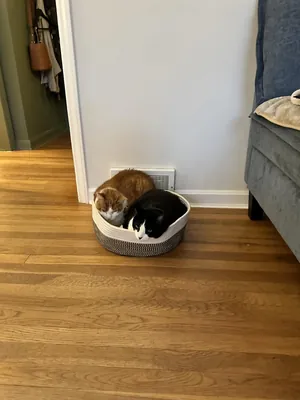
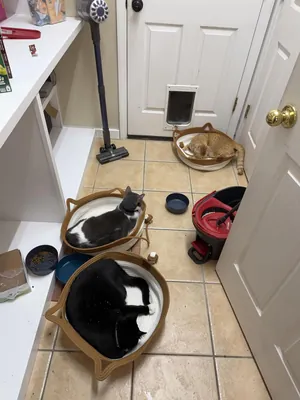
The AAFP's advice is specific. Cats often stretch and scratch right after they wake up, so put a scratcher next to where the cat sleeps. It can also help to put one next to the spot the cat already likes to scratch, such as the corner of the couch.
A survey summarized in the same toolkit adds more places to consider: areas where a cat may feel its territory is challenged (near entry doors, windows, and feeding areas), living areas where people spend time, and several spots around the home rather than one. A scratcher tucked in a basement or unused room is easy for a cat to ignore.
A simple way to start: for a few days, note where scratch marks show up and where your cat naps. Put the first scratcher at the worst corner, the second beside the favorite nap spot, and a third near a window or door if the cat patrols there.
What texture and shape do cats like to scratch?
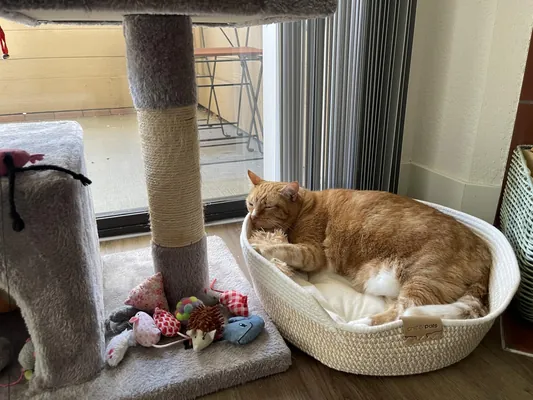
According to the AAFP, scratchers can be vertical or horizontal, should be tall or long enough for a full stretch, and should be stable enough not to move or fall over. Materials cats tend to like include wood, sisal rope, carpet, cardboard, and rough fabric. Cats differ, so the toolkit recommends trying several.
The survey data in the toolkit is worth knowing. Inappropriate scratching went down as the number of different scratcher types and styles in the home went up. Cats preferred upright structures taller than three feet. Cats nine and under preferred rope first, then carpet, then cardboard, while cats over nine preferred carpet first. In other words, variety beats buying one perfect post.
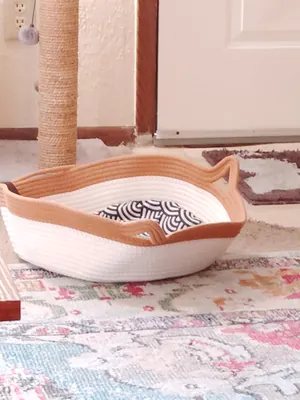
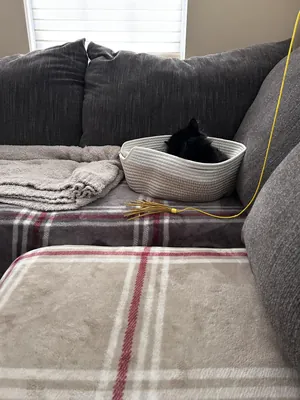
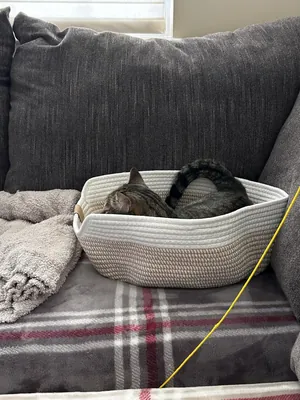
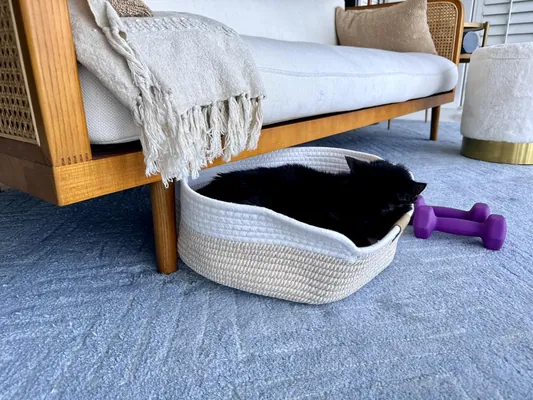
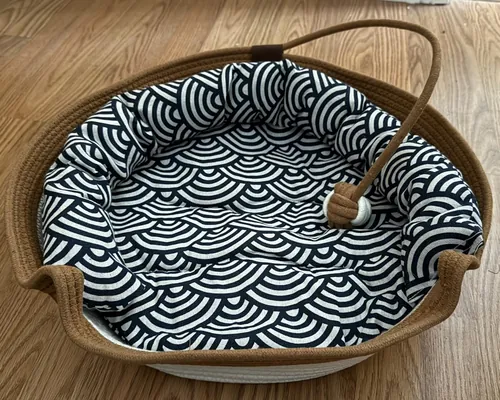
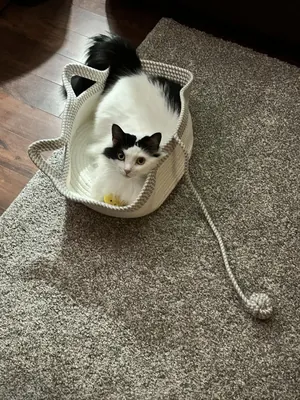
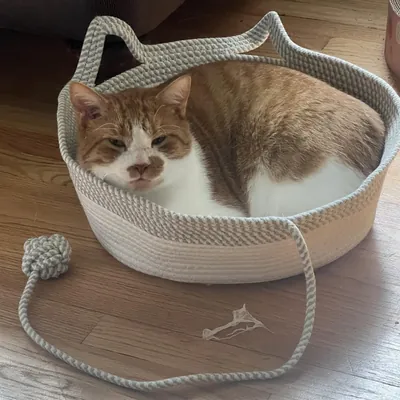
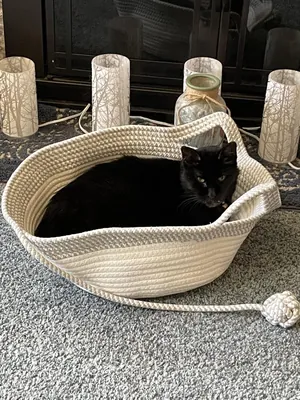
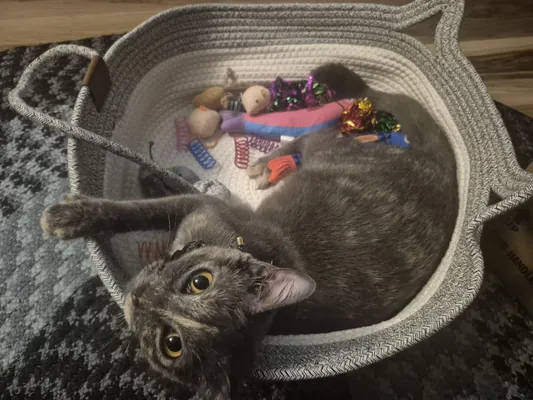
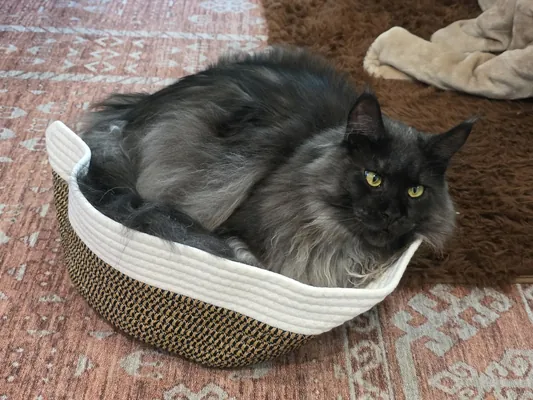
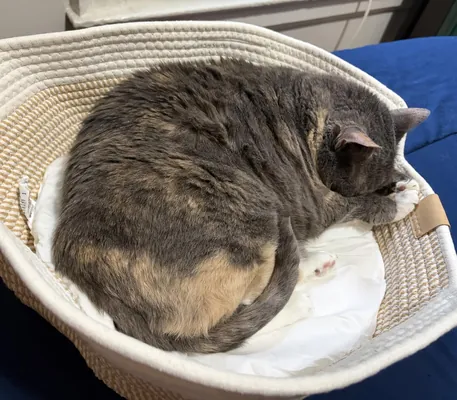
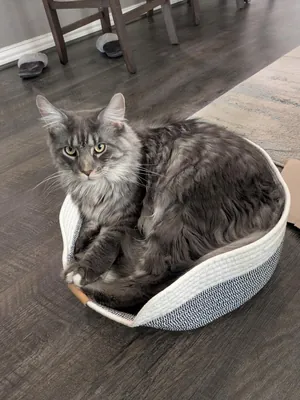
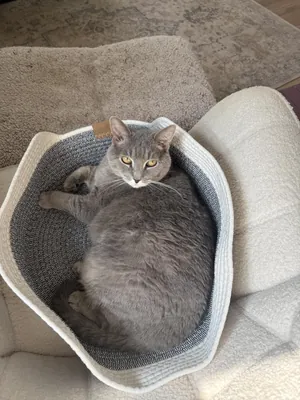
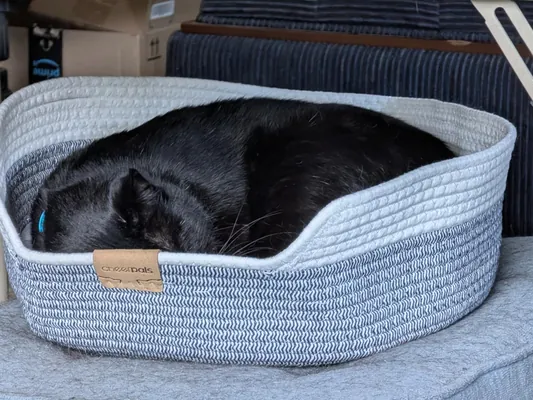
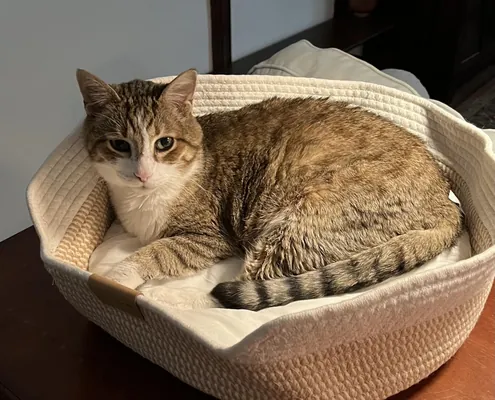
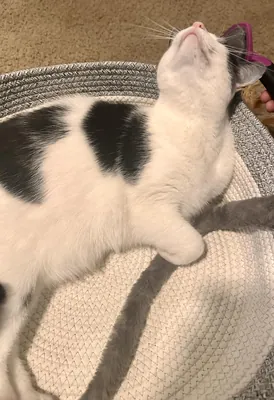
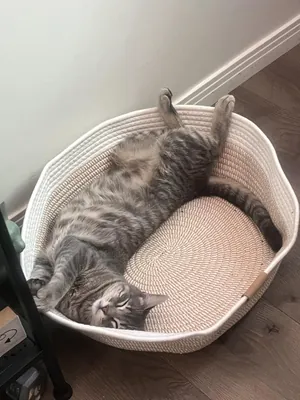
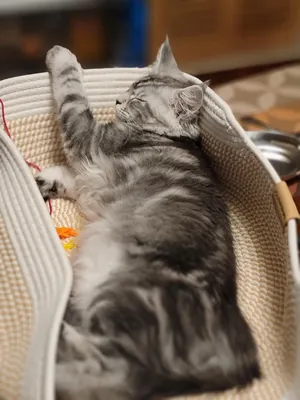
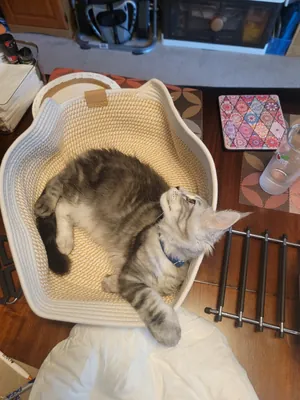
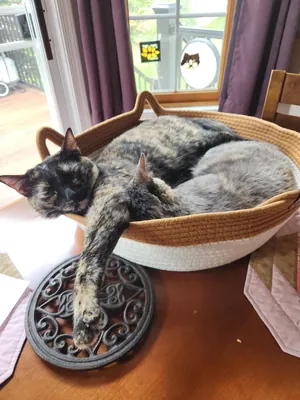
This is where a woven cotton rope basket can fit. The rope gives a rope-like surface, and the bottom and rim give a low, horizontal place to dig in. The listings describe these baskets as a bed and a scratching pad in one. Buyers report mixed results: some say a cat started scratching the sides or bottom within a day, and others say the cat sleeps in it and leaves the couch alone only some of the time. Treat it as one more surface in the mix. At roughly 18 inches across it is also shorter than the full-height stretch the AAFP describes, so it does not replace a tall, sturdy post for a cat that likes to reach up the couch arm.
How do I protect the couch while my cat switches?
The AAFP recommends temporarily making the unwanted spot less available: remove it, or cover it with something cats dislike, such as double-sided sticky tape, loose fabric, foil, or plastic. Put the new scratcher right in front of it so the cat has an obvious alternative at the same spot.
Skip punishment. In the survey the toolkit summarizes, punishment did not change how often cats scratched the wrong things, while positive reinforcement helped cats use the right ones.
How do I get a cat to try something new?
The AAFP suggests enticing the cat to the scratcher with catnip, treats, or toys and rewarding any behavior near or on it. If the cat scratches somewhere else, pick the cat up gently, carry it to the scratcher, and reward it there.
Buyers' stories show how much patience it can take. One said their cat ignored a rope basket for a month, then took to it after it moved to a hallway corner. Another sprinkled a little catnip and the cat settled in. A third said their cat sniffed the basket and walked away, then slept in it on day four. One buyer put in toys and catnip and the cat got in after six days. A couple of buyers had older cats that never took to it, even with catnip, and one used the seller's return policy.
A reasonable plan is to unpack it, set it where the cat already naps or at the scratching corner, add a pinch of catnip, and leave it for a week or two. If the cat ignores it, move it once to a different spot before you decide.
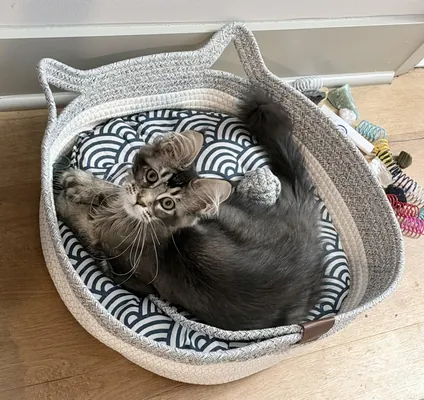
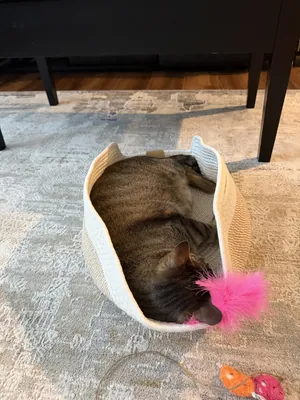
What if my cat sleeps in the basket but still scratches the couch?
It happens, and buyers describe it. One says their cat uses the basket constantly but has not started scratching it. Another says the cats love the attached ball but sleep elsewhere. One buyer, three weeks in, said their cat still scratched the couch and carpet and kept kneading the rug, and only warmed up to the basket after a heating pad went in. Another said their cat still goes for furniture, but less often.
A bed does not do what a scratcher does. If your cat stretches upward on the couch arm or a door frame, add a tall sturdy post at that exact spot, as the AAFP describes, and use the basket as the bed-and-dig spot nearby. If the cat kneads and scratches the carpet, a low horizontal surface like the basket's rim and bottom is a better match.
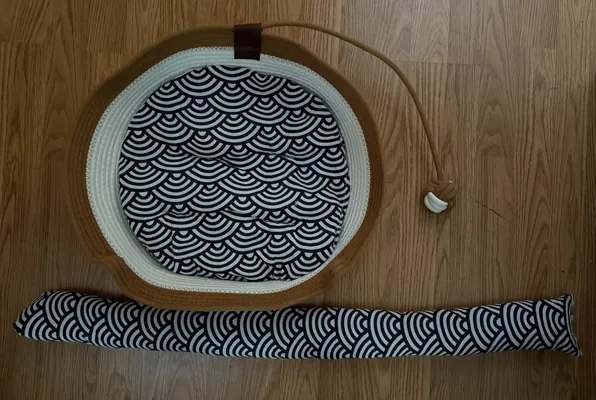
The cushion is also worth experimenting with. Several buyers took it out so their cats could reach the rope bottom, and others say their cats pulled it out themselves to scratch. A few cats never liked the cushion and slept right on the rope.
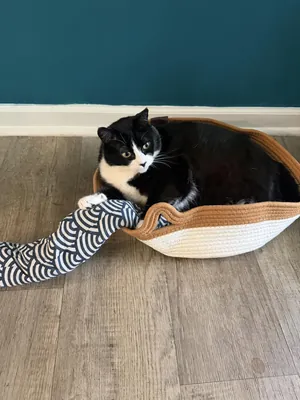
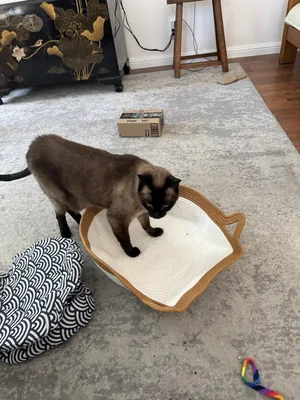
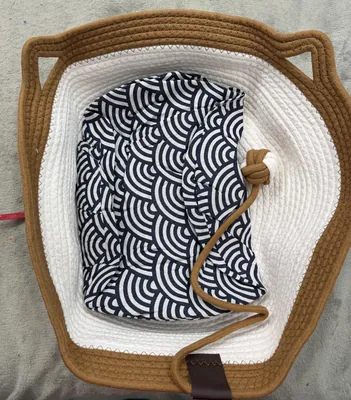
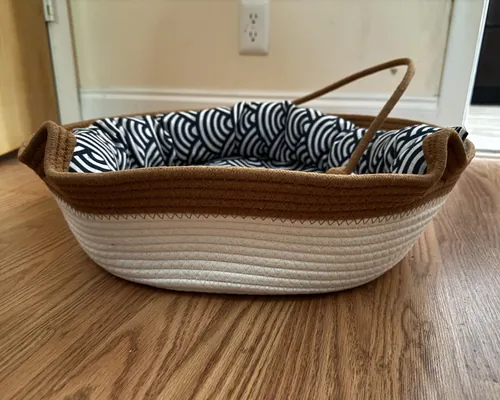
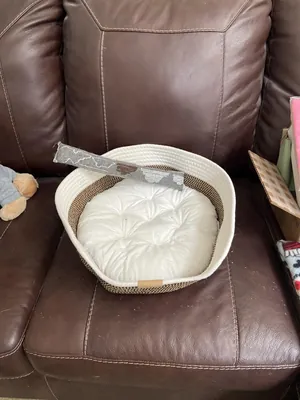
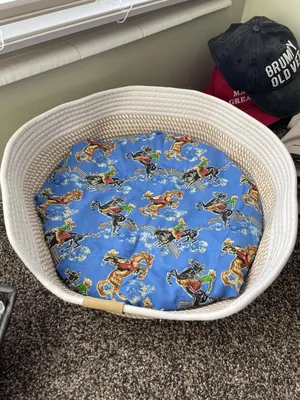
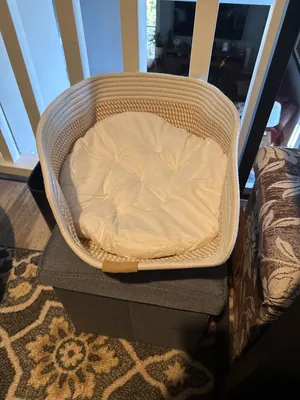
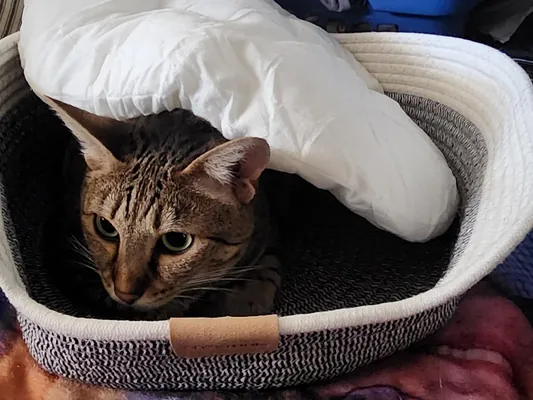
The listing for one basket describes flexible walls meant to give under claws and during play, and says it is made to hold cats up to 22 pounds. Buyers say their cats took to it quickly in some homes, including a rescued half-feral cat that tried it after a day and a four-week-old kitten, and not at all in others. Several mention it ships folded and takes time to hold its shape (more on that below).
How big should a basket-style scratcher be?
A basket needs to be large enough for the cat to turn around, stretch out a little, and settle. The listings give weight limits of up to 22 pounds for three of these baskets, and one lists an inside size of 18.5 by 18.5 inches and 6 inches high.
Buyers' notes are the most useful guide. A 10-pound cat had plenty of room in an 18-inch basket, and a 15-pound cat fit an 18.5-inch one. A 17-pound cat fit the large size, and so did a 19-pound cat that, as that buyer put it, just fits. One buyer with a 22-pound cat says it fit, while another with two Maine Coons of 19.5 and 22 pounds found the basket too small for them. Another buyer ordered the next size up for 12-pound cats because dimensions were hard to find, and one who ordered a medium for an 8.8-pound cat wished they had bought a large.
A good rule: measure your cat curled up and stretched out, compare with the inside diameter, and size up if you are between sizes. Remember the cushion takes up space.
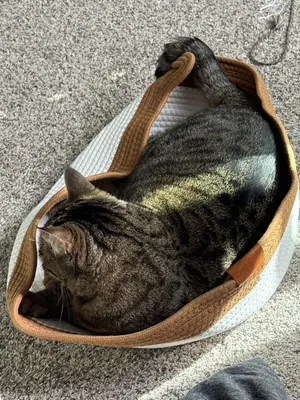
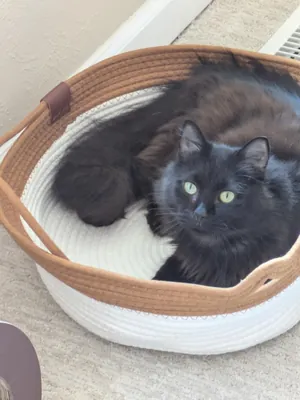
Does a home with more than one cat need more than one scratcher?
The AAFP survey points toward yes: scratchers in several spots, in several styles. A basket is easy to move and has handles, so a second one is simple to add.
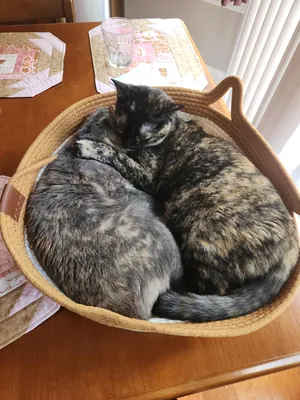
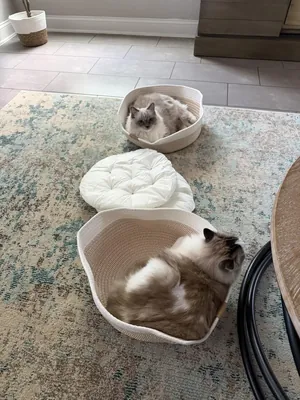
Several buyers describe exactly this. One bought a single basket to see if either cat liked it, then ordered a second right away. Another has four cats and ended up with four baskets. Some cats take turns, some share one at once, and one buyer described a pecking order. Another says their cat uses the cat-ear openings to bat at toys, and uses the basket for toy storage.
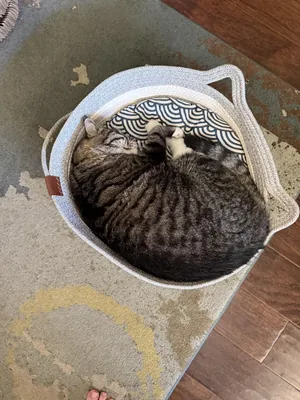
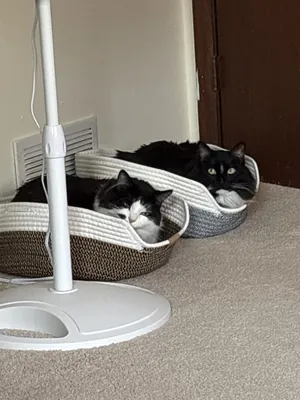
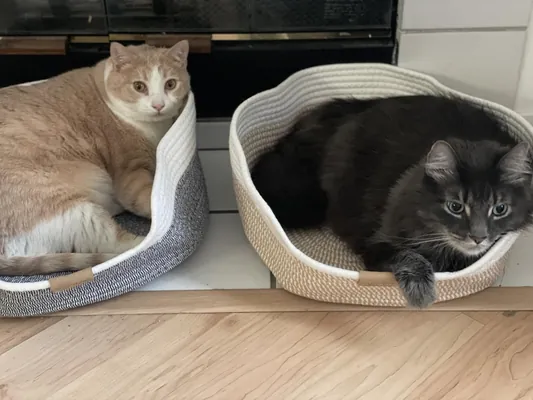
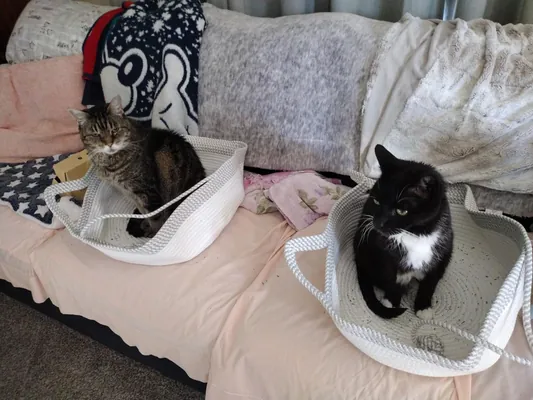
What about an older cat, or a cat that likes a warm spot?
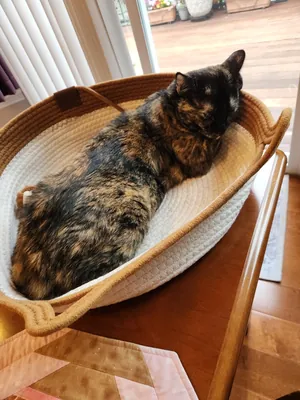
The survey in the AAFP toolkit found cats over nine preferred carpet to rope, so an older cat may take more readily to a cushion or a softer surface than to bare rope. Buyers' experience varies. A 13-year-old cat wanted nothing to do with a basket, and a 17-year-old cat would sit in it with catnip but never put claws in it. Other buyers say a 14-year-old, a 15-pound cat, and a senior cat took to it right away. One buyer likes that the front of their basket is a bit lower, so a geriatric cat can get in and out more easily.
Warmth plays a part. A few buyers added a heating pad for an elderly, arthritic cat, and one said their cat would not sleep in the basket without one. If you do, choose a pad made for pets and follow its instructions. In warm weather, the cushion can come out: the listing says the bare basket is more breathable, and one buyer noticed their cat jumping into wicker baskets on hot days.
What do I do if the basket arrives folded and floppy?
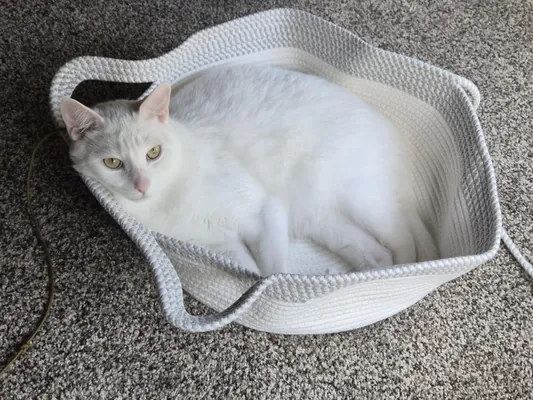
This is the most common complaint. Rope baskets are folded flat for shipping, and many arrive wavy, oblong, or limp. The listing for one says to reshape it with steam or an iron. Buyers share other fixes: set it upside down over a large bowl in the sun for a few hours; soak it in very warm water, hang it upside down over a pan lid, and let it dry completely; lightly mist the inside and outside with a spray bottle and reshape it by hand; or fold the white trim down for a few minutes and flip it back up. One buyer ran theirs through the washer and dryer and says it came out better, but another notes the care label only allows washing the cushion, so check yours before trying that.
Some baskets never get perfectly round. Several buyers say their cats do not care, and a few say they gave up and the basket stayed a little crooked. If a basket will not hold any shape and the cat will not use it, it is reasonable to return it; one buyer did. Also check the dimensions before you order. One buyer says the medium they received measured only about six inches across the bottom, far less than the 15.7 inches the listing gives.
Do I still need to trim my cat's claws?
Yes. Both the AAFP and the ASPCA recommend regular trims to blunt the tips. The AAFP says to use proper feline nail trimmers to avoid splintering, and that kittens, indoor-only cats, and older cats need trims more often. It suggests trimming in a calm setting and rewarding the cat afterward. The AAFP also describes temporary nail caps, which usually need to be reapplied every four to six weeks (AAFP toolkit).
Both groups strongly oppose declawing, which the ASPCA describes as amputating the last bone of each front toe, with risks that include anesthesia complications, bleeding, infection, and chronic pain (ASPCA). The tools above exist so that surgery is not on the table.
When is a basket the wrong answer?
- Your cat stretches full length up the couch arm or a door frame. A tall, sturdy post at that spot fits better.
- Your cat avoids rope. Try cardboard, carpet, or wood, since the AAFP says to experiment with textures.
- Your cat is much larger than the basket. A cramped bed will not get used.
- Scratching has suddenly increased. The AAFP links more scratching in indoor cats with anxiety, stress, or a lack of security, so look at changes at home and consider asking your veterinarian.
In most homes the answer is a few options, placed where the cat already spends time, and the patience to give each one a couple of weeks.