In this article
Magnetic tiles keep some kids busy for hours and sit in a pile for others. What usually decides it: a quick first demonstration, a base that holds, enough pieces, a story to build for, and a place to put it all away. This guide covers each of those, plus how to handle ramps and races and what to know about the small magnets.
Magnetic tiles are one of those toys that look like they should keep a child busy for hours, and sometimes they do. Other times a child clicks a few squares together, loses interest, and wanders off while the tiles sit in a pile. The difference usually comes down to a few simple things: a quick first demonstration, a base that actually stands, enough pieces, something to build for, and an easy place to put it all away.
Why do magnetic tiles hold a child's attention for so long?
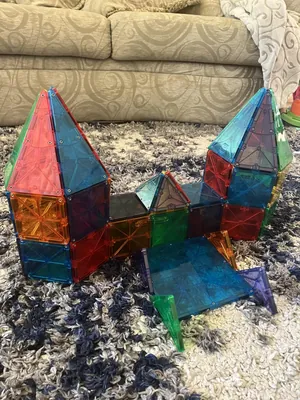
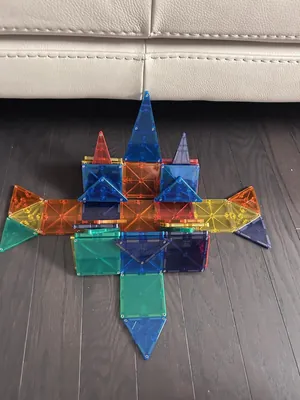
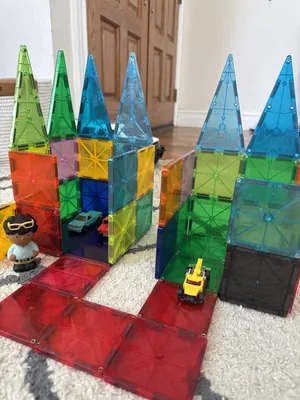
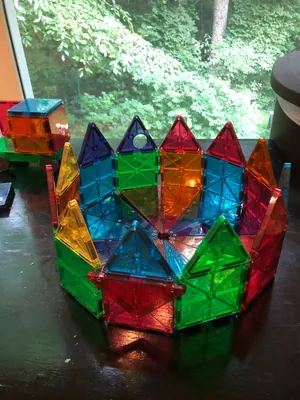
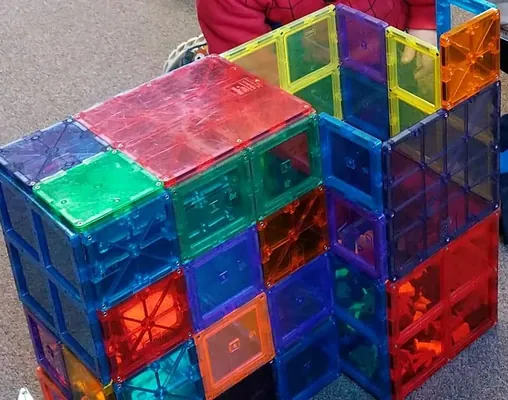
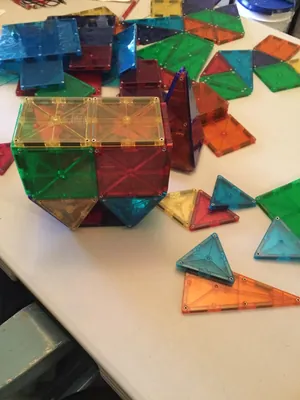
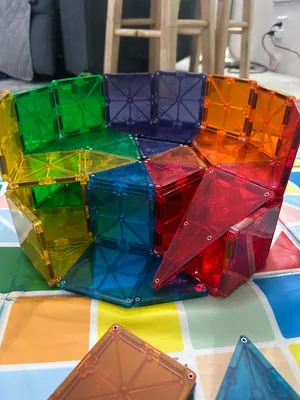
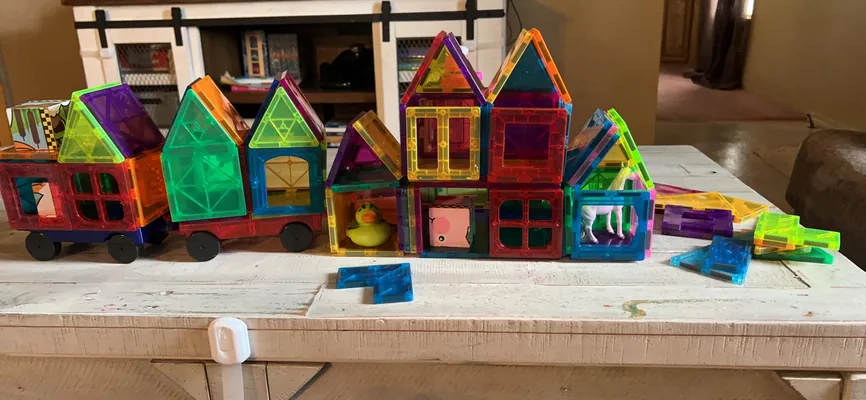
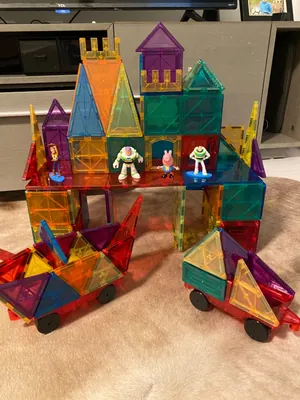
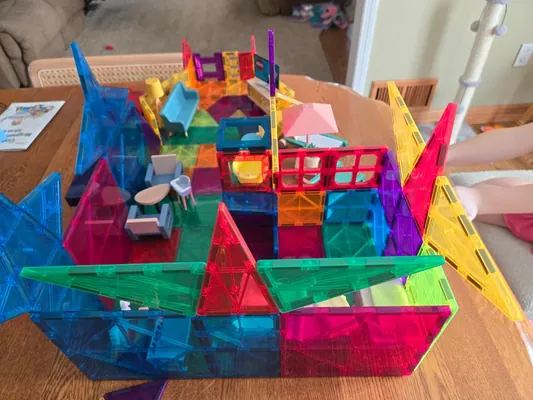
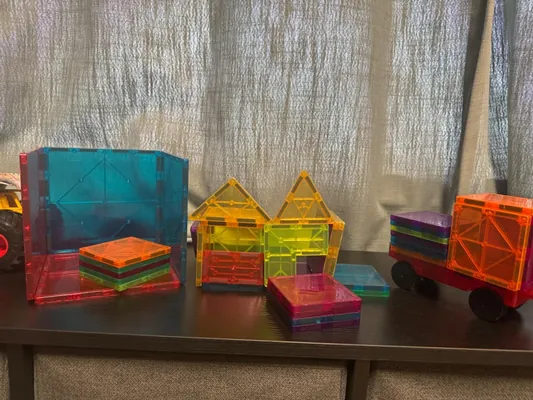
There is no wrong way to use them. The tiles snap together with almost no skill and come apart without a fight, so a two-year-old and a ten-year-old can both get a result in seconds. Buyers describe everything from houses, castles and garages to a zoo for toy animals, rocket ships, and little rooms for dolls. One parent says her 5-year-old reaches for them almost every day and builds something different each time.
That open-endedness is worth protecting. The American Academy of Pediatrics asks educators and families to protect unstructured play and to let children take the lead and follow their own curiosity. With tiles, that mostly means sitting nearby, offering a first idea if the child is stuck, and resisting the urge to build the "right" thing for them.
How do you get a child started when they just stack or scatter the tiles?
Show a few basics, then step back. One parent who bought several sets says her children were unsure what to do at first, but after she sat down and showed them the basics they were busy within five minutes, and their builds got more inventive the longer they played.
A good five-minute sequence:
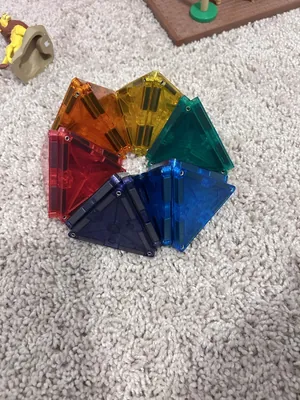
- Lay shapes flat on the floor. Squares and triangles make flowers, stars, boats and fish before anything has to stand up.
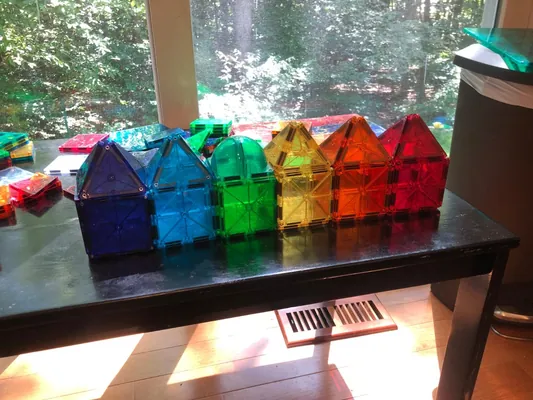
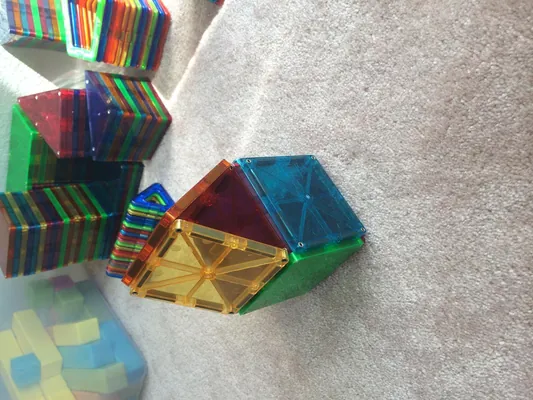
- Fold the squares up into a box. Stand four squares on edge around a base square, add a top, and the magnets pull the sides together into a cube. A child can feel it click.
- Add a triangle roof. A cube plus triangles becomes a house, a garage or a barn.
- Give it a purpose. A toy car needs a garage, a stuffed animal needs a room. A reason to build keeps the project going.
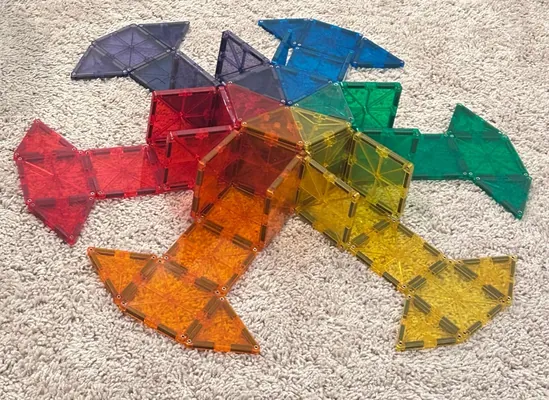
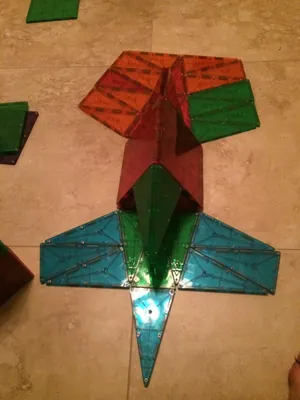
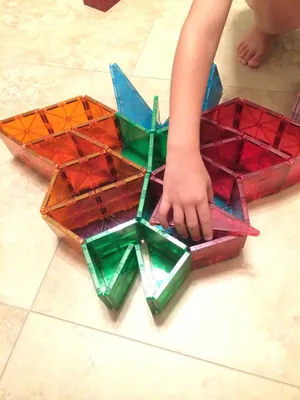
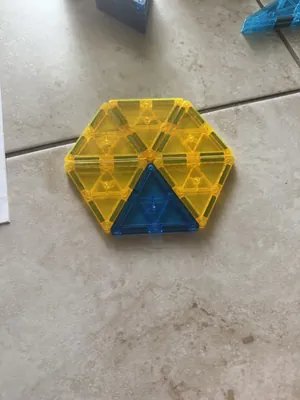
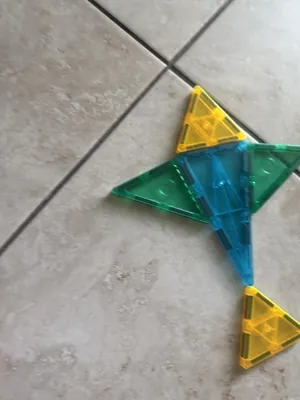
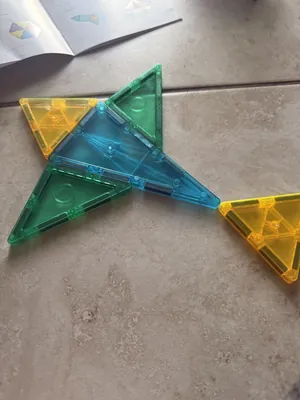
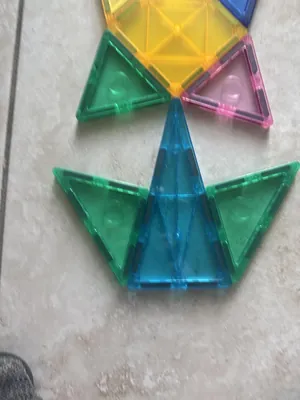
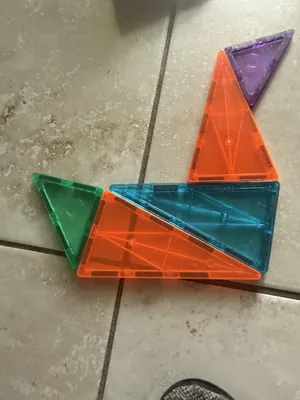
What if a 3-year-old gets frustrated connecting pieces?
That happens. One parent of a child who had just turned 3 said he still had trouble getting pieces to stay together and needed help building while his fine motor skills caught up. Start with larger tiles if you can: buyers say oversized squares are easier for small hands to handle and let kids build bigger structures. Sit with them for the first few builds and let them place the last piece themselves.
Why do tall builds keep falling over, and what helps?
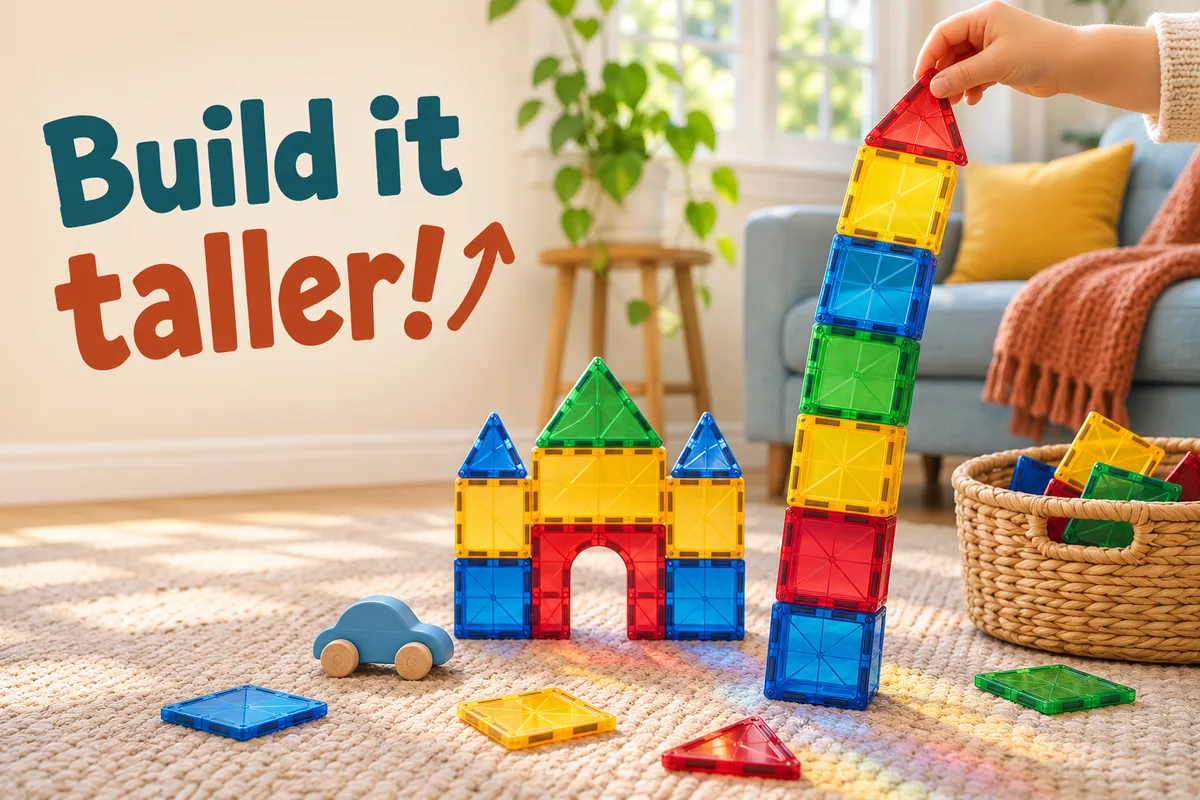
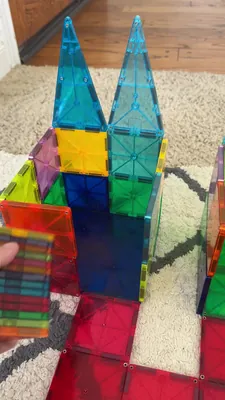
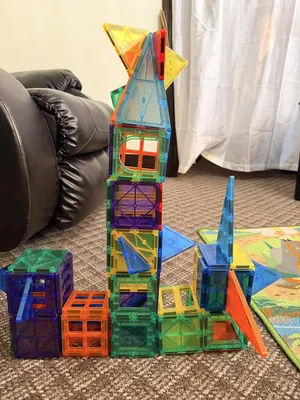
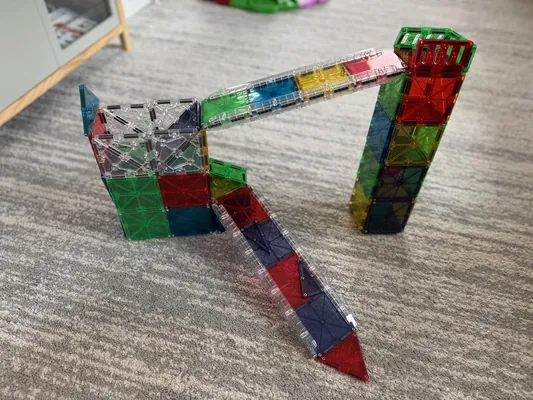
Many buyers notice that the magnets are gentle rather than strong, and taller or more complex builds can tip over. One parent who first wished for stronger magnets later decided it was a good thing: the magnets need to be mild enough to avoid pinching small fingers, so tall builds depend on neighboring tiles to hold them up. Another buyer says that once she taught her son to add structure and support, "just like in the real world", he started building impressive things.
These changes help a tower stay up:
- Widen the base. A two-tile-wide foundation is far steadier than a single column.
- Brace it. Build an L-shape or a four-sided tower so each wall props up the next. A wall or a sofa can also act as a support.
- Taper the top. Squares at the bottom and triangles near the top keep the weight low.
- Click each edge. Make sure every edge actually snaps to its neighbor before adding the next piece.
If a build keeps collapsing and your child gets upset, that is a good moment to build something sturdy together and talk through why one version stays up and another does not.
How many tiles does a child actually need?
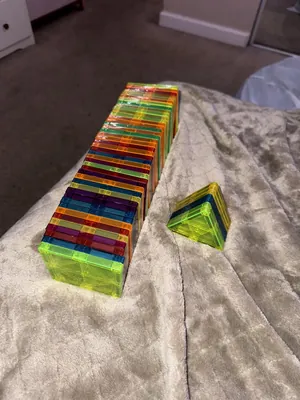
More than most boxes make it look like. A common starter size is around 100 pieces, and even fans of that size often say they wanted more. One buyer points out that the castles and rockets on the box use nearly every tile, so a child cannot build more than one big thing at a time. A parent of a 2.5-year-old says 100 pieces is enough for a tower but easy to outgrow, and suggests doubling up if you can afford it. A preschool teacher who buys them for her classes says the structures get more complex the more tiles the children can use.
A few practical points. Plain squares get used the most, so look at how many a set includes before counting total pieces. Two or more children means a bigger collection: one family bought four sets after their kids fought over a single one, and another parent suggests giving each child their own box. Window and door tiles are charming, but a couple of buyers wished their set had more solid squares and fewer cut-out shapes.
Pack sizes and counts on lower-priced sets are worth checking before you order. The listing for the set below counts 220 pieces, including two car bases, while most buyers describe the 120-piece size, so look carefully at which size you select.
Can you mix tiles from different sets?
Usually, yes. Several listings say their tiles work with other sets, and buyers report mixing sets from different makers without trouble. The catch is consistency over time. One buyer who ordered a second set less than two months after the first found the new tiles thinner and with sharper edges, and another said some tiles from a newer set were warping at a seam. When you add to a collection, unpack the new pieces, check the edges and fit, and test them against the old ones before the return window closes.
What if plain tiles stop being interesting?
A theme gives the building a story. One grandparent said a 5-year-old who had not been interested in regular tiles was suddenly hooked by a spaceship set and now heads for it every morning. If your child loves dinosaurs, rockets or trucks, a themed set can bring them back to tiles they had ignored.
For a dinosaur lover
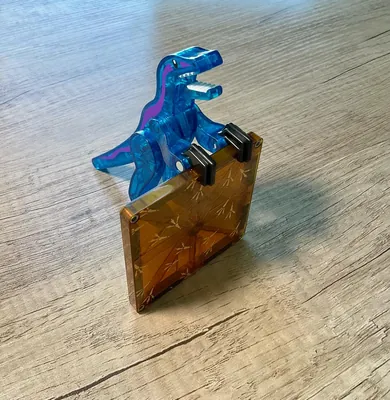
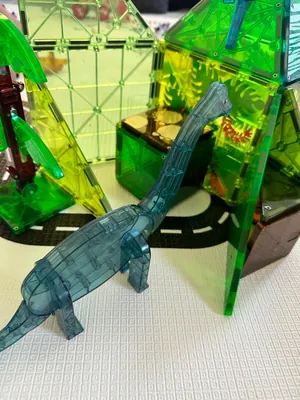
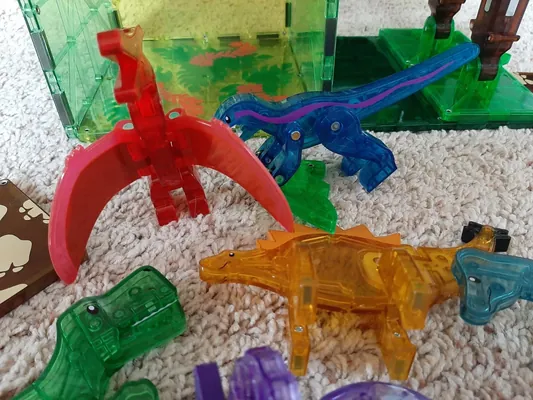
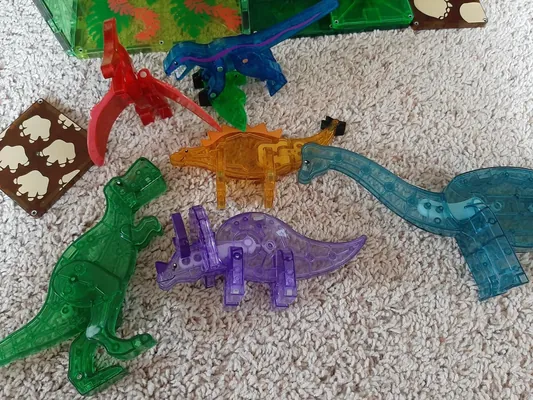
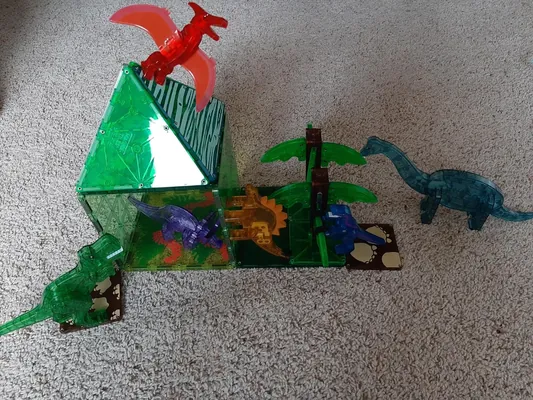
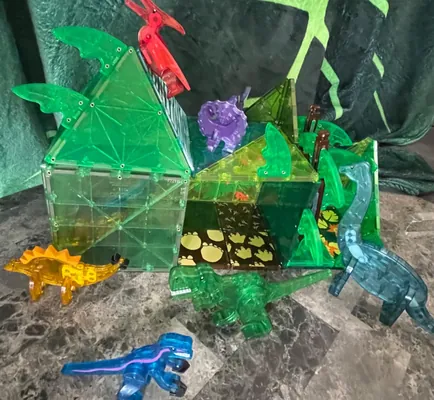
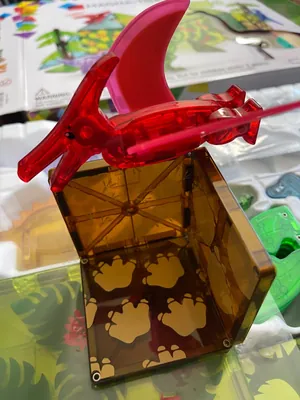
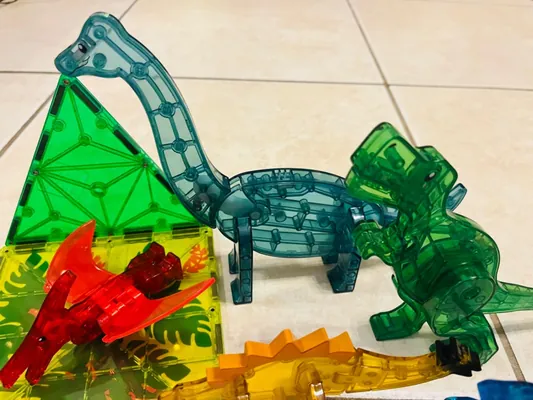
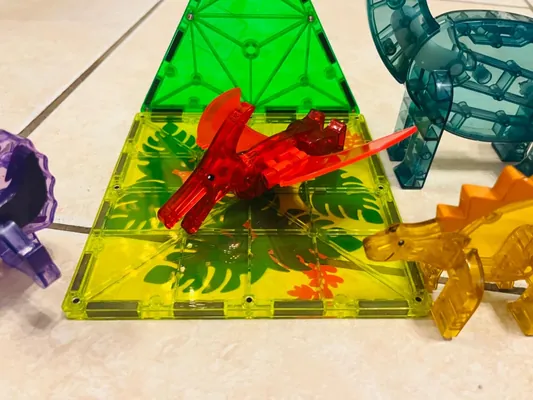
The dinosaur set in this group adds six figures with moving parts, plus trees and large tiles. Buyers say the dinosaurs are bigger than expected and that each has some part that moves, such as a mouth, wings, a tail or legs. They also report limits: the dinosaurs do not always stay put on the tiles and sometimes stand better on the floor, the trees are wobbly unless they are part of a structure, and a few buyers say the tile magnets feel weaker than in other sets. Several call the price steep.
For a space lover
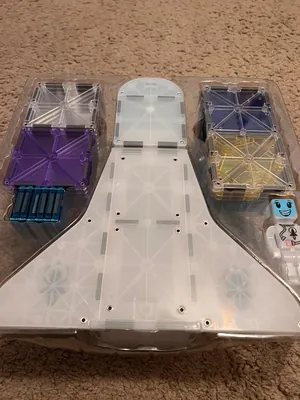
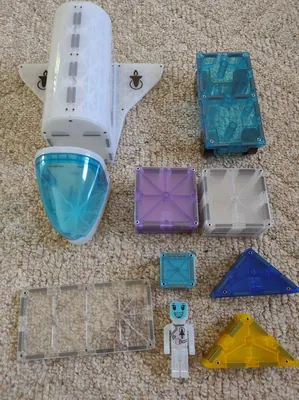
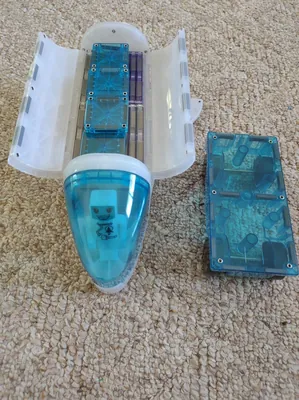
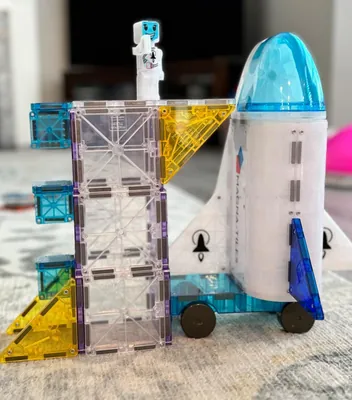
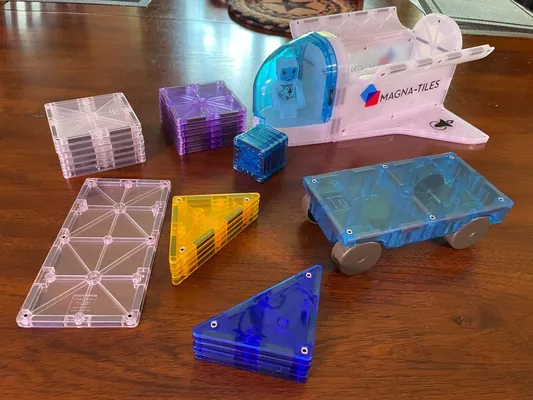
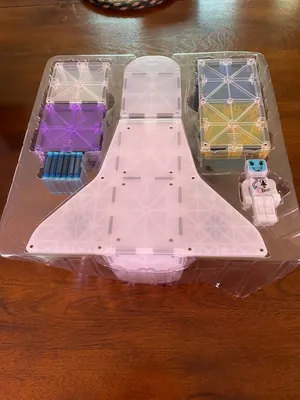
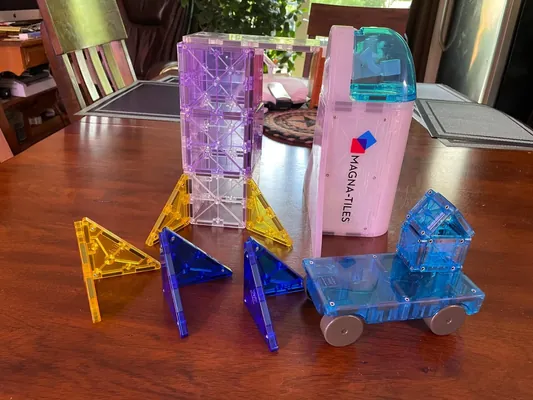
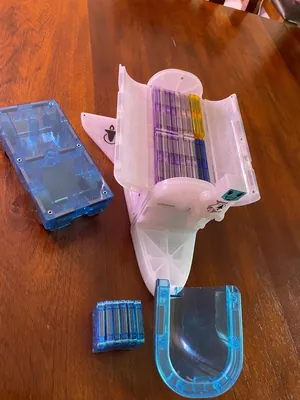
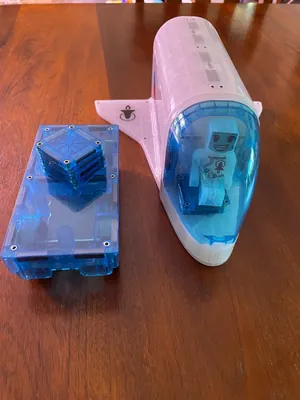
The space set is a small add-on built around a shuttle that opens to store the tiles. It comes with a capsule, an astronaut and a wheeled base, plus 12 squares, 8 right triangles and 6 small squares. Parents and teachers like the shuttle's design and the storage feature, but several caution that it is not a stand-alone set because there are few tiles to build with. One teacher noticed weak magnets and a fragile cockpit hinge, and another buyer said the edge of a tile has an opening a fingernail can slip into.
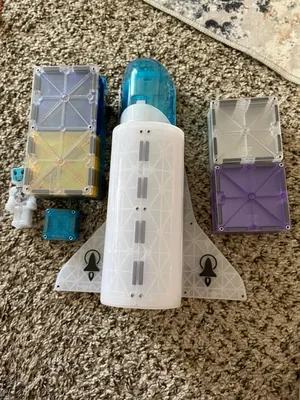
For a kid who loves trucks
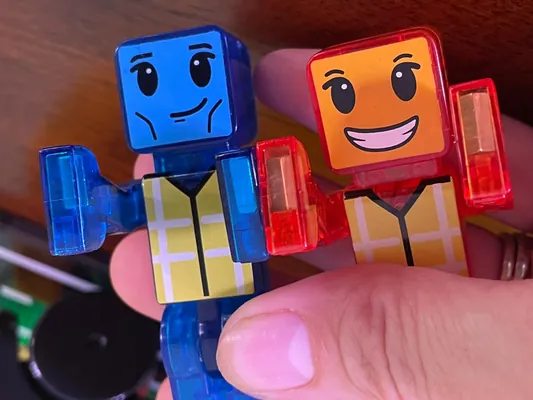
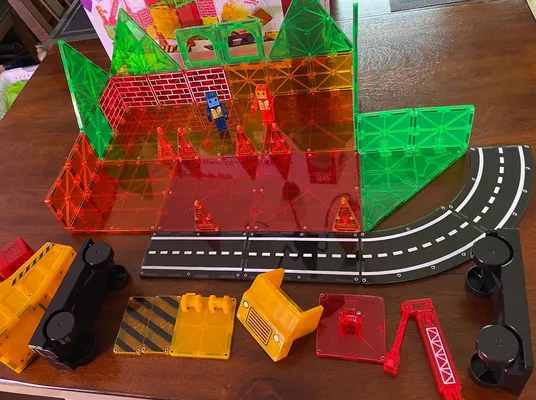
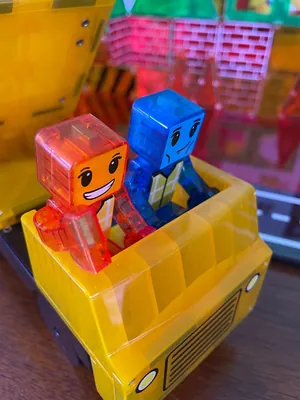
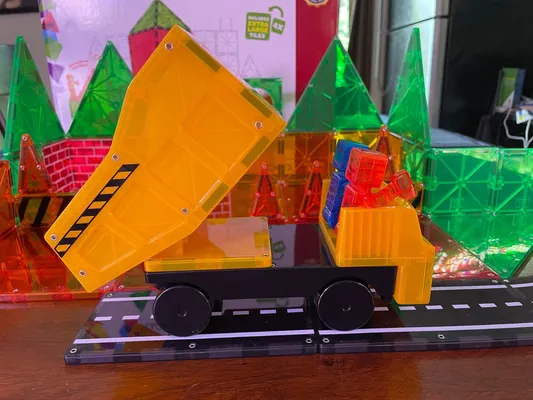
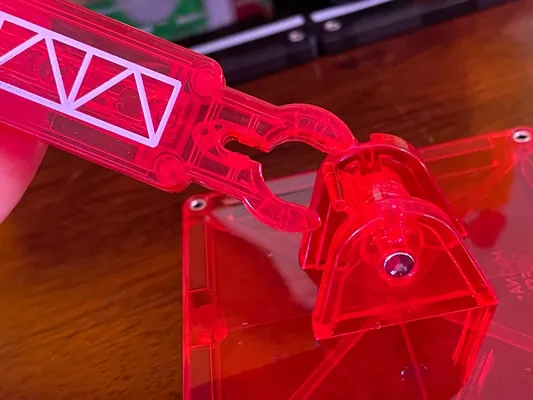
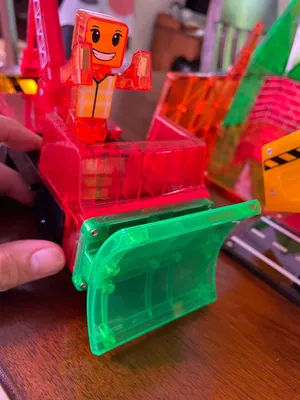
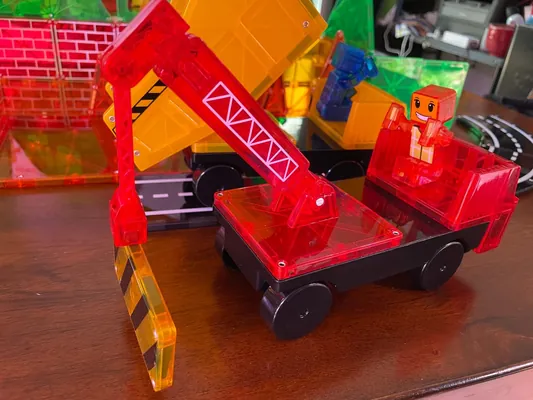
The construction set adds a crane, a dump truck, a plow, two truck cabs, two figures and road pieces to 50 pieces that include extra-large squares and triangles. Parents of toddlers like the oversized pieces and the dump truck, and one classroom volunteer says first graders enjoy the characters and extra parts. The main complaint is the price for 50 pieces.
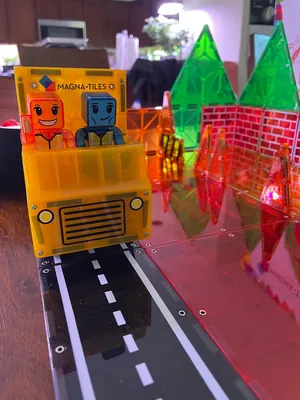
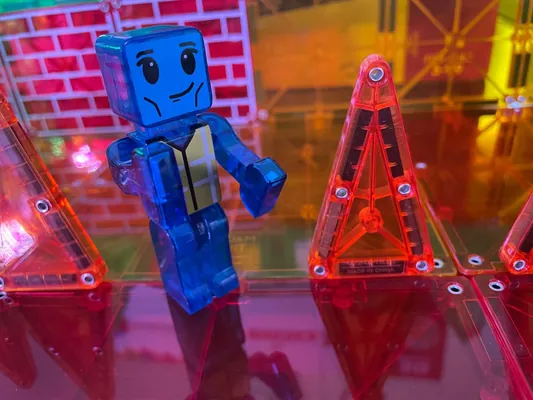
How do you add ramps and races without it turning into a frustrating project?
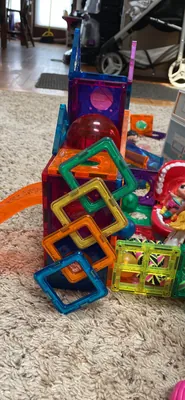
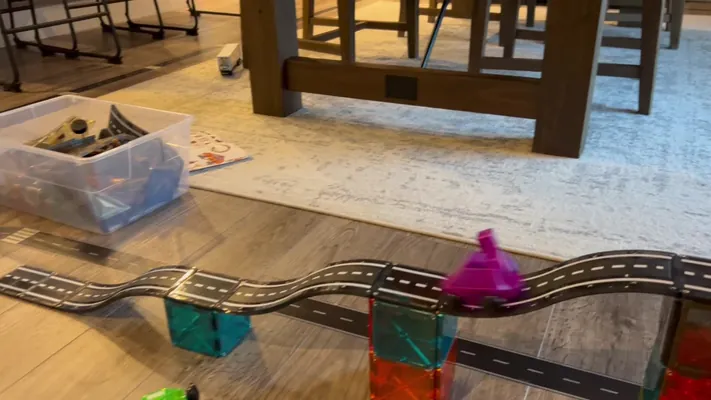
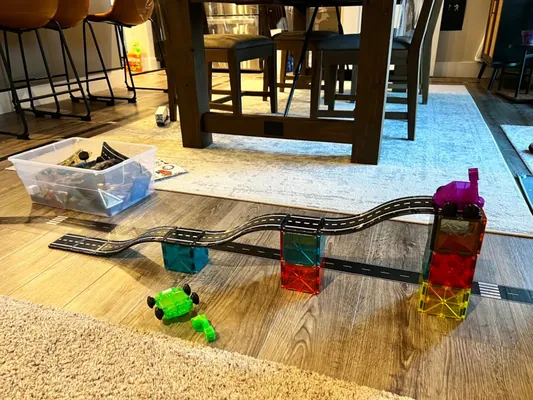
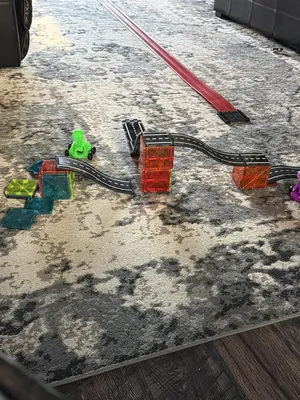
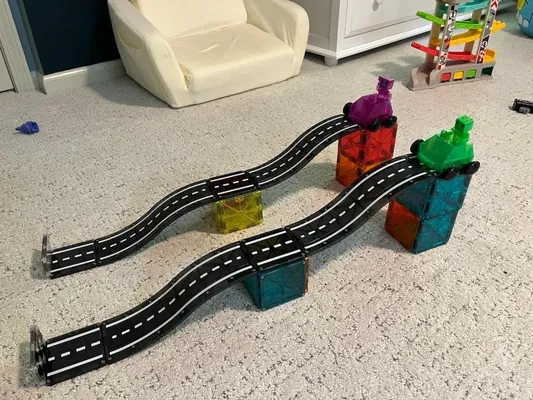
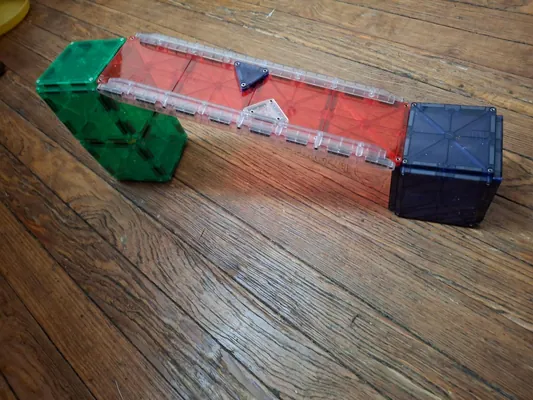
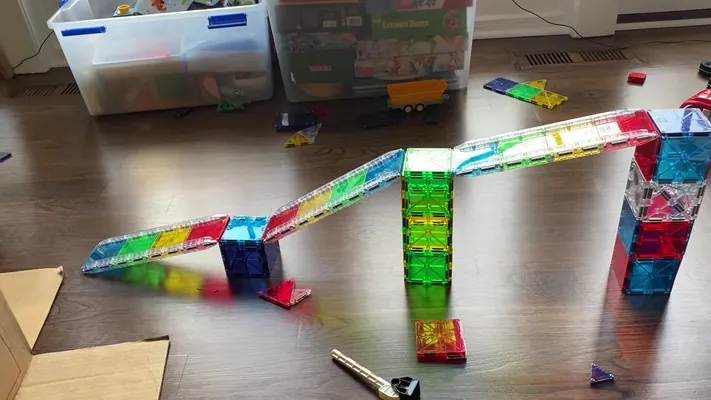
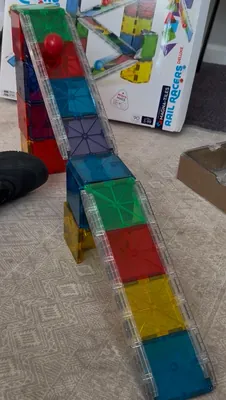
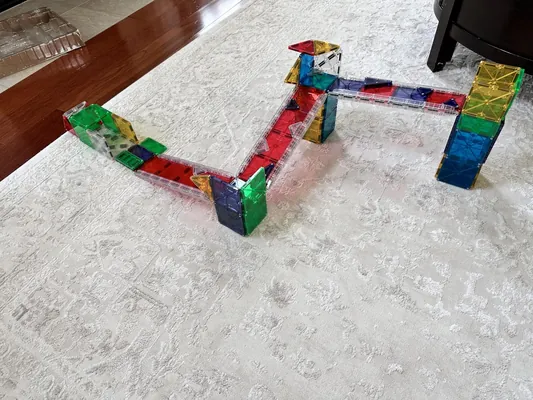
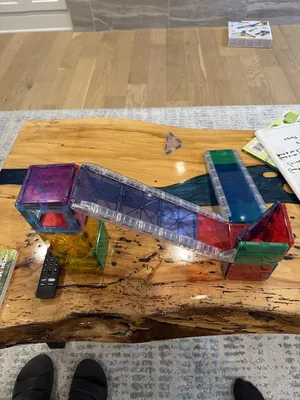
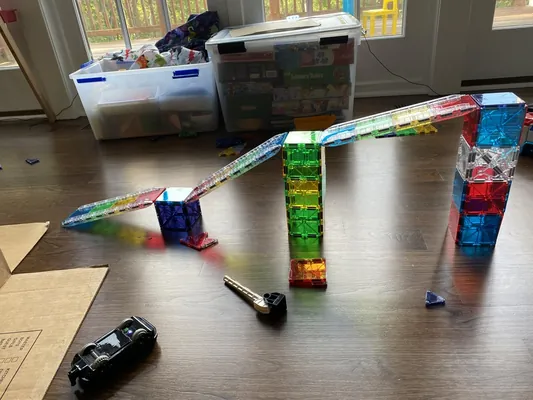
Ramps add cause and effect: build it, roll something down, change it, and try again. They are also harder than they look. A speech therapist who used one of the ramp sets with a group of children said it let her work on colors, shapes, directions and asking for help, and that the kids loved the ramps. A parent of a 3-year-old said it was difficult for him to build the rail and ramp by himself, and suggested the child be over 5 to do it independently.
A few habits keep ramps fun. Build the base first, because a ramp is only as steady as what holds it up. Keep the slope gentle at the start and test with the ball or car before adding more height. One parent said her 7-year-old announced the set "keeps falling down", so they sat together and troubleshot the base until it held. That kind of repeat-and-adjust is exactly the point.
A car set for toddlers and preschoolers
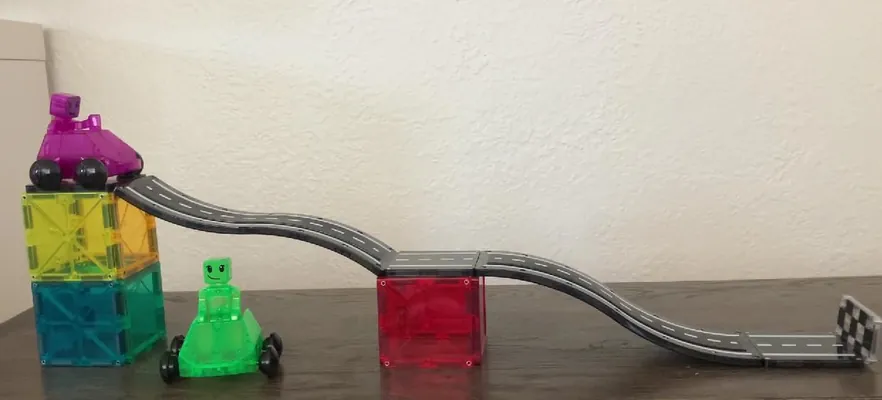
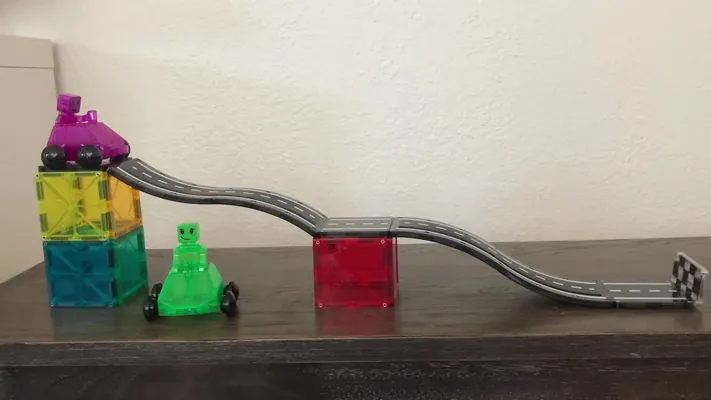
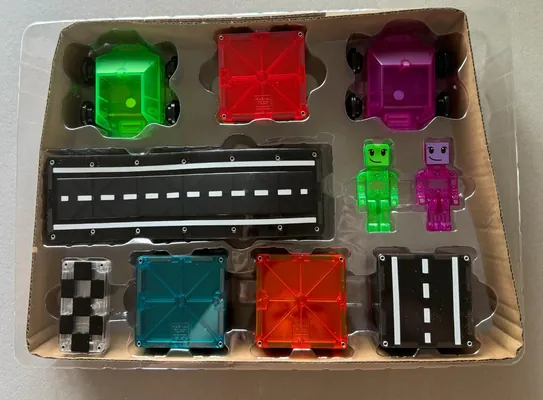
The car-and-ramp set includes four ramps, two vehicles, two figures, six road squares and two finish-line rectangles, plus 24 squares. Buyers say it adds a new kind of play to a collection, with cars that grip the sides of the road and figures with magnets in their heads, hands and feet. They also report a learning curve: the roads do not cling as firmly as other pieces and can drift out of place, a young child may need help, and one parent said her rowdy 3-year-old broke a piece of track. One detail from a buyer: the car wheels go outside the rails.
A rail-and-ball set for older builders
The ball-run set includes 90 pieces with six track rails and two balls. Buyers say it expands what tiles can do, and several say it works best from about age 5. The same few complaints come up: there are not enough rails for how many tiles come in the box (one buyer says a smaller version has only four, while the 90-piece listing counts six), and the base needs thought to hold the ramp. One parent says the balls are big enough not to be a choking hazard for her 2-year-old, while another reminds readers they would be a hazard for a much younger child, so follow the age guidance on the box.
Where do all the tiles go at the end of the day?
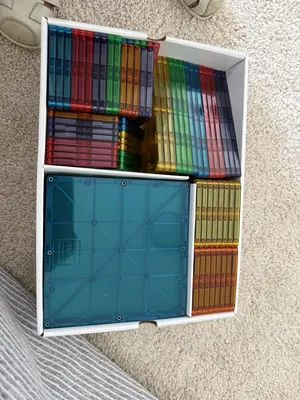
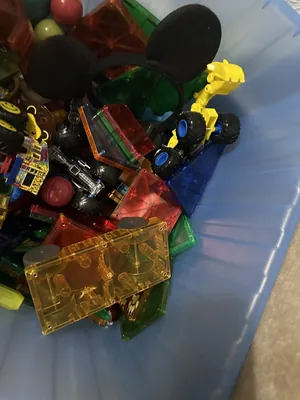
Storage decides whether tiles get used. If putting them away is a chore, they tend to stay in the box. Buyers say they keep theirs in a tote, a basket in the playroom, or a plastic bin so the tiles are within reach and cleanup is quick. One parent bought a separate bin for quicker cleanup because the box has a precise spot for every piece. Another points out that a shuttle set holds its own pieces, so cleanup is a single container.
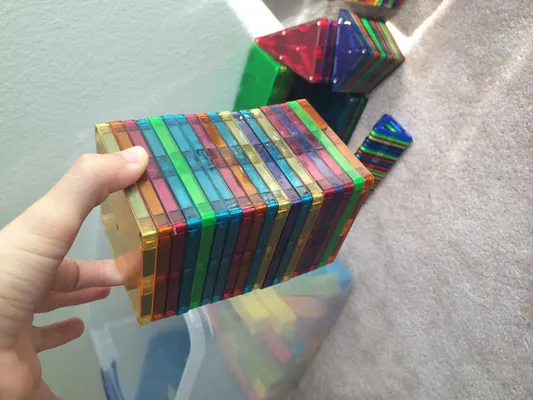
Tiles stack flat, so a child can slide them in by the handful. Keep one bin on a low shelf and cleanup can become part of the game: "Can you stack all the triangles?" It is also gentler on bare feet than many building toys, according to one parent who noted that stepping on a tile in the middle of the night hurts less than a stray plastic brick.
What should you know about the small magnets before you hand them over?
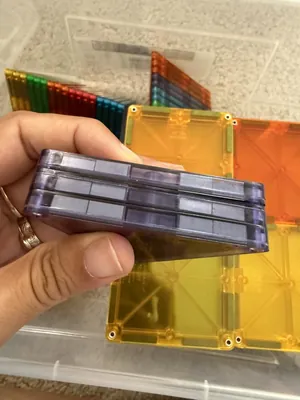
Most listings for these sets say ages 3 and up, and the tiles in several of them are built with magnets sealed inside, held shut with small rivets. The risk is a magnet that gets out. The U.S. Consumer Product Safety Commission warns that when two or more magnets are swallowed, they attract each other internally, and many incidents have ended in surgery. If you suspect a child swallowed a magnet, it advises seeking immediate medical attention. It lists abdominal pain, nausea, vomiting and diarrhea as symptoms to watch for, and notes that on an X-ray several magnets can look like a single object.
Buyers describe what to watch for. One parent found a toy car from a set had come apart after about six months and pulled magnets out of her kids' mouths several times. Other buyers of the same set reported cracked wheel bases or a cracked piece straight out of the box. A parent who used tiles with a baby of 10 to 14 months wrote that she does not recommend leaving young children unattended with small pieces or magnetic toys.
- Check pieces now and then. Look for cracks, warped seams, loose rivets and anything that rattles, and set aside damaged pieces.
- Count the extras. Figures, vehicles and balls are separate small parts that can be lost or come apart.
- Stay close with the youngest. If a child still puts things in their mouth, wait on tiles or play only while you are right there.
- Act fast if one goes missing. If you think a magnet was swallowed, do not wait for symptoms.