In this article
Short answer: wrap both halves in a slim two-part case, keep the hinge clean, and leave the inner screen alone. A foldable has two things a regular phone does not, a hinge and a folding inner display, and a case can only cover the shell around them. Most of the damage you can prevent comes from drops, grit in the hinge, and what gets closed inside the phone. Below: what a case can and cannot do, whether to use a screen protector, how hinge cases differ from two-part cases, how to choose between slim and tough, and the habits that matter as much as the case.
An iPhone Duo is a very expensive thing to carry loose in a pocket. Its price started at $1,999 when it launched in October 2026, and it folds open to a 7.6-inch inner display, so the usual advice (get a case, add a screen protector, forget about it) does not map neatly onto it. This guide separates what a case really protects from what is mostly about habits, and uses what people say about eight cases listed for it.
One caution before the cases. The pages for these cases are shared with cases for many other phones, and most of the buyer feedback on them comes from people using the same case styles on other iPhones. That feedback is useful for how a material wears or how slippery a finish is. It says little about how a case fits a folding body. This guide says so wherever it matters.
What makes a foldable phone different to protect?
Two screens, one hinge. The maker's launch announcement lists a 7.6-inch inner display and a 5.4-inch outer display, a titanium enclosure and hinge cover, and a hinge with more than 100 parts that holds the center of the display flat when open. The back and outer display use reinforced glass. The inner display has a scratch-resistant coating and a nano-textured cover layer that the maker says is part of the display itself.
A case wraps the outside of that structure: the corners, the edges, the camera area, and the back. It does not cover the inner screen when the phone is open, and it cannot keep dust out of a hinge. The maker's own accessories reflect that: a thin two-part case that wraps both sides of the phone, and a folio with a kickstand, both with built-in magnets for charging. The phone is rated IP68 for splashes, water, and dust, but the maker notes that the resistance is not permanent and may decrease with normal wear, so a case is not a license to take the hinge into the pool.
Can you put a screen protector on the inner display?
Be careful here. The maker's cleaning page for the phone says the nano-textured cover layer is an integral part of the inner display, helps protect it from scratches and dents, and should not be removed. The maker pages checked for this guide say nothing about adding a screen protector to it. An accessory-maker's care guide advises against ordinary tempered glass on the inner display and says to use only a product that is explicitly sold for folding displays. That is secondhand advice, so if you are tempted, ask the maker or an authorized service provider first.
The same cleaning page notes that material transfer from denim or pocket contents can look like a scratch and can usually be wiped off. Before assuming the inner display is damaged, wipe it gently with a soft, slightly damp, lint-free cloth. The maker says not to use compressed air on it.
What about the outer screen?
Two of the cases here come with a 9H tempered glass screen protector, but the listings do not say which of the two displays it is cut for. Check that before you stick it on. Buyers who used the kit on other phones offered two tips: one said to place the glass in the middle of the screen before pressing it down, because bubbles collect at the corners, and a few found the glass cracked or crushed inside the box, so open it before you need it.
Does the hinge need its own protection?
It is the one part a regular phone case never has to think about, and cases for a foldable take one of two approaches. Some are two separate halves that each wrap one side of the phone and leave the hinge exposed, which keeps the case thin and lets the phone fold fully. Others add a bridge across the hinge so the whole phone sits in one shell, which covers more but adds a moving part that has to open and close with the phone.
Neither is clearly better, and both have a weak spot. A bridge across the hinge only helps if it moves freely and closes properly. One buyer of a premium dual-layer case wrote that its hinge cover does not close completely, which is the kind of flaw to look for in photos before you buy. Two separate halves cannot flex that way, but they leave the hinge as open to grit as a bare phone.
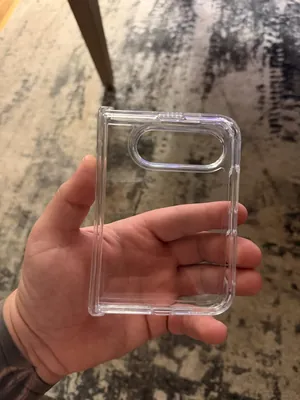
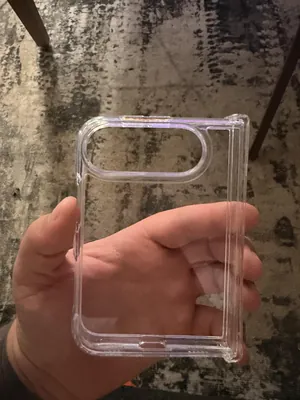
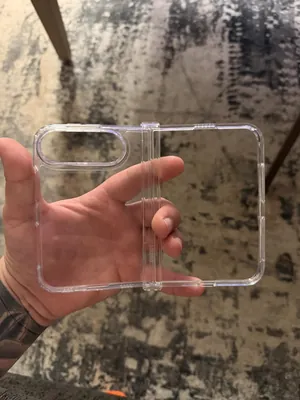
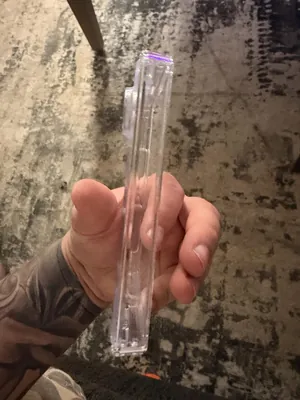
This clear case joins both sides with a bridge across the hinge. Its listing describes the hinge connection as durable and says the case has reinforced corners and a raised bezel around the camera and screen. It does not include a screen or camera protector.
A buyer who owns the phone said they chose it because they prefer a case without magnets, so check the listing if magnets matter to you. Across buyers of this case on other phones, the most common complaint by far is yellowing over months, even though the listing says the material resists it. The same buyers say the corners held up through repeated drops.
How much case do you need: slim or heavy-duty?
Think about where the phone spends its day and how it usually gets dropped, then choose the amount of case from that. A thicker case can make a foldable harder to open and to fold flat, so extra protection has a cost you feel every day.
What is a good case for everyday pocket carry?
Slim two-part cases are the obvious fit if the phone mostly lives in a pocket or bag. They keep the hinge free, add little thickness, and do not catch on fabric. The usual trade-off is that a slim shell is mostly about scratches and ordinary slips, not repeated hard falls.
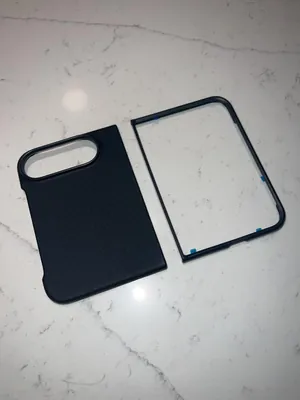
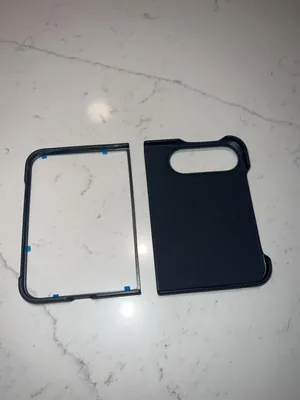
This two-part matte case wraps both sides of the phone. Its listing describes it as thin, light, and made from polycarbonate with a matte coating.
It has only two ratings at the time of writing, so there is little feedback to lean on. One buyer liked the adhesive strip along the inner rim of the front half, because it means the case should stay put, and noted that the color looks slightly different from the packaging.
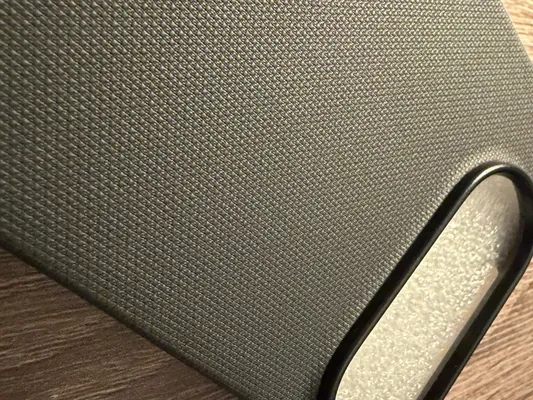
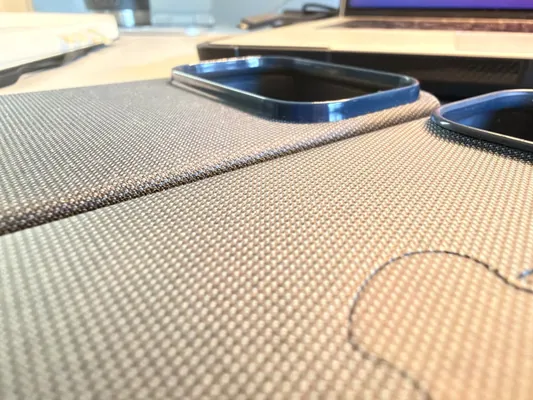
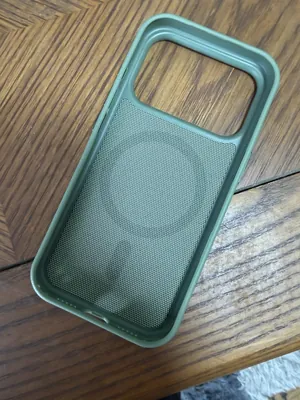
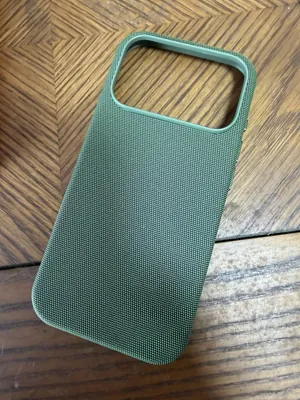
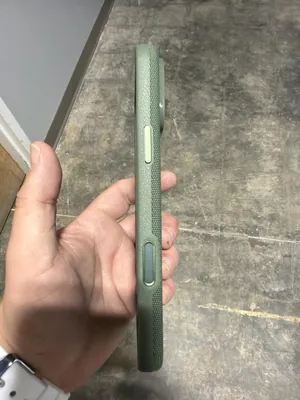
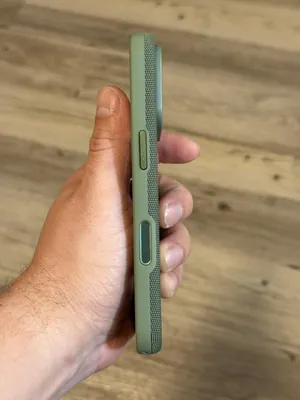
If you like the look of fabric, this woven two-piece case follows the same two-half idea. The listing says the front half attaches with reusable adhesive strips and that the back has a soft, woven finish.
Buyers of this case on other phones had mixed experiences. Many liked the texture, the responsive buttons, and the price compared with the maker's own woven case. Others said the finish gathers lint and skin oil and fades quickly, that corners frayed within a month, that it feels slippery, or that one drop pushed the weave out of place. One buyer who owns the maker's woven case said the third-party version is a molded plastic with a soft-touch coating and not a real fabric. If you buy it, treat the woven look as a surface finish and not as a shock absorber.
Which case suits a phone that gets dropped a lot?
If the phone regularly meets sidewalks, car floors, or tile, look for raised edges around the screen and camera and cushioned corners, then check that the case still lets the phone fold fully. The listings use phrases like “military-grade” and quote drop heights of 10 to 14 feet. Those are the sellers' claims, and the phrase is not tied to one standard consumer rating, so use them as a sign of intent and not as a guarantee.
This heavy-duty case is the least expensive of the group. Its listing describes a matte back, shock-absorbing corners, and covered buttons, and says it passed a 10-foot drop test.
Buyers of this case on other phones praised the price, the grip, and how light it is for a heavy-duty case. One said it survived being run over after falling on a highway, with the case wrecked and the phone with only minor scratches. Common complaints were that it does not include a screen protector, that it has no holes for a wrist strap, and that the materials feel basic. One buyer said a button broke off.
Why do so many cases feel slippery?
Hard plastic and smooth coatings are easy to wipe clean and look good, but they are slick, and many buyers of both the dual-layer case and the woven case say so. A foldable is expensive enough that a slippery shell is a real risk. If you pick a smooth case, consider whether you will use a strap or grip accessory, and check that the case has room for one.
This dual-layer case is the most expensive option here and is built around aluminum control buttons and a touch-sensitive camera button. Its listing says it can survive up to 8-foot drops and comes with a lifetime warranty and a 99-day trial.
Buyers of this case on other phones liked how solid it feels and how strong the magnets are, and one dropped it in snow and on rocks without trouble. A long list of complaints says the finish is slippery, the plastic buttons or camera trim can pop off or break, the color wears, and it is not worth the price. A couple said it scratches easily or marks from magnetic chargers, and one said it was too thick to charge on their car's pad. Because the cost is several times higher than the others, a long return window matters more here than anywhere else.
What if you mostly read or watch video?
A case that props the phone changes how you use the big inner display, because you can set it down at a desk or on a table instead of holding it. The maker's folio has an integrated kickstand that supports a range of angles and folds away when it is not needed.
It has no ratings at the time of writing, so the claims here are the listing's. It describes a fabric made from recycled polyester, built-in magnets for charging, and a kickstand that snaps back when it is not in use. As with the two-part case, the folio covers the outside of the phone and does not change how you treat the inner display.
Will a clear or light-colored case stay looking good?
Not forever. Clear plastic and light colors show their age. Many buyers of clear cases say the edges turn yellow within months, even when the listing promises that the material resists yellowing, and one who works in a hospital said daily alcohol wipes may have sped it up. A light color can show dirt in a few weeks. This is cosmetic and does not mean the case has stopped protecting, since buyers who complained about the color also said it kept their phones safe, but it matters if you chose a clear case to show off the phone.
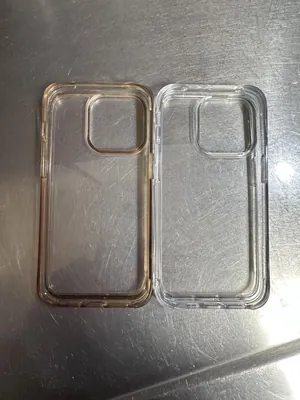
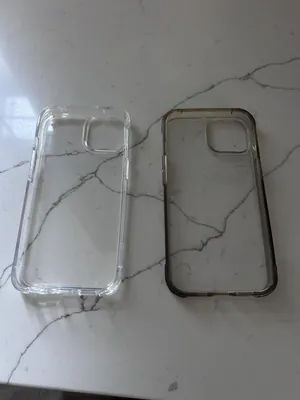
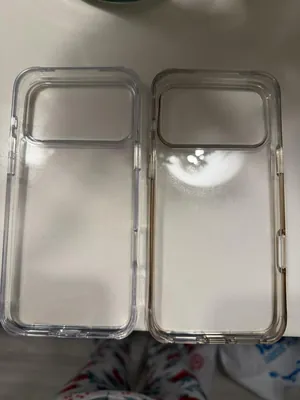
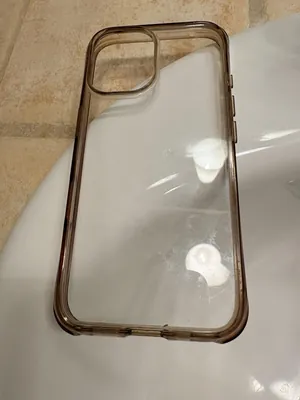
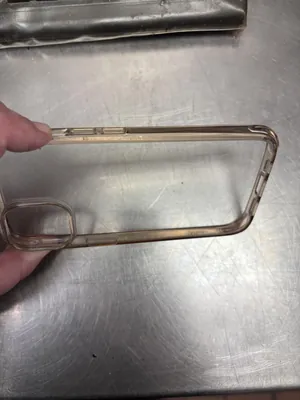
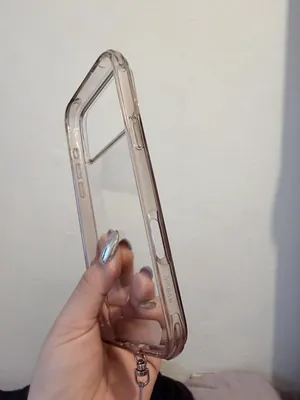
This clear case is listed with a bundled glass protector and a cleaning kit, and its listing describes a magnetic ring, raised camera and screen edges, and cushioned corners.
Buyers of this case on other phones were generally warm about the fit, the price, and the extras in the box, and several said their phones survived many drops. Some said it yellows after months to a year and a half. Others asked for more camera protection or said the lip around the camera button feels flimsy.
If you prefer color, this translucent matte case comes in several colors, and its listing says it has a bundled glass protector, a raised camera guard, and a magnetic ring.
Buyers of this case on other phones liked the colors, the fit, and the feel, and one found it not slippery while another found it a bit slick. One who dropped a light blue one a few times said it protected the phone but stained within two to three weeks, so they would choose a darker color. A few found the screen protector in the box cracked on arrival. One buyer said it fit their foldable phone from another maker and liked how thin and light it is, which is a reminder that these pages cover many different models.
Cleaning matters more than most owners expect. The maker's cleaning page for cases says to wipe a clear case, inside and out, with a soft, slightly damp, lint-free cloth and to avoid household cleaners, solvents, and abrasives. It describes a separate mild-detergent method for its own woven case and notes that the material can show wear over time.
Will a case get in the way of charging and magnets?
The phone charges on magnetic and Qi2 25W chargers, and the maker's two cases line up with them. Third-party cases mostly advertise an embedded magnet ring, and how well it works depends on the case more than on the claim. Buyers of these cases on other phones had a range of results: several said the magnets held a car mount and a stand firmly, while one said a wallet kept falling off the back of the dual-layer case and another found it too thick for their car's wireless pad. One buyer disliked the way a magnetic charger marked the finish of their case in one day.
The simplest fix is to test your own chargers, stands, and car mount within the return window, and to notice whether the phone sits flat and starts charging right away. If a case makes charging unreliable, that is a better reason to return it than a cosmetic flaw.
What habits protect a foldable beyond the case?
Because the hinge and the inner display are not covered by a case, the habits around them matter as much as the case you choose. Third-party care guides, including one on protecting the inner display, repeat the same points, and the maker's own cleaning page supports some of them.
- Check the inner screen before closing the phone. A card, a coin, a key, or a bit of grit between the halves puts pressure on a folding display that a flat phone never faces.
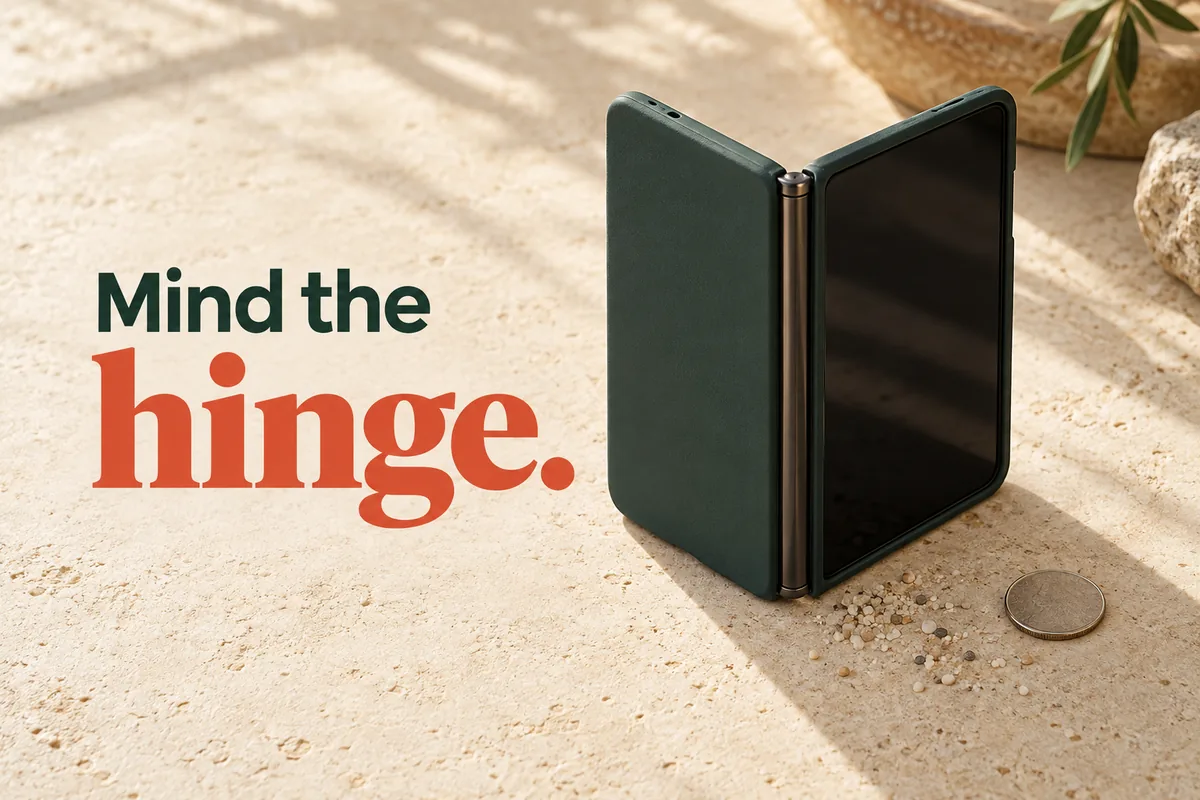
- Keep the hinge away from sand, crumbs, and pocket lint, and do not force the phone closed if you see something in the gap.
- Clean the inner display with a soft, slightly damp, lint-free cloth and skip compressed air, which the maker says not to use.
- Do not assume a smudge or a gray streak is a scratch. Material from denim and pocket contents can look like one and often wipes away.
- Treat the water resistance as a bonus, not a plan. The maker says the rating is not permanent and may decrease with normal wear, and that liquid damage is not covered by the warranty.
Is a protection plan worth a look?
For a phone this costly, it is reasonable to read the details. The maker says its protection plans cover accidental damage such as drops and spills, in select markets, with deductibles and service fees, and that cosmetic damage is excluded. Compare that with what your own insurance or credit card already covers, and with the cost of repairing a folding display, before deciding. A case reduces the chance of damage, and a plan changes what damage costs you. They do different jobs.
How do you read buyer feedback on a case for a brand-new phone?
Cautiously. Several of these listings group cases for many phones on one page, so the star rating and most of the written comments can come from owners of a different model. The labels on the comments show it: buyers mention iPhone 15, 16, 17, and 18 models, and one even mentions a foldable from another maker. A page with more than 100,000 ratings may have only a few from people who own this phone.
What carries over is how a material behaves. Clear plastic yellows, smooth shells are slippery, woven finishes collect lint, and loose-fitting buttons come off. What does not carry over is fit around the hinge, how well the halves line up, and whether the case lets the phone fold flat, and for those you have only the listing's photos and claims, the handful of buyers who own the phone, and the return window.
One listing note is worth following. The clear hinge case asks buyers to confirm the model before ordering, by opening Settings, then General, then About, and checking the Model Name, and that is a good step with any case.
A last test before you commit to any case: put the phone in it, open and close it ten times, and check that it folds flat and that nothing pinches. If the case makes the phone harder to open, you will notice it every day, and returning it takes only a minute.