In this article
Skin that looks flat or dull is often short on water, and surface hydration is the part that changes within days. The look of firmness takes weeks, which is where peptide serums come in, with modest results. Start with sunscreen and a moisturizer you like, add a hydrating serum on damp skin, treat a peptide serum as a slow extra, add one product at a time, and judge the result with photos taken weeks apart.
You wash your face, you moisturize, and by midafternoon your skin still looks flat: no bounce, a dull cast, and fine lines that seem deeper under bathroom lighting. It is a common complaint, and it usually has more than one cause.
This guide separates what changes within days from what takes weeks, shows where hydrating serums and peptide serums fit, and explains how to use them without irritating your skin. You can follow the routine without buying anything new; the products that appear along the way are examples of what each step looks like in practice.
Why does skin look flat or dull even when you have a routine?
Flat, dull skin usually comes from several things at once. Skin that is low on water often feels tight and looks dull, and fine lines show up more clearly on it. Over the years skin also loses some firmness, and sun exposure speeds that along. These causes matter because the fixes work at very different speeds.
What changes in days, and what takes weeks?
- Days: surface hydration. A water-binding ingredient, applied well and sealed under a moisturizer, can make skin look smoother and softer within a day or two. This is the “plump” effect most people notice first.
- Weeks to months: the look of firmness and fine lines. Slower-acting ingredients such as retinoids and peptides need steady use, and the results tend to be modest.
- Every day: sun protection. The American Academy of Dermatology points out that not every sunscreen guards against sunburn, skin cancer, and premature skin aging, and it has a page on how to select one that does.
What should come before any serum?
A serum is an add-on, so the base routine comes first: a gentle cleanser, a moisturizer you will actually use, and sunscreen every morning. The AAD's page on the order to apply skin care products puts treatments after cleansing and moisturizer and sunscreen after them, and it warns that using too many products can irritate skin, especially more than one anti-aging product, which can make the signs of aging more noticeable. That is the best argument for adding one new product at a time.
Retinoids are the other well-known option for fine lines. The AAD's anti-aging skin care hub has a page on how retinoids differ from retinol, and a dermatologist can help you decide whether one suits your skin. Peptide serums are often marketed as a gentler alternative, but the evidence behind them is thinner, so treat them as an extra rather than a replacement.
How do hydrating serums make skin look plumper?
The quick plumping effect comes from humectants, ingredients that attract and hold water. Harvard Health explains that hyaluronic acid binds water and can help replenish moisture and plump fine lines. Its advice for using it is practical: apply the serum to damp skin, follow right away with a moisturizer that contains an occlusive ingredient to seal the water in, and layer products from thinnest to thickest.
Many copper peptide serums are really hydrating serums with a peptide added, and the feel of the formula often matters more day to day than the peptide. One example pairs hyaluronic acid, polyglutamic acid, and sugarcane-derived squalane with copper peptides in a 1.69-fluid-ounce dropper bottle, and its listing describes the result as plumping and firming. Buyers who liked it described a light, smooth finish that did not feel greasy; one buyer in their 70s said the lines at the corners of their eyes looked smoother within a day, while another who used it daily for two months saw no plumping at all. Buyers also praised a dropper cap that wipes excess serum off the glass as you pull it out. The most common complaints were about condition on arrival, covered in the section on what to check when the bottle arrives.
A second option leans on a liposomal delivery system. Its listing describes low-molecular-weight hyaluronic acid, hydrolyzed collagen, niacinamide, panthenol, a 12-peptide complex, and PDRN in a 1-fluid-ounce dropper bottle. Most buyer comments are short and positive about the same things: a lightweight texture that absorbs quickly without stickiness, and skin that feels soft and hydrated. There is little detail about long-term change, so judge it as a hydrating serum first. One buyer noted the instructions suggest mixing it with an oil but used it alone without trouble.
Why does a hydrating serum sometimes leave skin feeling tight?
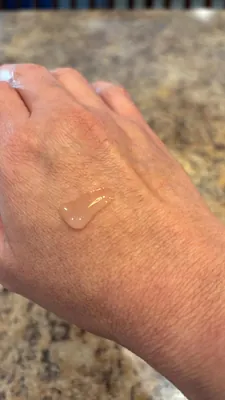
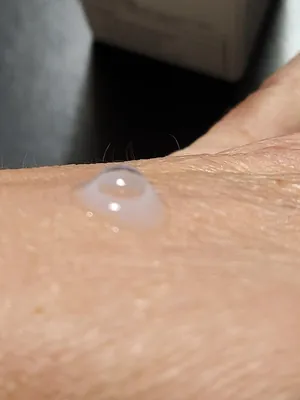
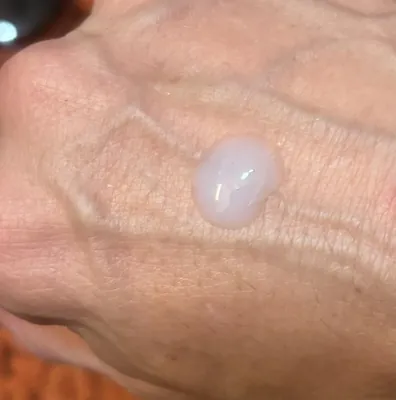
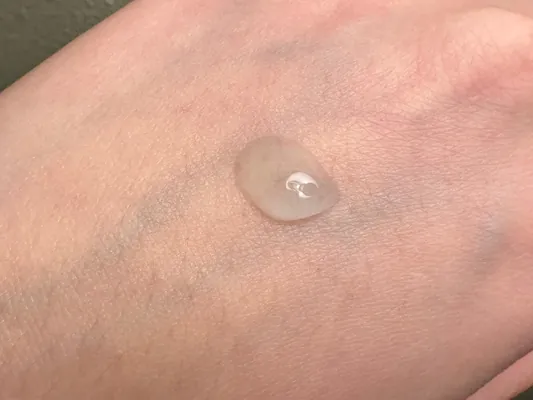
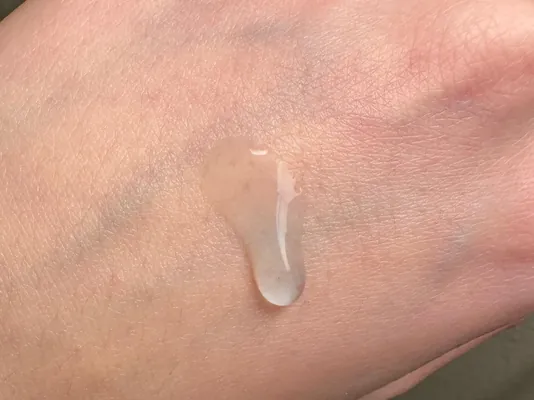
Because water-binding ingredients draw moisture from wherever it is available, and in dry air that can include your skin. If the serum is the last thing you apply, it may feel drying or tacky. Buyers of a one-ounce copper peptide and hyaluronic acid serum described exactly this: the serum itself was light and absorbed fast, but several said it felt a little drying and always followed it with moisturizer. Others found a gel-like serum tacky for a few minutes until the moisturizer went on. Treat the serum as the middle step, not the finish.

Where do peptide serums fit in?
Peptides are short chains of amino acids, and cosmetic versions are used to signal the skin rather than to hydrate it. Copper peptide (GHK-Cu, often listed as copper tripeptide-1) is the one most serums are built around. “Multi-peptide” formulas add others, such as palmitoyl tripeptide-1, palmitoyl tetrapeptide-7, and acetyl hexapeptide-8. The honest summary is that there is real laboratory interest and limited human evidence. A 2025 review of acetyl hexapeptide-8 found that studies suggest it may reduce wrinkle depth and improve elasticity and hydration, but that its low skin penetration limits how much it can do.
Expect gradual, subtle changes at best. As one buyer in their 50s put it, a peptide serum is a support product, not a substitute for in-office treatments. If you want more on copper peptides alone, including strength numbers and scalp use, our guide to adding a copper peptide serum to your routine goes deeper.
Can you use peptides with vitamin C, retinol, or acids?
Healthline advises avoiding copper peptides at the same time as retinol, vitamin C, and alpha hydroxy acids, since those can reduce their effect. The listing for a popular one-percent serum says the same, telling users to avoid direct acids, retinoids, and strong antioxidants. This is a real constraint: one buyer who wanted a vitamin C product for dark patches said they could not use the peptide serum as often as they hoped. A common workaround is to give each active its own time of day, such as vitamin C in the morning and the peptide at night; if you use a prescription retinoid, ask your dermatologist how to fit it in.
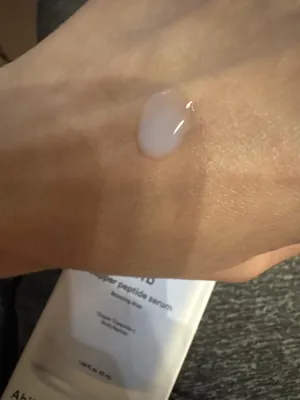
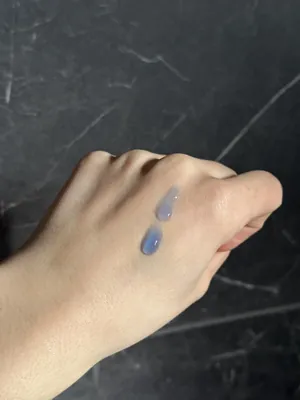
A one-percent multi-peptide serum is a modest-cost way to try the category. Buyers describe it as blue when it comes out, lightweight, slightly tacky for a few minutes, and with a faint metallic smell that fades as it dries. A few things to know first: two buyers said it dried pink on their skin or flushed their cheeks for a few hours, and one buyer with naturally prominent under-eye bags said they looked worse after a month of use, improving within days of stopping. That buyer suspected a muscle-relaxing peptide in the formula. It is one account, not proof, but it is a good reason to keep a new peptide serum away from the eye area at first.
How do you apply a serum so it sits well under moisturizer and sunscreen?
- Cleanse, then leave your skin slightly damp if the serum is a humectant, as Harvard Health advises.
- Use a few drops. Buyers of several serums say three or four drops cover the whole face, and one noted that four drops took a little longer to absorb than three.
- Pat it in rather than rubbing, and give it a couple of minutes if it feels tacky.
- Follow with moisturizer, then sunscreen in the morning, in the order the AAD recommends.
- Add only one new product at a time and give it about two weeks before you add another.
Texture decides whether you will keep using a serum. Very thin serums can run off your face: buyers of one two-ounce peptide serum said it was watery enough to drip and dried so fast that they needed extra product to cover their face. Pouring a few drops into your palm first helps. Thin formulas have an upside, too, since a watery serum is less likely to pill under moisturizer and sunscreen than a tacky one.
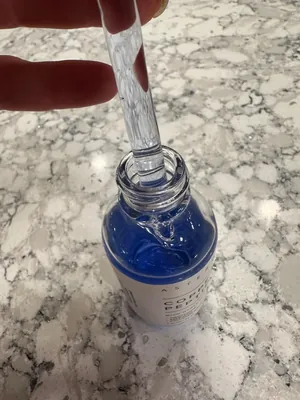
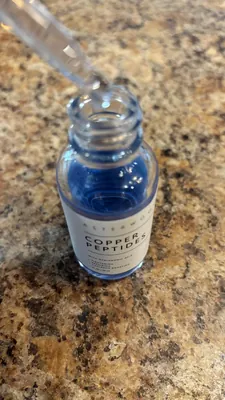

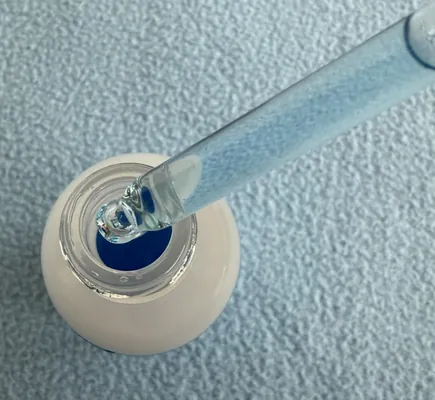
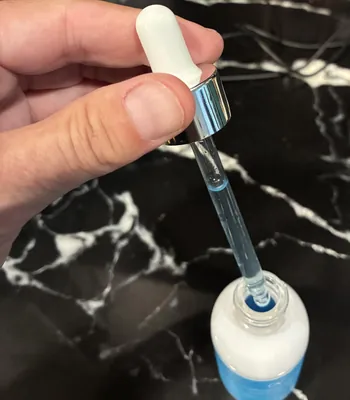
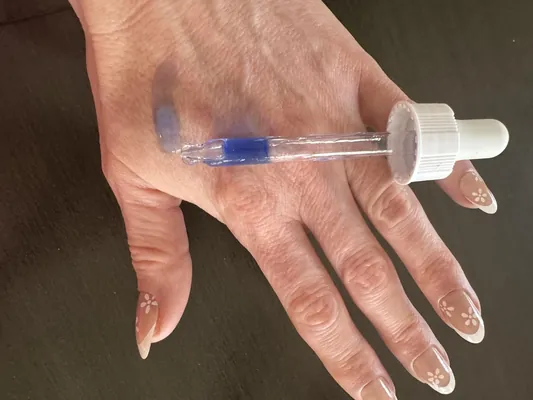
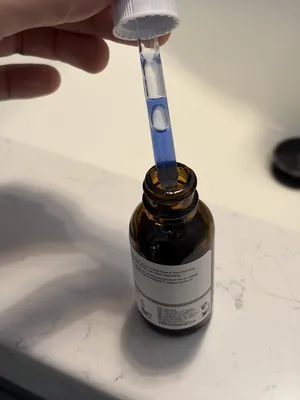
A simple copper peptide and hyaluronic acid serum is an easy way to practice the routine. It comes in one-ounce dropper bottles, and buyers mention single bottles as well as multi-bottle packs. The listing says it is vegan and free of sulfates and parabens. Buyers describe a light blue, lightweight serum that absorbs fast, and many use it at night after toner and before moisturizer. Opinions on the smell vary widely, from “no smell” to spicy, cinnamon-like, sweet, or musty, so the scent is worth a sniff test. A few buyers received a bottle with a dropper or pump that did not work.
What if your skin is sensitive, dry, or prone to breakouts?
Patch test first. Healthline suggests applying a small amount inside the elbow and waiting 24 hours, and stopping if you develop redness, hives, itching, or burning. Many buyers with sensitive skin said fluid, fragrance-free serums did not bother them, but not everyone had the same experience. One buyer with oily, acne-prone skin broke out and traced it to coconut oil in a serum's formula, and another saw small bumps on their face after using a different serum. Neither case proves the ingredient was at fault, so if your skin looks worse after a couple of weeks, stop and ask a dermatologist rather than assuming it is a phase.
If your skin is dry or easily irritated, look for barrier-supporting ingredients beside the peptides. One lightweight, fragrance-free serum lists ceramide NP, panthenol, and ectoin along with copper peptide and several other peptides, in a 1.69-fluid-ounce dropper bottle. Buyers with dry, sensitive, or eczema-prone skin described it as comfortable and non-sticky, and several said it layered well under moisturizer and sunscreen without pilling. The listing cites a four-week study of 22 participants, which is small, and the results are the seller's own. One buyer ran into the same trade-off as above: if you want to use vitamin C daily, this serum has to wait for another time of day.
What about the area around the eyes and the neck?
Fine lines tend to show first around the eyes, and the skin there is thin. The AAD recommends using your ring finger for any cream near the eyes, because it is the weakest finger and pulls the least on delicate skin. Start with the serum on your cheeks and forehead, keep it off the lash line, and add the eye area only after your skin has settled. The neck is less delicate, and several buyers apply their serum there as well; one said the vertical lines on their neck looked better, though they saw little tightening along the jaw.
A two-ounce serum suits this routine because you can use it on the face and neck without rationing it. The listing describes copper peptide with two palmitoyl peptides, hyaluronic acid, and botanical extracts, and it names jojoba and coconut oils, which is worth knowing if oils break you out. Several buyers called it thin and runny, and a few said it was not very moisturizing on its own, so a couple of them mixed a drop into their daily moisturizer.
Can the same ingredient help a thin-looking scalp?
Copper peptides are also sold for thinning hair, and the evidence there is more limited than the marketing suggests. Buyer stories of fuller hair are encouraging for them but are not proof, and shedding has many causes. The AAD recommends seeing a board-certified dermatologist for hair loss to find the cause. For more on how scalp formulas differ from face serums, see our copper peptide guide.
If you try one, use it only where it is meant to go. One buyer who also misted a scalp spray on their face said they noticed extra fine hairs where they sprayed. Blue formulas can also tint light hair: the listing for one scalp spray warns that extra product can turn blonde, gray, or light hair blue and suggests a hidden-section test, and a buyer with bleached hair worried about exactly that.
A water-based dropper serum is one scalp option. Its listing describes a fragrance-free, paraben-free formula in a one-fluid-ounce bottle. Buyers call it thin and watery, not greasy, and one with hair extensions liked that it has no oil or alcohol. One buyer who found the bottle small for the price was disappointed. Results claims on the listing are the seller's; the long-term effect is unproven.
A spray is the other format. This two-fluid-ounce scalp spray lists just copper peptide at four percent and distilled water, with directions for one or two sprays morning and night, kept off the hair lengths. Buyers like the lightweight, no-residue feel. Several, however, said the bottle arrived partly empty or leaking, and one reported white particles floating in two sealed bottles and returned both. A spray is also harder to measure than a dropper, so check the fill and clarity before the first use.
What should you check when the bottle arrives?
Buyers of nearly every serum in this group mentioned a problem with the bottle rather than the formula. Take a minute to check before you put it on your skin:
- Seal. Several buyers of one pricey serum opened boxes that were unsealed, with serum leaking inside. If the seal is missing or the cap is loose, return it.
- Fill level. Buyers of a one-ounce serum, a spray, and a few others said bottles were noticeably under-filled. Compare the liquid to the size on the label.
- Color and clarity. Copper peptide serums are usually pale to bright blue. One long-time buyer said a new bottle of a multi-peptide serum was clear and watery, unlike earlier bottles, and another found white particles in a sealed spray. If it looks different from your photos, or smells foul or metallic and stays that way, do not use it.
- Expiry date. One buyer found the date on a loose sticker rather than printed on the box. If the date is missing or unreadable, ask the seller.
- Ingredient list. Read it against the advice above. A buyer's photo of one liposomal serum's box shows retinol listed near the end, which is not what you want if you are keeping peptides away from retinol. Formulas change, so check the label on your bottle.
- Dropper or pump. A few buyers got droppers that broke or pumps that did not work.
Store the bottle away from heat and direct sunlight, as the packaging for several of these serums advises.
How long should you give a serum before deciding it works?
Take a bare-faced photo in the same window light, at the same angle, before you start, and repeat it every two to four weeks. Keep the rest of your routine steady in the meantime. A hydrating serum should look better within days; a peptide serum, if it helps, will be subtle and slow, and buyers' experiences vary from a week to nothing after two months. If you see irritation, stop. If you see nothing after about eight to twelve weeks, the money is probably better spent on sunscreen or a dermatologist visit.
A simple way to start
- Settle a cleanser, a moisturizer, and a morning sunscreen.
- Add a hydrating serum on damp skin and seal it under moisturizer.
- Wait about two weeks. If your skin is calm, consider one peptide serum at night after a patch test.
- Keep vitamin C, retinoids, and acids at a different time of day, and add the eye area last.
- Check the bottle on arrival, take photos, and judge at eight to twelve weeks.
Skin that looks flat is often skin that needs water, sun protection, and patience before it needs anything fancy. A serum can be a pleasant, useful middle step, as long as you ask of it only what it can reasonably do.