In this article
A tired dog needs both body and brain work, so follow a walk with a short nose game or training session, and use a self-moving ball only for supervised chase play. Check the shell, skip it for dogs that destroy toys, and never leave a motorized ball out where a dog can chew the battery.
Some dogs finish a good walk and still bounce off the furniture. The work-from-home hours, rainy days, and early mornings before anyone is ready are the hardest. This guide covers why that happens, what tires a dog out indoors, and where a self-moving ball can help and where it can go wrong.
Why is my dog still wild after a walk?
A walk covers the legs, but not always the brain. Dogs bred to herd, hunt, or work often have energy that needs a job as much as a run, and a dog with nothing to do will find something: chewing, barking, digging, or circling you with a toy. Several buyers describe exactly this, from a Doberman who wants constant interaction while the owner works from home to a puppy full of energy before the household heads out in the morning.
Before assuming it is only boredom, keep in mind that the same signs can come from anxiety or a medical problem. Veterinary sources point out that sudden, persistent, or out-of-character changes in behavior are worth a check-up, and that separation anxiety can look a lot like a bored dog with a chewing habit.
What can you do indoors in ten minutes to tire a dog out?
Mental work counts. The American Kennel Club's rainy-day game challenge suggests a nose game for days when outside time is limited, since a nose-based activity gives a dog's mind a workout. AKC's indoor guidance also includes training new skills as a form of stimulation and a leash-based game that practices self-control by asking for a sit in the middle of excitement.
- Scent games. Hide a few treats around a room and let the dog search.
- Short training sessions. Teach a new trick; learning tires a dog out.
- Food puzzles and stuffed chew toys. These keep a dog busy while you are on a call.
- Chase and tug in a hallway. A clear stretch of floor gives a dog room to run.
A self-moving toy is one more tool, mostly for the stretch when you cannot play yourself. It works best for dogs that already love chasing things, and it does not replace the games above.
Where does a self-moving ball fit?
These toys hide a small motor and rechargeable battery inside a shell. They wake when a dog touches them, run for a few minutes, then go quiet until the next nudge. That fits the way many dogs play: chase, pounce, repeat. One buyer wrote that a dog played from noon until evening and was completely tired. Another with two active dogs said the free entertainment of watching them chase it around the house was half the fun.
Two details decide whether the toy works for your dog:
- Rolling or vibrating. Some of these balls roll and change direction. Others mostly vibrate or hop in place. Several buyers of the vibrating style said it barely moved across carpet, which is a letdown for a dog that wants to chase.
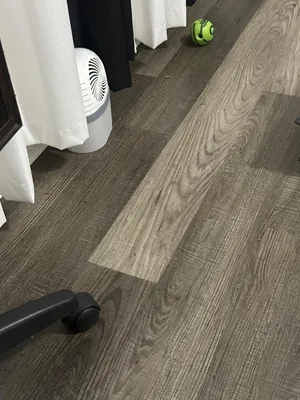
- Floor and noise. The listings say they roll best on hard floors and slow down on thick carpet. Noise varies: one buyer called a motorized toy loud enough that an older dog refused to approach, while another dog needed a few days to get used to a barking sound.
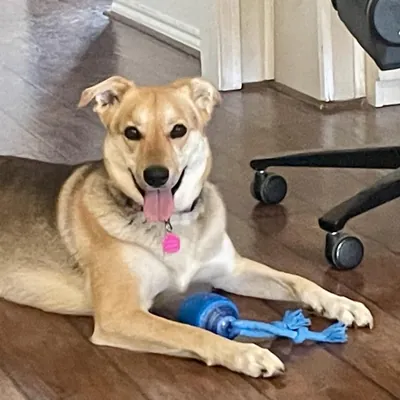
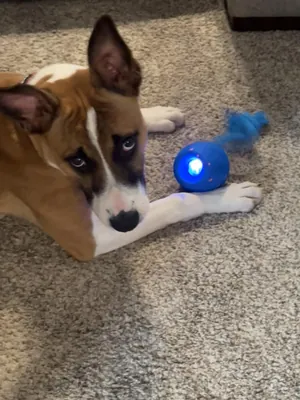
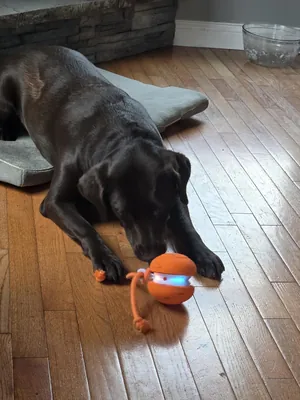
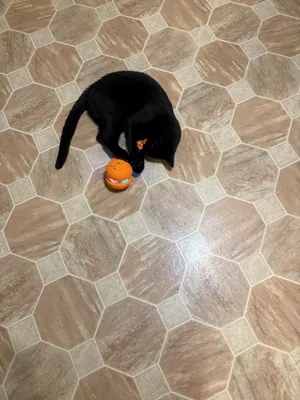
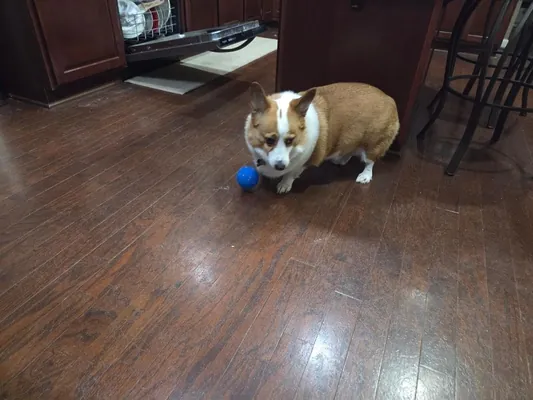
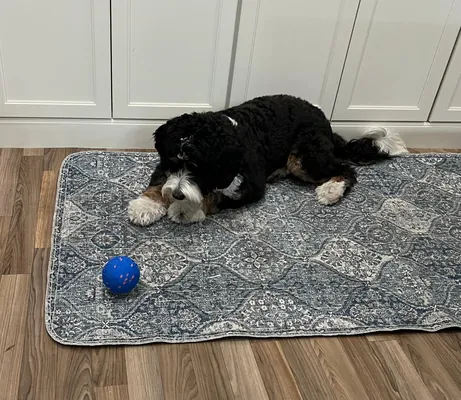
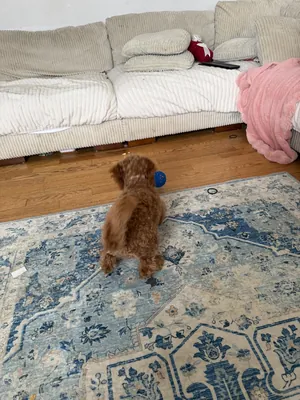
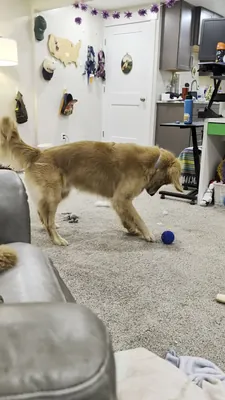
How do you introduce one to a wary dog?
Let the dog look at it while it is switched off, and reward curiosity with a treat or praise. One listing gives the same tip. Buyers who did this reported that dogs warmed up, including a dog that was suspicious at first but knew to engage and a retriever puppy that was scared at first and ended up playing happily. Cats are a coin toss: one buyer's cat hid under the bed while another stayed interested for a few minutes.
One ball with two soft rope tails rolls in unpredictable patterns. Its listing describes fast and slow rolling modes and an interactive mode that starts moving when the dog touches it. One buyer found slow mode too slow, while another liked that standby mode keeps the ball still until the dog engages again. The barking sound is a listing feature that one dog needed time to accept.
A foam-covered ball with a rope loop is lighter and softer. The listing describes two speed modes, colored lights, and a spare rope. One buyer called it fairly quiet and said it works best on hard floors, and another described it as bigger than a baseball. One buyer reported only about ten minutes of play before the battery died, though others said it charged quickly.
What if your dog chews everything?
This is where self-moving toys need the most care. The American Society for the Prevention of Cruelty to Animals advises learning how your dog chews and avoiding anything that can be bitten off in significant pieces, and says products that fragment should not be given to any dog, because a blockage can require surgery.
Many of these toys add a second concern: a rechargeable battery module inside. Pet Poison Helpline treats a swallowed or punctured battery as an emergency and says to call the helpline and a veterinarian right away rather than wait for symptoms. The listings call their shells chew-resistant, and some call them indestructible, but buyers' stories show the limits. One owner's 70-pound dog chewed a ball apart while unsupervised and the motor fell out. Another buyer's Border Collie loosened the glue that held the shell to the inner ball and then damaged the threads, so the toy could no longer be opened to charge.
- Supervise every session until you know how your dog plays, and put the toy away afterward.
- Check the shell and seam before each use. Stop using the ball if it cracks, separates, or will not close.
- Match the shell to your dog. The listings here describe soft foam and hard rubber-like shells, and buyers report chewing damage with both in some homes.
- If your dog swallows a piece, or the battery module, contact a veterinarian immediately.
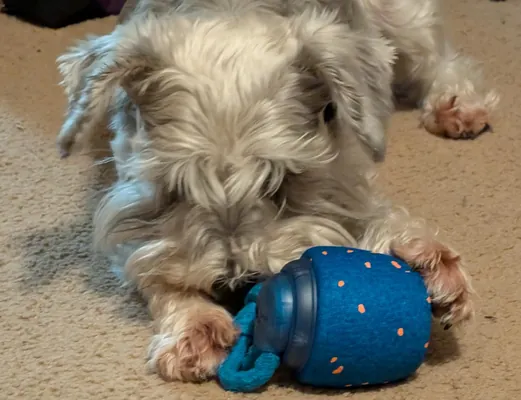
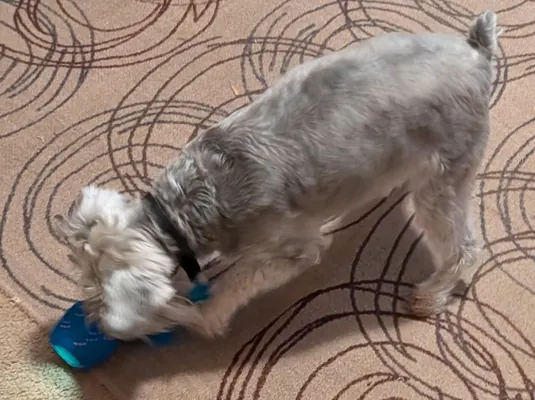
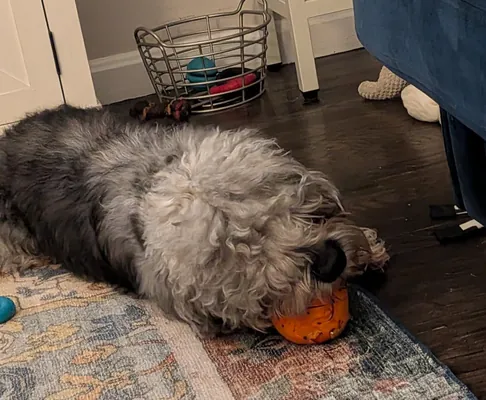
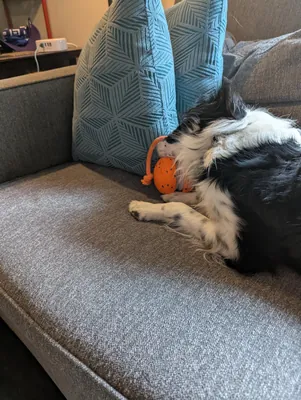
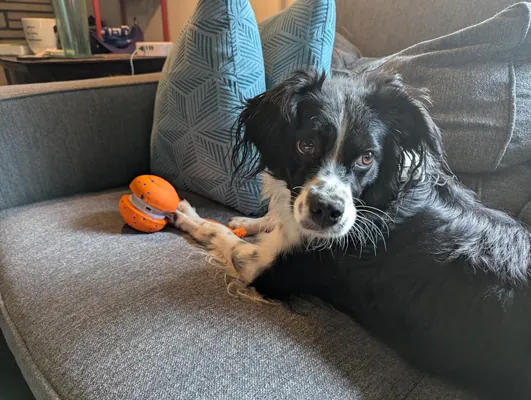
A hard-shelled ball that you unscrew to power on survived rough play for several buyers, including a Bernedoodle that chewed on it for months and a retriever puppy that was teething. Some of those same buyers say it mostly vibrates and hops in place rather than rolling, so match the toy to the play style you want.
A second hard-shell ball is a newer listing with only one written review. That buyer's 70-pound dog chewed it apart without supervision and the motor fell out, even though the listing calls the material chew-proof.
A soft-shelled option comes with a slightly rubbery foam cover. Buyers liked its light weight and soft foam shell, and one noted that it is not waterproof, so keep it out of wet grass.
A smaller, lower-priced ball is also listed for dogs of all sizes. Its few buyers said it vibrates intensely in place instead of moving around the room, and that the gears grind if the shell is not closed carefully. Another buyer said their dogs were scared of the noise.
Is there a ball that does not need a battery?
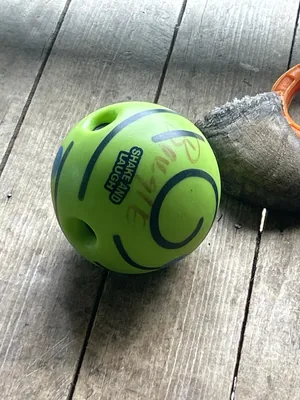
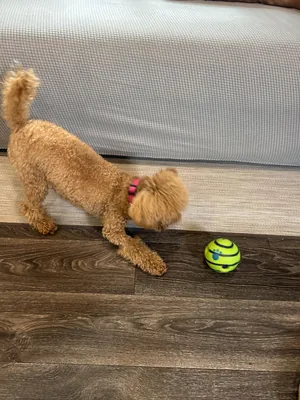
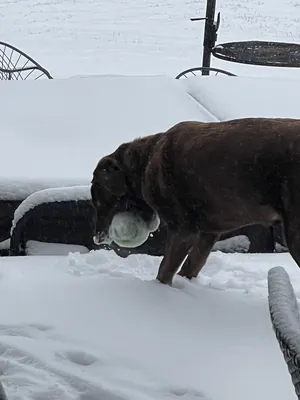
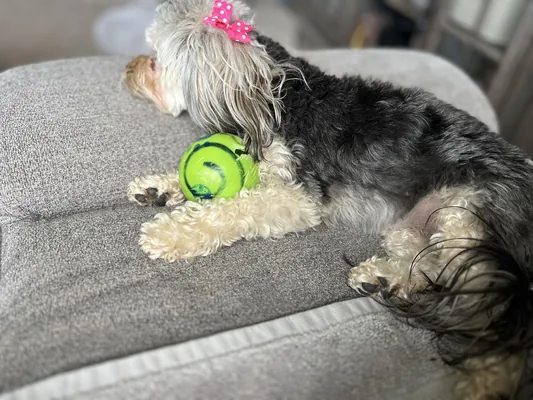
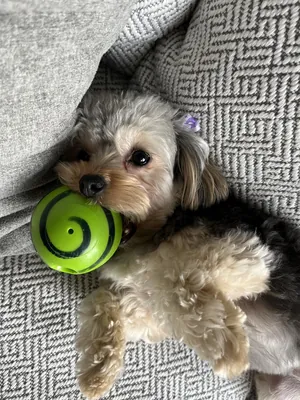
Yes. A hard plastic ball with whistle tubes inside makes giggling sounds when it rolls or is shaken, with no charging and no batteries. It costs less than the motorized balls, and many dogs love the noise. The listing itself says it is not for heavy chewers, and the reviews back that up: plenty of owners reported cracks or holes within an hour or two, and some dogs started eating pieces. Others said one lasted a year or more.
It suits dogs that carry and roll things rather than chew them, and it works well for hallway or yard play. Choose the size carefully: one buyer found the smallest size too big for a nine-pound dog, and another found a larger size too soft for a big dog. Check it often, and throw it away once it cracks.
Which dogs and homes are a poor match for a self-moving ball?
A self-moving ball is a poor fit for a dog that destroys toys, a dog that is frightened of noise or motion, and a home with mostly thick carpet. It is also not a stand-in for exercise: no listing or review shows it replaces a walk. A newer listing here has no written reviews yet, and its description is general, so check the manufacturer's size and chew guidance before deciding.
A simple routine works for most households: a walk, then ten minutes of a nose game or short training, then supervised ball time, then a chew you trust and a rest.