In this article
To protect a nonstick pan, keep metal tools out of it, never preheat it empty or run it on high, wash it by hand, and replace it when the coating flakes. Wooden utensils are one gentle option, but they need hand washing and occasional oil, and quality varies widely.
A nonstick pan is cheap to scratch and expensive to replace. The usual culprits are a metal spatula used out of habit, a pan left on a hot burner empty, and a trip through the dishwasher. This guide covers what actually wears a coating down, which utensils are gentle, and what to know about wooden sets, including how to keep them from cracking, staining, or ending up worse than the tools they replaced.
What actually damages a nonstick pan?
Three things come up again and again in test-kitchen and consumer advice:
- Metal tools. Consumer Reports says metal can scrape or mar the surface, which makes food stick and the pan harder to clean. America's Test Kitchen is less absolute, noting that metal can be used carefully if you avoid cutting and heavy force.
- Too much heat. Most sources put the point where PTFE coatings begin to break down at about 500°F. America's Test Kitchen suggests adding fat when you preheat, avoiding an empty hot pan, never broiling in a nonstick skillet, and staying at or below 450°F in the oven. Ceramic coatings are generally cited as happier below 450°F.
- Rough cleaning and storage. Hand washing with a soft sponge is the usual advice, because dishwashers and abrasive pads are more likely to scratch. Stacking pans without a layer between them can scuff the surface too.
Buyers describe the same pattern. One household reported that old metal utensils were scratching their pans before they switched to wood. Another said anyone who cooks in the family's good cookware must use wood or nonstick-safe tools, with no exceptions.
Is a scratched nonstick pan dangerous?
Sources disagree. One expert quoted by Consumer Reports describes the solid coating as chemically inert, while other consumer writers point to PFAS concerns for damaged pans and advise replacing ones that are flaking or deeply scratched. No official guidance turned up in the sources reviewed for this guide, so check what the pan's maker recommends. A coating that is peeling, badly scratched, or warped is the common reason to retire a pan.
Which utensil materials are gentle on nonstick pans?
The common alternatives to metal are silicone, nylon, and wood. Each has trade-offs. Plastic and nylon can soften or melt on a hot pan edge, and some buyers say they are moving away from them for that reason. Wood does not get hot the way metal does, and one buyer pointed out that there is no plastic to melt. The long handles on many wooden tools also keep hands farther from the heat.
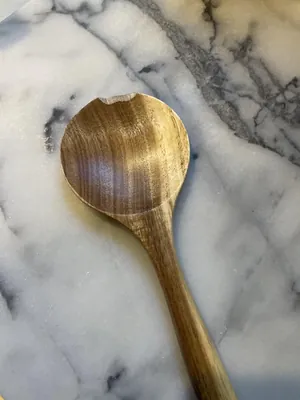
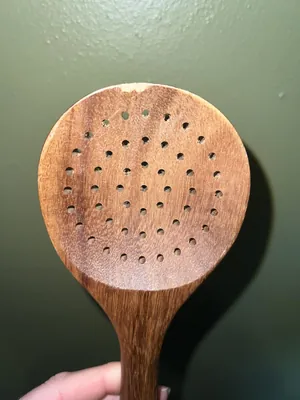
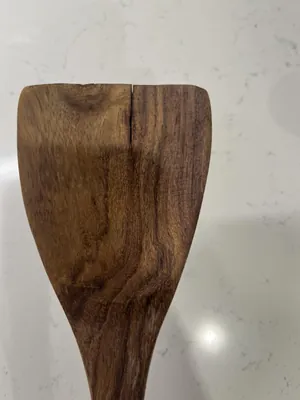
Wood has its own weak points. It can crack, split, or splinter, it needs hand washing, and finishes vary. Quality ranges widely in the listings below, which is why the next section matters more than the material itself.

What should you look for in a wooden utensil set?
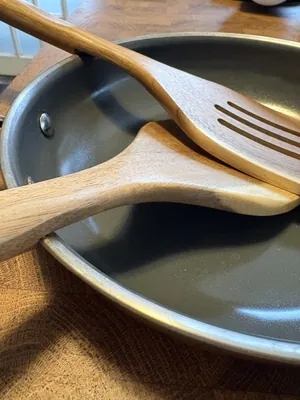
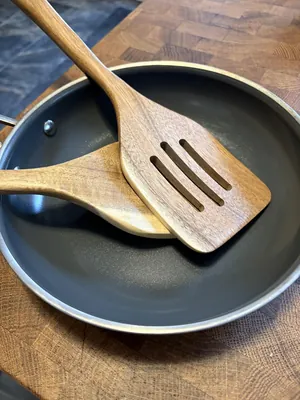
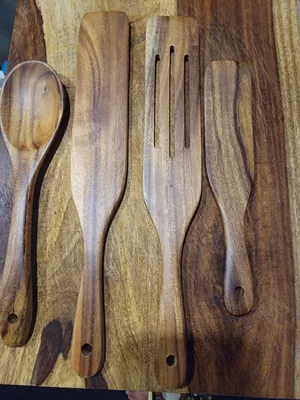
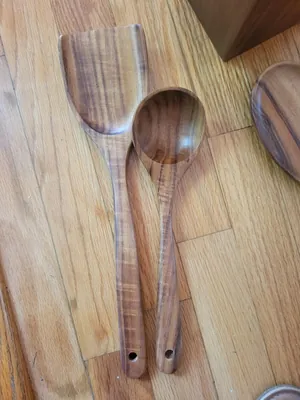
- One-piece construction. Several listings and buyers favor tools carved from a single piece, with no glued seams where food and moisture collect.
- A smooth finish with no splinters. Several buyers found rough spots or splintering around hanging holes and slots, and some received pieces that were already cracked.
- Handle length. One buyer said the shorter handles in a set steamed their hands, so check the lengths against your pans.
- Actual size. Several buyers found a set smaller or larger than they expected, so check the dimensions.
- A rest notch or hanging hole. Buyers of several sets praised the small groove that lets a spatula rest on the pan's edge.
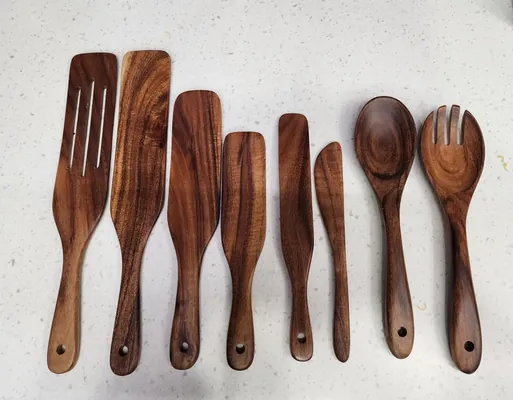
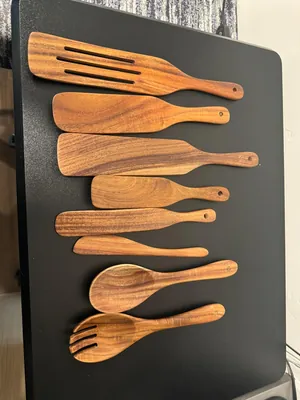
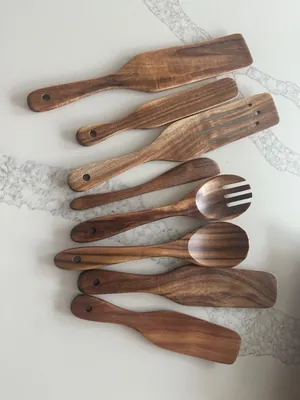
- Pieces you will actually use. A spatula, a slotted spatula, a spoon, and a ladle cover most cooking. A pasta server and salad fork are extras.
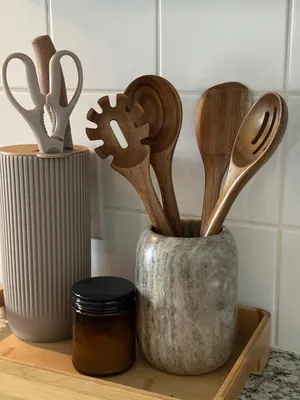
Where the tools live matters as much as which set you choose.
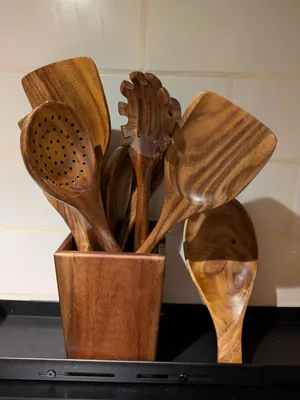
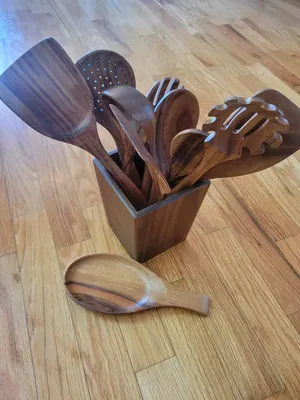
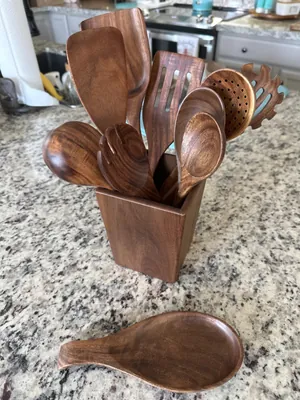
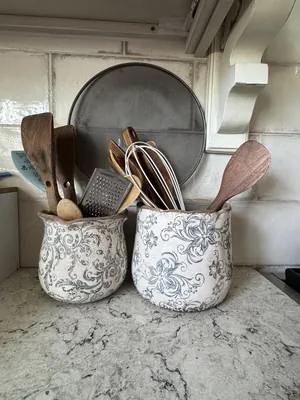
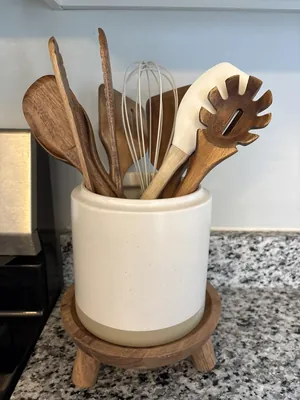
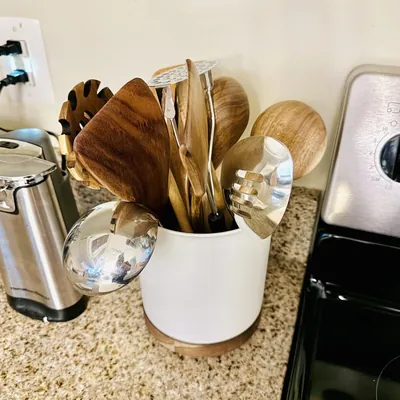
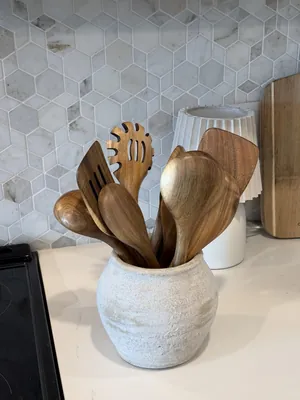
The largest set here comes with a round holder and a spoon rest, and its listing describes the wood as nonstick-safe. Buyers' reviews cover several set sizes of this listing, so check which version you are buying. One buyer's holder arrived broken.
A smaller set also includes a holder and spoon rest and arrives in a gift box. Buyers praised the weight and the look, while one questioned whether it was truly acacia and another reported color loss after a few washes.
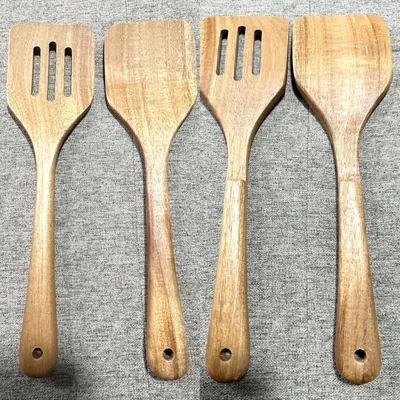
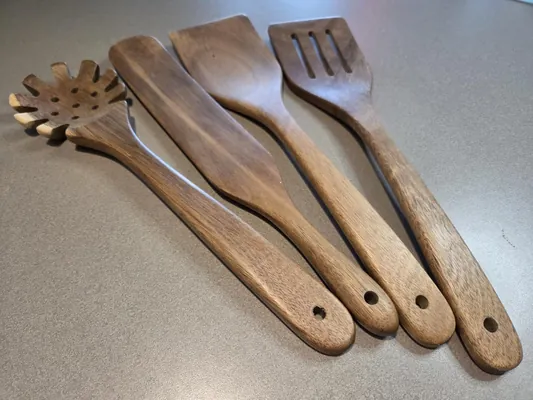
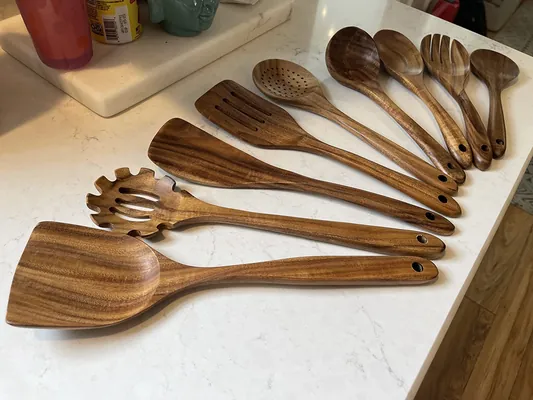
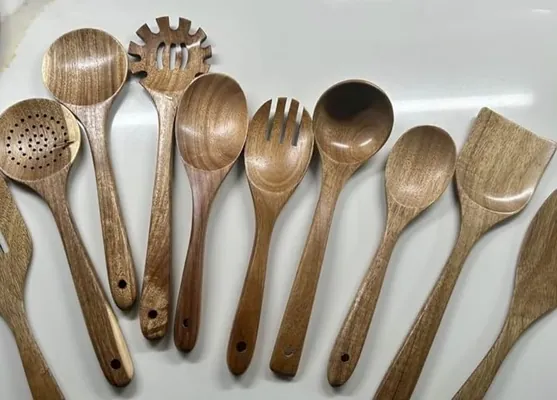
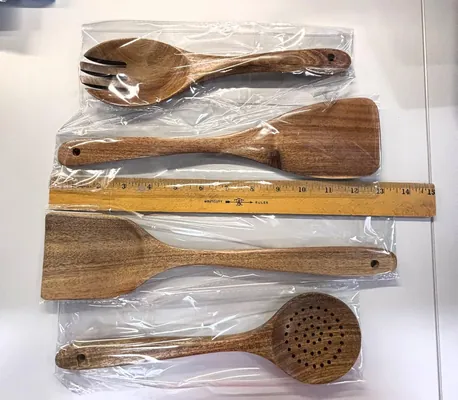
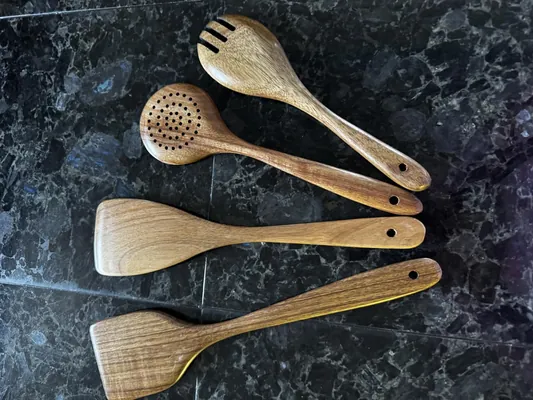
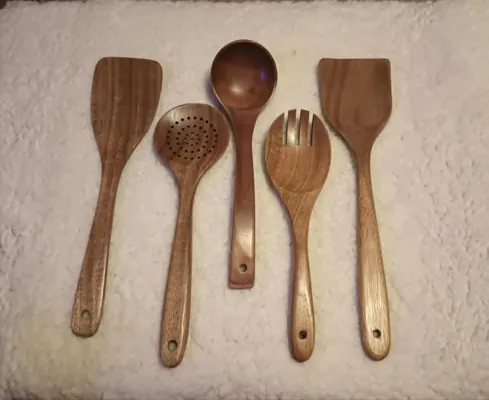
Buyers of a 12-piece set loved the small notch that lets a spatula rest on a pot, though some said the pieces felt laminated and some arrived cracked. One buyer's spatula cracked in under three months.
A 10-piece set of simple shapes drew mostly positive buyer comments for looks and gentleness on pans. Complaints were mixed: a pasta scoop that was flatter than the photo, handles of different lengths, and a few chipped pieces.
Another 10-piece set is described by buyers in smaller sets of four to six pieces, which shows how much the contents can vary. Buyers called the wood smooth and lightweight, and some noted cracked pieces or inconsistent quality up close. One said the box had no markings to confirm the wood species.
A nine-piece set sells at a similar price and has many buyers. It also drew the most finish complaints in this group: color fading, stain transfer to boiling water, a strong smell, and chipping after six months. Several others praised the weight and grain.
Is a slim spurtle better than a flat spatula?
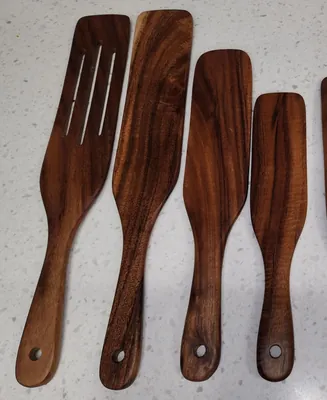
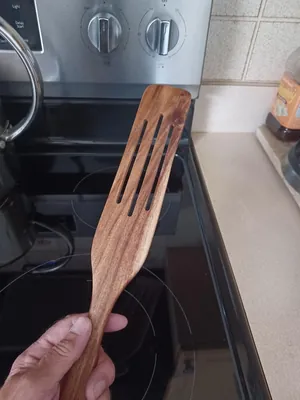
A spurtle is a slim wooden stirring stick, historically used for porridge and soups. Its flat edge scrapes the bottom of a pan without a wide blade to catch on food. Buyers of one set said it was easier than a regular spoon for chowder and sauces, and that the thin edge slides under eggs and pancakes. It does take practice, and one buyer noted the spatulas are tricky at first.
How do you care for wooden utensils so they last?
Wood lasts when it dries between uses. Nearly every listing and many buyers say the same:
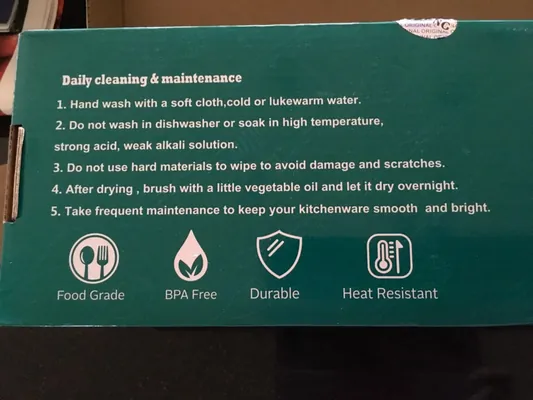
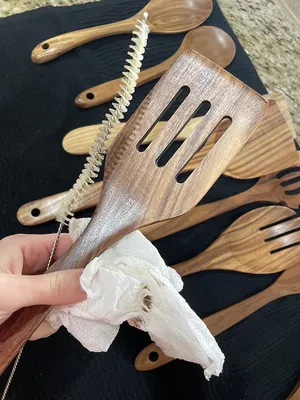
- Hand wash with warm, soapy water and dry promptly. Do not soak. Buyers who tried the dishwasher disagree: one said a set came out looking new, while a different buyer reported cracks and splinters after a wash. Follow the maker's instructions.
- Oil occasionally. For wooden cutting boards, university extension guidance is to apply food-safe mineral oil every month or two and avoid vegetable or nut oils, which can turn rancid. University of Maine Extension gives similar advice. That guidance is for boards, the closest published advice for wood kitchenware. A few buyers rub utensils with olive oil, which the extension advice cautions against.
- Retire cracked pieces. Extension guidance for boards says to replace ones that can no longer be cleaned effectively. A split or splintered spatula can trap food and break off into a dish.
What if a new set smells strong or loses color?
Several buyers reported a strong smell from a new set when it met boiling water, and some said color came off the wood. One buyer wrote that this can be natural oils or a sign of a finish that was not made for food. If you cannot rule that out, return the set. Wash new tools before first use and watch the wash water; if the water tints heavily, the finish smells chemical, or color shows up in food, stop using the set.
When is a wooden set not the right choice?
Wood is a poor fit for a household that runs everything through the dishwasher, for very heavy daily use, or for anyone who does not want to oil and dry tools. Tongs are the weak point: one set's listing includes wooden tongs, and many buyers said the tongs broke on first use or arrived broken. Skip wooden tongs for gripping and use another material for them.
The reviews for the next listing mix a wooden version with silicone sets, so read carefully which version a review describes. Buyers of the wooden version said the finish is smooth, though some reviews describe water stains, splintering, or chipping after washing. Its set includes tongs and a whisk.
What is a simple routine to protect a nonstick pan?
- Use wood, silicone, or nylon in nonstick and ceramic pans, and save metal for stainless and cast iron.
- Preheat with a little fat, never empty, and keep nonstick pans off a broiler and out of a hot oven.
- Hand wash with a soft sponge and dry the pan and the utensils right away.
- Oil wooden tools with food-safe mineral oil every month or two, and retire any that crack or splinter.
- Retire a pan when the coating flakes, warps, or is badly scratched.