In this article
A mantel garland looks full when it is longer than the shelf, thick enough to hide its own wire, and shaped in a few passes instead of draped straight from the box. Most disappointment happens at the first unboxing, when a compressed garland looks nothing like the listing photo. A few measurements, some fluffing and a secure way to hold it fix most of that.
Why does a mantel garland look thin when it comes out of the box?
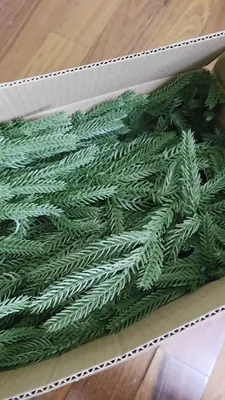
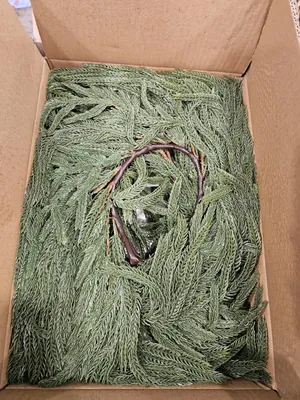
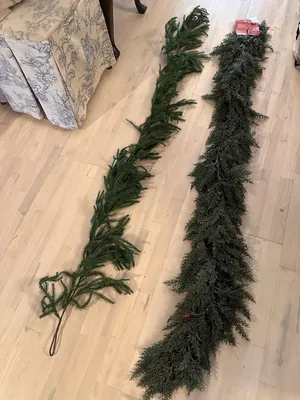
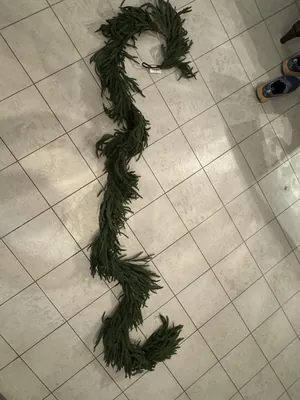
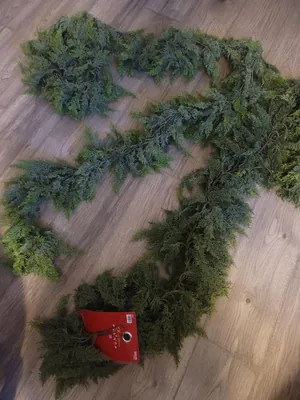
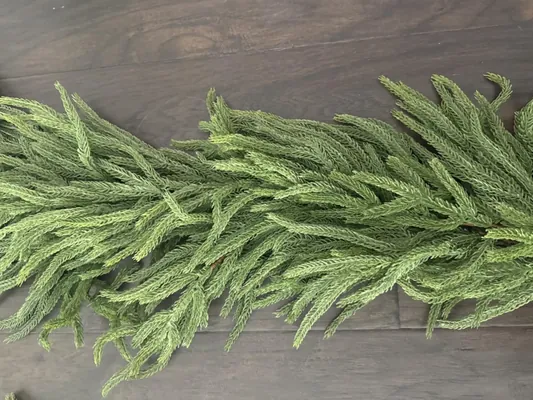
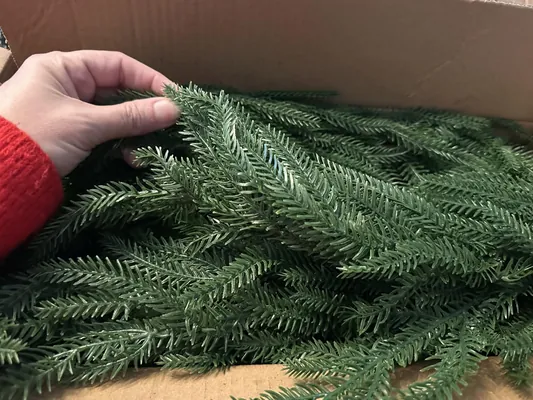
Most garlands are folded or compressed to fit a shipping carton, so the branches arrive flattened, kinked and pointing every which way. Buyers of many different versions describe the same first impression: the garland looked sparse and a little limp until they spent time shaping it. Several also noted that the product photo looked fuller than what arrived, and a few guessed that the photo shows two strands tied together. One buyer of a pre-lit garland wrote that the listing image shows two nine-foot strands, not one.
That does not mean the garland is a dud. It means the box is the starting point, not the finished look. How much shaping a garland needs depends on how it is built: the branches on some can be bent along the whole stem but not at the tips, while others spring back into place with only a shake.
How do you fluff a garland so it fills out?
- Unpack it somewhere it cannot snag. Buyers warn that the wire ends on some garlands are sharp, and one suggested gardening gloves for the first pass.
- Lay it flat and shake it out. One buyer who decorates professionally stretches the garland across the floor so the wire sets, then fluffs, hangs it, and fluffs again.
- Work from the center stem outward. Lift each branch up and out, rotating so some tips point forward and some tilt back, which hides the stem.
- Step back six to ten feet before you decide you are done. Several buyers say their garland looks convincingly real from across a room and more like plastic up close, so judge it from where guests will see it.
- If it still holds shipping folds, hang it vertically for a while. One buyer found that let the branches relax.
What if one strand still looks sparse?
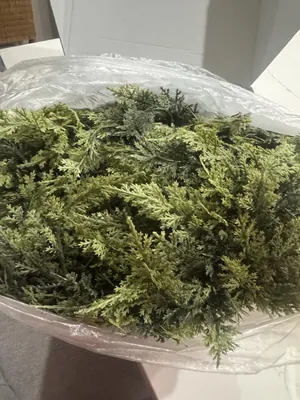
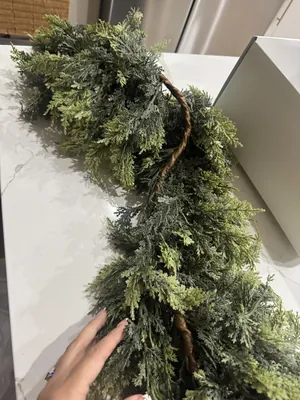
Double it. This is the most common fix in buyer comments: two strands side by side on the mantel, or twisted around each other on a stair rail, give the layered look the listing photo suggests. One buyer put it plainly: for a normal-size mantel they would use two six-foot pieces, and three or four for a really lush look. Another suggested mixing a cedar-style garland with a pine-style one, so the two textures fill in each other’s gaps.
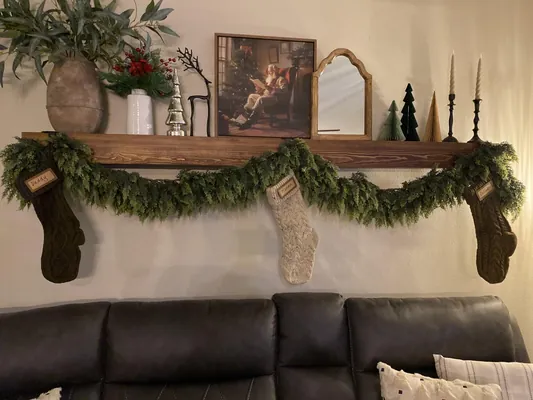
There is a limit in the other direction. A couple of buyers found an extra-full strand almost too full for their mantel, and one liked that theirs was thick but still left room for the stocking hangers. If you hang stockings, a very thick garland needs to sit back from the front edge, and a lighter strand may be the better choice.
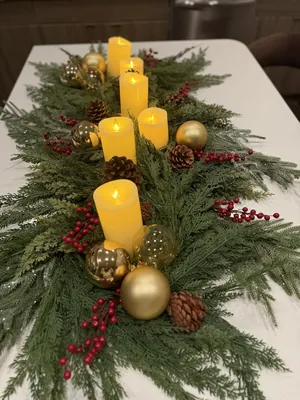
If you want more fullness without buying a second garland, tuck in pine cones, berry picks, ribbon or wired ornaments. The listings for several of these garlands suggest this too, and buyers did it successfully.
How long should a mantel garland be?
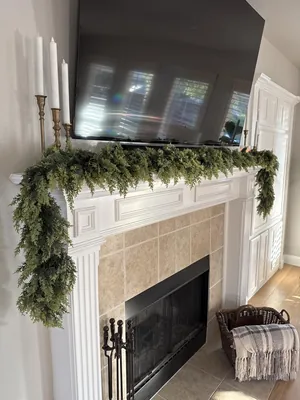
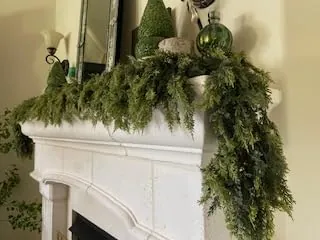
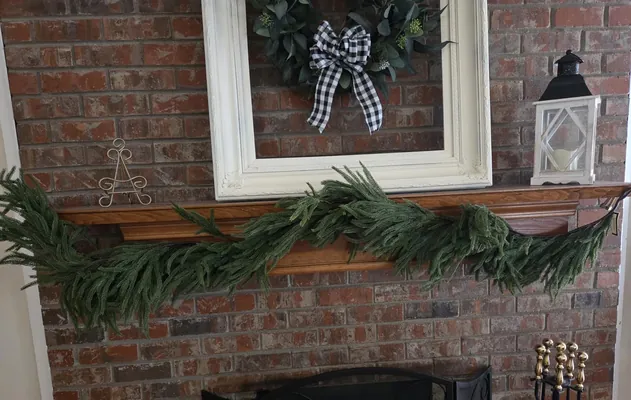
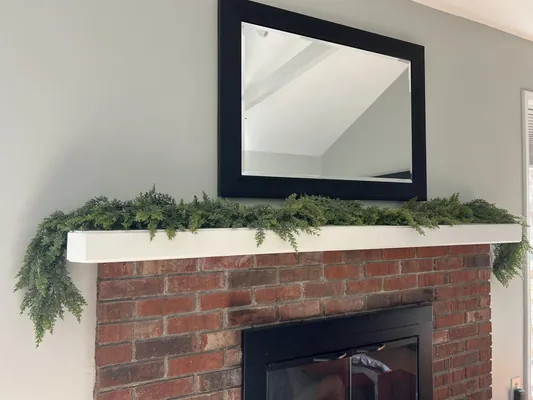
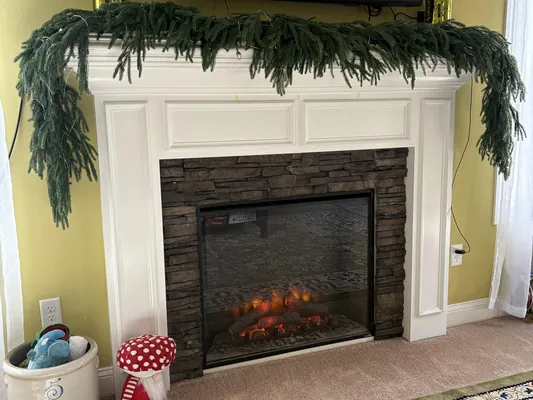
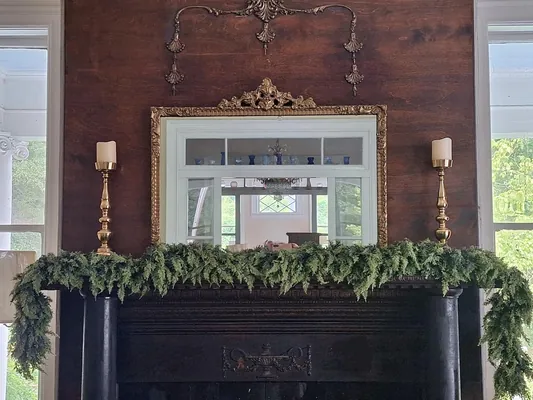
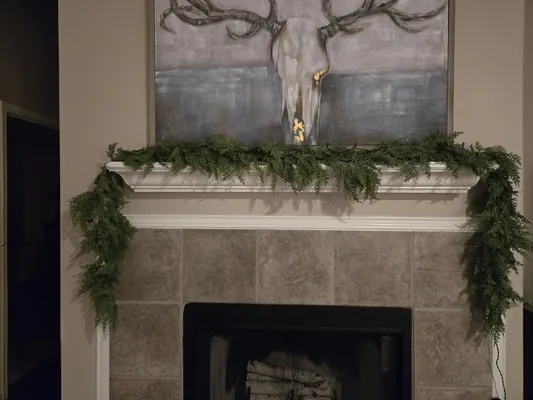
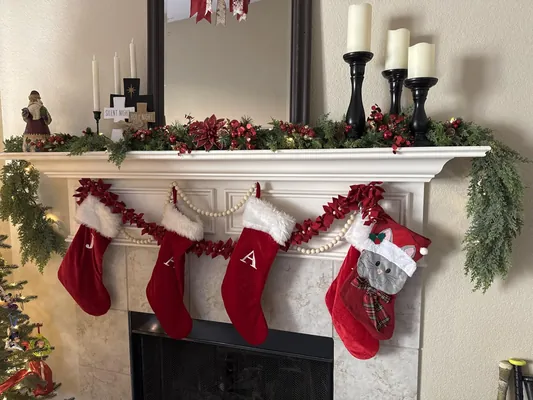
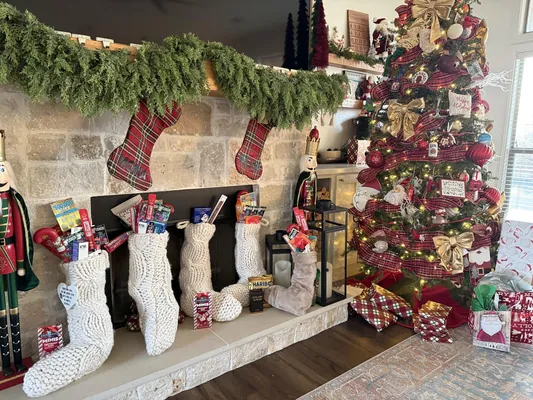
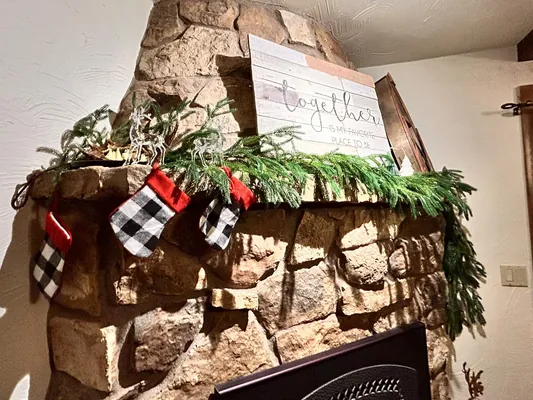
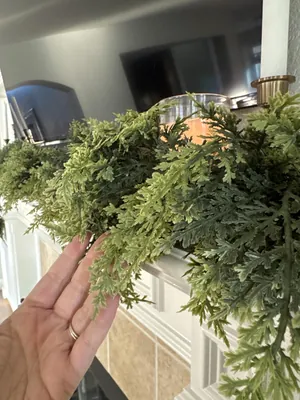
Longer than the mantel. A garland that is exactly as long as the shelf reads as a flat stripe; a garland with extra length can swag slightly across the front and fall past each end, which is the look most buyers were after. Measure the mantel, then add a foot or more of drop for each end if you want that draped effect. In the photos buyers shared, the strands that looked best let a good length fall past the corners rather than stopping at them.
Buyers gave a few useful reference points. One found a nine-foot strand covered a seven-foot mantel and still draped over each end. Another said a six-foot strand covered a standard fireplace mantel with a little left to fall down each side.
Check the real length as well as the stated one. One buyer said a nine-foot garland barely fit a window about 6.5 feet wide; another thought a six-foot strand was shorter than six feet unless pulled straight; and a separate buyer measured a nine-foot extra-full garland at about 112 inches from loop to loop. Buyers of a two-pack listed at ten feet reported pieces closer to six or seven feet. Read the size and version on the listing you are choosing, and leave some slack.
Do the ends need to hang straight down?
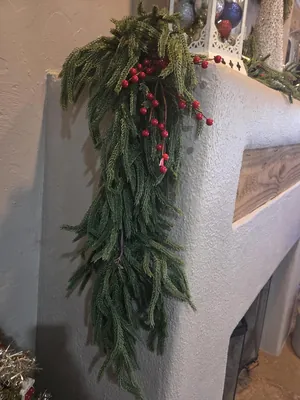
Not necessarily. Some garlands bend freely in both directions, and others have a stem that curves one way. One buyer centered a six-foot garland on a table and found one half bent backward, so before you center a strand, lay it out and see which way it wants to curve. Branches that droop at the tips, as the listing for one pine garland describes, hang naturally at the ends without any shaping.
Two strands also solve a lot of length problems. A two-pack of nine-foot garlands can run along a long mantel as a single, longer swag, or one strand can go on each side of a centered mirror. The listing says the two pieces can be linked end to end for an extra-long swag.
How do you hold a heavy garland in place on a mantel?
A mantel does most of the work, since the shelf carries the weight and you only need to keep the strand from sliding. The weight matters more at the ends and on anything vertical. Real-touch garlands are made of soft, rubbery plastic and are heavier than the thin garlands they replace: one buyer weighed a nine-foot extra-full strand at about 4.8 pounds, and the listing for another says up to 5.1 pounds.
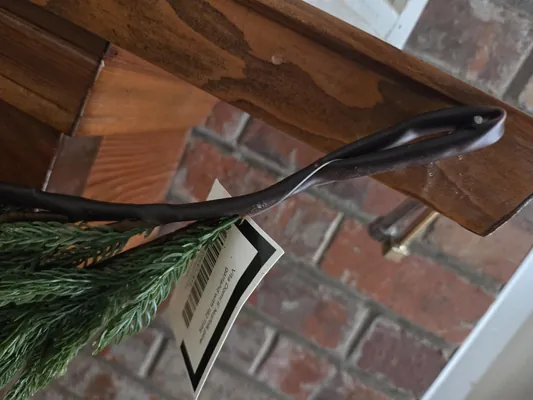
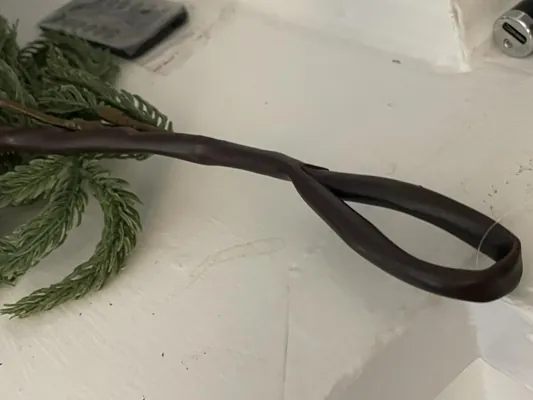
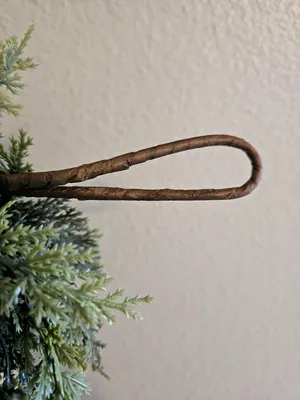
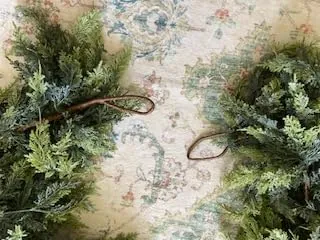
Buyers recommend simple holds: the loops at the ends of the stem, decoration clips, zip ties tucked out of sight, or removable adhesive hooks for stair rails and trim. One said a heavier garland stayed put on the mantel without extra holders, and another warned that a heavy strand will droop on a rail unless you add ties or hooks. Removable hooks need a clean, smooth surface, so they suit painted trim better than brick or stone.
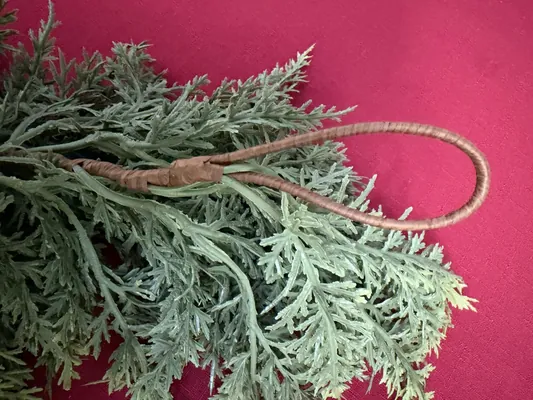
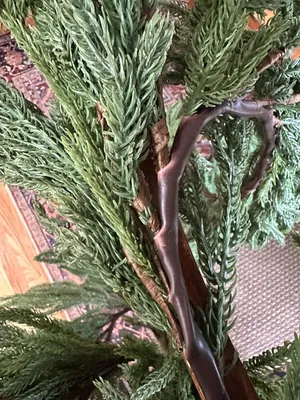
Handle the fasteners gently. One buyer’s end loop broke when attaching it to the mantel, and another said the brown wrap on the main stem cracked easily. Neither is typical, but both are reasons to lift the garland by the stem, not the loop, when you place it.
How do you fit stockings around a garland?
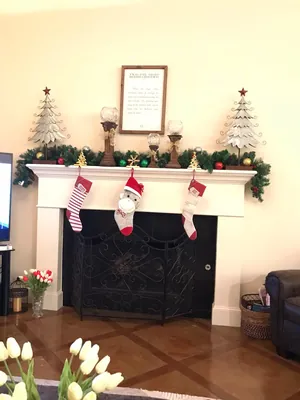
Plan the stockings first, because they hang from the same spot. Set the stocking holders on the mantel, then lay the garland behind and between them, letting the greenery spill over the front rather than sit on top of the hooks. One buyer said their garland was thick enough for the mantel but left room for the stocking hangers, which is the balance to aim for.
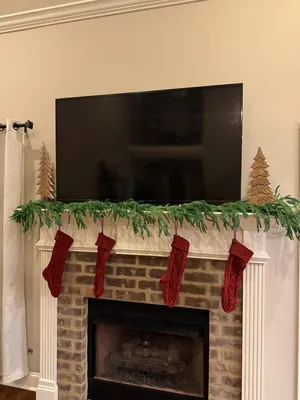
Is it safe to put a garland on a mantel above a working fireplace?
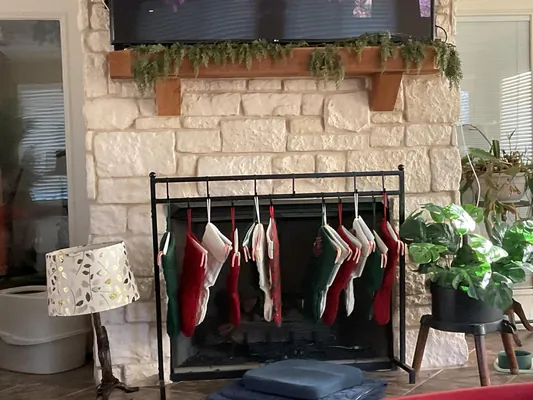
Artificial greenery is not fireproof. Some listings describe their needles as fire-resistant, which is a manufacturer’s claim and not a guarantee, and one listing tells buyers directly to keep the garland away from open flames and heat sources. The National Fire Protection Association’s holiday safety tips point the same way: keep decorations away from heat sources and choose decorations that are flame-resistant or flame-retardant.
For a mantel, that translates into a few plain habits. Keep the greenery away from the firebox opening, do not let strands hang near the flame, and take it down or skip it if the mantel gets hot when the fireplace is running. If you use candles, NFPA recommends keeping them at least 12 inches from anything that can burn, and flameless candles are a simple way to keep the glow without the risk. If your fireplace is electric, the same caution applies to the vents that blow warm air.
These steps are common-sense precautions, not a promise that any garland is safe in every setup. If you are unsure, ask your fireplace installer or local fire department about clearances for your hearth.
Should you buy a pre-lit garland or add your own lights?
A pre-lit garland saves the work of weaving a string through the greenery, and the lights are usually spaced evenly. The tradeoffs are the cord and the bulbs. Buyers of pre-lit versions mention a plug that sits only a few inches from the end of the garland, so reaching an outlet on a mantel often means an extension cord running down the wall. One said the plug was about five inches from the end, another that the cord to the outlet was around ten inches long. Plan where the cord will exit before you shape the garland.
Longevity varies a lot. One buyer reported that half the lights failed within two days, another had lights stop working after two seasons in storage, and a third said a strand lasted seven years before one section went out. Another buyer noted theirs was not LED and wished it had been battery-operated, and a buyer of a battery-style version mentioned a timer that runs six hours on and 18 off. Check the listing for light type, power source and any timer.
Adding your own lights to an unlit garland is a popular route. Several buyers wove thin warm-white fairy lights through a cedar-style strand, and one suggested the fine copper-wire kind, which would be hard to see among the branches. Whichever you choose, follow the CPSC’s guidance for lights: check cords and sockets for damage, use lights tested by a recognized laboratory, avoid more than three standard-size sets on one extension cord, and turn lights off when you leave or go to bed. If you link garlands end to end, follow the manufacturer’s connection limit printed on the tag.
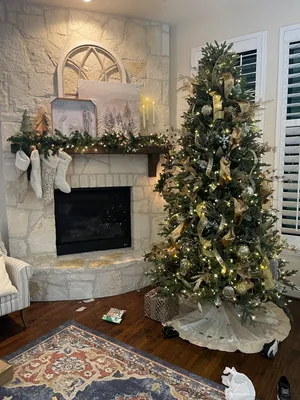
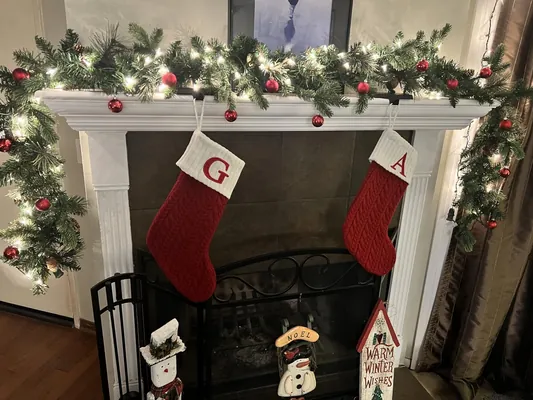
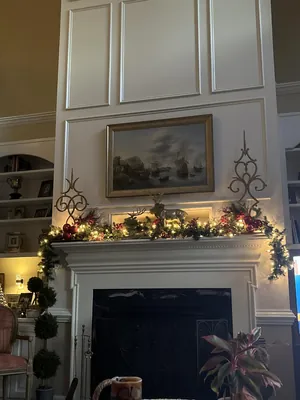
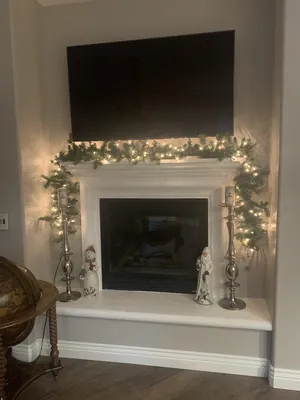

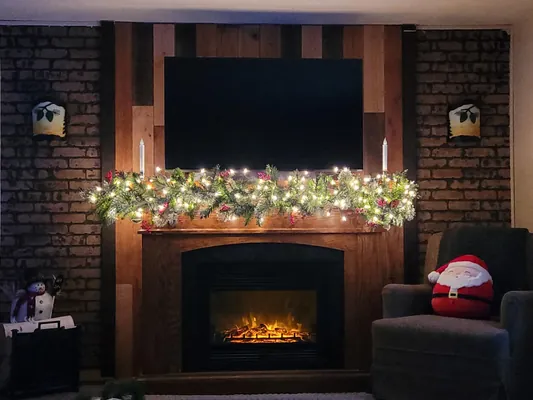
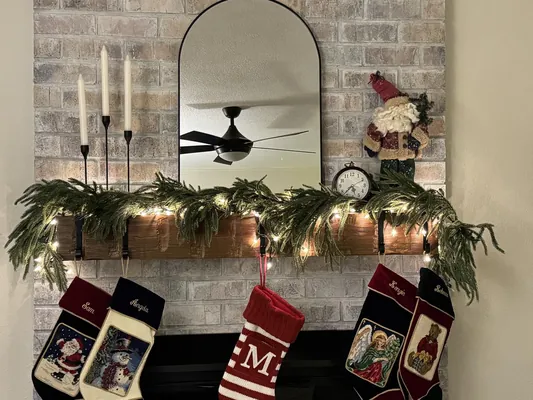
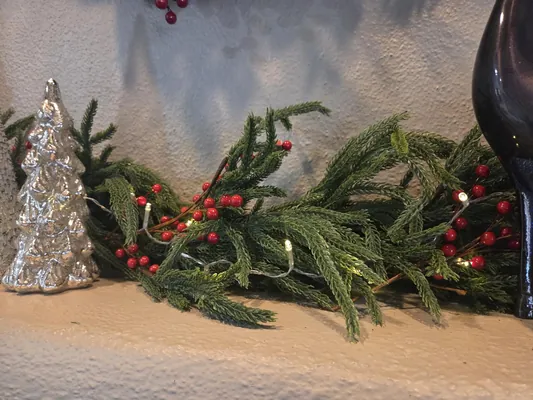
Pre-lit garlands also come decorated, which brings its own surprises. Several buyers said the frosted pine cones on one version looked greener than in the listing photo, and one painted over them. A few also noted glitter and flocking to sweep up after hanging, and buyers of lit versions said they spent five to fifteen minutes fluffing.
What does a real-touch garland feel like, and does it shed?
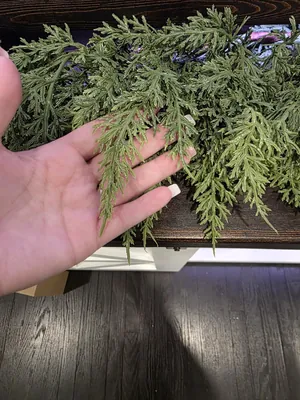
The softness is the big difference from older garlands. Buyers describe a rubbery, silicone-like material that is not prickly: one said they styled it without gloves and had no scratched or itchy skin, and another, who is allergic to real greenery, liked getting the cut-cedar look without the allergens. Some called the feel waxy and said that up close it reads as plastic, while from a short distance it looks real.
Because the foliage is soft plastic, buyers generally report no dry needles to vacuum, although a few mention little rubbery bits coming off. Smell is mixed. Many noticed no odor, while others noted a plastic smell that faded; one left the garland out for a week before using it, and one buyer described a greasy coating on the garland and box that left a slick feeling on their hands. If you are sensitive to odors, unpack it a few days before you need it.

Where else can the same garland go once the mantel is done?
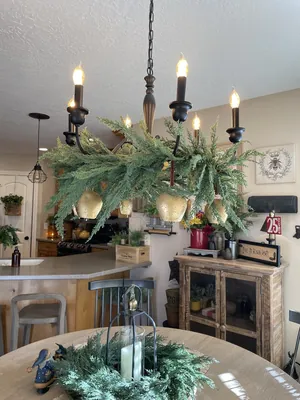
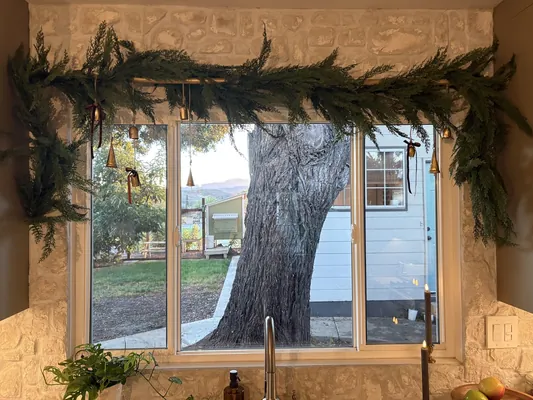
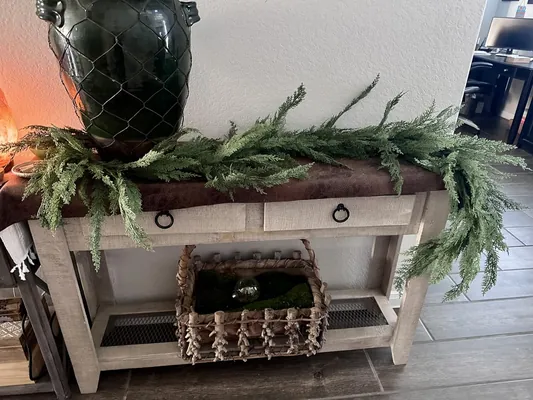
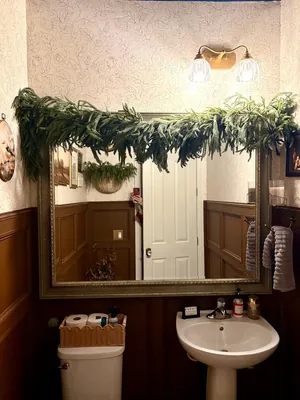
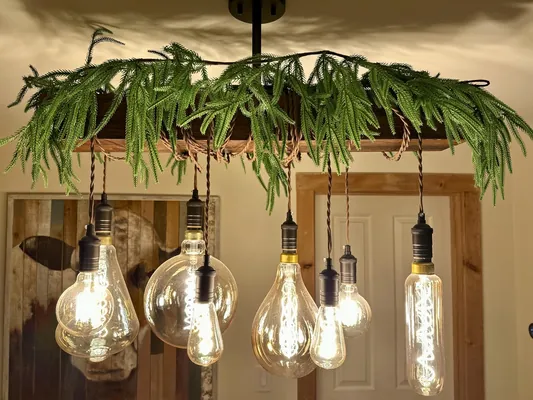
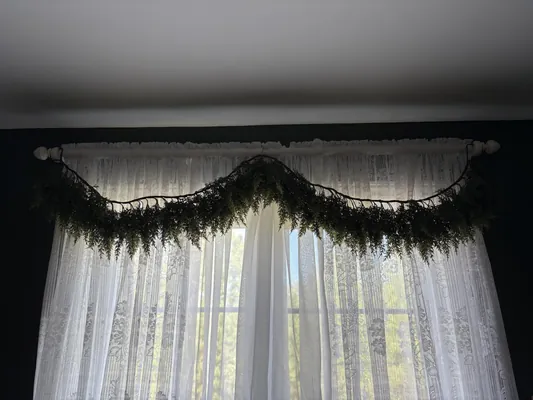
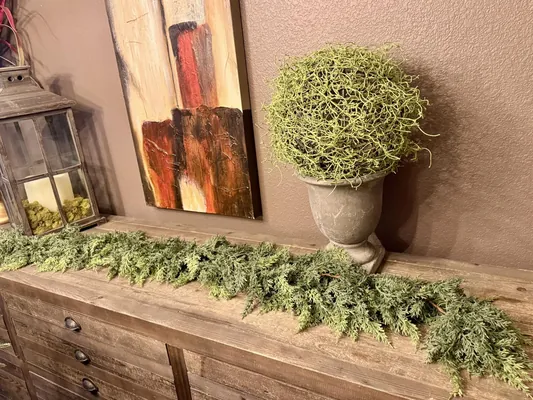
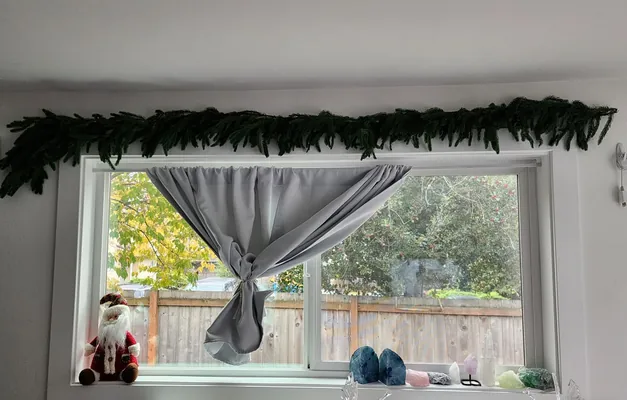
Plenty of buyers used the same strand in more than one place. A garland rests easily along a TV console, a dresser, a console table or a window frame, and a short piece can become a table runner or a centerpiece with candles and ornaments. One buyer draped a strand over a light fixture and kept it up through March. One buyer’s photo shows a strand across a bathroom mirror.
Stair rails are popular too, but they need more support than a mantel. One buyer found that when a garland hangs vertically all the greenery shifts to the bottom and the bare stem shows, so they preferred to lay it flat instead. On a rail, expect to secure it at regular intervals, and consider doubling it for fullness. For outdoor use, check that the listing says it is built for weather; some describe their garlands as waterproof or UV-protected, and one buyer said theirs held up to rainy weather on a front door.

How do you store a garland so it looks full again next year?
The way you pack the garland decides how long the next unboxing takes. Buyers recommend keeping the original box if it is sturdy: one refolded a garland into its bag and box with no trouble and planned to store it that way. Others used a wreath storage tote or the cloth bag that came with some versions. Dust it off with a feather duster before you pack it, as one listing suggests, and keep it away from heat, since one buyer noted they were not sure whether a garland would tolerate attic heat in summer and found no storage instructions.
Fold or coil the garland along its natural curve and avoid crushing it under heavy boxes. A little care at the end of the season is the difference between fluffing it for five minutes next year and starting over.