In this article
Sometimes the water you need is somewhere else: a campground with no hookups, a young tree a long walk from the spigot, or a house on a well when the power goes out. Moving and storing water is a weight problem before it is a container problem, and it comes with one rule that matters more than any feature: know whether the water is for drinking or for everything else. This guide covers how much to plan for, which containers suit which job, and what to test before you trust a bag with a full load.
How much water do you really need to move?
For drinking, the CDC's baseline is one gallon per person per day, for at least three days and ideally two weeks, with more for pregnant women, people who are sick, pets and hot climates (CDC). That number covers drinking and basic cooking only. Washing hands and dishes, flushing a toilet or giving a young tree a real soak all come on top, and they are where the volume goes.
Then comes the part people forget: water is heavy. A gallon weighs about 8.3 pounds, so 30 gallons is roughly 250 pounds and a 63-gallon bag is over 500. Several buyers of the large soft-sided bladders make the same point in different words: the loops and handles are fine for positioning an empty bag, but nobody trusted them to lift a full one. One buyer's advice was to plan ahead, because a full bag stays where it is.
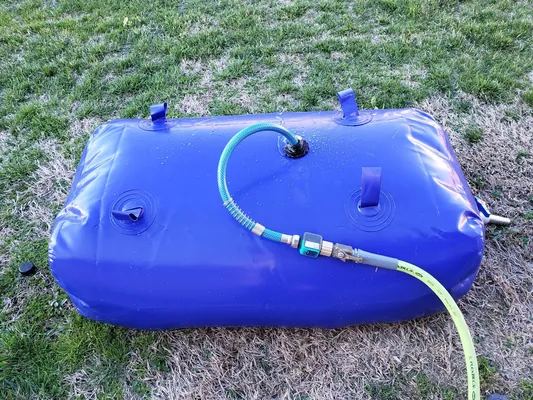
That changes the plan. Instead of asking how many gallons you can carry, ask where the water will sit and how it will come out. A bag that fills in the back of a truck, in a bathtub or on flat ground and then dispenses from where it lies is a different tool from a jug you carry by the handle.
Can you drink from a water bag, or is it only for utility water?
It depends on the bag, and the listing is the only place that says so. In this group of products, some are described as food-grade bags for drinking water. The heavy-duty PVC bladders are the opposite: one listing says plainly that it is for non-potable water such as irrigation, washing and utility use, and another marks its emergency and drought uses as non-potable. One buyer spelled out the consequence: the bag is fine for flushing and cleaning, and anything people or animals drink should be filtered first.
The CDC's advice for drinking water is to use FDA-approved food-grade containers when you can. If you cannot, use a durable, unbreakable container with a tight lid, and never one that held bleach, pesticides or other chemicals. Label stored water with the date, replace it every six months, and keep it cool and out of direct sunlight (CDC). A buyer of one heavy bladder also noted that it should stay out of direct sun. The practical rule is to decide what the water is for before you fill, and to label the bag.
There is one more catch with the thin, foil-lined tub bags. Two buyers wrote that once they are filled they cannot be dried or sterilized well enough to reuse for drinking water, so treat them as single-fill. A buyer of a clear tub bag that is labeled one-use planned to keep the used bag for flushing and washing in a later emergency.
What if the water source itself is questionable?
Treat it before it goes into a bag. The CDC says clear mountain stream water is generally not safe to drink, and that boiling is the best option: a rolling boil for one minute, or three minutes above 6,500 feet (CDC). Filters help but are not complete: a pore size of 1 micron or smaller handles parasites, 0.3 micron or smaller adds bacteria, and neither removes viruses, so a disinfectant after filtering is the safer finish (CDC). Water with fuel or toxic chemicals cannot be made safe by boiling or disinfecting at all.
How do you keep water on hand at home when the power or the pipes fail?
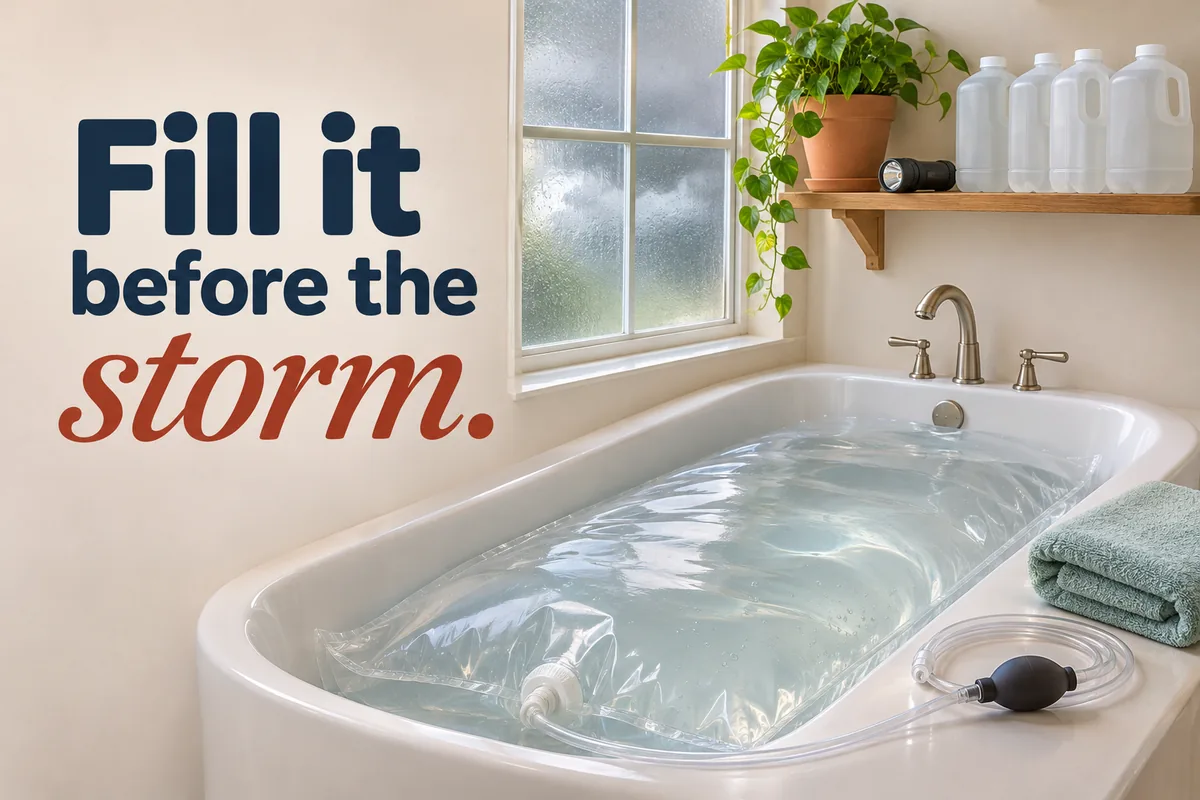
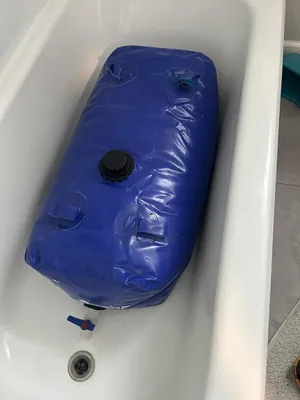
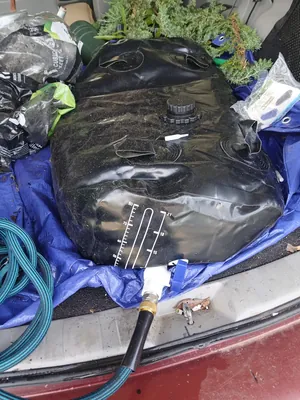
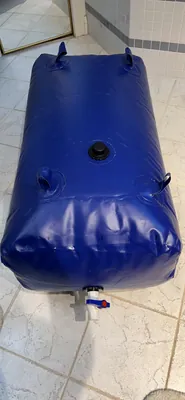
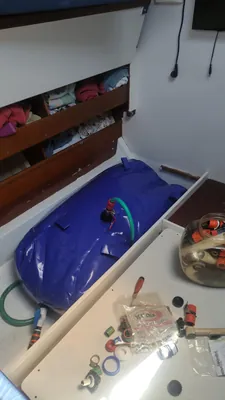
Several buyers of the large bags are on private wells, where a power cut means no water at all. Their reasoning is consistent: fill something before the storm, and use it for flushing and basic hygiene so the bottled water lasts for drinking. A bathtub is the obvious container, but an open tub collects dust, soap film and pet hair, which is why people reach for a bag that lies in the tub and closes over the water.
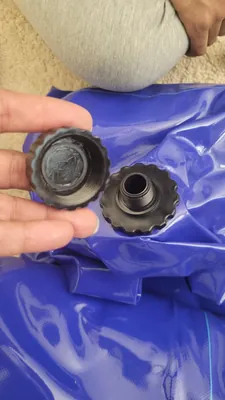
The setup is simple. Lay the bag flat, line its fill opening up with the faucet, and stay nearby while it fills so you can ease the liner into the corners. One buyer filled theirs a day before an ice storm and found it easy to unwrap and fill. Getting the water back out is slower. A siphon works best when the destination sits lower than the bag, and one buyer who had gone five days without water after a hurricane called the slow flow far better than none. Another buyer warned that a completely full bag can block the tub drain, so you may need a longer hose to drain leftovers elsewhere.
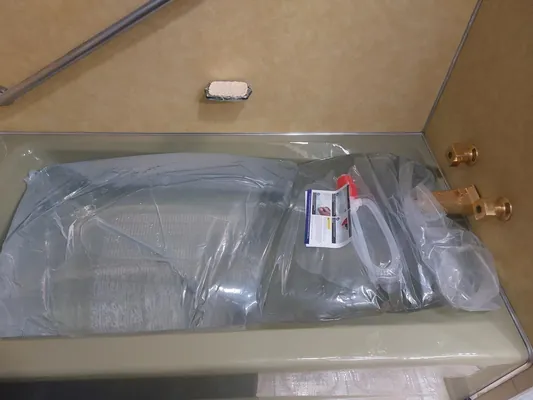
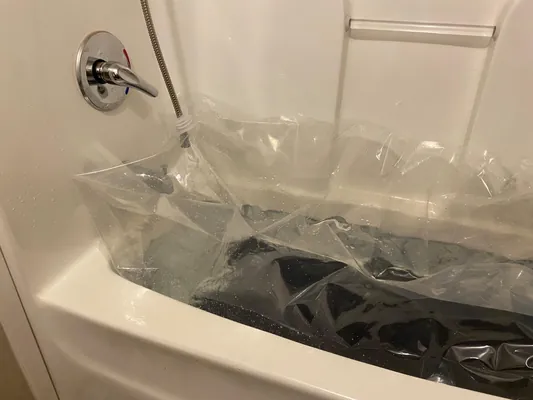
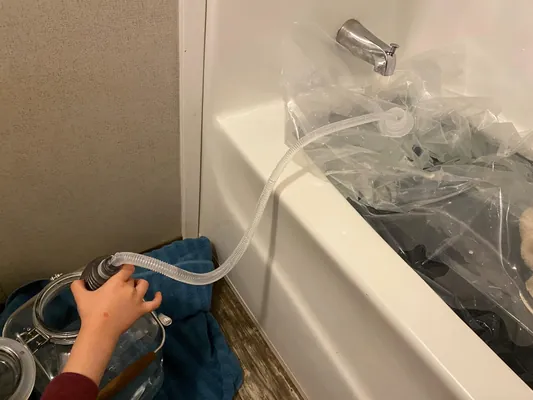
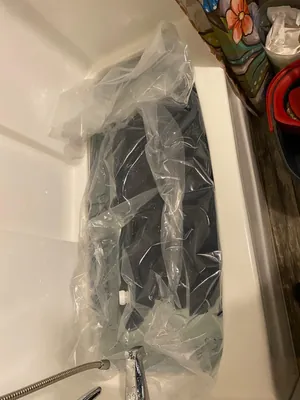
Foil-lined bags suit homes with more than one bathroom. Buyers describe the larger pack as two bags that each hold 58 gallons, so one can sit in each bathroom or be used on different occasions. They also describe the pump as slow but useful. The two listings differ on size, so check whether you are buying one bag or two.
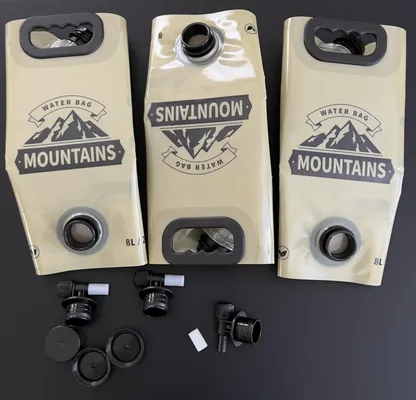
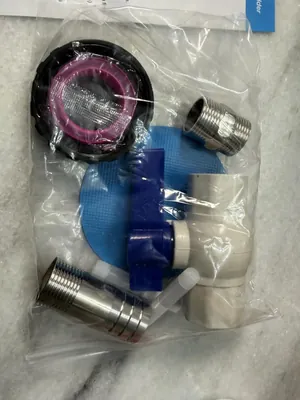
If one big bag feels like too much, a set of smaller ones spreads the risk of a leak and lets you put water in different rooms. A buyer of a three-pack noticed too late that no fill sock or faucet adapter was included, so check what comes in the box.
How do you haul water to a campsite with no hookups?
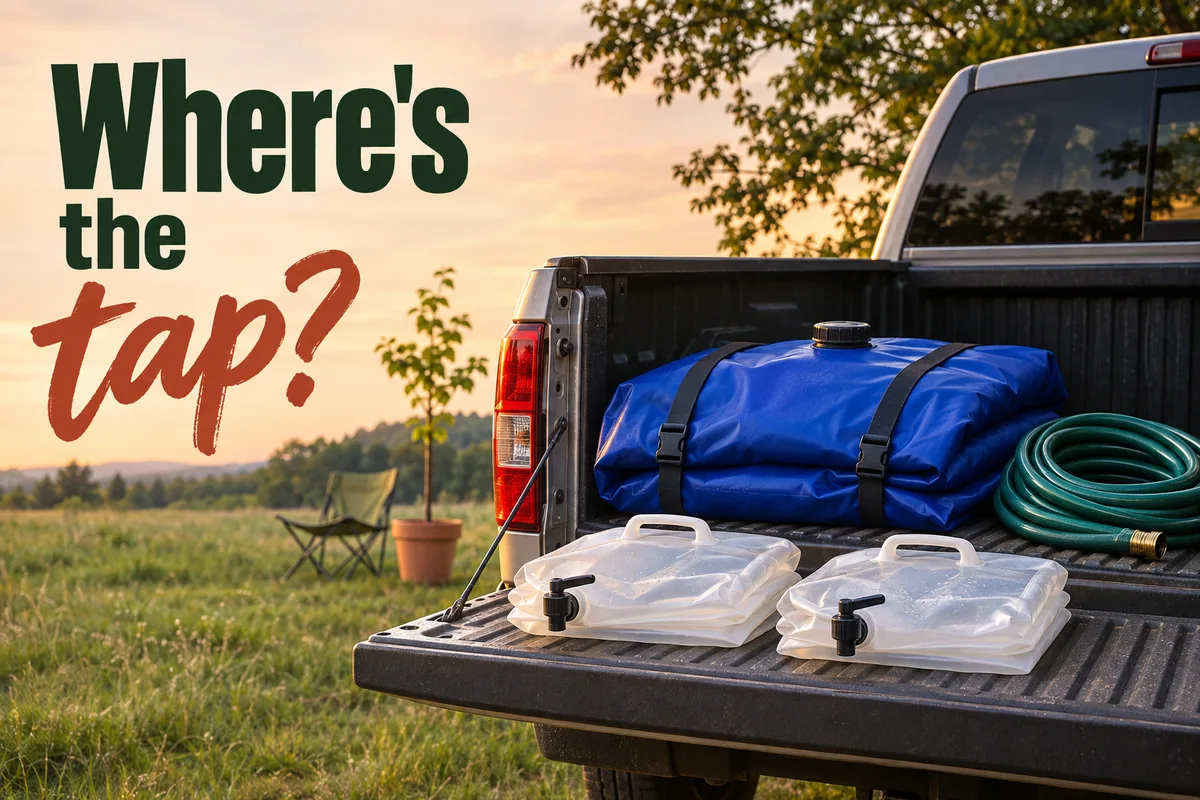
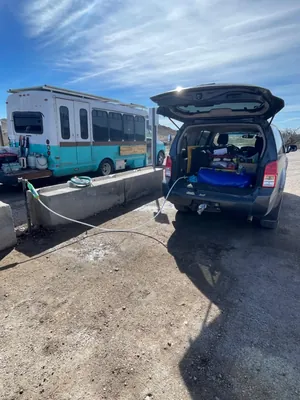
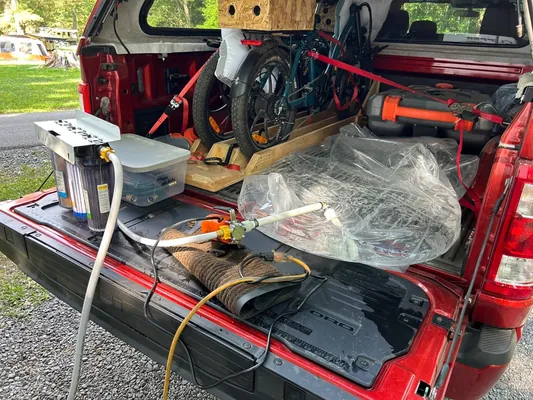
Two systems come up again and again: a big bag that rides in a vehicle and a handful of small jugs. The big bag makes sense when you are refilling something larger. One buyer at a long-term desert camp fills a heavy bladder in the back of a car and moves the water into a motorhome's fresh tank with a 12-volt pump, which ended the trips to the water station. Another shuttles water to dry campsites in a truck bed instead of hauling drums.
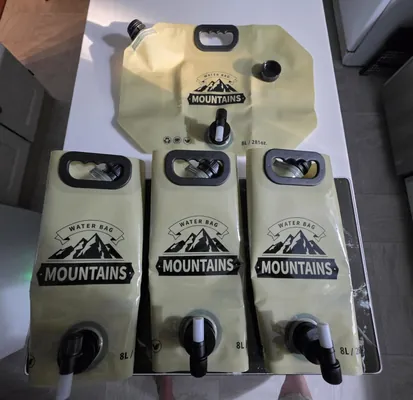
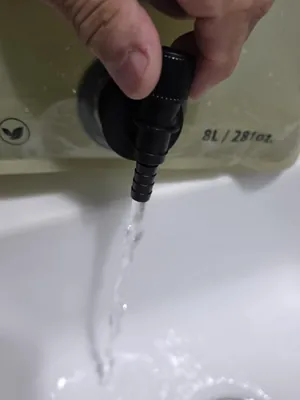
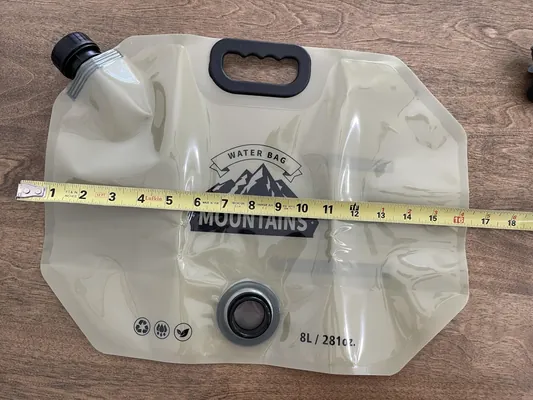
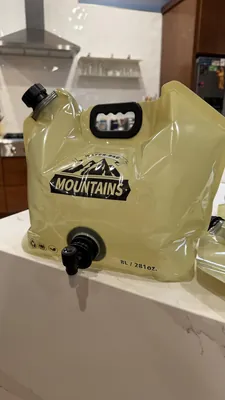
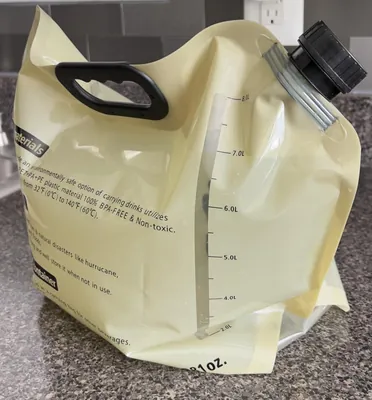
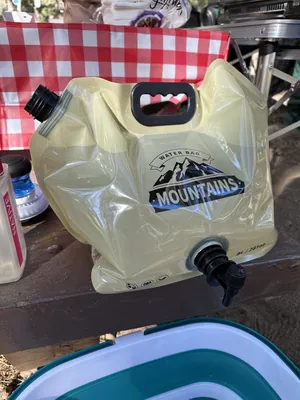
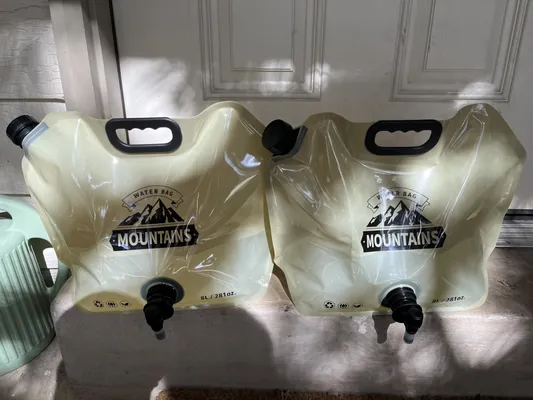
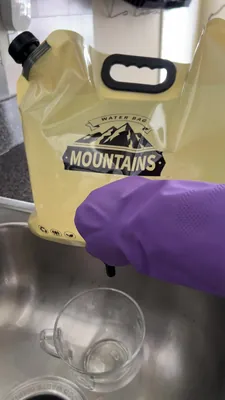
Small jugs make sense when the car is full. Buyers of a four-pack of 2-gallon collapsible jugs describe them as light, flat when empty, and easy to spread around a truck bed. One hunter likes that they fit in a drawer afterward, unlike 5-gallon jugs. A family camping at a site without water found the spigot convenient and suggested the jugs for a hand-wash station. A two-star buyer had a rougher time: the spigot knobs were small and needed dry hands, and a jug tipped over and spilled. Wet plastic also sticks to itself inside, so another buyer in a humid climate dries them carefully before storing them.
Why test a large bladder at home before the trip?
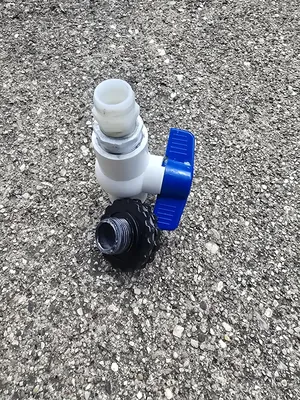
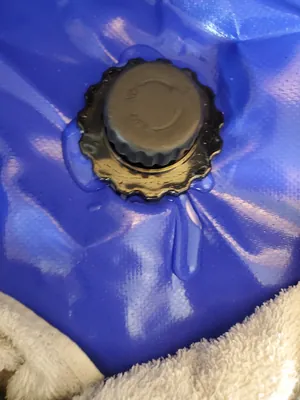
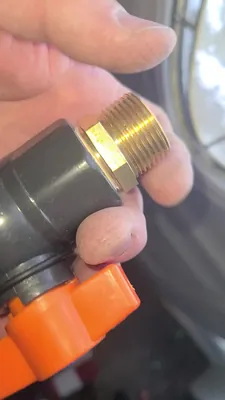
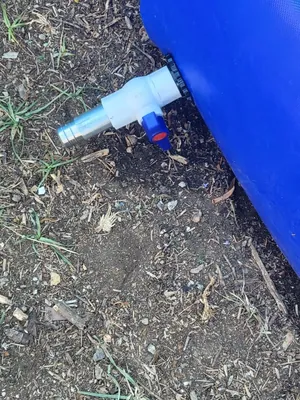
Because leaks are the main complaint with the big soft-sided bladders, and the pattern is useful. Several buyers of the 63-gallon bag saw leaks at a seam or valve on the first fill. In other cases the cause was a fitting installed backward or a loose valve, and correcting it solved the problem. One buyer used thread tape on the outlet before attaching the valve and had no leaks after more than a day in a tub. Another measured with a gallon meter and found the bag full at about 47 gallons, short of the 63 advertised, and a different buyer saw a 30-gallon bag burst at 25.
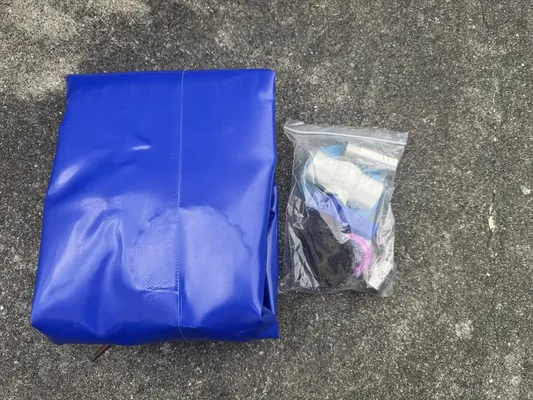
So fill it once where a leak is harmless: a bathtub, a driveway or a lawn. Fill it partway first. Check the seams and the valve while it sits, and plan on a working capacity well below the stated number. Buyers who found problems after the return window had closed could only patch the bag, so open it as soon as it arrives.
Can a water bladder help with watering young trees, a garden or animals?
It is one of the most common uses in the buyer comments. One buyer who plants trees on forest land used to haul 5-gallon buckets and now fills a bladder in the back of a truck. Another uses a heavy bladder to bring water up a bluff to a wildlife watering hole. Others fill one for a horse ranch, a greenhouse drip system or chickens. One buyer who stored water ahead of a storm later used the leftover to water seedlings in a basement greenhouse.
Two cautions from the same comments apply. The big bladders are described as non-potable, so they suit irrigation and washing rather than anything people drink. And a buyer who planned to water animals from one wanted an inline filter first, so read the listing's limits before deciding what the water is for.
How do you keep a water bag working season after season?
Store it flat and dry, away from sharp objects and harsh chemicals, as the heavy-duty bladder's listing advises. Empty it fully before folding it, since wet plastic sticks to itself and is hard to dry. Keep filled bags out of direct sun, and never lift one by its loops when full.
Whatever you pick, a small habit helps more than any feature: write what the water is for, and the date, on the bag. Next season you will not have to guess whether it was the drinking bag or the garden bag.