In this article
When a hurricane, freeze or water main break is coming, the question is how to have enough clean drinking water on hand. The CDC's answer is a gallon per person per day, for at least three days and ideally two weeks. Getting that much water into safe containers fast is the hard part, and it is where bathtub water bags come in. This guide covers how much to store, what makes a container safe, how bathtub bags work, and why a heavy-duty hauling bladder is a different product that should not hold your drinking water.
How much drinking water does a household actually need?
The CDC's baseline is one gallon per person per day, with a minimum of three days and a goal of two weeks if you can manage it. It adds that pregnant women, sick people, pets and people in hot climates may need more (CDC).
The arithmetic is quick. A family of four needs about 12 gallons for three days and about 56 gallons for two weeks. A dog or cat adds a little. Write the number down before you shop, because it tells you whether a few jugs are enough or whether you need something bigger.
That one gallon is for drinking and basic cooking. Washing and flushing use far more, which is where many people start thinking about the bathtub.
What makes a container safe for drinking water?
Food-grade material, a clean container and a tight lid. The CDC recommends food-grade water storage containers and says to label them "drinking water" with the date, replace the water every six months, and keep containers cool and out of direct sunlight (CDC).
FEMA adds that if you reuse bottles, use two-liter plastic soft-drink bottles rather than jugs that held milk or juice, since those are harder to clean (FEMA).
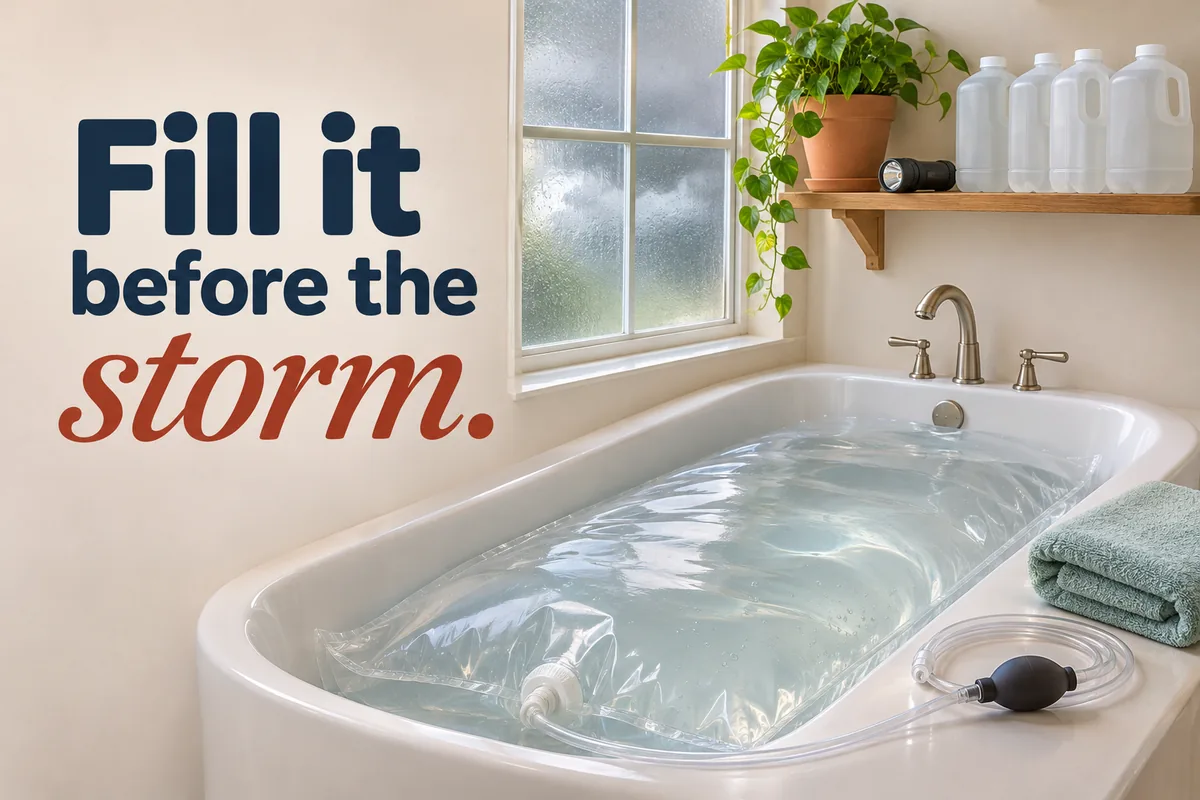
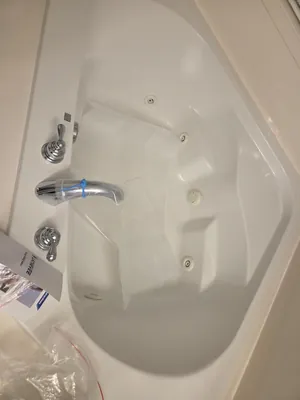
A clean bathtub is not a safe place to store drinking water on its own. A tub has an open surface, a drain, and whatever soap residue is left on it, which is why products sold as bathtub bladders put a clean bag inside the tub instead. The bag, not the tub, holds the water.
How does a bathtub water bladder work, and what do buyers say?
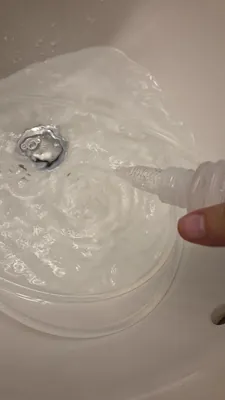
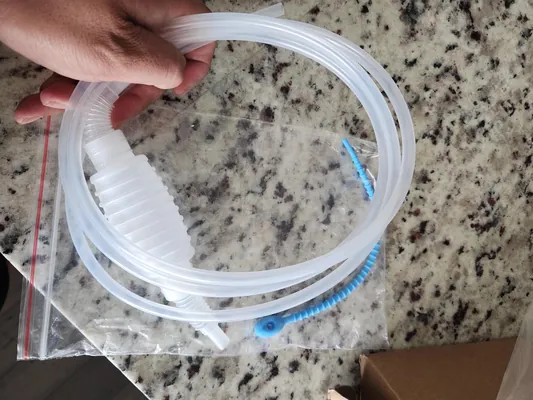
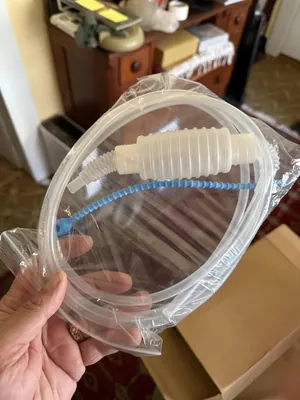
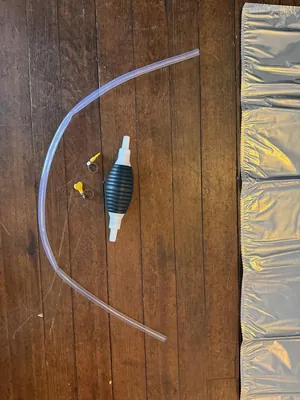
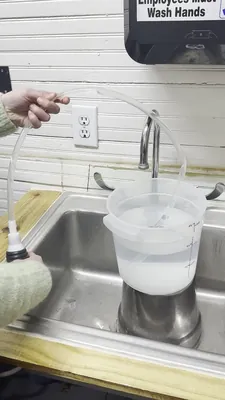
You unfold a bag, lay it flat in the tub, attach the fill port to the faucet, and fill it. A hand siphon pump or hose lets you draw the water out later. The listings describe it as a way to store a lot of water fast when you get warning of an outage, such as before a hurricane or a freeze.
The details matter. The size of your tub decides how much water the bag will actually hold, according to one buyer who tested a 100-gallon bag. The bag was 65 inches long, and the buyer advises measuring the tub first. The listing itself says capacity depends on the bathtub. Others note the pump tube is thin, so draining a lot of water by hand takes a long time, and one says the plastic is thick but could be thicker.
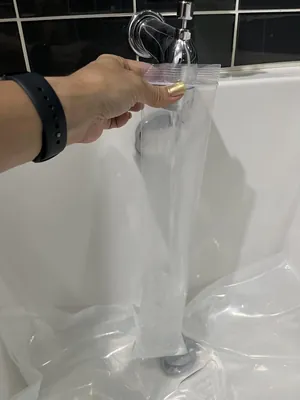
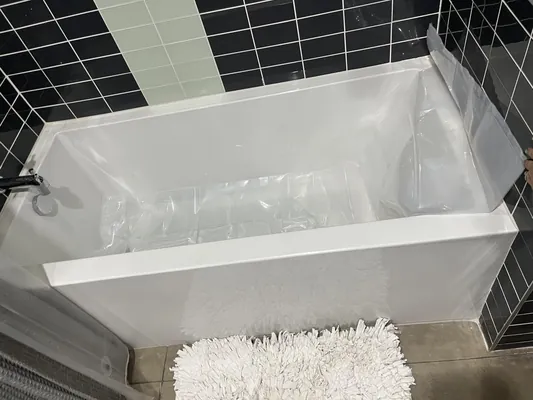
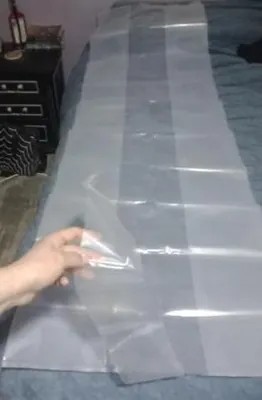
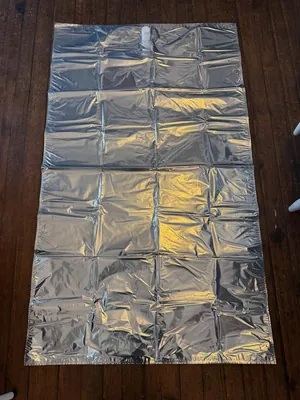
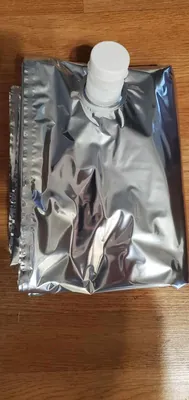
Material choices differ. One listing uses clear food-grade PVC so you can see the water, and a buyer notes there was no strong chemical smell. Another uses an opaque aluminum-foil lining that the listing says blocks light and limits contact with air. Buyers of that style say the material feels thick, and that the two-bag set can go in separate bathrooms. One buyer says they appreciate being able to store the water more cleanly than in an open tub.
Another point from buyers is to keep the bag away from heat. One buyer says they would not store theirs in an attic. And remember the CDC's six-month replacement guidance when deciding whether to fill a bag ahead of time or only when a storm warning arrives (CDC).
Is a heavy-duty water bladder the same as a drinking-water bag?
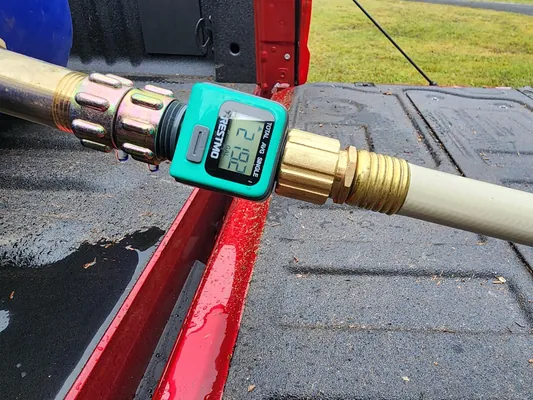
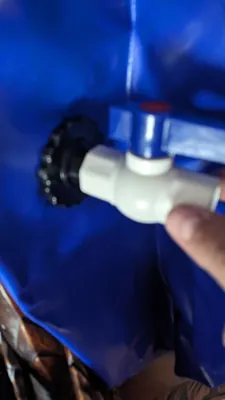
No, and this is the most important distinction in the group. Some water bladders are sold for hauling or irrigation, not drinking. The listing for the 30-gallon PVC bladder describes it as a non-potable water storage and rainwater collector, and the 63-gallon listing describes irrigation, rainwater and off-grid use and says non-potable. Buyers use these to carry water in truck beds and trailers, fill RV tanks, top off pools, fill a trough, and, in one case, to transport waste water.
That last use is a reason to treat them as non-drinking containers. Unless a listing clearly says its material is food-grade and meant for drinking water, use it only for irrigation, cleaning, flushing or other non-drinking needs.
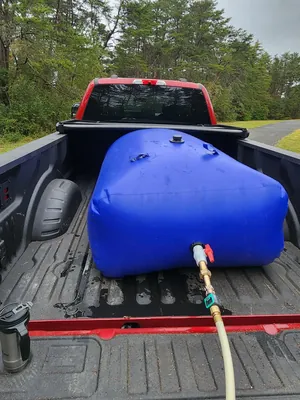
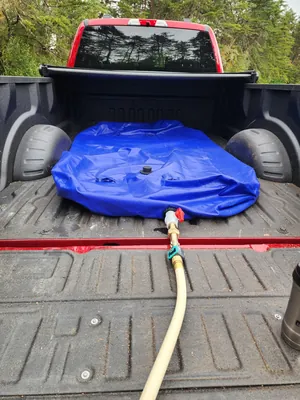
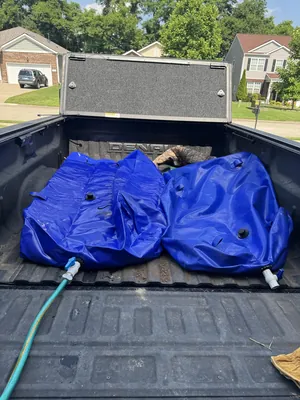
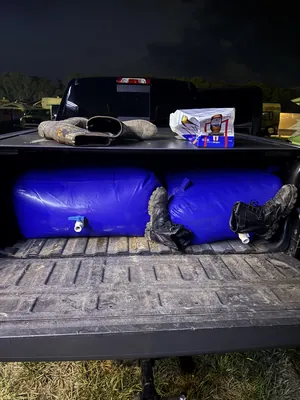
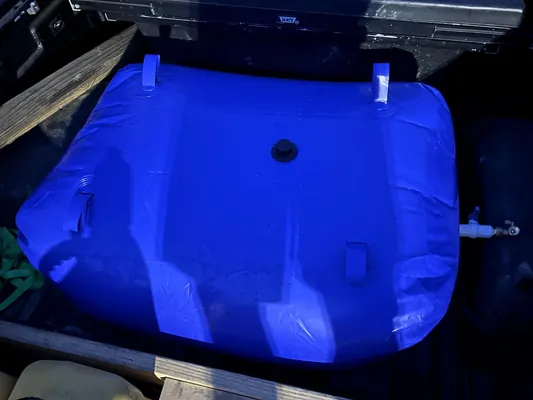
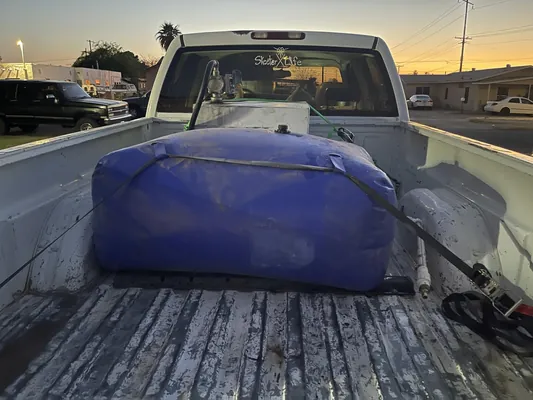
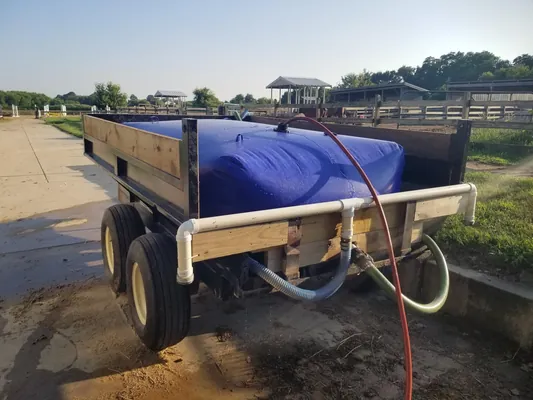
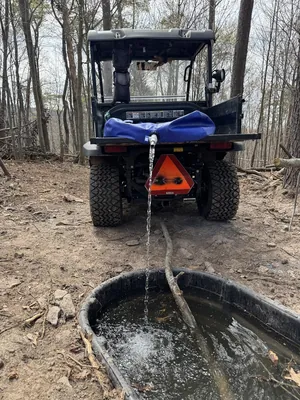
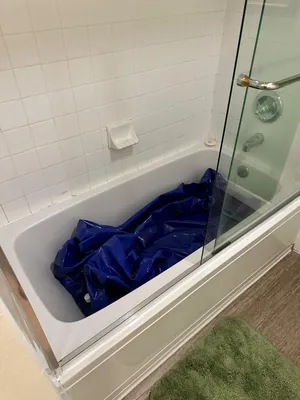
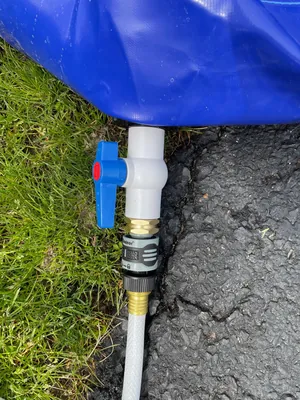
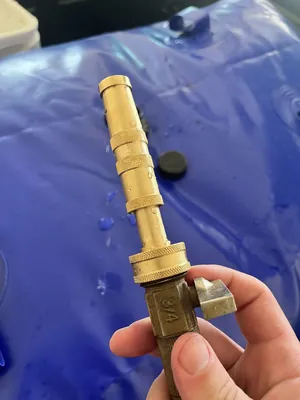
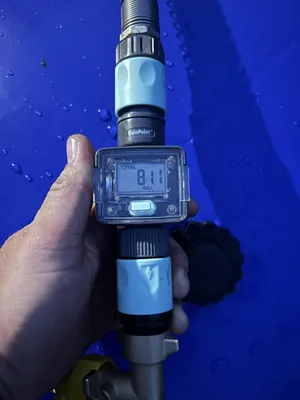
These also come with trouble that buyers report openly. Many say the bag leaks or fails at a seam, sometimes on the first fill. A number of others say it holds noticeably less than advertised, around 20 to 25 percent, and several say the fittings did not match a garden hose. A few say the supplier sent a replacement or advice, including tightening the outside knob on the valve. If you use one for hauling, plan for a test fill at home before the day you need it.
What should you do to keep stored water safe?
Label the container, note the date, keep it cool and shaded, and rotate it. If you ever doubt a supply, the CDC says bottled water is best for drinking and cooking in an emergency, and its page explains how to make water safe when you do not have it (CDC).
A bathtub bladder is a convenient way to bank a lot of water in a short time. It does not replace a basic stock of bottled water and a plan to rotate it. Start with the number you worked out at the top, store at least three days, and treat the extra as a bonus.