In this article
Waking up with a stiff neck is often blamed on the pillow, and sometimes the pillow really is part of it. The fix is not the softest or the most expensive one. It is the one that holds your head in line with your spine in the position you actually sleep in. Here is how to work out what height and shape you need, when an adjustable pillow makes sense, what to check when a new pillow arrives, and when stiffness is a reason to see a doctor instead.
Can a pillow really cause a stiff neck?
It can contribute. Your neck is meant to sit roughly in line with the rest of your spine while you sleep. A pillow that is too high pushes your head forward or up, and one that is too low lets it drop, and over several hours either can leave muscles tight when you wake up. Other things matter as well: the mattress, how you sleep, stress, a long day at a screen, and sleeping with your head turned. So a new pillow is a reasonable thing to try, but not a guaranteed fix, and it should never replace getting checked when the pain is unusual.
One thing buyers of neck pillows agree on is that results are personal. One buyer said a contoured pillow made their morning stiffness go away, another liked the same shape but said it did nothing for their migraines, and a third said it was too low for their shoulders. The sections below are about how to narrow the field before you buy.
How high should my pillow be for my sleeping position?
Height is the biggest variable, and it depends mostly on how you sleep and how wide your shoulders are. Ohio State University's health system explains that the goal is to keep your neck in a neutral position relative to your trunk, and that a side sleeper needs enough height to fill the gap created by the shoulder.
- Side sleepers need the most height. The pillow has to fill the space between the shoulder and the head so the head does not tilt down toward the mattress.
- Back sleepers need a medium height, enough to support the natural curve of the neck without pushing the chin toward the chest.
- Stomach sleepers usually do better with a thin pillow, or none, because lying face-down already turns the neck.
A practical check is to lie in your usual position on the pillow and have someone take a side photo. If your head tilts noticeably up, down, or sideways compared with the line of your spine, the height is off. A petite back sleeper did this with two lofts of the same pillow: in a photo with the medium loft their head tilted forward, and with the low loft it sat in better alignment. Another side sleeper found even the tallest version too low.
What if I move between my side and my back during the night?
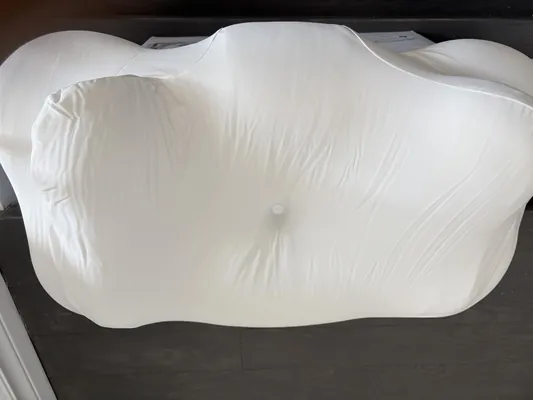
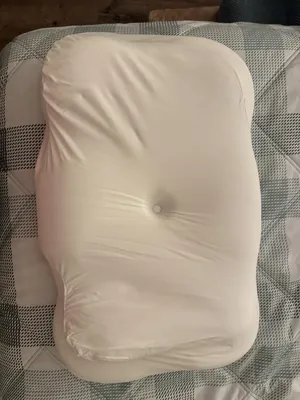
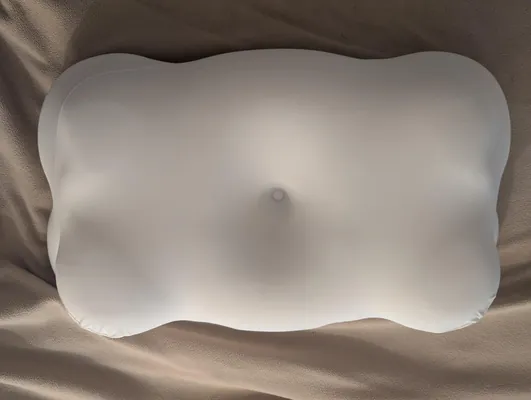
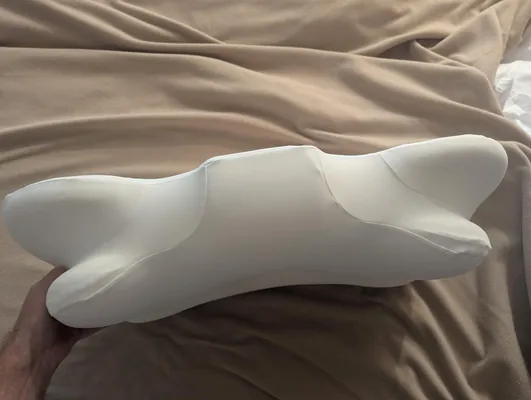
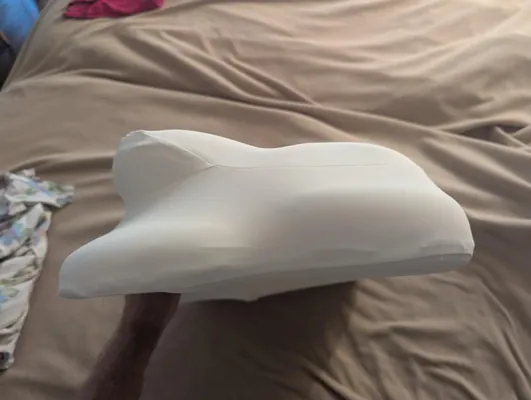
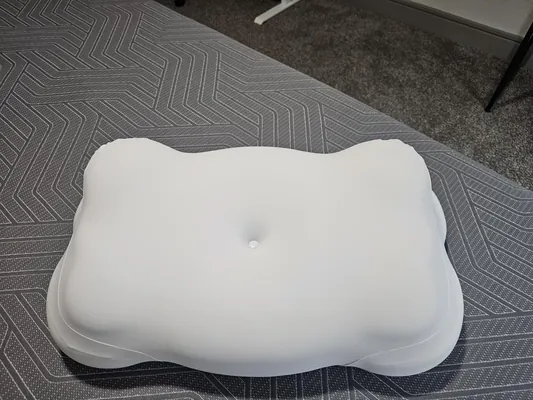
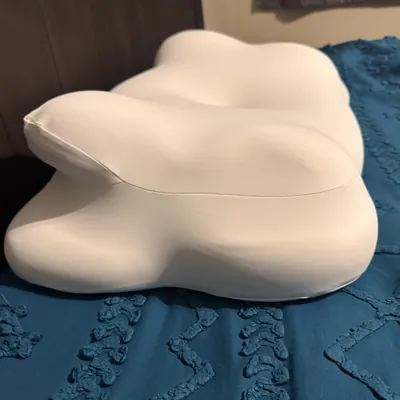
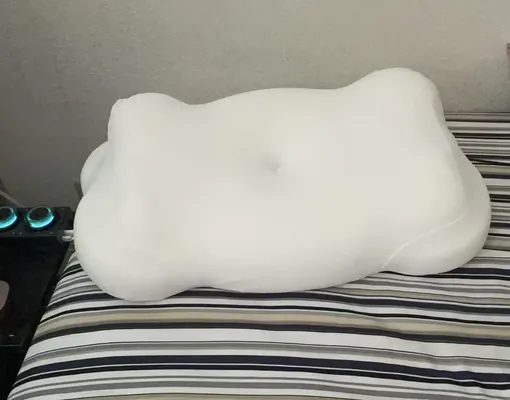
Most people shift. A pillow that supports one position and fails the other can leave you stiff on the side you slept on least well. Dual-height contour pillows try to cover both: a higher edge for the shoulder gap on your side, a lower center for your back. Buyers of one such pillow described it as supportive without being rigid, and several liked flipping it to choose between two heights. A few found it too low or too soft for side sleeping, and one said it compressed more than expected, so height claims are worth checking against your own shoulders.


Should I get an adjustable pillow, a contour pillow, or a regular one?
A fixed-shape pillow is a bet that its designer's idea of "medium" matches your body. An adjustable pillow lets you change the height yourself by adding or removing fill or layers, which is useful if you are not sure what you need or if you share the bed with someone who needs something different. The trade-off is that you do the work, and the loose fill can take a few tries to get right.
What if I need more or less height than a pillow comes with?
This is the case for shredded-foam and layered pillows. Buyers of one shredded memory foam pillow said it took a few tries to find the right fullness, that the extra fill bag was useful for a firmer feel, and that a petite buyer who wanted a thin pillow removed fill and was pleased. A few found the foam smelled at first; one aired the loose fill in an open bag for three days and said the odor faded. Others said the pillow lost support after about six months. One buyer who sleeps on their stomach unzipped the inner case and removed a big handful of fill from a layered fiber pillow, and said their shoulder stopped going numb. Another buyer, who said they have cervical spondylosis, tried at least five pillows over three years and said removing one inner layer of that pillow finally stopped the morning stiffness. That is one person's experience, not proof.






Why does a new neck pillow feel strange for the first few nights?
A pillow that holds your head in a different position than your old one will feel odd even when it is the right shape. Several buyers noted an adjustment period, and one buyer with a shorter neck said it took time. The listing for one double-sided contour pillow suggests starting on its softer side and moving to the firmer side as your neck gets used to it. Give a new pillow a few nights, make small changes one at a time, and judge it by how your neck feels in the morning, not in the first ten minutes.
Experiences varied. Several buyers said it was comfortable and supportive for side sleeping. One said it felt flat, like a thin piece of sponge. Two said their pillow arrived with a tear, and a buyer who deals with migraines said it was comfortable but did not reduce them. One buyer noted a chemical smell and left the pillow in the sun for a day.
Do I need a cooling pillow, or a firmer one?
If you wake up hot, a cooler pillow can matter for comfort, though comfort and neck alignment are separate questions. Listings describe gel, cooling covers, and breathable layers, and buyers had a range of experience: some said the pillow stayed cool all night, one back sleeper said it kept them a bit warmer than their other memory foam pillows. Firmness is a similar story. Some people want a firm pillow that holds the head steady, and others find that uncomfortable.
Buyers praised its feel, and one said they took out the layer to lower the height. Several said it relieved neck pain, one mentioned using a sleep tracker and seeing better scores, and one said they bought a second one five years later. A few cautions: one buyer said it was not a full queen-sized pillow, one found chunks missing from the foam, and another did not like where the zipper and emblem sat.
Buyers of this one were split. Several said it relieved neck pain and stayed cool, and one back sleeper preferred the low loft over the medium. Others said the grid pattern left marks on their face, that the pillow felt flimsy or went flat after a few months, or that the medium loft was lower than the listing said. A few buyers reported inconsistency between pillows of the same size. With a high price, check the return policy before you open it.
Only a handful of buyers wrote about this one. One said it was a great pillow on sale but not worth the full price, and another said it was firm and heavy. Two said their pillow arrived looking used, with cat hair, so check it on arrival.
How can I tell if a pillow is what the listing says?
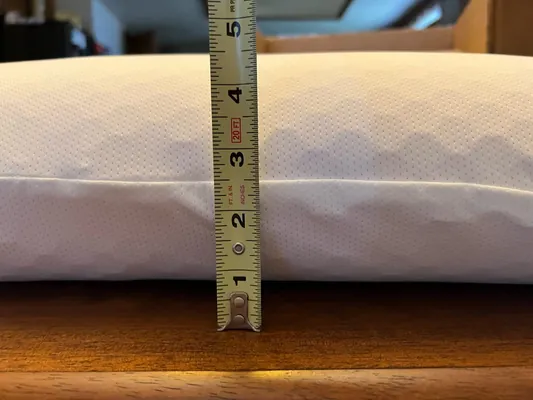
A neck pillow only works if its real height matches what you need, so it is worth checking when it arrives. Measure the loft with a ruler while the pillow rests on a flat surface after it has fully expanded. Many foam pillows arrive compressed, and buyers say to leave them out for about a day before judging. Compare the number with the listing. In one case, a buyer measured a medium loft that was well under the stated 6.5 inches.
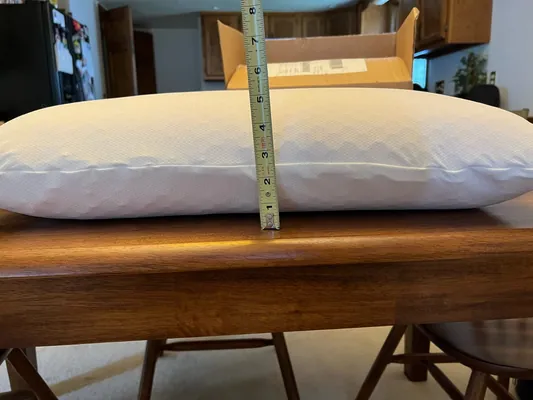
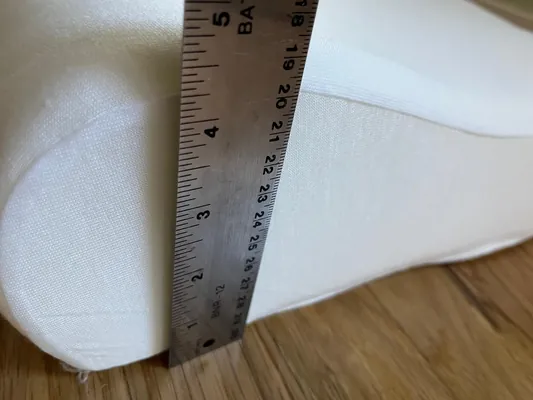
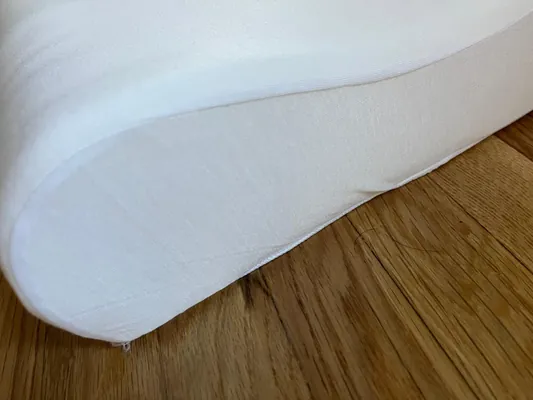
- Look for tears, missing foam, and used-looking stains right away, because return windows can be short.
- Let compressed foam sit open for 24 hours, and air any odor outside before putting a pillowcase on.
- Check how the cover fastens and whether you can wash it, because several buyers wrote about cover care.
- Read the return policy before opening a pillow that costs more than about $100.
Can I trust the feedback on a listing?
Be careful when many comments seem to be about something other than a neck pillow. One listing for a butterfly-shaped contour pillow with two heights shows a high rating, but several buyers wrote that many of its reviews belong to a different product, and most of the comments attached to it are about decorative euro pillow inserts. One buyer of the neck pillow said it was not memory foam and led to more pain, another reported mold under the cover, and a third said it was the only pillow that let them sleep pain-free after a spinal injury. Treat the rating as unreliable and compare dimensions with other listings.
When is a stiff neck more than a pillow problem?
A pillow can help ordinary morning stiffness, but it cannot treat everything. The Mayo Clinic lists situations that call for prompt care, including severe neck pain after an injury such as a fall or car crash, neck pain with a high fever, weakness in an arm or leg, and trouble walking. It also suggests seeing a doctor if neck pain gets worse despite self-care or lasts for several weeks. If any of that sounds like you, talk to a clinician rather than shopping for another pillow.