
In this article
To warm a room that never catches up, heat that room instead of the whole house: seal the biggest draft, then add a small thermostat-controlled heater sized to the space. A wall-mounted model keeps the floor clear, which matters most in kids' rooms, home offices, and small spaces where a floor heater always ends up in the way.
Most homes have one room like this: the bedroom at the end of the duct run, a basement office, a kitchen that sits at 66°F at six in the morning, a converted garage or sunroom the central system was never built for. You can turn the whole house up to fix it, or you can warm the one room where people actually sit and sleep.
This guide covers why a room stays cold, when a small heater makes sense, how big a room one heater can handle, and what to check so a wall-mounted heater stays safe and out of the way.
Why does one room stay cold when the rest of the house is fine?
A cold room is usually cold for a reason, and the reason decides what will help. The common ones:
- Air leaks. Gaps around windows, under exterior doors, and around outlets on outside walls let cold air in and warm air out.
- Cold surfaces. Large windows, exterior walls, and floors over a crawl space or garage stay cold, and you feel it even when the thermostat reads fine.
- Heating that does not reach. Rooms at the far end of a duct run, additions, and converted basements often get less heat than the rest of the house.
- A thermostat in the wrong place. One buyer described an open upstairs balcony where fireplace heat collected next to the thermostat, so the system believed the whole floor was warm while the bedrooms stayed chilly.
Buyers describe a wide range of causes: a family room under north-facing windows where cold air drops in from a nearby mountain, a 1950s house where replacement baseboard heaters never worked well, an RV with a large back door and thin insulation, and a basement office that stayed colder than the rest of the house. A heater helps all of them, but not equally, which is why it is worth knowing which problem you have first.
Is it worth sealing drafts before buying a heater?
Yes, because a heater in a leaky room just runs longer. The U.S. Department of Energy says weatherstripping suits parts that move, such as doors and operable windows, while caulk is the right material for stationary gaps, and describes these as low-cost fixes that often pay back in a year or less. A simple check: on a windy day, hold your hand near the window edges and along the bottom of the door. Any steady movement of cold air is worth fixing first.
Heavy curtains and a rug over a bare floor also help a room hold the warmth it has. One buyer who put a wall heater in a poorly insulated extension reported that it struggled there, while the same model kept a properly insulated living room comfortable. A heater is not a substitute for insulation; it works best when the room can hold on to the heat.
Is heating one room cheaper than turning up the whole house?
Sometimes. The idea is called zone heating: keep the main thermostat modest and add warmth only where you spend time. It saves money when you would otherwise heat many empty rooms to cover one cold one, and it does not when a small heater runs flat out for hours in a room that loses heat quickly.
The math is simple. Watts divided by 1,000, times hours, times your electricity rate gives the cost. A 1,500-watt heater at full power uses 1.5 kilowatt-hours each hour. At an example rate of 17 cents per kilowatt-hour (check your own bill), that is about 26 cents an hour, or roughly $2.55 for ten hours at full power. A thermostat lowers that, because the heater cycles off once the room reaches the set temperature.
Buyers report mixed results, which fits the math. One buyer who heats a basement office warned to expect a higher electric bill if the heater runs a lot in a cold space, and said a tighter schedule brought the cost down. Another, in an older house with electric baseboard heat, reported bills about 20% lower than with the previous plug-in heaters. A third, heating a cabin over an uninsulated crawl space, estimated that total wattage dropped from roughly 4,000 to roughly 2,700 after adding a thermostat-controlled wall heater. These are individual situations, not promises.
Why mount a heater on the wall instead of setting one on the floor?
A floor heater needs floor: a footprint, a cord across the room, and a spot nobody will bump. In a small bedroom, home office, or kid's room, that is the first thing to go wrong. One buyer lost a floor heater to dogs roughhousing, then chose a wall-mounted model because it could not be knocked over. Another bought one for a one-year-old's room and used the child lock with a schedule that warms the room before wake-up and shuts off afterward.
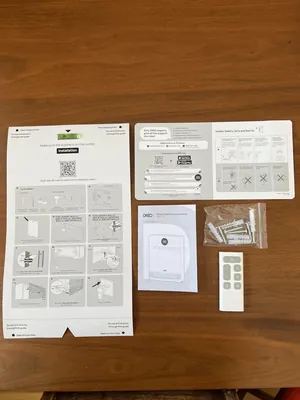
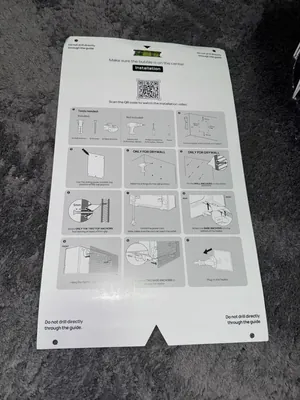
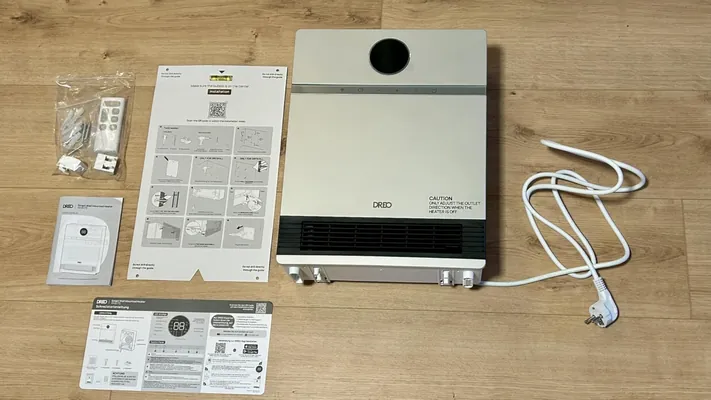
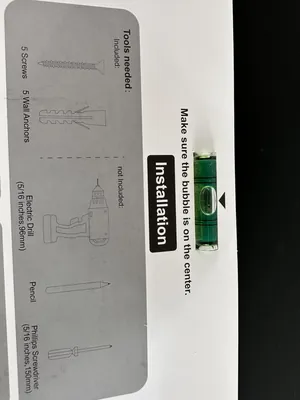
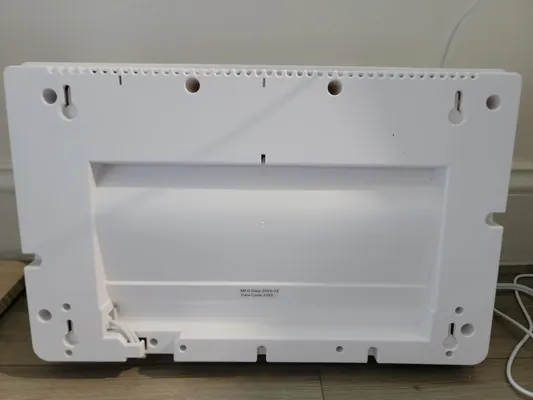
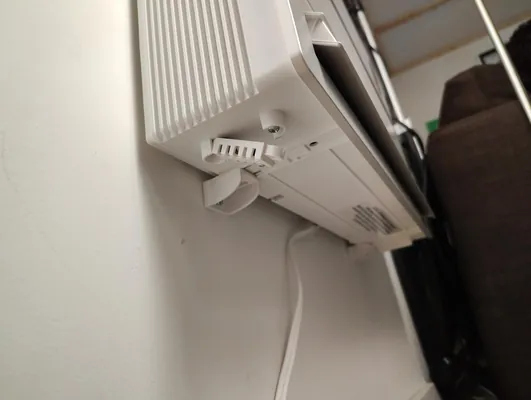
The trade-offs are real. A plug-in wall heater needs an outlet within reach of its cord, since extension cords are discouraged with heaters (more on that below), and it needs a few holes in the wall. Most of the models here are light enough that buyers mounted them with the supplied drywall anchors, and several praised the paper drilling template with a built-in level. Check each manual for weight and wall requirements.
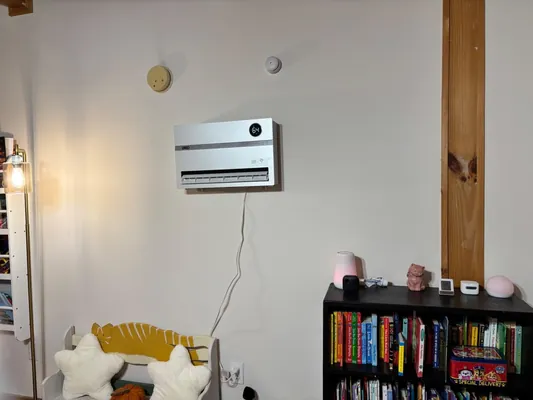
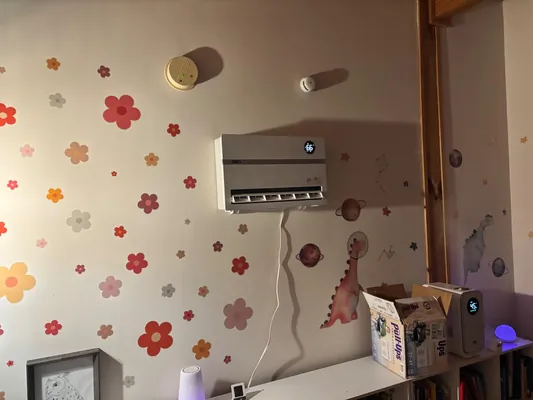
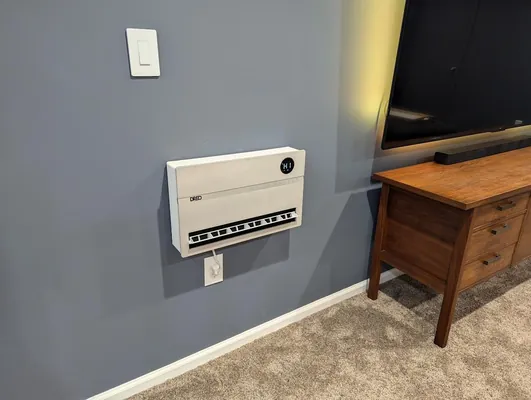
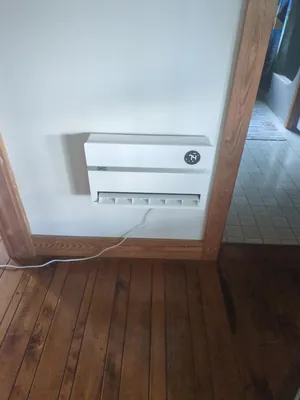
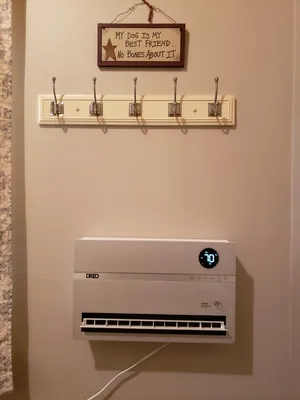
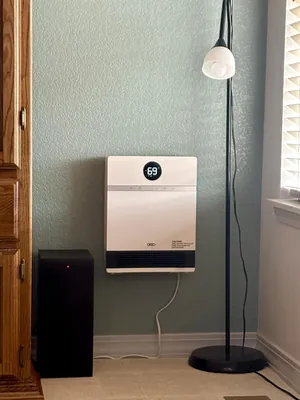
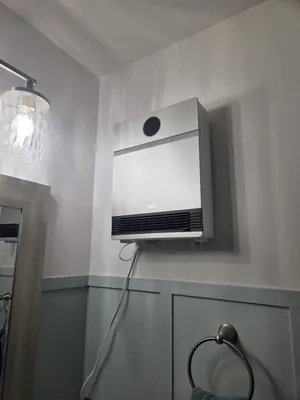
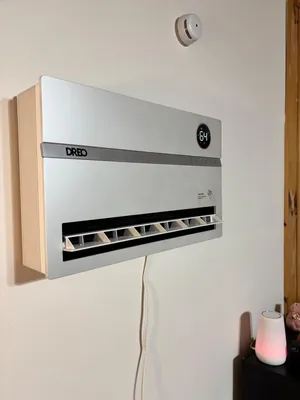
A compact wall heater pairs a built-in thermostat with a few heat levels, so you can run it low for background warmth or higher when you need it. One buyer used the 41°F lower limit of this model's thermostat to keep a small greenhouse above freezing.
What if you cannot drill into the wall?
Check before buying, because the options differ. One listing here is wall-mount only. Another can sit on supplied feet, and buyer photos show it on the floor or on a homemade stand. Fan-free panel heaters often come with feet or casters. One buyer who could not drill into the wall found a wheel bolt fell out during setup and returned the heater, so inspect feet and wheels closely when it arrives.
How big a room can one wall heater actually warm?
Most of the wall heaters here draw 1,500 watts, which one listing describes as 5,200 BTU. Two listings say that is enough as the main heat for roughly 150 square feet in a well-insulated room, and up to 750 square feet as supplemental heat. Treat the larger number as a best case.
Buyers' numbers show how much insulation and climate matter. One said a 12-by-18-foot kitchen went from 66°F at 6 a.m. to 70°F by 7 a.m. with only the heater running. Another reported that it kept a roughly 250-square-foot room comfortable. A third, with a room of about 180 square feet, said that when the night dropped into the upper 30s it could not get the room above 65°F and ran constantly. Another thought it would warm no more than about 500 square feet, even as supplemental heat.
- Taking the edge off a small, reasonably tight room: a single 1,500-watt heater is usually enough.
- Main heat for a drafty or large space: expect it to run constantly, and consider sealing leaks or adding a second source.
- A room with a separate main system: a smaller heater can handle just the morning or evening chill.
Will a 1,500-watt heater trip the breaker?
It can. At 120 volts, 1,500 watts is about 12.5 amps, most of a standard 15-amp circuit, so a vacuum or hair dryer on the same circuit can trip it. One buyer measured an initial draw close to 20 amps. If a breaker trips, look at what else shares the circuit before blaming the heater.
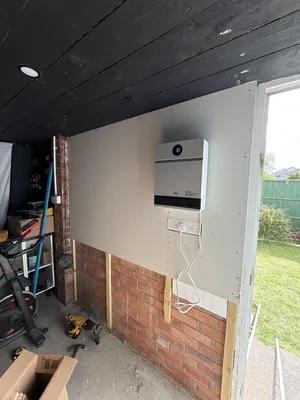
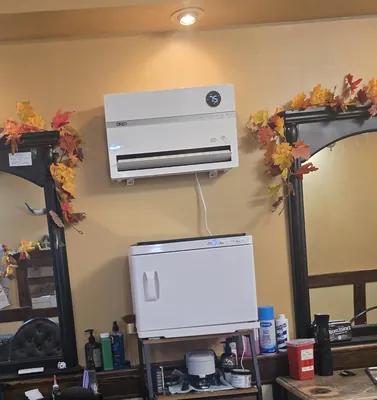
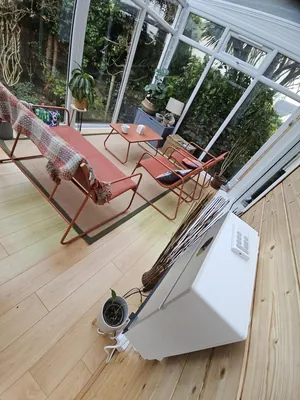
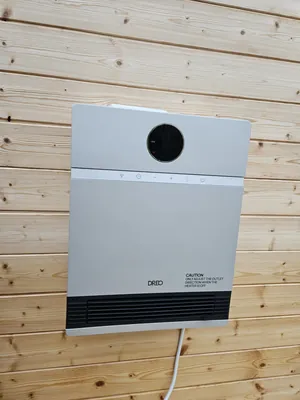
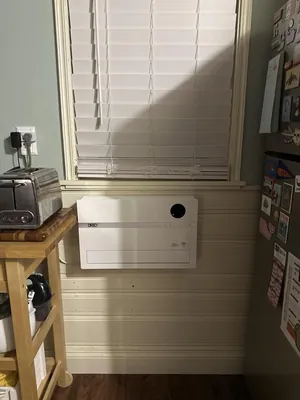
For a larger living area, kitchen, or basement, a model with wide oscillation and a fine thermostat range helps spread the heat. This one lists 120-degree oscillation and a 41 to 95°F range with 1°F accuracy. Buyers liked the quick install and the drilling template. A few units clicked on and off repeatedly or read the room several degrees high, so plan to calibrate it or set the target a little higher.
Does a wall heater need a fan?
Two designs show up in this group. Fan-forced ceramic heaters warm air and push it into the room. They heat a space quickly and offer a fan-only mode, but they make some noise. One listing claims 28 dB, and many buyers called their units quiet, yet others described a rattle, a chirp, or a bearing sound, and two said a unit was loud from the start.
Fan-free radiant panels warm people and surfaces in front of them rather than moving air. They are silent, which matters in a bedroom, and listings and some buyers say they dry the air less. The catch is that radiant heat is directional. One buyer put a panel under a desk to warm their feet and loved it. Another placed one five feet from a desk and still felt cold, so these work best close to where you sit.
What about the graphene panels?
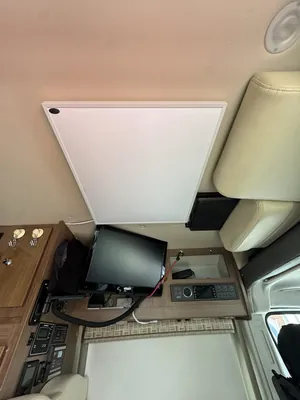
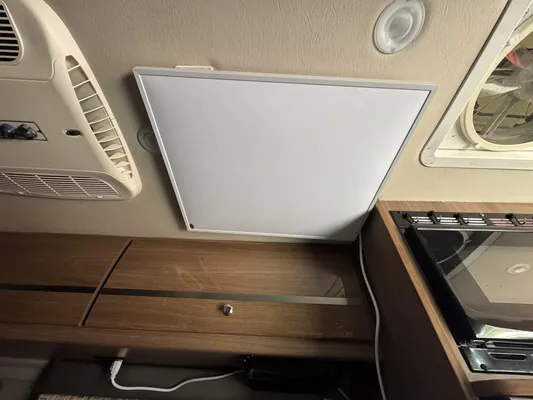
The search term behind this guide points to a smaller kind of heater: flat 350-watt panels about 2 cm thick that mount on a wall or ceiling. The listings describe a graphene heating element that reaches 248°F in about three minutes and a fan-free design they say limits dust circulation. At 350 watts, they use about a quarter of the power of the 1,500-watt models, so they suit a camper, a small office, or a spot where you stand or sit nearby, not a whole room.
The few buyers who wrote about them said the heat feels comfortable and not dry in a camper van. One mounted two on the ceiling because the surface gets very hot. Another found it too strong right beside the toilet, so choose a spot away from where people sit or stand. The remote doubles as the temperature sensor, so where you leave it matters. The listings mention flame-retardant materials and a 10-year warranty; read the terms before relying on either.
The second panel is a newer listing with few written reviews. Its description matches the first but emphasizes a single on/off switch for anyone who wants no menus. Everything here about it comes from the listing, not from buyer feedback.
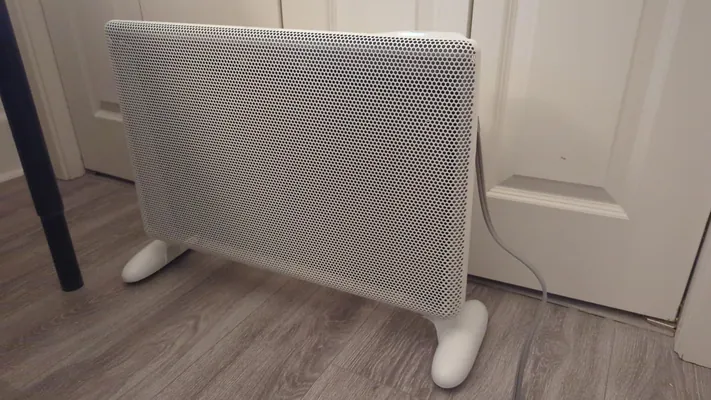
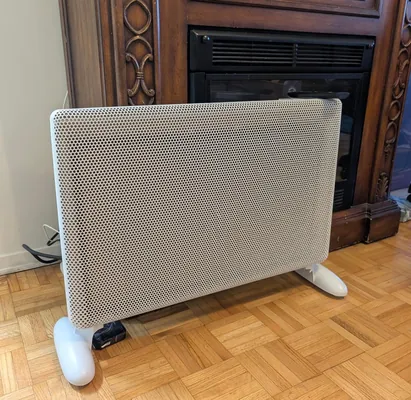
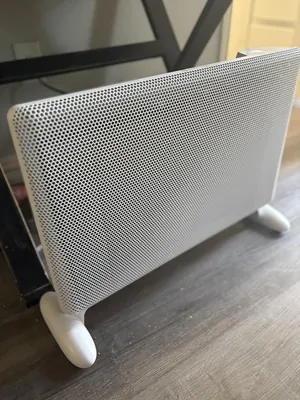
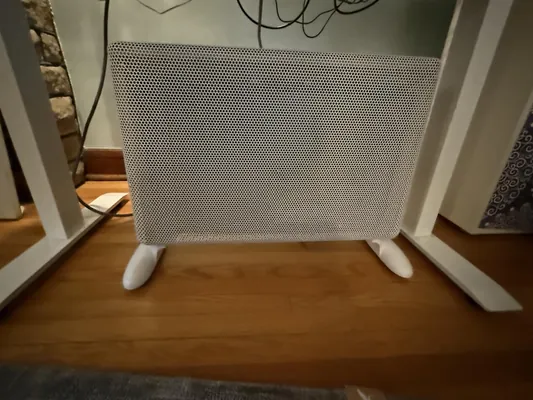
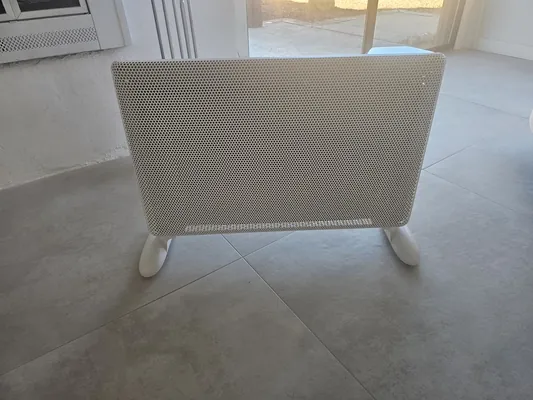
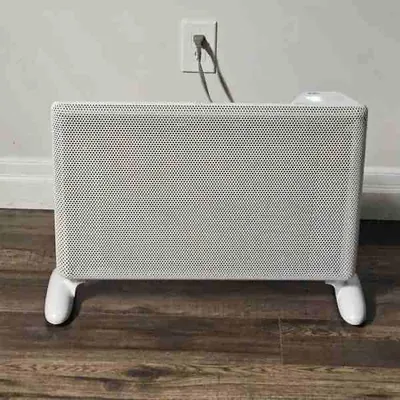
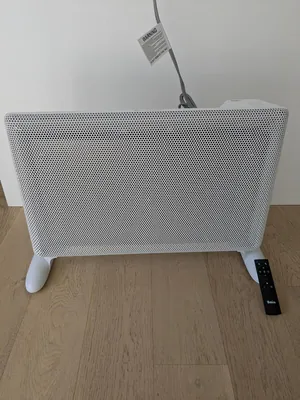
If you want a larger fan-free heater, a mica panel gives silent heat and can stand on feet or hang on the wall. The listing mentions a 24-hour timer, an app, and shut-off if it tips over. Buyers praised its quiet operation and fast warm-up in basements and family rooms. Their cautions are worth noting: the back of the unit gets very hot, so use the handle, and one buyer reported strong fumes after about a year of use. If you smell burning that does not fade after the first few uses, stop and unplug it.
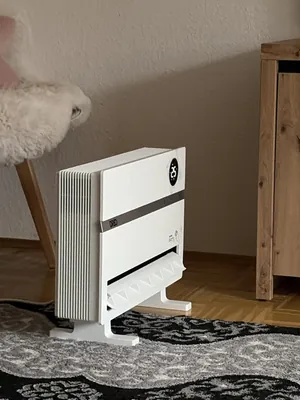
Is a smart heater worth it for cold mornings?
The most useful feature is a schedule. Heating a room all day to be warm at 7 a.m. wastes energy, and so does waiting until you are already cold. Buyers describe bathrooms that warm from 30 minutes before they wake to an hour or two later, and a kid's room that preheats and turns off when the family leaves. One bought a heater for an older, visually impaired parent partly because it could be controlled by voice, and another started a room warming from the app on the way home.
A child lock matters in a kid's room. One buyer set the lock so a child could not turn the heater up to 85°F, and scheduled it to switch off in the morning so it would not run all day. Turning off the display at night helps light-sensitive sleepers, a feature several buyers named.
Can you trust the built-in thermostat?
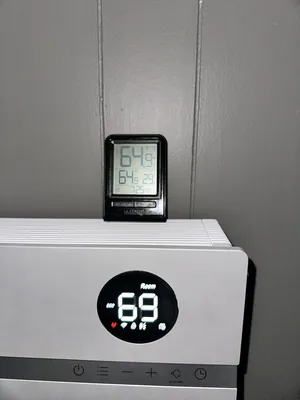
Often, with a caveat. The sensor sits in the heater, near a warm wall, so it can read higher or lower than the room. One buyer set 80°F and saw the heater cut off when its sensor hit 80°F while the room was 71°F. Others fixed this by calibrating the temperature offset in the app or by setting the target a few degrees higher. A small separate thermometer in the middle of the room is the easiest way to see what is really happening.
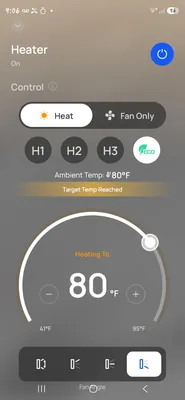
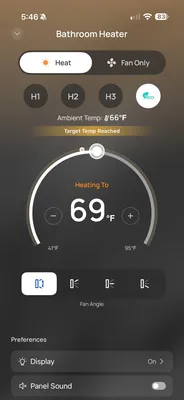
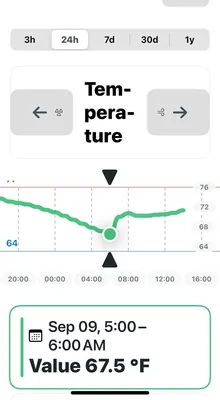
A compact smart model with a remote, an app, and voice control suits a bathroom or bedroom warmed on a schedule. Its listing names 150 square feet as the main-heat size and 28 dB for the fan. Buyers reported fast heat and easy mounting, and a few noted an inaccurate temperature reading and limited fan reach. One buyer's plug arrived frayed, so inspect the cord and plug when it arrives.
For a kid's room, the Wi-Fi model below adds a child lock and a fan-only mode, and a washable filter according to one buyer. It has the most mixed feedback of the group on noise: two buyers reported rattling or a failing fan, and another received a unit that looked used. If you buy one, test it right away and keep the packaging until you are sure.
How do you use a wall heater safely?
A wall mount removes the tip-over risk, but not the others. The Consumer Product Safety Commission's heater checklist and NFPA's space heater tips agree on most of the basics:
- Plug straight into the wall outlet. Avoid extension cords and power strips. CPSC advises against extension cords with heaters.
- Keep a clear zone. NFPA's guidance is at least three feet from anything that can burn, including furniture, curtains, bedding, and people.
- Choose a lab mark. Look for a certification mark from a recognized testing lab, plus overheat and tip-over protection.
- Check the plug and cord. If either feels hot, or the plug looks frayed or discolored, stop using it. One buyer posted photos of a frayed plug on arrival and asked about a return.
- Turn it off when you leave or sleep. NFPA advises turning heaters off when you leave the room or go to bed. A thermostat and timer help, but follow the manual for overnight use.
- Do not ignore a tripped outlet. If a heater trips a ground-fault outlet, stop using it and have it checked rather than assuming the outlet is the problem.
Can you put one in a bathroom?
Take it carefully. CPSC has long cautioned against portable electric heaters in bathrooms. Some wall heaters are sold for bathrooms, and one listing here cites an IP24 rating, which means it resists splashing water. That is not the same as being safe in a shower. Follow the manual's distances and keep the heater well away from the tub, shower, and sink. Some versions come with a plug that has built-in leakage protection, which one buyer chose for a mudroom.
The first time you run a new heater, a faint burning smell is common as dust and coatings burn off, and buyers mention it fading quickly. A smell that returns later, or a hot, discolored plug, is a reason to stop and unplug it.
What is a sensible order for fixing a cold room?
- Find the biggest leak, usually a window or door, and seal it.
- Decide where the heat needs to go: the bed, the desk, the bathroom mat, or the whole room.
- Match the watts to the space: 350 watts for a spot, 1,500 for a small to medium room.
- Pick the form that fits the room: wall-mounted to keep floors clear, fan-free for quiet.
- Set a schedule, then check it with a thermometer in the middle of the room.
- Plug it straight into the wall, keep the zone around it clear, and stop using it if anything smells or feels wrong.